Table of Contents >> Show >> Hide
- The Short Answer
- What Exactly Is the Farmer’s Almanac?
- How the Almanacs Say They Make Forecasts
- Why Modern Forecasting Has an Edge
- Seasonal Outlooks Are Not the Same as Detailed Forecasts
- So, How Accurate Is the Farmer’s Almanac Really?
- Why the Almanac Still Feels Accurate to So Many People
- When the Farmer’s Almanac Is Actually Useful
- When You Should Definitely Not Rely on It
- The Best Way to Use It
- Final Verdict: How Accurate Is the Farmer’s Almanac?
- Real-Life Experiences: Why People Still Check the Almanac Anyway
- SEO Tags
Every year, right around the time people start arguing over whether it is “sweater weather” or just “you forgot your jacket,” the Farmer’s Almanac makes its grand entrance. Suddenly your aunt is forwarding winter predictions, your neighbor is stockpiling birdseed like a squirrel with a spreadsheet, and someone at the hardware store is absolutely certain the Almanac already called for a brutal season. It happens like clockwork. Which is fitting, because clocks are much easier to predict than weather.
That brings us to the big question: how accurate is the Farmer’s Almanac? The honest answer is more interesting than a simple yes or no. The Almanac has serious staying power, a devoted audience, and a long American tradition behind it. But when you compare its long-range weather claims with modern meteorology, official NOAA forecast guidance, and independent analysis, the picture gets clearer. The Almanac can be entertaining, occasionally directionally right, and oddly good at making people feel prepared. But if you want reliable, decision-grade weather information, it is not the gold standard. Not even close.
The Short Answer
If you are asking whether the Farmer’s Almanac can accurately predict detailed local weather months in advance, the evidence says no. The publication itself promotes a high accuracy rate, but independent analysis has found its forecast performance much closer to chance than to precision. In plain English: it is better treated as a tradition and conversation starter than as a tool for planning snow removal, weddings, road trips, or your emergency pantry.
That does not mean the Almanac is useless. It just means it works best when you use it for broad seasonal curiosity rather than as a weather commandment carved into stone. Think of it as weather folklore wearing a blazer.
What Exactly Is the Farmer’s Almanac?
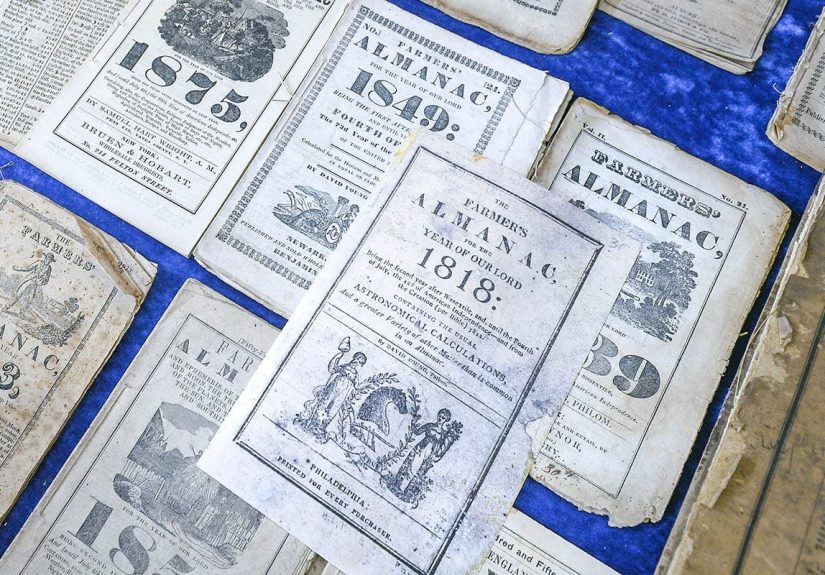
First, a quick clarification that saves a lot of confusion at family dinners: there are two major U.S. almanacs people often blend together. The Old Farmer’s Almanac dates back to 1792, while Farmers’ Almanac began in 1818. Both publications mix weather outlooks with gardening advice, astronomy, seasonal tips, folklore, recipes, and practical household content.
That mix is part of their charm. You are not just buying a weather booklet. You are buying a little cultural artifact that says, “Here is how to plant beans, track the moon, survive winter, and maybe settle an argument about frost.” The weather pages are only one piece of the product, but they are the part that gets the headlines.
How the Almanacs Say They Make Forecasts
The Old Farmer’s Almanac
The Old Farmer’s Almanac says its long-range forecasts are based on a proprietary method that blends solar science, climatology, and meteorology. It describes its approach as comparing solar patterns and historical weather conditions with current solar activity. In other words, it leans heavily on analogs, cycles, and pattern matching over time.
Farmers’ Almanac
The Farmers’ Almanac says its formula dates back to 1818 and includes factors such as sunspot activity, the Moon’s tidal action, planetary positions, and analog-style comparisons to past weather patterns. The exact formula is kept secret, which definitely adds mystique, though not necessarily scientific transparency.
And yes, both publications lean into the idea that their methods are special, time-tested, and different from what government agencies and TV meteorologists do. That is part branding, part tradition, and part “please stop asking us to show our work.”
Why Modern Forecasting Has an Edge
Modern meteorology does not work by peeking at the sky and having a strong vibe about February. It uses satellites, weather balloons, radar, ocean data, computer models, historical records, and constant updates. That update part matters a lot. Official forecasts improve because they are revised as new information arrives. The atmosphere is chaotic, which is a science word that basically means the weather loves ruining overconfidence.
NOAA notes that a five-day forecast is accurate about 90% of the time, and a seven-day forecast is accurate about 80% of the time. But once you push out to 10 days or more, accuracy drops sharply, landing closer to a coin-flip level overall. Researchers at NCAR and UCAR have also explained that detailed day-to-day weather becomes fundamentally hard to predict beyond roughly two to three weeks, even with better models and more computing power. That is not because meteorologists are lazy. It is because the atmosphere is a chaotic system with real physical limits.
This is where the Almanac runs into trouble. It is trying to sell specific confidence at very long lead times in a field where science says specific confidence has natural limits. That does not automatically make every seasonal statement wrong, but it does make grand certainty look suspicious.
Seasonal Outlooks Are Not the Same as Detailed Forecasts
One reason people get confused is that NOAA also issues outlooks weeks or months ahead. So if official agencies can do that, why not the Farmer’s Almanac? Because these are not the same kind of product.
NOAA’s Climate Prediction Center issues probabilistic seasonal outlooks. These outlooks show the likelihood of temperatures or precipitation ending up above normal, near normal, or below normal over a given period. They are not promising that your town will get snow on January 17 at 2:15 p.m., and they are not even trying to forecast seasonal snowfall totals months out. In fact, the National Weather Service explicitly notes that seasonal outlooks do not project snowfall accumulations because snow forecasts are generally not predictable more than about a week in advance.
That difference is huge. A probabilistic climate outlook says, “The odds tilt warmer than average for this region.” A traditional Almanac-style forecast often sounds more like, “Brace yourself for a cold, snowy winter.” One is a carefully qualified probability statement. The other is a bold sentence designed to be remembered, shared, and maybe framed by people who love dramatic weather.
So, How Accurate Is the Farmer’s Almanac Really?
Here is the part that matters most. Independent evaluation has not supported the idea that the Almanac is consistently highly accurate. A frequently cited analysis by University of Illinois atmospheric scientist John Walsh found that monthly temperature forecasts were right about 50.7% of the time and monthly precipitation forecasts about 51.9% of the time. That is a long way from the kind of accuracy rate the Almanac promotes and much closer to chance.
Other critics make a related point: some Almanac language is so broad that it is hard to score cleanly. A phrase like “cold and stormy” or “warm and wet” may feel meaningful, but once you try to define what counts as a hit, things get slippery fast. How cold is cold? How wet is wet? Over what exact area? For how many days? If a forecast is fuzzy enough, it gains a superpower: it can sound right later even when it was not truly precise.
That does not mean every Almanac prediction fails. Sometimes broad seasonal calls line up with actual outcomes. But “sometimes right” is not the same thing as scientifically reliable. Even a stopped clock gets two moments of glory every day, and nobody lets it run air traffic control.
Why the Almanac Still Feels Accurate to So Many People
If the scientific case is weak, why do so many people swear by it? A few reasons explain the Almanac’s stubborn popularity.
1. Broad predictions sound persuasive
If a forecast says winter will be colder and snowier than normal across a large region, there is a decent chance that at least part of that region will experience exactly that. Big geographic areas give predictions a lot of room to “work.”
2. We remember the hits and forget the misses
When the Almanac nails a holiday storm or a bitter cold snap, people talk about it for weeks. When it misses badly, the memory tends to evaporate faster than a summer sidewalk puddle.
3. It offers certainty in an uncertain world
There is emotional comfort in a forecast that sounds confident. Official outlooks often use probabilities and ranges, which is scientifically honest but less dramatic. The Almanac gives people a simpler story, and humans love a simple story.
4. Tradition matters
The Almanac is woven into American seasonal life. People buy it because their parents did, their grandparents did, and because it feels comforting to flip through practical advice that exists outside the doom-scroll economy.
When the Farmer’s Almanac Is Actually Useful
To be fair, the Almanac does have value. Just not always the value its weather marketing suggests.
- It is useful for seasonal mindset. If it nudges you to prep the house, winterize equipment, or think ahead, that is not nothing.
- It is enjoyable to read. Gardening tips, astronomy content, folklore, and old-school practical advice are part of the appeal.
- It can offer broad planning prompts. Not precise planning, but a reminder to think about weather risks before they are standing in your driveway wearing ice.
- It reflects cultural continuity. In a world of apps, alerts, and endless updates, the Almanac still feels tactile and human.
So yes, there is a reason people still buy it. They are not all gullible. Some just enjoy the tradition and know better than to treat it like a military briefing.
When You Should Definitely Not Rely on It
There are also moments when trusting the Almanac is a terrible idea. If the weather decision carries money, safety, travel, or timing consequences, use modern forecast tools instead.
- Planning a flight or long road trip
- Managing a farm operation on tight timing
- Scheduling a wedding or outdoor event
- Preparing for extreme cold, flood risk, or dangerous storms
- Making decisions about snow removal, irrigation, or construction timelines
For those situations, NOAA, the National Weather Service, and trusted local meteorologists are the better choice. They update forecasts constantly, explain uncertainty, and provide the kind of detail the Almanac simply cannot deliver months in advance.
The Best Way to Use It
The smartest approach is not “believe everything” or “mock everyone who reads it.” It is this: enjoy the Almanac for tradition and broad seasonal curiosity, but verify everything important with official forecasts.
Read the Almanac the way you would read a charming old relative’s advice about winter. Respectful interest? Absolutely. Blind obedience? Probably not. Especially if that relative once told you a copper bracelet could fix the washing machine.
Final Verdict: How Accurate Is the Farmer’s Almanac?
The Farmer’s Almanac is accurate enough to stay culturally relevant, interesting enough to keep selling, and inconsistent enough that science still raises a skeptical eyebrow. Its weather predictions are not supported by the same transparent methods, continuous data updates, or demonstrated skill levels that modern meteorology relies on. Independent analysis suggests its long-range forecasting is much closer to chance than to the confident numbers often used in marketing.
So, how accurate is the Farmer’s Almanac? Not accurate enough to replace NOAA, your local National Weather Service office, or a trustworthy meteorologist. But accurate enough, at least occasionally, to keep the legend alive. And honestly, that may be the real magic of the Almanac: not that it can conquer weather chaos, but that it keeps convincing us every year that maybe, just maybe, this time it knows something the rest of us do not.
Real-Life Experiences: Why People Still Check the Almanac Anyway
If you want to understand the Farmer’s Almanac, do not start with a weather lab. Start in a kitchen in late fall. Someone has a mug of coffee. Someone else is talking about frost dates. A dog is blocking the doorway for no good reason. The Almanac gets opened not like a scientific instrument, but like a ritual. That experience matters more than most people admit.
A lot of readers do not buy the Almanac because they believe it can out-forecast modern meteorology. They buy it because it makes the year feel organized. Gardeners like flipping to planting guides. Homeowners like feeling one step ahead of winter. Families like the sense that nature has a pattern, even if that pattern occasionally laughs in their face and dumps sleet on the grill.
Take the backyard gardener experience. A person reads that the coming season may trend cool and wet, and suddenly their planning brain turns on. They think about drainage, mulch, seed timing, and whether the tomatoes deserve one more raised bed. Even if the forecast is not precisely right, the Almanac has already done something useful: it got them paying attention. In that way, the value is psychological as much as meteorological.
Then there is the commuter or road-tripper experience. Plenty of people glance at the Almanac in the fall, see a warning about a rough winter, and start checking tires, replacing wiper blades, or finally admitting the windshield scraper snapped in half three years ago. Was the Almanac accurate? Maybe. But the preparedness it triggered was still helpful. Sometimes a dramatic prediction succeeds not by being exact, but by making people less complacent.
There is also the family-story effect. Many people remember the one time the Almanac “called it.” Maybe it mentioned a stormy stretch, and that winter really was messy. Maybe it hinted at bitter cold, and then the pipes froze and Uncle Dave became a temporary plumbing philosopher. Those stories stick. They get retold at holiday tables and hardware aisles. Rarely does anyone gather the misses with the same enthusiasm. Nobody leans over mashed potatoes and says, “Remember when the Almanac was vaguely wrong in three separate months?”
That is why the Farmer’s Almanac experience is so different from reading a modern forecast app. An app is transactional. You open it, check the chance of rain, and move on with your life. The Almanac is slower. It invites browsing. It mixes weather with moon phases, household tips, recipes, folklore, and seasonal advice. It feels less like a dashboard and more like an annual companion.
And that may be the real reason it survives. People are not only buying predictions. They are buying atmosphere. Not the scientific kind, although that would be useful. The emotional kind. They want a printed object that says the year has rhythms, the seasons still matter, and preparation is part of living well. Even skeptical readers can appreciate that.
So in real life, the Almanac often works as a seasonal nudge, a family tradition, and a storytelling machine. It may not be the most accurate forecasting tool in America, but it remains one of the most memorable. And in a country where weather is practically a shared hobby, memorable still counts for something.