Table of Contents >> Show >> Hide
- What counts as a “weird place” for a pet?
- Why pets pick the weirdest places (it’s not just to roast you online)
- When “weird” is cute… and when it’s a clue
- Safety first: funny photos should never become scary stories
- How to capture “pets in weird places” photos like a Bored Panda pro
- Caption ideas for “Hey Pandas” submissions
- Weird-place inspiration: a mini gallery in words
- Final thought: the weird places are part of the magic
- Experiences From the “Weird Places” Club (Extra ~)
If you live with a pet, you’ve probably learned an important truth: you do not own your home. You merely maintain it
while a small, fuzzy weirdo auditions for “Most Unexpected Nap Location” like there’s a trophy involved.
One day your cat is purring like a tiny engine on the sofa. The next, they’re folded into a salad bowl like a
furry croissant. Your dog? Perfectly happyuntil they discover the laundry basket and decide it’s their new
emotionally supportive hammock.
That’s why “Hey Pandas” prompts like “Share Your Pets In The Weirdest Places” hit the internet like
a confetti cannon: they’re instantly relatable, wildly photogenic, and they prove pets have two modesadorable
and why are you like this? In the spirit of Bored Panda community fun, this article is your guide to the
weirdest pet “hangouts,” the real reasons animals seek them out, and how to enjoy the comedy without turning your
home into a safety hazard.
What counts as a “weird place” for a pet?
“Weird” doesn’t mean “rare.” It means “a location that makes a human pause mid-step and whisper, ‘How did you even
get up there?’” The best weird places share one thing: they’re either surprisingly snug,
oddly warm/cool, smell like you, or offer stealth-mode privacy.
Classic weird places (a.k.a. the Pet Hall of Fame)
- The sink (kitchen or bathroom): a curved bowl that cradles the body like a custom pet bed.
- The laundry basket: soft, smells like you, and comes with bonus “freshly laundered” perfume.
- Cardboard boxes: the universal law of catsif it fits, it sits.
- Open drawers: your socks are now a blanket, and your pet is now a landlord.
- Under the bed / inside closets: the classic “I’m busy being mysterious” retreat.
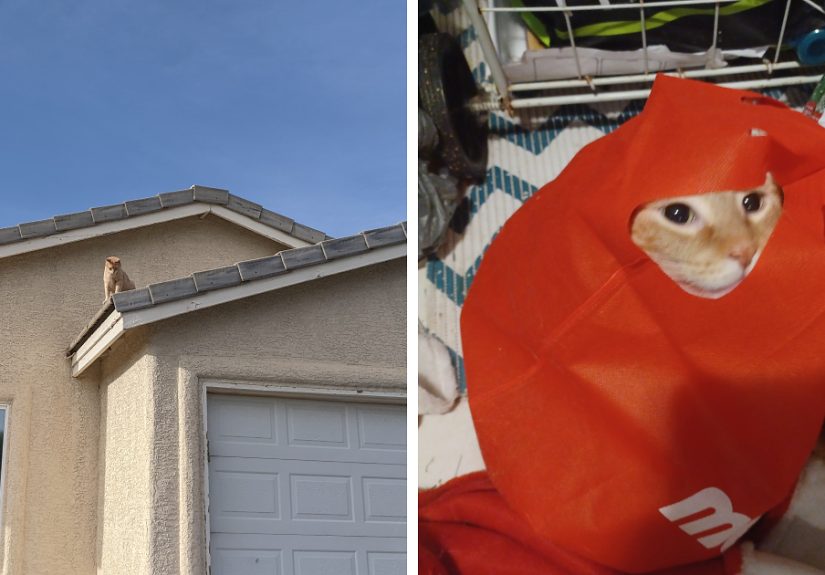
- On top of the fridge / cabinets: height = power. Also, humans can’t reach without making noises.
- Bathtub: cool, smooth, and strangely echo-y (perfect for dramatic sighs).
- Suitcases: “Oh, you’re leaving? Cute. Sit down. No you’re not.”
- Houseplants: not recommended, but extremely common in the “caught red-pawed” genre.
Why pets pick the weirdest places (it’s not just to roast you online)
Pets don’t choose odd locations to “be random.” Their choices usually make sense through an animal lenscomfort,
security, temperature, scent, and stress relief. The internet sees comedy. Your pet sees a five-star resort with
a questionable check-in policy.
1) Small spaces feel safer (especially for cats)
Many animalscats in particularare wired to appreciate spots where they can tuck in and observe. A tight space
can reduce exposure, limit surprises from behind, and offer a “hide-and-recharge” zone. This is why boxes, cubbies,
and covered beds become prime real estate. In shelters and stressful environments, giving cats a hiding place is
widely recommended because it can lower stress and help them cope.
2) Temperature is a big deal (warmth, coolness, and “just right”)
Your thermostat is set for human comfort. Your pet may disagree. Cats often seek warmer microclimates
(sunny windows, freshly used blankets, bathrooms after showers), while some pets also love cool surfaces like tile,
tubs, or sinksespecially in warmer weather. Dogs burrowing under covers can be about warmth, comfort, and that
cozy “den” feeling.
3) Your scent = comfort (dogs take this very seriously)
Dogs experience the world nose-first. Clothes, bedding, and frequently used spots can smell like their favorite
person (you) and feel emotionally grounding. That’s why the laundry pile can beat a perfectly nice dog bed, and why
your hoodie becomes a premium nesting sitedespite your strong belief that “this hoodie is not a pillow.”
4) Privacy and decompression (the “do not disturb” nap)
Sometimes the weird place is simply a quiet place. A tucked-away corner, a closet, or under a chair can be an
animal’s version of turning the phone on silent. This can be totally normalespecially in busy homes, during loud
events, or when a pet is new and still building confidence.
When “weird” is cute… and when it’s a clue
Most quirky sleeping spots are harmless. But a sudden changelike a social cat hiding all day, or a dog choosing
unusually tight spaces out of nowherecan signal stress, fear, or discomfort. Context matters:
- Normal: your cat naps in the sink sometimes, especially in warm weather.
- Worth watching: your pet hides more during parties, construction noise, or schedule changes.
- Time to call the vet: hiding plus appetite changes, litter box issues, limping, vomiting,
unusual aggression, or a general “something’s off” vibe.
The practical rule: if the behavior is new, intense, or paired with other symptoms,
don’t write it off as “just being weird.” Pets can’t type “I feel unwell” into the family group chat, so behavior
becomes their message.
Safety first: funny photos should never become scary stories
The internet loves a pet in a surprising spot, but some spots are risky. A few simple habits can keep your “Hey Pandas”
moment fun instead of frantic.
High-risk zones to check (especially with cats)
- Dryers and washing machines: always check before starting a load. Warm, dark spaces attract curiosity.
- Recliners and sofa beds: pets can crawl inside mechanisms. Look before you close or open anything.
- Cabinets with cleaners: lock them up; laundry/utility rooms often contain chemicals and tempting items.
- Stoves/ovens: never leave the oven door open; always check if your cat is a “warm appliance enthusiast.”
- Small trash cans and plastic bags: suffocation/ingestion risksespecially for curious puppies and kittens.
Also: don’t stage dangerous “cute” shots. If your pet naturally chooses a safe odd spot, great. If they don’t,
let’s not introduce them to the top of a wobbly bookshelf for the sake of engagement. Your pet doesn’t need fame.
They need functioning ankles.
How to capture “pets in weird places” photos like a Bored Panda pro
The best pet photos feel spontaneousbecause they are. Here’s how to get the shot without spooking your tiny model
off their weird little throne.
Quick photo tips that actually work
- Use natural light when possible. Flash can startle pets (and turn eyes into glowing orbs).
- Get low to their level for more personality and less “security camera footage” energy.
- Take burst shots to catch the blink-free, judgement-filled stare.
- Include context (the full sink, the entire suitcase, the suspiciously tiny box) for maximum comedic effect.
- Never force a pose. If your pet leaves, that’s the director yelling “cut.” Respect the artistry.
Caption ideas for “Hey Pandas” submissions
A good caption makes the photo feel like a tiny sitcom. Here are some plug-and-play lines you can tweak:
- “He ordered a bed online. The box arrived. He chose the box. Naturally.”
- “She’s not hiding. She’s in a private meeting.”
- “This is his laundry now. I live here too, apparently.”
- “The sink is occupied. Please use another sink. Thank you.”
- “We bought a cat tree. She chose the top of the fridge. It’s a lifestyle.”
- “If you need me, I’ll be negotiating with the suitcase.”
Weird-place inspiration: a mini gallery in words
To help you spot (and safely celebrate) your pet’s next bizarre hangout, here are a few common “genres” of weird-place
pet moments, with concrete examples:
The “perfectly curled” phenomenon
You’ll see this in bowls, baskets, hats, planters (please relocate them), and drawers. The pet becomes a living
cinnamon roll, and the object becomes “their bed” by force of confidence alone.
The “if I fits, I sits” contract
Boxes, shoebox lids, tiny containers, open cabinetscats especially will test the physics of fitting like they’re
conducting important research for NASA. Spoiler: the cat always wins.
The “human-scent nest” storyline
Dogs in your laundry, cats on your pillow, pets on your jacket the second you put it down. It’s equal parts comfort
seeking and a gentle reminder that personal space is a myth.
The “look at me, I’m furniture now” twist
Some pets pick spots that place them right where life happens: the bathroom doorway, the middle of the hallway,
the keyboard zone, the one chair you needed. It’s not random. It’s strategy.
Final thought: the weird places are part of the magic
The charm of “pets in the weirdest places” is that it’s pure, low-stakes joy. No filters required. Just an animal
doing something that makes absolutely no senseuntil you remember they’re chasing comfort, safety, scent, or the
perfect temperature pocket.
So if your pet is currently lounging in a sink, perched like a gargoyle on a cabinet, or wedged into a box that
used to hold a toaster… congratulations. You’ve been gifted a classic “Hey Pandas” moment. Snap the photo, keep it
safe, and let the internet collectively say: “Yep. That tracks.”
Experiences From the “Weird Places” Club (Extra ~)
Every pet household eventually joins the club. You don’t sign up. You just wake up one day and realize you’ve said
the sentence, “Why is the cat in the sink?” with the same calm tone you’d use for “The mail is here.”
One common experience: the laundry basket takeover. A dog who has access to plush beds, rugs, and a
whole couch will still choose the basket like it’s a luxury suite. The most hilarious part is the expression:
half bliss, half “I dared you to stop me.” Owners often report the same plot twistfresh laundry is less likely to
be folded because a sleepy pet is now “protecting it.” (Protecting it from what? From being neatly put away,
obviously.)
Then there’s the sink sleeper, a cat who treats porcelain like memory foam. People describe walking
into the bathroom at night and seeing two glowing eyes from the basin, like a tiny, judgmental lighthouse.
Sometimes the cat is there because it’s cool. Sometimes it’s there because the bathroom is quiet. Sometimes it’s
there because the sink is shaped like a perfect loaf-mold and your cat has strong opinions about loafing.
A favorite story genre is the suitcase protest. Someone opens their suitcase for a trip, turns
around for two seconds, and returns to find a pet installed inside like a carry-on accessory. Cats do it with a
calm “I live here now” energy. Dogs do it with full-body enthusiasm, rolling around like the suitcase is a
happiness trampoline. The message is clear: travel plans may proceed only after negotiations and snacks.
New pet owners often experience the closet phase. A recently adopted cat might disappear into a
closet corner or under a bed, especially in the first days or weeks. It can look oddlike the cat is “avoiding”
everyonebut it’s frequently a decompression tactic. Many people describe a gradual shift: first the cat watches
from a safe distance, then creeps out at night, then finally strolls into the living room like they’ve owned the
place since 1997. The weird place wasn’t rejection; it was a confidence-building headquarters.
And finally, the classic: the box that makes no sense. A cat ignores a roomy cat bed and chooses a
box that barely qualifies as a box anymoremaybe a shallow lid, maybe a ripped corner, maybe a container meant for
office supplies. They settle in with absolute certainty. Owners often describe laughing, taking a photo, posting it,
and receiving a hundred comments that basically say, “Yep. Cats.”
The best part of these experiences is how universal they are. Different homes, different pets, same delightful
confusion. Your pet’s weird place might be a sink, a basket, a drawer, a box, or a suitcase. But the vibe is always
identical: maximum comfort, zero explanation, and a face that says you’re the weird one for questioning it.