Table of Contents >> Show >> Hide
- What Heart Rate Measures (In Plain English)
- What Blood Pressure Measures (Also In Plain English)
- The Core Difference: Speed vs. Pressure
- Why Heart Rate and Blood Pressure Don’t Always Rise Together
- How Each One Is Measured (And How People Accidentally Mess It Up)
- What Heart Rate Can Tell You That Blood Pressure Can’t (And Vice Versa)
- Common Myths (Let’s Gently Toss These in the Trash)
- How They Interact in Real Life: Quick Scenarios
- When to Pay Extra Attention
- A Simple Tracking Plan That Won’t Make You Obsessed
- Bottom Line: Two Numbers, Two Stories
- Experiences People Commonly Have When Comparing Heart Rate and Blood Pressure (About )
Heart rate and blood pressure get lumped together like two socks that look like a pair but absolutely are not.
One is how fast your heart is beating. The other is how hard your blood is pushing on the walls of your arteries.
Both matter. Both change all day long. And both can confuse the heck out of youespecially when your smartwatch is
chirping and your blood pressure cuff is staring at you like it knows your secrets.
This guide breaks down the key differences between heart rate and blood pressure, why they don’t always move together,
what “normal” usually means, and how to track them without spiraling into a full-blown relationship status update with your
vital signs. (It’s complicated.)
What Heart Rate Measures (In Plain English)
Heart rate is the number of times your heart beats in one minute. It’s measured in
beats per minute (bpm). If you’ve ever checked your pulse at your wrist or neck, that’s heart rate.
What’s a “normal” heart rate?
For many adults at rest, a typical resting heart rate falls somewhere around 60–100 bpm.
Athletes and very fit people can be lower, and stress, illness, dehydration, and stimulants can push it higher.
The important part isn’t chasing a perfect numberit’s noticing what’s normal for you and what changes suddenly.
Why heart rate changes so easily
Heart rate responds quickly because it’s heavily controlled by your nervous systemespecially the balance between
“fight-or-flight” (sympathetic) and “rest-and-digest” (parasympathetic). That’s why your heart rate can jump when:
- You stand up fast
- You drink caffeine
- You’re anxious or excited
- You exercise
- You’re fighting off an infection
- You didn’t sleep (or you slept… poorly… again)
What Blood Pressure Measures (Also In Plain English)
Blood pressure is the force of blood pushing against the walls of your arteries as your heart pumps.
It’s measured in millimeters of mercury (mm Hg) and written as two numbers:
systolic/diastolic.
Systolic vs. diastolic: the two-number story
- Systolic (top number): pressure when the heart contracts and pushes blood out.
- Diastolic (bottom number): pressure when the heart relaxes between beats.
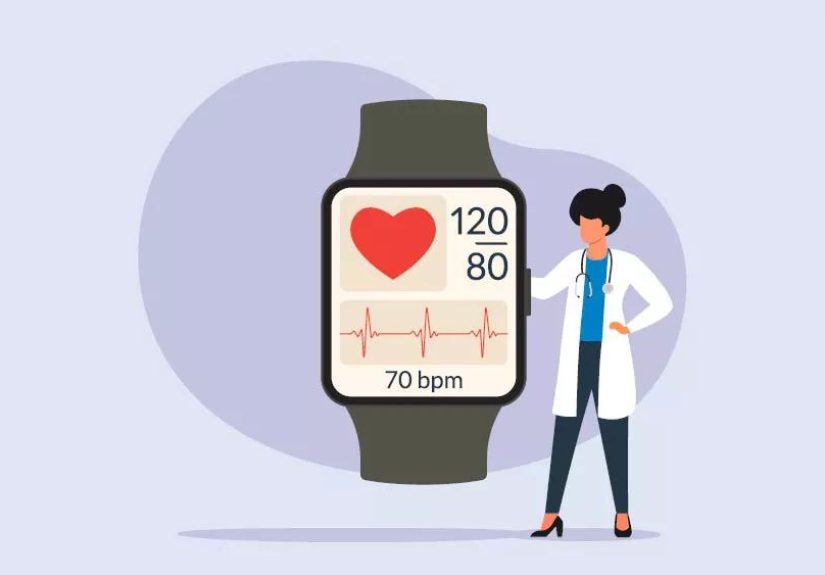
A reading like 120/80 means systolic is 120 and diastolic is 80.
Blood pressure is more about your blood vessels and overall circulation than “how hard your heart is working” in a moment.
What’s a “normal” blood pressure?
Many major U.S. health authorities describe normal blood pressure as being under 120/80 mm Hg.
High blood pressure (hypertension) is typically defined as readings that are consistently at or above 130/80.
(One random high reading after sprinting up the stairs because you were late doesn’t automatically mean you’re doomed.)
The Core Difference: Speed vs. Pressure
Here’s the simplest way to remember it:
- Heart rate = how fast the pump is beating (beats per minute).
- Blood pressure = how much force is in the plumbing (pressure in your arteries).
If your body were a city:
- Heart rate is how many delivery trucks leave the warehouse each minute.
- Blood pressure is how much pressure is in the roads and tunnels those trucks travel through.
You can have more trucks moving without a massive pressure spikebecause roads can widen (blood vessels can dilate).
And you can have high pressure with a totally normal truck schedulebecause the roads are narrow, stiff, or congested.
Why Heart Rate and Blood Pressure Don’t Always Rise Together
People assume: “If my heart beats faster, my blood pressure must go up.”
Sometimes that happens. Sometimes it doesn’t. The reason is that blood pressure depends on more than heart rate.
A helpful (not scary) formula
A common way to think about blood pressure is:
Blood Pressure ≈ Cardiac Output × Vascular Resistance
Cardiac output is how much blood your heart pumps per minute. Heart rate influences it, but so does
how much blood is pumped with each beat (stroke volume). Vascular resistance is how tight or relaxed your arteries are.
So even if heart rate increases, your blood vessels may relax enough that blood pressure doesn’t skyrocket.
Example: Exercise
During a brisk walk, your heart rate climbs to deliver more oxygen to your muscles. Meanwhile, your blood vessels in working muscles
dilate to improve flow. Result: heart rate rises a lot, blood pressure may rise modestly, and your body does exactly what it’s designed to do.
Example: Stress (a.k.a. the “email that ruins your afternoon”)
Stress hormones can raise heart rate and cause blood vessels to tighten. That combination can push blood pressure higher.
This is why a stressful day can inflate your readingsespecially if you’re taking blood pressure right after being emotionally ambushed by life.
Example: Dehydration
If you’re dehydrated, blood volume can drop. Blood pressure may fall, and your heart rate can increase to compensate.
Translation: higher pulse doesn’t always mean higher pressure.
How Each One Is Measured (And How People Accidentally Mess It Up)
How to measure heart rate
You can measure heart rate with:
- Your fingers on your pulse (wrist or neck)
- A smartwatch or fitness tracker
- Medical devices like pulse oximeters or ECG-based monitors
If you’re doing it manually, count beats for 30 seconds and multiply by 2. Do it a couple times for a more reliable number.
How to measure blood pressure (the right way)
Blood pressure is best measured with an upper-arm cuff that fits properly. Technique matters more than most people realize.
For more accurate at-home readings:
- Sit with back supported, feet flat, and legs uncrossed.
- Rest quietly for about 5 minutes before measuring.
- Keep your arm supported at heart level.
- Don’t talk during the measurement (yes, even if you want to narrate your anxiety).
- Take two readings about 1 minute apart and record both.
- Avoid nicotine, caffeine, alcohol, and exercise for a bit before measuring if you’re tracking baseline values.
The cuff size matters, too. A cuff that’s too small can read artificially high, and a cuff that’s too large can read artificially low.
If your numbers are surprising, “wrong cuff” is a very real plot twist.
What Heart Rate Can Tell You That Blood Pressure Can’t (And Vice Versa)
Heart rate is great for “right now” feedback
Heart rate is especially useful for understanding:
- Exercise intensity (are you truly working, or just aggressively existing?)
- Stress response and recovery
- Sleep and fatigue patterns
- How your body reacts to caffeine, dehydration, and illness
Blood pressure is better for long-term risk tracking
Blood pressure is a major marker for cardiovascular risk because it reflects ongoing strain on arteries and organs.
High blood pressure often has no symptoms, which is why it’s sometimes called a “silent” problem.
If you want to know whether your circulation is running at a healthy pressure over time, blood pressure gives you that information.
Common Myths (Let’s Gently Toss These in the Trash)
Myth 1: “If my heart rate is normal, my blood pressure must be fine.”
Nope. You can have a totally normal heart rate and still have high blood pressure. They measure different things.
Many people with hypertension feel fine and have no clue until a cuff tells on them.
Myth 2: “A fast heart rate automatically means high blood pressure.”
Also nope. Heart rate can rise while blood pressure stays steady, especially during healthy exercise.
And blood pressure can be high even when heart rate is calmthink stiff arteries, chronic stress, or genetics.
Myth 3: “One weird reading means something is terribly wrong.”
One reading is a snapshot, not the whole documentary. Posture, stress, timing, caffeine, hydration, pain, and technique all matter.
Patterns over days and weeks are much more meaningful than a single rogue number.
How They Interact in Real Life: Quick Scenarios
Scenario A: Coffee + deadlines
Your heart rate bumps up, you feel jittery, and your blood pressure may rise temporarilyespecially if you measure right after reading
a message that starts with “Per my last email…”
Scenario B: Cardio workout
Heart rate climbs significantly. Blood pressure may rise somewhat, but your blood vessels open up in active muscles.
After you cool down, both should trend back toward baseline.
Scenario C: You stand up quickly
Heart rate may jump briefly to maintain blood flow to your brain. Blood pressure can dip for a moment.
If you feel lightheaded often, that’s worth discussing with a clinician.
When to Pay Extra Attention
It’s smart to talk to a healthcare professional if you notice:
- Blood pressure readings that are consistently high (especially if you’re averaging at or above 130/80)
- A resting heart rate that is consistently unusual for you, especially with symptoms like dizziness, fainting, chest discomfort, or shortness of breath
- Big changes from your usual baseline without an obvious reason (like illness, new medication, or major lifestyle changes)
If you ever have severe symptoms (like chest pain, severe shortness of breath, sudden weakness, confusion, or trouble speaking),
seek urgent medical care right away. This article is educational, not medical advice.
A Simple Tracking Plan That Won’t Make You Obsessed
For heart rate
- Check resting heart rate at the same time of day (many people use mornings).
- Look for trends: is it creeping up over weeks? Is it higher when you’re stressed or sleeping poorly?
- Use it during exercise to learn effort levelsnot to “win” a number.
For blood pressure
- Measure at consistent times (often morning and evening for a few days if your clinician recommends tracking).
- Take two readings each time and write them down.
- Focus on averages, not one-off spikes.
Bottom Line: Two Numbers, Two Stories
Heart rate tells you how fast your heart is beating in the moment. Blood pressure tells you how much force your blood is pushing through
your arteries. They influence each other, but they’re not interchangeable, and they don’t always move in sync.
If you understand the difference, you can use both numbers as helpful informationnot as a daily mystery novel where every plot twist is “Is this bad?”
Experiences People Commonly Have When Comparing Heart Rate and Blood Pressure (About )
Once people start tracking heart rate and blood pressure, a funny thing happens: they realize their bodies are not machines with one “on” setting.
The first experience many folks describe is confusionbecause their heart rate “feels” like effort, while blood pressure feels like… nothing.
Someone might say, “My pulse is racing, so my blood pressure must be high,” then check and find a normal blood pressure reading. Or the reverse:
they feel totally fine, discover high blood pressure during a routine visit, and think the cuff is trolling them. (It isn’t. It’s just doing its job.)
Another common experience shows up with stress. People often notice their heart rate spikes in meetings, before presentations,
or even while scrolling upsetting news. A few will test blood pressure right afterward and get a higher-than-expected number.
Then they retest latercalmer, seated properly, after a few minutes of quietand the reading drops. The takeaway many learn is that
how and when you measure matters, and that “resting” is not the same as “sitting while mentally arguing with your inbox.”
Exercise creates one of the most reassuring real-world lessons. Beginners are often startled to see heart rate climb quickly during cardio.
They’ll describe it as, “My heart was poundingI thought something was wrong.” After learning that heart rate is supposed to increase with activity,
many people become more confident and start using heart rate as a training tool: easy days, moderate days, and “wow, I can’t sing during this” days.
In contrast, blood pressure isn’t usually something people monitor mid-workout at home. Instead, they notice longer-term effects: after weeks of
consistent walking, strength training, better sleep, and less sodium-heavy eating, their average blood pressure improves.
That’s a different kind of feedbackslower, quieter, but powerful.
Caffeine is another classic experience. People often report a noticeable heart rate bump after coffee or energy drinks, especially if they’re sensitive.
Some also see a temporary blood pressure rise. This leads to practical experiments like “no caffeine before my morning blood pressure check” or
“one cup instead of three.” The same happens with hydration: a day of not drinking enough water can make someone feel off and see a faster pulse,
while blood pressure might be lower than usual. Many learn to interpret these numbers as signals to adjust basics firstwater, rest, breathingbefore panicking.
Finally, people who track both often describe a calmer relationship with their health once they understand the difference.
Instead of treating every number as a verdict, they treat it as data. Heart rate becomes a window into stress, recovery, and fitness.
Blood pressure becomes a long-term check on artery health and cardiovascular strain. The most helpful experience is the moment it “clicks”:
two measurements, two storiesand you get better decisions when you read the right story from the right number.