Table of Contents >> Show >> Hide
- The Viral “Vengeance Meow” That Gave Every Tired Cat Parent a Tiny Spark of Hope
- Why Cats Think 4 AM Is a Perfect Time for Customer Service
- “Revenge” Ideas That Are Funny, Safe, and Don’t Damage Trust
- How to Stop Your Cat From Waking You at 4 AM (Without Starting a Feud)
- A Quick Troubleshooting Checklist (Because 4 AM You Is Not Built for Strategy)
- Extra : Real-World “4 AM Cat War” Experiences (and What Usually Works)
- Conclusion
If you’ve never been jolted awake at 4:00 a.m. by a furry roommate who doesn’t pay rent, congratulations on your peaceful, cat-free existence. For the rest of us, the “4 a.m. wake-up call” is practically a rite of passageright up there with stepping on a hairball barefoot and finding a single wet food “crumb” on your pillow like it’s a threat.
One sleep-deprived guy decided he’d had enough. Instead of silently suffering (or dramatically Googling “can I legally divorce my cat?”), he delivered a harmless, comedic payback that made the internet collectively whisper, “Honestly? Respect.” But beneath the laughs is a real question: why do cats do thisand how do you stop it without becoming the villain in your cat’s origin story?
The Viral “Vengeance Meow” That Gave Every Tired Cat Parent a Tiny Spark of Hope
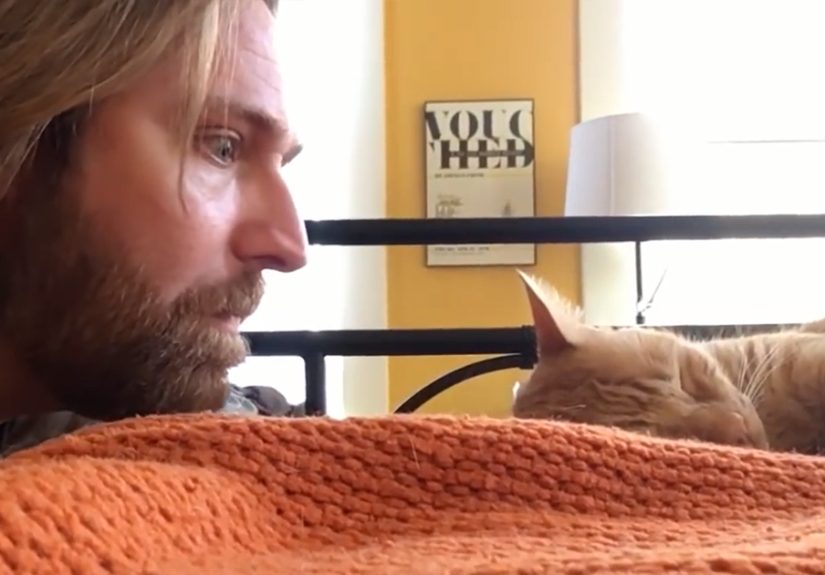
The most famous example of “revenge” comes from a viral moment featuring an Atlanta-based writer and a very orange cat named Italics. According to coverage of the video, the cat’s nighttime meowing had been waking him up repeatedly, so the human tried a taste-of-your-own-medicine move: he got close to the sleeping cat and let out a long, dramatic “MEOW,” then asked (with the seriousness of a courtroom prosecutor), “Were you sleeping?” followed by a stern, “Don’t meow in the middle of the night.” It’s petty, it’s theatrical, andcruciallyit’s not harmful.
What made the clip so relatable wasn’t the “gotcha.” It was the universal dynamic: cats are excellent at training humans. You think you’re in charge because you buy the kibble. Your cat thinks they’re in charge because you jump out of bed like a firefighter every time they make a noise.
The internet response ranged from laughter to “Sir, you have provoked a tiny tiger.” And honestly, both can be true. The real takeaway is that funny payback gets clicks, but changing the pattern gets sleep.
Why Cats Think 4 AM Is a Perfect Time for Customer Service
1) Cats are “crepuscular,” not nocturnal
Many people assume cats are nocturnal, but a lot of domestic cats are actually crepuscularmost naturally active around dawn and dusk. In the wild, that timing lines up with prey movement. In your house, that timing lines up with you whispering, “Please… I have a meeting tomorrow.” When your cat gets a burst of energy at dawn, they aren’t being evil; they’re being a tiny, fluffy evolutionary throwback.
2) Breakfast has accidentally become your cat’s favorite button to push
If your cat wakes you up and you immediately feed them, you’ve created a simple rule in your cat’s mind: Noise → Human stands up → Food appears. That’s not “spite.” That’s cause and effect. Animal welfare groups and vets frequently point out that rewarding the behavior (even unintentionally) makes it more likely to continueand creep earlier.
Translation: the moment you feed the 4 a.m. alarm clock, you just bought the deluxe subscription plan. Tomorrow’s wake-up might be 3:50. Then 3:35. Then your cat will start experimenting with time travel.
3) Boredom and pent-up energy are loud
Indoor cats sleep a lot, but they also need stimulation and structured activity. If a cat snoozes all day because the environment is dull, those natural “hunt/play” urges don’t magically vanishthey pop up when the house gets quiet. That often means the middle of the night or early morning. And if your cat has learned that waking you up leads to play, cuddles, yelling (yes, even yelling), or movement, they’ll keep doing it.
4) Sometimes it’s a health issue, not a behavior issue
A sudden change in sleep/wake patternsespecially in older catscan signal medical problems. Veterinary references link night waking and increased activity/vocalization with conditions such as hyperthyroidism, pain, sensory or cognitive changes, and other medical issues. If your cat’s early-morning chaos is new, intense, or paired with weight loss, increased appetite, litter box changes, confusion, or yowling that seems unusual, a vet visit is the responsible first step.
“Revenge” Ideas That Are Funny, Safe, and Don’t Damage Trust
Let’s define “revenge” like mature adults: harmless comedy that doesn’t scare, hurt, or punish your cat. Animal behavior guidance strongly discourages punitive methods (yelling, spraying, physical punishment), because it can increase fear and aggression and damage the human-animal bond. So if your “revenge plan” involves stress or pain, that’s not revengethat’s just being mean.
Harmless, comedic payback (a.k.a. “I’m joking, please don’t call my cat’s lawyer”)
- The 4 p.m. “Were you sleeping?” gag: A one-time, gentle joke (quiet voice, no startling) can be funny for humans. The goal is humor, not training.
- Move the “breakfast button”: The best “revenge” is taking away the reward. If waking you no longer produces food, the behavior loses power.
- Outsmart the schedule: Use tools (like timed feeders) so your cat learns breakfast comes from a machine, not your face.
- Give them a better job: A puzzle feeder at night or early morning turns “wake human” into “work for snacks,” which is more dignified for everyone involved.
Real talk: the funniest revenge is the kind that ends with you sleeping in and your cat staring at an automatic feeder like it’s a sacred vending machine.
How to Stop Your Cat From Waking You at 4 AM (Without Starting a Feud)
Step 1: Detach breakfast from your existence
If food is the trigger, stop making “human wakes up” the signal for breakfast. Many behavior resources recommend feeding at set times and avoiding feeding in response to demanding meows. A timed automatic feeder can help because it shifts the association away from you.
- Use a timed feeder for the danger zone: Set it to dispense a small portion around the time your cat usually starts the wake-up routine.
- Then slide the time later: Adjust the feeder schedule gradually so your cat’s “expectation window” moves closer to your real wake-up time.
- Don’t “pay” the meowing: If the cat screams and you feed them immediately, you’ve reinforced the screaming.
Step 2: Run the “hunt, eat, groom, sleep” routine at night
Cats are wired for short bursts of activity followed by eating and resting. A solid evening routine can reduce dawn chaos: play hard (interactive wand toys are great), then serve a meal or a satisfying snack, then let the house wind down. The goal is to make bedtime feel like the end of a successful “day” for your catnot the start of a nightclub.
Step 3: Increase daytime enrichment so your cat doesn’t nap through life
If your cat sleeps all day, they’ll be awake when you aren’t. The fix isn’t to “argue” at 4 a.m.; it’s to build a more stimulating day. Ideas that often help include puzzle feeders, hiding kibble so your cat can “hunt,” window perches for watching outdoor activity, rotating toys, and scheduled play sessions.
Step 4: Pick a boundary and enforce it consistently
If the behavior is attention-seeking, consistency is everything. “Sometimes it works” is the most powerful training schedule on earth. If you ignore the behavior for a week, then give in one morning, you’ve taught your cat to try harder next time.
- If you can: ignore the wake-up attempts completelyno talking, petting, arguing, bargaining, or negotiating.
- If you can’t: consider sleeping with a closed door and providing a cozy setup outside the bedroom (bed, water, enrichment).
- Reward what you want: calm, quiet behavior gets attention and playat the right time.
Step 5: Rule out medical issues when the pattern changes
Night waking can be behavioral, but it can also be medical. If your cat suddenly becomes restless at night, vocalizes more than usual, seems ravenously hungry, loses weight, appears confused, or shows pain signs, get veterinary guidance. Conditions like hyperthyroidism are common in mature and senior cats and can include hyperactivity and vocalization, among other signs.
A Quick Troubleshooting Checklist (Because 4 AM You Is Not Built for Strategy)
- Is this new? If yes, consider a vet check before assuming it’s “just attitude.”
- Is it food-driven? If your cat marches you to the kitchen, switch to timed feeding and stop “paying” the meows.
- Is it play-driven? Add evening interactive play + enrichment and keep toys rotating.
- Is your cat young? Young cats often have more energy; increase structured play and stimulation.
- Is your cat older? Watch for confusion, yowling, or changes that could signal discomfort or cognitive changes.
- Are you inconsistent? Even one “fine, here’s breakfast” can reset the whole training plan.
Extra : Real-World “4 AM Cat War” Experiences (and What Usually Works)
Ask a room full of cat owners about early-morning wake-ups, and you’ll get stories that sound like tiny domestic thrillers: the paw on the face, the delicate “mrrp” that escalates into full opera, the strategic knocking of a single object off a dresseralways the loudest object, always the one you forgot existed until it hit the floor.
A common pattern is the “accidental training loop.” Someone feeds the cat right after waking up because it’s the fastest way to restore peace. The cat learns the shortcut. Within weeks, the wake-up creeps earliernot because the cat hates you, but because the cat loves efficiency. Owners who break this loop usually report the same turning point: they stop making their body the breakfast dispenser. Timed feeders help, but so does changing the morning script: get up, do one or two non-food tasks (bathroom, coffee, shower), and only then feed. That small delay can weaken the association between “human eyes open” and “food appears now.”
Another pattern is the bored indoor cat with a packed daytime nap schedule and zero hobbies. When these cats get more structured play (especially interactive play in the evening), the wake-ups often improve. Many owners describe success when they treat play like a real appointment: 10–15 minutes of focused “hunt” play before bed, followed by a meal or snack. The cat’s body gets the memo: big effort, big reward, then sleep. If you skip the play and just toss a toy on the floor, some cats will treat it like a decorative suggestion.
Multi-cat households add a twist: one cat may be quiet, while the other becomes the spokesperson for the entire feline union. People often find that adding enrichment stations (multiple scratchers, multiple perches, multiple puzzle feeders) reduces conflict and nighttime drama. If the early wake-ups are paired with chasing, ambushing, or tension around the litter box, adding a second (or third) box and spacing resources out can make the home feel calmer at night.
Then there’s the “senior surprise.” Owners sometimes report that an older, previously calm cat suddenly starts pacing or vocalizing at night. In those situations, the best “tip” isn’t a feederit’s a vet visit. Pain, thyroid issues, sensory changes, or cognitive changes can turn nighttime into a confusing, uncomfortable experience for a cat. When underlying issues are treated or managed, sleep often improves for everyone.
And yessome people try the comedic “revenge” approach: a gentle, silly “meow back,” a daytime wake-up joke, a dramatic speech about boundaries. The consistent punchline is that cats are rarely impressed. The real win comes from routine, enrichment, and not rewarding the 4 a.m. performance. In other words: you don’t out-petty a cat. You out-schedule them.
Conclusion
The viral “revenge on the 4 a.m. cat” moment is funny because it’s familiar: cats can be adorable, chaotic little alarm clocks. But the path to real peace isn’t paybackit’s behavior basics. If you want your mornings back, detach food from your wake-up, add meaningful play and enrichment, set consistent boundaries, and rule out medical issues when patterns change. Do that, and you can keep the cat… and keep your sleep.