Table of Contents >> Show >> Hide
- What Is a Georgian Era Bridge Kitchen Faucet with Sidespray?
- Why This Faucet Style Stands Out
- Design Details That Matter in a Real Kitchen
- Where the Georgian Era Bridge Kitchen Faucet Works Best
- Installation and Fit Checklist
- Pros and Cons
- Care and Maintenance Tips
- Is It Worth It?
- Experiences Related to the Georgian Era Bridge Kitchen Faucet with Sidespray
- Final Thoughts
Some kitchen fixtures are content to do their job quietly. The Georgian Era Bridge Kitchen Faucet with Sidespray is not one of them. This is the kind of faucet that walks into a kitchen and immediately becomes part plumbing fixture, part jewelry, part conversation starter. If your design taste leans toward timeless over trendy, tailored over flashy, and “yes, I would like my sink area to look expensive” over “whatever was on sale,” this style of faucet deserves a close look.
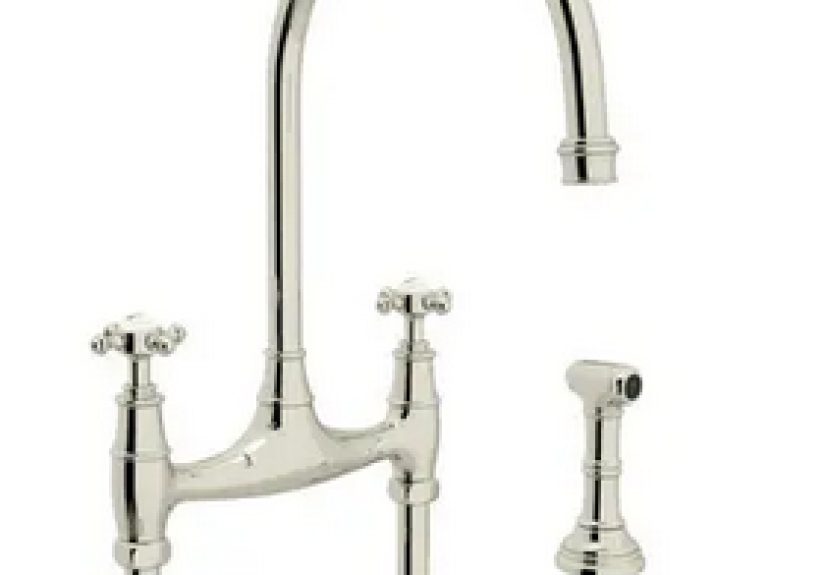
At its core, a Georgian Era bridge faucet brings together old-world character and modern kitchen practicality. It features the classic bridge silhouette, a high arched spout, separate hot and cold handles, and a matching sidespray for rinsing dishes, sink corners, and produce without turning cleanup into a full-contact sport. In other words, it gives you period-inspired beauty without asking you to wash lettuce like it is still 1783.
This article breaks down what makes the Georgian Era Bridge Kitchen Faucet with Sidespray special, where it works best, what to know before installation, and whether it is really worth the premium price tag. Spoiler: this is not a budget faucet. It is a statement faucet. Thankfully, it also knows how to work.
What Is a Georgian Era Bridge Kitchen Faucet with Sidespray?
The phrase sounds a little formal, but the concept is easy to understand. A bridge faucet is a two-handle faucet in which the hot and cold water lines visibly connect to the center spout through a horizontal “bridge.” That exposed connection is what gives bridge faucets their distinctive architectural look. Unlike ultra-minimal single-hole models, bridge faucets proudly show their structure, which is exactly why designers and homeowners choose them.
In the Georgian Era version, the styling leans traditional and refined. You get elegant proportions, a tall C-shaped gooseneck spout, and handle designs that feel rooted in classical English design. Depending on the model, the faucet may come with lever handles or cross handles, which lets you tune the look from slightly softer and more tailored to more overtly historic.
The sidespray is the practical sidekick. Mounted beside the main faucet, it gives you extra reach where a fixed spout cannot. That matters more than many people expect. A sidespray helps rinse a deep basin, blast away bits of onion trying to begin a new life in the corner of the sink, and wash oversized cookware without the awkward dish-angle gymnastics most of us pretend are normal.
Why This Faucet Style Stands Out
1. It delivers a truly timeless silhouette
Trendy faucets often age like trendy haircuts: exciting for a while, then suddenly a little too specific to the year they were chosen. A Georgian-inspired bridge faucet tends to age better because its appeal comes from proportion, symmetry, and traditional detailing rather than novelty. It feels at home in classic kitchens, but it can also add character to transitional spaces that would otherwise look a little too polished and a little too predictable.
2. The sidespray adds real utility
A beautiful faucet that is annoying to use is just an expensive lesson. The sidespray keeps this style grounded in everyday function. It is especially useful in kitchens with large farmhouse sinks, workstation sinks, or deep basins where a fixed stream alone does not reach every area comfortably. For busy cooks, the sidespray is not a decorative extra. It is the cleanup secret weapon.
3. It suits both period and updated kitchens
One of the smartest things about the Georgian Era Bridge Kitchen Faucet with Sidespray is that it can flex stylistically. In a traditional kitchen with inset cabinetry, marble counters, and unlacquered brass hardware, it looks perfectly at home. In a more updated kitchen with shaker cabinets and mixed metals, it can act as the piece that softens the room and gives it soul. Think of it as the fixture version of a blazer: always polished, rarely out of place.
4. It offers finish options that change the mood of the room
Finish matters. A lot. Polished chrome feels crisp and classic. Polished nickel looks warm and tailored. Satin nickel is a little quieter and more forgiving in busy family kitchens. English bronze adds depth and old-world richness. Unlacquered brass is for those who appreciate a living finish that develops patina over time. If you want your kitchen to look collected rather than catalog-perfect, that last option can be especially appealing.
Design Details That Matter in a Real Kitchen
The magic of this faucet is not only in the overall style, but in the proportions. A high arc spout creates visual drama and also gives better clearance for stockpots, flower vases, sheet pans, and other awkward kitchen objects that refuse to fit under lower faucets. The separate hot and cold handles give a more classic user experience and a more intentional look at the sink. Some homeowners genuinely prefer that tactile two-handle control because it feels precise and substantial.
On top of that, the bridge design itself creates presence. This is not a faucet that disappears into the backsplash. It anchors the sink wall or island. In many kitchens, especially those with farmhouse or apron-front sinks, that is exactly the point. The faucet becomes part of the composition, almost like a piece of hardware chosen with the same care as cabinet knobs, pendant lights, and range trim.
There is also the matter of craftsmanship. Luxury bridge faucets are often chosen not just for appearance, but because buyers expect better materials, smoother operation, and longer-lasting performance. That is one reason this category remains popular in high-end kitchen renovations. When someone chooses a faucet like this, they are usually not asking, “Will it turn water on?” They are asking, “Will it still feel beautiful and substantial five or ten years from now?”
Where the Georgian Era Bridge Kitchen Faucet Works Best
This faucet is especially strong in kitchens that want warmth, detail, and a sense of permanence. Here are a few examples:
- Traditional kitchens: Perfect with paneled cabinetry, natural stone, decorative millwork, and classic hardware.
- English cottage or country kitchens: A natural match for fireclay sinks, mixed woods, and layered finishes.
- French-inspired spaces: The bridge form and elegant spout pair beautifully with marble, limestone tones, and warm metals.
- Transitional kitchens: Use it as the character piece in a room with simpler cabinets and cleaner lines.
- Statement sink zones: Ideal on a kitchen island or under a window where the faucet can be fully appreciated.
It is a less natural fit in aggressively modern kitchens built around sharp geometry, flat slabs, and industrial minimalism. Could it work there? Sure, if you want contrast. But in most cases, a bridge faucet shines brightest when the room already values texture, craftsmanship, and a little historic charm.
Installation and Fit Checklist
Before falling in love with any faucet, make sure it actually fits your sink setup. Romance is nice. Hole spacing is nicer.
A Georgian Era Bridge Kitchen Faucet with Sidespray is typically a deck-mounted design that requires multiple holes: two for the hot and cold supports, and one for the sidespray. Because bridge faucets have visible structure and a wider footprint than many single-hole faucets, they need enough room behind the sink and enough visual breathing room around them.
This style is best suited to homeowners who are either selecting fixtures during a full kitchen project or replacing an existing multi-hole faucet with a similar layout. If you are switching from a compact single-hole faucet, installation may require deck modifications, a sink change, or a base plate solution. Translation: measure first, fantasize second.
It is also worth thinking about spout reach and height. A generous reach helps center the water stream in the sink basin, while a taller spout makes everyday washing easier. But if you have upper cabinets, a shelf, or a low window trim nearby, always check clearance carefully. A faucet this pretty deserves a proper stage, not a cramped corner.
Pros and Cons
Pros
- Timeless bridge design with strong visual character
- Matching sidespray improves cleaning flexibility
- Excellent choice for traditional, transitional, and luxury kitchens
- High-arc spout is practical for larger cookware
- Available in finishes that range from crisp to warmly patinated
- Often perceived as higher-end and more architectural than standard faucets
Cons
- Premium price point
- Requires the right sink-hole configuration
- Traditional look may not suit every kitchen style
- Some finishes, especially living finishes, require more thoughtful care
- Two-handle operation is not as quick as a single-lever faucet for some users
Care and Maintenance Tips
If you invest in a faucet like this, take care of it like it is more than just a water on-off machine. Good maintenance is simple: wipe it down regularly with a soft cloth, avoid abrasive cleaners, and keep hard water spots from settling in and throwing a permanent mineral-themed house party.
For most premium faucet finishes, mild soap and water are the safe everyday choice. If mineral spots build up, a gentle vinegar-and-water approach is often recommended by manufacturers, but never let acidic solutions sit on the finish. Pat dry instead of scrubbing. The goal is to preserve the finish, not challenge it to a duel.
If you choose unlacquered brass, expect change over time. That is not damage. That is the appeal. A living finish darkens, softens, and develops patina with use, air, water, and touch. Some homeowners love that collected-over-time character. Others panic the first time the faucet stops looking like a trumpet in a showroom. Know which person you are before ordering.
Is It Worth It?
For the right kitchen, yes. The Georgian Era Bridge Kitchen Faucet with Sidespray is worth it for buyers who care about long-term style, tactile quality, and a sink area that feels intentionally designed. It is not the faucet for someone who wants the cheapest functional option or the most invisible fixture possible. It is for the homeowner who notices the shape of a spout, the warmth of a finish, the usefulness of a sidespray, and the way one well-chosen fixture can elevate an entire room.
It also makes sense for renovation projects where the sink zone is being treated as a focal point. In that context, the faucet earns its keep. It contributes both visually and practically, which is more than can be said for a lot of decorative upgrades that merely sit there looking expensive.
Experiences Related to the Georgian Era Bridge Kitchen Faucet with Sidespray
Living with a Georgian Era Bridge Kitchen Faucet with Sidespray feels different from living with a generic faucet, and not just because it looks better in photos. The experience starts visually. People tend to notice it almost immediately, especially in kitchens where the sink wall or island is visible from the entry. It has a composed, furniture-like presence. Instead of fading into the background, it helps define the personality of the room. That sounds dramatic for a faucet, but some fixtures really do have main-character energy.
In daily use, the high arched spout is one of the most appreciated features. Filling tall pots is easier. Rinsing bulky roasting pans feels less awkward. Washing a vase does not require turning it sideways like you are solving a puzzle. The extra clearance changes how the sink feels to use, especially for people who cook often or do a lot of cleanup by hand.
The two-handle setup creates a more deliberate routine. Some people prefer the speed of a single lever, but others genuinely enjoy the feel of separate hot and cold controls. It adds a sense of precision and old-school quality. The motion can feel smoother and more ceremonial in the best way, like making tea with a proper kettle instead of microwaving water in a mug and pretending that is the same thing.
The sidespray becomes more useful the longer the faucet is in the kitchen. At first, it may seem like a bonus feature. Then it quietly becomes the thing you reach for all the time. It helps rinse the sink after meal prep, wash grit from vegetables, clean around drain baskets, and direct water exactly where you need it. In family kitchens, that targeted spray can make cleanup quicker and less messy. In entertaining kitchens, it helps the sink recover after a dinner party that may have gotten a little too enthusiastic with the cookware.
Finish experience matters, too. Polished finishes tend to feel dressier and brighter, while satin finishes are a little more relaxed. Unlacquered brass changes the experience most of all because it evolves. The faucet does not stay frozen in time. It deepens in color, develops variation, and starts to look more integrated into the kitchen. For homeowners who love warmth and patina, that transformation is satisfying. For perfectionists who want every inch to look untouched forever, it can feel like owning a very elegant reminder that life happens.
There is also a long-term emotional side to a faucet like this. Because it is substantial and visually memorable, it often becomes one of the details homeowners mention most when talking about their kitchen. Cabinets matter. Countertops matter. But a well-chosen faucet is the piece you touch every day. That creates a relationship with the object that is more immediate than many other finishes in the room. When the faucet looks good, feels good, and works well, the whole sink area seems more enjoyable to use.
So the experience of this faucet is not only about water flow or style points. It is about how a practical object can make a kitchen feel more intentional, more personal, and frankly more grown-up. It turns routine tasks into slightly better rituals, which is a pretty impressive achievement for something whose basic job is, technically speaking, just being wet in the correct direction.
Final Thoughts
The Georgian Era Bridge Kitchen Faucet with Sidespray succeeds because it does not force you to choose between beauty and usefulness. It gives you both. You get the sculptural charm of a traditional bridge faucet, the convenience of a sidespray, and the kind of elevated presence that can transform an ordinary sink area into a standout design moment.
For homeowners building a kitchen with character, warmth, and longevity, this faucet is a smart splurge. It is elegant without being delicate, practical without being plain, and classic without feeling stale. In a world full of forgettable fixtures, that is no small accomplishment.