Table of Contents >> Show >> Hide
- What a Scratch Awl Actually Does (Besides Looking Suspiciously Like a Tiny Spear)
- Meet the General Tools #818: The Quick Specs
- Design Breakdown: Why This Awl Feels “Right” in the Hand
- Best Use Cases for the General Tools 818
- How to Use the 818 Like a Pro
- Sharpening and Maintenance: Keep It Snappy
- Safety and Common Mistakes
- How the 818 Compares to Similar Tools
- Who Should Buy the General Tools 818?
- Real-World Shop Experiences (500+ Words of Practical, Been-There Scenarios)
- Conclusion
Some tools are loud about how important they are. Big motors, bright colors, lots of marketing adjectives.
And then there’s the scratch awl: a quiet little spike with a wooden handle that shows up, does the job,
and somehow makes your work look like you actually planned it.
The General Tools 818 Hardwood Handle Scratch Awl is one of those “always within reach” shop tools.
It’s built for classic layout workscribing lines, marking points, starting screw holesand it does it with a
simple, durable design that feels at home in a toolbox, an apron pocket, or stuck point-down in a scrap block
like a tiny wooden-handled flag of productivity.
What a Scratch Awl Actually Does (Besides Looking Suspiciously Like a Tiny Spear)
A scratch awl is a marking tool. Instead of drawing a line with graphite that can smudge, it scribes a line:
a shallow groove you can feel with a fingernail and follow with a chisel, saw, or drill bit. That groove can be
the difference between “close enough” and “how did you get that fit so clean?”
It’s also a great “starter” tool for small holesespecially for screws or hardware where you want the fastener
to land exactly where you marked it. And because it’s essentially a strong, fine point, it’s handy for piercing
softer materials (think thin leather, cardboard, plastic film, even drywall paper) when you need a clean,
controlled puncture rather than a ragged tear.
Meet the General Tools #818: The Quick Specs
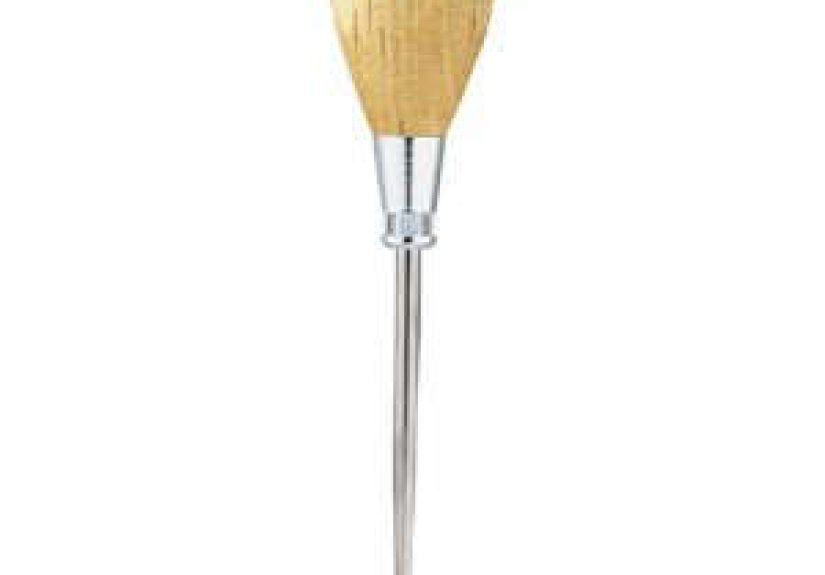
The General Tools 818 is a traditional scratch awl with a hardwood handle and an alloy steel blade that runs
through the handle, anchored with a plated steel ferrule and cap. In plain English: it’s meant to feel solid,
not wobbly, and it’s designed to survive being used like a real shop tool.
Specifications at a glance
- Blade length: 2-3/4 inches
- Overall length: 6-1/2 inches
- Handle: Contoured, fluted hardwood for grip
- Blade: Alloy steel running through the handle
- Hardware: Plated steel ferrule and cap
That size is a sweet spot: long enough to guide precisely, short enough to control. You won’t feel like you’re
steering a pool cue, but you’ll still have leverage for crisp marks.
Design Breakdown: Why This Awl Feels “Right” in the Hand
A fluted hardwood handle that behaves when your hands don’t
The 818’s handle is contoured and flutedmeaning it has shallow grooves that improve grip. That matters more
than people think, because layout work is about subtle pressure and steady control. A slick handle turns
“precision marking” into “surprise abstract art.”
Hardwood also tends to feel warmer and less fatiguing than all-metal handles during longer sessions. It’s the
difference between “I’ll make a few marks” and “I’ll lay out the entire project and still have patience left.”
A blade that runs through the handle (aka: fewer regrets)
One of the most meaningful build details is that the alloy steel blade runs through the handle and is secured
to both ends with steel hardware. In real-world terms, that helps the tool resist loosening, twisting, or
pulling free when you apply pressureespecially when you’re starting holes or working in tougher stock.
Best Use Cases for the General Tools 818
1) Woodworking layout: the “make it land on the line” tool
For woodworking, the scratch awl shines in layout workmarking joinery, transferring measurements, and creating
reference points that don’t smear away the second you brush them with your sleeve. It’s especially useful when
you’re marking with the grain, where a pencil line can get fuzzy and a knife can sometimes be awkward.
A practical example: you’re laying out hinge screw locations on a cabinet door. Pencil dots can drift under
pressure, and drilling “near” your dot is how hinges become “interpretive.” An awl mark gives a physical seat
for the drill bit to find center.
2) Starting screw holes without splitting wood
When a screw absolutely must start exactly on your mark, the awl helps you create a tiny pilot point that
guides the screw tip. This can be especially helpful on small hardware screws, hinges, and light-duty trim
work, where one slip turns a tidy install into a new hobby: filling and repainting.
The key is to treat the awl as a starter, not a full pilot-hole replacement for bigger fasteners. For larger
screws or hardwoods, you’ll still want a drill bit pilot hole. Think of the awl as the bouncer at the door:
it keeps the fastener from wandering into the wrong club.
3) Scribing on metal, plastic, and laminates
Need to mark a cut line on a surface where pencil won’t show? A scratch awl can score a fine line on many
materials. On sheet goods, it can mark cleanly without tearing fibers the way a dull pencil point can.
On plastics and laminates, it can leave a visible hairline you can follow slowly and confidently.
For heavier metal drilling, a dedicated center punch is often better because it creates a deeper dimple for
the bit. But for light scribing, fit-up lines, and “I just need a precise mark,” an awl is a fast, simple option.
4) Leather, craft, and pattern work
Scratch awls are common in leather and craft work for tracing patterns and marking stitch lines before punching.
A fine point helps you transfer detail cleanly without leaving messy residue. If you’re doing hobby leatherwork
or craft layout, the 818’s size is comfortable for controlled, short strokes.
5) The sneaky household jobs
A scratch awl is one of those tools that quietly earns its keep outside the workshop. Marking drywall for small
anchors, picking out a clogged glue tip, aligning holes, popping out a stubborn staplenone of these are
glamorous, but all of them are satisfying. Also: it’s fantastic at finding the exact center of a pre-drilled
hole when your eyes are tired and your overhead light is doing its worst.
How to Use the 818 Like a Pro
Scribing a straight line
- Set a straightedge or ruler where you want the line.
- Angle the awl slightly and draw the tip along the edge with steady pressure.
- Make a light pass first, then deepen with a second pass if needed.
This “two-pass” approach keeps the tool from jumping and helps you land a cleaner line. It’s the difference
between “precise groove” and “tiny accidental canyon.”
Marking a drill point for hardware
- Place the tip exactly on your mark (take the extra secondfuture you will thank you).
- Press straight down to create a small dimple.
- Let your drill bit find that dimple naturally before you start drilling.
Starting a screw hole
For small screws, you can create a starter point by pressing and slightly twisting the awl. Use controlled
pressurethis is layout work, not a medieval tournament. If the wood is very hard or the screw is larger,
follow up with a proper pilot hole.
Sharpening and Maintenance: Keep It Snappy
A scratch awl works best with a clean, sharp point. Over time, tips can dull, roll, or pick up tiny burrs,
especially if the tool gets used for tasks it didn’t sign up for.
Quick maintenance tips
- Touch up the tip with a fine stone or sandpaper, rotating the awl to keep the point symmetrical.
- Avoid needle-thin sharpening if you plan to start holes; too thin can bend more easily.
- Wipe the blade after use; a light oil helps prevent rust in humid shops.
- Don’t toss it point-first into a toolbox with other metal tools unless you enjoy surprise dents and dulled tips.
Safety and Common Mistakes
Yes, it’s a small tool. No, that doesn’t mean it can’t cause big problems if you use it carelessly. The safest
habit is simple: push and scribe away from your hand, keep your off-hand out of the travel path,
and store the point protected (even a cork or a scrap of rubber tubing works).
Also worth noting: the manufacturer includes a California Proposition 65 warning for chemical exposure
(including nickel, metallic). If you’re sensitive to metals or you work in regulated environments, it’s smart to
follow your usual PPE and hygiene habitswash hands after use and avoid touching your face in the shop.
How the 818 Compares to Similar Tools
Scratch awl vs. brad awl (piercing awl)
A scratch awl is primarily for layout and scribing. A brad/piercing awl is designed more for
making holes. The 818 leans toward marking and starter holesgreat for layout, solid for light piercing,
but not trying to replace a dedicated brad awl for larger holes.
Scratch awl vs. marking knife
Marking knives are excellent for crisp, clean linesespecially across the grainbecause they slice fibers cleanly.
But a scratch awl can be faster for certain layout tasks, easier for point marking, and less fussy when you’re
transferring measurements. Many woodworkers keep both: the knife for ultimate precision and the awl for speed and
versatility.
Scratch awl vs. center punch
If you drill metal often, a center punch makes a deeper dimple that helps prevent bit wander. The scratch awl is
better for scribing lines and light marks on a variety of materials. In a mixed-material shop, they’re a great duo:
the awl lays out the “where,” the punch commits to the “here.”
Who Should Buy the General Tools 818?
- Woodworkers who want a reliable marking tool for layout, joinery, and hardware placement.
- DIYers who need a simple, durable tool for starting screw holes and making precise marks.
- Leather and craft hobbyists who want controlled pattern tracing and marking.
- Anyone who’s tired of “close enough” holes that somehow never line up with the hinge.
The 818 isn’t flashy. It won’t beep, connect to Wi-Fi, or explain your mistakes in an app. But it will help you
make cleaner marks, start hardware more accurately, and build projects that look like they were made on purpose.
Real-World Shop Experiences (500+ Words of Practical, Been-There Scenarios)
In a small cabinet shop, the scratch awl tends to become the “before you drill anything” tool. When hinge plates
or drawer-slide brackets need to land perfectly, workers often mark the screw locations with an awl first, even if
they’ll still drill pilot holes. The reason is simple: drill bits can skate on smooth surfaces, especially on
factory-finished plywood or hardwood that’s been sanded to perfection. A tiny awl dimple gives the bit a starting
seat. It’s a small move that saves a lot of reworkbecause nobody wants to fill misaligned holes on a door that’s
already been finished.
In a home garage workshop, the awl becomes a layout assistant for “one-off” repairs. A common example is replacing
a hinge on an interior door or mounting a hook rack. The fasteners are small, the margins are tight, and the work is
often overhead. Users will mark a point with a pencil, then set the awl tip on the dot and press to create a
physical center. The next stepdrilling or drivingfeels calmer because the tool is no longer guessing where the
center is. It’s almost like giving your drill bit a GPS coordinate instead of a vague vibe.
In leathercraft, the scratch awl’s “quiet precision” shows up during pattern transfer. Makers trace patterns onto
leather where pencil might rub off or leave residue. With controlled pressure, the awl can leave a fine guideline
that’s visible enough to follow but not so deep that it ruins the piece. In that setting, the hardwood handle
matters: it’s comfortable for longer sessions, and the fluted grip helps when hands get a little tired. People
often develop a habit of making several light passes instead of one heavy onebecause leather rewards patience and
punishes drama.
In metal and mixed-material DIY projects, the awl is often used for “fit-up” marking: aligning two parts, holding
them in place, then scribing where a cut or hole needs to go. While a center punch may take over for final drilling
in steel, the awl is great for quick scribe lines on softer metals, plastics, and laminates. This is especially
helpful when marker ink is too thick, pencil doesn’t show, or tape is getting in the way. A thin scratch line is
surprisingly readable under angled light, and it doesn’t smear when you reposition the part.
Even in basic home projects, the awl can become a dust-reducing hero. For small drywall anchors, some people poke a
starter hole with an awl rather than spinning a drill bit into drywall. The point slips through with less mess and
gives the anchor a cleaner start. It’s not a magic trickdrywall is still drywallbut it can reduce the “snowstorm”
effect when you’re working indoors and would rather not vacuum a room for a single screw.
The most consistent “experience-based” lesson is that the scratch awl is a confidence tool. It doesn’t
replace measuring. It doesn’t fix bad layout. But once your layout is right, the awl helps you transfer that plan
into the real world without drift. And in a shop, drift is where time goes to disappear.
Conclusion
The General Tools 818 Hardwood Handle Scratch Awl is a small tool that solves big, annoying problems:
wandering drill bits, unclear marks, hardware that almost lines up, and “why does this screw hate me” moments.
With a comfortable hardwood handle and a solid, through-handle steel blade design, it’s built for everyday layout
and light piercing tasks across woodworking, DIY, and craft projects.
If you care about accuracyor you just care about not redoing work you already did oncethis awl is an easy win.
It’s simple, sturdy, and surprisingly addictive: once you start using a proper scribed line, you’ll wonder why you
ever trusted a smudgy pencil dot with your reputation.