Table of Contents >> Show >> Hide
- Quick Snapshot: What Are “Foreclosure Quilts”?
- Meet Kathryn Clark: When Urban Planning Meets Needle & Thread
- Why Quilts, Not Charts? The Power of “Soft Data”
- From Map to Quilt: How the Pattern Works
- Materials Matter: Linen, Cotton, Reclaimed Denim, and the Politics of Scraps
- Notable Works and Where They’ve Landed
- Seeing One Up Close: What Your Eyes Notice First
- What “Fabrics & Linens” Can Learn from These Quilts
- How to Talk About Foreclosure Quilts Without Sounding Like a Textbook
- FAQ
- Experience Notes: on Living with the Idea of a “Foreclosure Quilt”
- Conclusion
A quilt is supposed to do two things: keep you warm and make you feel safe. Kathryn Clark’s Foreclosure Quilts politely refuse to do either. They’re still gorgeouslinen, cotton, thread, geometry, the whole cozy-meets-craft vibebut then you notice what’s missing: holes, gaps, absences. Suddenly you’re not looking at “a pretty textile.” You’re looking at a neighborhood where “home” got edited out.
If you’ve ever stared at a foreclosure map online and felt your brain slide off the screen (numbers, dots, heat zones, blah blah), Clark’s work is a sharp, human reboot. She turns hard data into soft goodsand somehow makes it hit harder. It’s design that’s both tactile and political, the kind of fabric story you can’t unsee once it’s stitched into your memory.
Quick Snapshot: What Are “Foreclosure Quilts”?
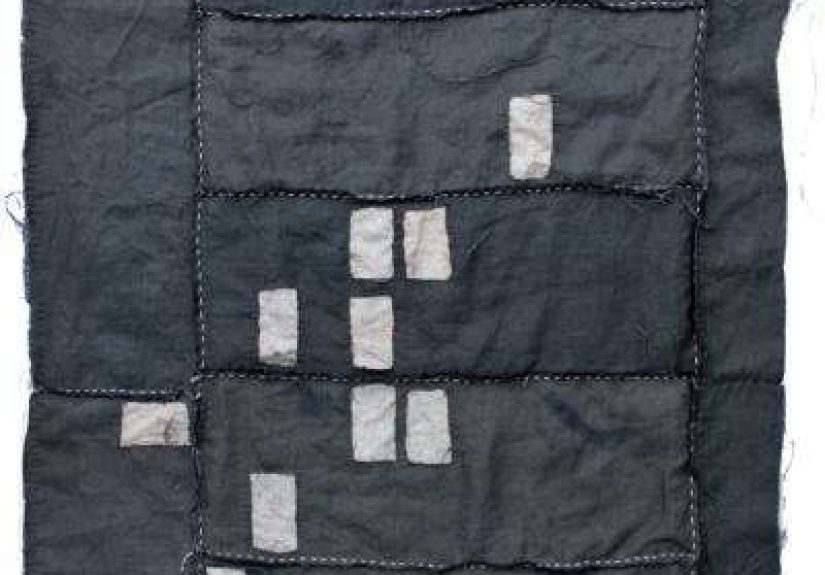
Clark began making her Foreclosure Quilts in 2007 as the housing crisis grew into a national wound. Each piece maps real patterns of foreclosure in specific places, translating neighborhood layouts into quilt blocks. The foreclosed properties aren’t shown with a symbol or a different colorthey’re shown as holes and voids, places where the textile literally disappears.
It’s a simple idea with an uncomfortable punch: quilts are domestic armor, and these quilts have been punctured. They’re a visual record of loss, but they’re also a critique of the promises we attach to home ownershipwarmth, stability, continuitywhen those promises don’t hold.
Meet Kathryn Clark: When Urban Planning Meets Needle & Thread
Kathryn Clark didn’t arrive at mapping by accident. She worked in urban planning and design before shifting fully into art, bringing along a planner’s instinct: zoom out, study patterns, ask what policies and systems do to real people. When the foreclosure wave started to spread, she questioned the built environment she had helped designand then chose a medium that could carry both data and empathy.
That’s what makes her work feel different from “art about a topic.” These quilts aren’t decorative commentary from a distance. They come from someone who understands neighborhoods as lived systemsstreets, lots, blocks, and the fragile web of relationships that makes a place feel like home.
Why Quilts, Not Charts? The Power of “Soft Data”
A spreadsheet can show foreclosure counts. A map can show clusters. But a quilt can do something those tools rarely manage: it can make the story stick. Quilting carries a long tradition of recording hardship and family historyusing scraps because you don’t waste fabric when times are tight. Clark leans into that legacy and flips it into a contemporary documentary form.
The irony is part of the point. A quilt is “home” as an object: stitched labor, care, protection. When Clark tears that idea openby removing sections, fraying edges, and letting negative space take overshe’s turning the comfort object into a witness statement.
From Map to Quilt: How the Pattern Works
1) Neighborhood grids become quilt blocks
The underlying geometry often comes from neighborhood maps (including foreclosure mapping sources used during her research). Streets become borders. Blocks become repeating units. What looks like modernist patterning is, on closer inspection, a translation of actual city structurefamiliar if you’ve ever looked at a planning diagram or a parcel map.
2) Randomness creates uneasy beauty
Here’s the twist: the placements of “affected” lots can be randomized within the map logic. That improvisational feel is crucial. It mirrors how foreclosure spreads through a community: not as a neat line, but as scattered shocksone house, then another, then suddenly a cluster.
3) Holes do the emotional heavy lifting
In many works, foreclosed lots appear as literal cut-outs. The quiltan object associated with securitycan’t fully do its job. It’s missing pieces. The metaphor isn’t subtle, but it doesn’t need to be. When the fabric is gone, your body understands the message before your brain finds the words.
Materials Matter: Linen, Cotton, Reclaimed Denim, and the Politics of Scraps
In textile work, material is never neutral. Clark’s pieces commonly use familiar, humble fiberslinen, cotton, and even recycled denimthe kind of cloth you might associate with workwear, bedding, and everyday living. That’s important: these are “home” materials telling a story about homes being lost.
Found cloth and remnants also carry a second message: the economy leaves leftovers. When you build an artwork from remnants, you’re making the medium echo the subject. It becomes a quiet rebuttal to the idea that crisis is abstract. Crisis has texture. Crisis has frayed edges.
Notable Works and Where They’ve Landed
Washington, D.C. Foreclosure Quilt (2015)
One of the best-known pieces, Washington, D.C. Foreclosure Quilt (2015), entered the Smithsonian American Art Museum’s Renwick Gallery collection. The museum notes that Clark began this series in 2007 to document how the recession reshaped the American landscapeand that she continued even after the mortgage crisis faded from headlines, because the distress didn’t simply disappear.
Albuquerque Foreclosure Quilt (2012)
Another key work, Albuquerque Foreclosure Quilt (2012), appears in quilt-museum records as a hand-pieced studio quilt, made in San Francisco, using linen as a primary fiber. It’s a reminder that these pieces are both conceptually sharp and technically grounded in traditional quiltmaking skills: careful piecing, handwork, and a commitment to craft as message.
Other mapped cities
Across the broader series, Clark has mapped multiple municipalitiescities like Atlanta, Cleveland, Detroit, Las Vegas, Phoenix, and othersshowing that the problem wasn’t confined to one “bad market” or one unlucky region. The repetition of city names matters: it turns the series into a national pattern, not an isolated anecdote.
Seeing One Up Close: What Your Eyes Notice First
- The seduction of pattern: From a distance, you may read it as minimalist designgrid, rhythm, balance.
- The reveal of loss: Then you see the holes and realize the “pattern” is actually absence.
- The material contradiction: Quilts promise comfort, but these quilts feel exposedlike protection that can’t fully protect.
- The time embedded in thread: Handwork slows you down. You can’t scroll past stitching.
This is why Clark’s work lands so well in the “fabrics & linens” conversation. It’s not fabric as background styling. It’s fabric as the main argument.
What “Fabrics & Linens” Can Learn from These Quilts
Textiles can be décor and evidence
Most home-textile talk lives in the land of “softening a room” and “adding texture.” Clark’s quilts remind us that textiles also record who we are and what we’ve lived through. Historically, quilts have documented family stories, community moments, and political realities. Foreclosure quilts extend that tradition into a modern crisisusing the language of bedding to talk about losing beds.
“Home” is a design conceptand a vulnerability
Interior design often sells “home” as a feeling you can buy: a throw blanket here, a linen duvet there. Foreclosure quilts puncture that fantasy. They ask: what happens when the idea of home is marketed as security, but the systems behind it can strip that security away?
Care, repair, and the ethics of materials
The use of remnants and recycled fibers also nudges a bigger question: what do we do with the leftovers of economic systems? In the same way that mending has become a cultural counter-move against disposable fashion, Clark’s material choices echo a refusal to treat crisisand peopleas disposable.
How to Talk About Foreclosure Quilts Without Sounding Like a Textbook
If you’re discussing Clark’s work with friends, readers, or students, skip the academic throat-clearing and try something simple:
- Start with the object: “It looks like a quilt, but it’s full of holes. Why?”
- Shift to the map: “This is a neighborhood translated into fabric.”
- Land on the contradiction: “A quilt is supposed to protect youthis one can’t.”
- Invite a story: “What does ‘home’ mean when the system fails?”
The work is accessible because the metaphor is physical. You don’t need a seminar to understand missing fabric.
FAQ
Are the quilts “accurate maps”?
They’re map-based translations. Think of them as data-informed portraits rather than GPS tools. The goal isn’t navigationit’s legibility: making a crisis visible in a form people will actually look at long enough to feel something.
Why holes instead of a different color?
Because absence is the subject. A colored square is still fabric. A hole is loss you can’t ignore. It also challenges the quilt’s traditional promise of warmth and coverage.
Is this “craft” or “fine art”?
It’s both, and that’s the point. The series uses the cultural authority of craftcare, labor, traditionto carry a contemporary social argument. In other words: it’s art that refuses to be aloof.
Where can someone encounter similar work?
Start with museum craft and textile collections (including institutions that collect contemporary quilts and fiber art), and organizations devoted to art quilts and surface design. Clark’s work is also discussed in craft and art publications that focus on textiles as a serious contemporary medium.
Experience Notes: on Living with the Idea of a “Foreclosure Quilt”
You don’t have to stand in front of a museum wall label to have an “experience” with a foreclosure quilt. The idea travels. It follows you into the soft places of everyday lifebeds, couches, laundry pileswhere textiles usually mean comfort, not critique.
Experience #1: The double-take. Imagine walking into a gallery and spotting a quilt from across the room. Your brain does the normal quilt thing: “Oh, cozy.” Then you get closer and your stomach drops. The holes aren’t decorative. They’re missing homes. That emotional gear shiftthe moment a comfort object turns into a witnessis the work doing its job.
Experience #2: Reading a neighborhood like a story. A map quilt is weirdly intimate. Streets and blocks are usually impersonal, but on fabric they feel human-scaled. You may catch yourself tracing the grid with your eyes the way you’d trace a familiar route: school, grocery store, a friend’s house. Even if it isn’t your neighborhood, the structure is recognizable. That recognition is the hook: it makes “elsewhere” feel close.
Experience #3: Thinking about linens differently at home. Later, you’re making your bed and you notice how much of your daily life is wrapped in clothsheets, towels, dish towels, old T-shirts. Clark’s quilts can make that feel newly loaded. Fabric isn’t just texture; it’s labor and protection. When protection fails, what does “home” become? You start to realize why quilting was the perfect medium: it sits exactly at the intersection of shelter and story.
Experience #4: The conversation you didn’t plan to have. Foreclosure can be a loaded topicmoney, shame, blame, luck, policy, trauma. But a quilt gives people a way in. You can talk about pattern and stitching first, then slide into the harder stuff. It’s a back door into real conversation, the kind that doesn’t start with “So, let’s discuss structural inequality,” but still ends up there.
Experience #5: A maker’s impulse to respond. If you sew, knit, quilt, or even just hoard fabric “for a project someday,” these quilts can spark a very specific itch: “What would I map?” Not to copy the work, but to respond in your own language. Maybe you map a place you love. Maybe you map a change you’ve witnessedshops closing, parks improving, neighbors displaced. The experience becomes participatory: the quilt isn’t only an object to admire; it’s a prompt.
Experience #6: The quiet after. The strongest textile art doesn’t shout. It lingers. Days later you might see a “For Sale” sign and think of missing fabric. You might read a headline about housing and picture a grid with gaps. That’s the strange power of cloth as metaphor: it’s soft enough to enter your life without permission, and serious enough to stay.
Conclusion
Kathryn Clark’s Foreclosure Quilts are a masterclass in what textiles can do when they’re allowed to be more than decoration. They’re fabric as documentation, linen as ledger, quilting as civic memory. They don’t let us treat the housing crisis as a finished chapter just because the news cycle moved on. Instead, they stitch the story into something slower than headlines and harder to ignore than a chart.
If “fabrics & linens” usually means shopping and styling, Clark expands the category: fabric can also mean responsibility, witness, and repair. And yes, the quilts are beautifulbecause beauty is what makes you look long enough to understand what’s missing.