Table of Contents >> Show >> Hide
- The Internet Saw a Dinner Party. Women Saw the Whole System.
- Why Canceling a Doctor’s Appointment Crosses a Serious Line
- The Bigger Issue: Entitlement Masquerading as Partnership
- What Real Support Looks Like in a Marriage
- Why Stories Like This Keep Going Viral
- The Real Lesson Is Not About Dinner Etiquette
- Related Experiences Readers Instantly Recognize
- Final Thoughts
Some marriage stories make you sigh. Others make you laugh in that nervous, is this person for real? kind of way. And then there are the stories that make the entire internet put down its coffee and say, “Absolutely not.” This one lands squarely in the third category.
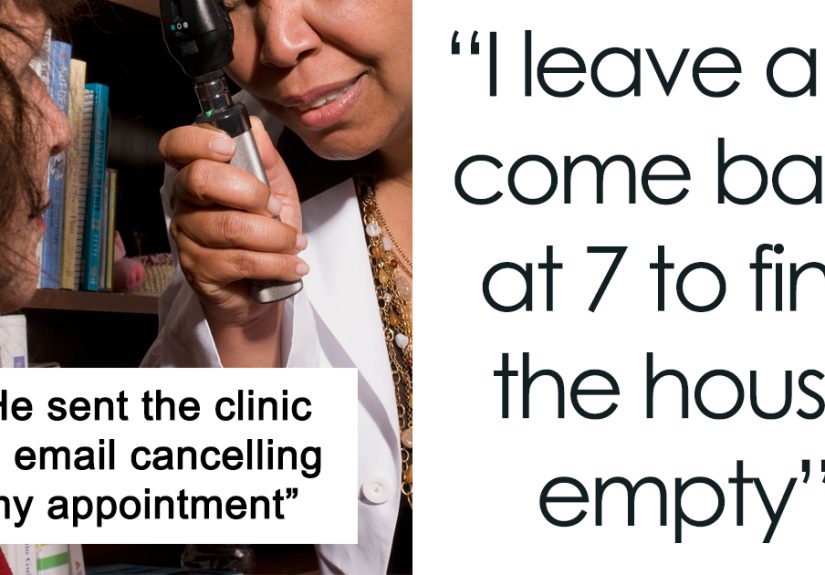
A viral relationship story about a husband canceling his wife’s urgent doctor’s appointment because he wanted her available to host dinner for his friends hit such a nerve for one simple reason: it was never really about dinner. The dinner was just the garnish. The main course was entitlement, control, disrespect, and the all-too-familiar assumption that a wife’s time, labor, and even health can be rearranged to serve everyone else first.
That is exactly why readers reacted so strongly. On the surface, the situation sounds wildly inconsiderate. Underneath, it points to something deeper and more serious: the way invisible labor, emotional labor, and control can pile up inside a relationship until one outrageous incident reveals the whole structure. When a spouse feels comfortable interfering with medical care for the sake of appearances, comfort, or social hosting, the problem is not poor scheduling. The problem is a broken power dynamic.
This story also resonates because it mirrors real patterns experts have been discussing for years. In many heterosexual households, women still carry a disproportionate share of caregiving, planning, hosting, emotional smoothing, and domestic management. The burden is often treated as natural, even when both partners work or when the woman is dealing with her own physical or emotional strain. So when a husband says, in effect, “Your appointment can wait, my guests can’t,” it sounds extreme, but it also sounds familiar.
The Internet Saw a Dinner Party. Women Saw the Whole System.
The reason this story traveled so far is that it felt bigger than one selfish husband. It tapped into a pattern many women recognize instantly: the expectation that they will make a home feel warm, feed guests, manage the atmosphere, stay pleasant, and absorb inconvenience with a smile. Hosting is often framed as a shared family effort, but in practice, it frequently becomes one person’s unpaid production schedule with better napkins.
That is where this story stops being about one canceled appointment and starts becoming a conversation about invisible work. Cooking, cleaning, remembering, preparing, welcoming, anticipating preferences, and making social events appear effortless is labor. It is not magic. It is not a feminine hobby. And it is definitely not less important than a husband’s desire to impress his buddies over dinner.
When women say they are exhausted, they are often not talking only about physical chores. They are talking about the mental load: remembering what needs to happen, who needs what, what time something starts, what is running low, what still needs to be cleaned, whether guests have dietary restrictions, whether the table looks presentable, whether anyone will notice if they quietly fall apart in the laundry room for five minutes. That kind of labor is hard to measure, which is exactly why it gets dismissed so easily.
Why Canceling a Doctor’s Appointment Crosses a Serious Line
Missing or delaying medical care is not a cute plot twist in a marriage anecdote. It is not a small sacrifice made in the name of hospitality. It can carry real consequences. When an appointment is described as urgent, the right response from a spouse is support, concern, and maybe a ride to the clinic, not a stealth calendar edit worthy of a petty office villain.
One of the most disturbing parts of this scenario is not just that he preferred the dinner to the appointment. It is that he took it upon himself to make the decision for her. That matters. There is a major difference between a couple discussing a scheduling conflict and one partner unilaterally canceling the other’s care. The first is a conversation. The second is control dressed up as inconvenience management.
Healthy partners do not treat each other’s medical care like a movable errand, somewhere between dry cleaning and picking up sparkling water. They understand that pain, symptoms, fear, uncertainty, and medical stress already take a psychological toll. A supportive partner reduces that burden. An entitled partner adds to it and then expects applause for having “important guests” coming over.
And let’s be honest: the friends were not in danger. The roast would survive. Store-bought dessert would survive. A postponed dinner would survive. What should never have been treated as optional was the wife’s access to medical attention.
The Bigger Issue: Entitlement Masquerading as Partnership
This kind of story often gets reduced to a single label: rude. But rude is too soft. Rude is forgetting to text back or showing up without bringing ice. Canceling your spouse’s urgent doctor’s appointment because you need her to host your friends is a performance of entitlement. It sends a loud message: your body, your needs, and your schedule are secondary to my comfort and my social image.
That is what makes so many readers interpret the incident as more than selfishness. It looks like a power play. It suggests a spouse who sees his partner not as an equal adult with agency, but as household infrastructure. Not a person with symptoms, but a service package: hostess, cook, social buffer, decor coordinator, vibe manager.
Once that mindset settles into a relationship, every disagreement starts sounding warped. A wife asking for care becomes “inconvenient.” A husband expecting labor becomes “normal.” A woman setting boundaries becomes “dramatic.” And suddenly a dinner party is treated like a moral emergency while her health concern gets shoved to the side like expired lettuce.
When “I Need You” Really Means “I Need What You Do for Me”
That phrase in the headline is especially revealing. “He needs her.” But what did he actually need? Did he need her companionship? Her safety? Her comfort? Her presence as a beloved partner? No. He needed her labor. He needed her performance. He needed her to carry out the polished domestic version of his social plans.
That distinction is everything. There is a huge emotional difference between being valued as a person and being valued as a utility. One feels like intimacy. The other feels like staffing.
What Real Support Looks Like in a Marriage
A supportive spouse does not compete with your health needs. A supportive spouse adapts. Maybe dinner gets rescheduled. Maybe takeout appears. Maybe friends are told, “We have to rain-check because my wife has an important appointment.” That is what grown-up partnership sounds like. No grand speech needed. Just priorities in the correct order.
Real support also means respecting autonomy. Your spouse is not your assistant. They are not your live-in event planner. They are definitely not someone whose medical decisions you override because your social calendar is feeling fragile. In a healthy relationship, both people have standing, voice, and control over their own time and body.
There is also something powerful in the simplest version of care: believing your partner when they say something matters. No interrogation. No eye roll. No “Can’t you just move it?” If your spouse says, “I need to see a doctor,” the respectful answer is not negotiation theater. It is, “Okay. What do you need from me?”
Why Stories Like This Keep Going Viral
These stories spread because they serve as emotional X-rays. They reveal fractures people have been walking around with for years. Many readers are not reacting only to this husband. They are reacting to old arguments, forgotten birthdays they planned themselves, medical concerns dismissed as overreacting, parties they hosted while sick, and all the times they were told that keeping the peace mattered more than telling the truth.
There is also a cultural reason these stories explode online. People are increasingly fluent in the language of emotional labor, invisible work, and coercive control. Behaviors that might once have been waved away as “just how he is” are now being named more clearly. That shift matters. It does not make every inconsiderate spouse abusive, but it does help people identify when a pattern is drifting from frustrating into harmful.
And this story, frankly, gives off several blazing red flags. Interfering with medical care. Assuming access to a partner’s time without consent. Prioritizing public image over private well-being. Expecting a woman to host while unwell. Punishing her needs by reframing them as inconvenience. None of that sounds romantic. It sounds like someone confusing marriage with ownership.
The Real Lesson Is Not About Dinner Etiquette
If there is a lesson here, it is not “communicate better about hosting.” It is much bigger: no one should have to earn access to their own healthcare by first finishing the appetizers. Marriage is not a system where one partner’s needs become real only after the social obligations are complete.
The healthiest relationships are not the ones that look perfect from the outside. They are the ones where both people can say, “I’m not okay,” without fear that their pain will be minimized, rescheduled, or turned into an argument about guest seating. Love is not demonstrated by how well someone smiles through discomfort while passing mashed potatoes. Love is demonstrated by whether their humanity stays intact when plans get messy.
So yes, the internet laughed, groaned, and collectively dragged the husband for filth. But under the jokes was something serious. People were defending a basic principle that should not be controversial in the first place: a wife is not a hospitality appliance, and her health is not negotiable.
Related Experiences Readers Instantly Recognize
What makes this story linger is how many people have lived some version of it. Maybe not with a canceled appointment, but with the same ugly logic. A woman says she is sick and is still expected to clean before guests arrive. She says she is burned out and is told to “push through” one more family event. She says she has a headache, back pain, anxiety, dizziness, or exhaustion, and somehow the conversation turns into whether dinner plans can still be saved.
Plenty of women know what it feels like to become the person who keeps life running while their own needs are treated like optional upgrades. They book appointments around everyone else’s schedule. They postpone checkups because childcare is hard to arrange. They cancel therapy because the budget got tight. They delay rest because the house is a mess. They tell themselves they will deal with the pain next week, next month, after the holidays, after the guests leave, after the school forms are signed, after literally everything except their own body stops asking for attention.
Then something happens that makes the unfairness impossible to ignore. Sometimes it is a spouse volunteering them for another task without asking. Sometimes it is being expected to host with a fever and a smile. Sometimes it is hearing, “Can’t you reschedule?” for the tenth time. And sometimes it is the shocking clarity of realizing that the household would grind to a halt if they stopped, yet the people benefiting from that labor still behave as if it costs nothing.
Readers also relate because these moments are often followed by a second injury: being made to feel unreasonable for objecting. Suddenly the issue is not that she is overwhelmed, unwell, or disrespected. The issue becomes her tone. Her timing. Her inability to “just be flexible.” Her refusal to understand how important this dinner, game night, work mixer, holiday brunch, or boys’ weekend send-off apparently is. It is emotional sleight of hand, and it leaves people doubting themselves even when the facts are plain.
Another common experience is the loneliness of being surrounded by people and still not being supported. A woman may be hosting a table full of guests, replenishing drinks, smiling through discomfort, and mentally counting the minutes until she can sit down, while nobody notices that she is running on fumes. Or worse, they notice and assume she has it handled because she always does. Competence becomes a trap. The better she is at carrying everything, the easier it becomes for others to pretend the load is not heavy.
That is why stories like this create such passionate reactions in comment sections. People are not only reacting to one outrageous husband. They are reacting to years of normalized imbalance. They are recognizing the emotional math that says one partner’s convenience is allowed to outweigh the other partner’s health. They are seeing how quickly love can start to resemble management, and how domestic life can become a stage where one person performs care while receiving very little of it back.
The most powerful response, in real life and not just online, is often the simplest one: refusing to cooperate with the bad script. Go to the appointment. Leave the dishes. Order pizza. Tell the friends the truth. Let the person who demanded the dinner learn what hosting actually requires. Nothing clarifies invisible labor faster than its sudden absence. And nothing exposes entitlement faster than a boundary that says, calmly and firmly, “No. My health comes first.”
Final Thoughts
The title may sound like internet-drama gold, but the underlying issue is painfully real. A spouse who cancels an urgent medical appointment for the sake of social entertaining is not just being inconsiderate. He is revealing what he believes his partner is for. That is why this story hit so hard, and that is why it keeps circulating.
At its core, this is a story about hierarchy inside a marriage. One person’s needs are treated as urgent, public, and important. The other person’s needs are treated as flexible, private, and inconvenient. Once you see that dynamic, the dinner itself becomes almost irrelevant. It is just the occasion that exposed the truth.
No healthy relationship is built on that kind of arrangement. A good partner does not require someone to shrink, delay care, and perform domestic perfection so his evening can go smoothly. A good partner protects your peace, respects your autonomy, and understands that love without respect is just extra work in nicer packaging.
Note: This article is provided in publish-ready HTML body format only, in standard American English, with no inline source links and no extra code artifacts.