Table of Contents >> Show >> Hide
- What “Domestic Science: Kiosk Kiosk” Really Means
- The Beauty of the Useful Object
- KIOSK as a Store, Archive, and Design Philosophy
- The Swedish Household Tools That Steal the Show
- Everyday Design Is Also Sustainable Design
- How to Bring the Kiosk Kiosk Mindset Into Your Home
- Domestic Science as a Way of Seeing
- Experience Notes: Living With the Domestic Science Mindset
- Conclusion
- SEO Tags
Some household objects enter our lives with the glamour of a celebrity walking a red carpet. Others arrive quietly, usually in a plastic bag, and spend the next ten years saving us from crumbs, weeds, sticky cans, runaway dust, and the tiny domestic disasters that make a home feel less like a sanctuary and more like a sitcom set after lunch. Domestic Science: Kiosk Kiosk belongs to the second groupbut with a twist. It reminds us that the broom, the dustpan, the can opener, and the garden trowel are not boring background players. They are small machines of civilization.
The phrase points to a charming design idea: everyday household tools can be beautiful, useful, culturally specific, and surprisingly emotional. KIOSK, the New York-born project known for collecting ordinary objects from around the world, built its reputation on this exact belief. Instead of chasing luxury for luxury’s sake, KIOSK celebrated the practical item with a story: the Swedish dustpan, the handmade horsehair brush, the wall-mounted can opener, the powder-coated garden tool. These objects do not shout, “Look at me!” They simply work well, last long, and look cheerful while doing it. Honestly, that is more than can be said for many humans before coffee.
What “Domestic Science: Kiosk Kiosk” Really Means
Domestic science is an old-fashioned phrase, but it still has bite. Historically, domestic science and home economics treated the household as a place of knowledge, skill, hygiene, efficiency, nutrition, budgeting, repair, and care. In modern design language, the idea becomes even broader: a home is not just decorated; it is operated. Every object has a job. Every material has a lifespan. Every tool either makes daily life smoother or becomes another thing you have to clean around.
Kiosk Kiosk fits beautifully into this conversation because it focuses on ordinary objects that reveal how people live. A broom is never just a broom. It tells us what materials a culture values, how a manufacturer solves a problem, what a household expects from daily maintenance, and whether the designer believed usefulness could have charm. KIOSK’s approach treats these humble items as evidence: evidence of local craft, industrial design, regional habits, and the underrated poetry of getting things done.
The Beauty of the Useful Object
Modern consumers are often trained to admire the spectacular: the statement sofa, the sculptural lamp, the kitchen appliance with enough buttons to launch a weather balloon. But most domestic life happens around modest tools. You sweep. You open a can. You cut herbs. You pull weeds. You hang things. You wipe the counter again because someone made toast like they were feeding pigeons in a wind tunnel.
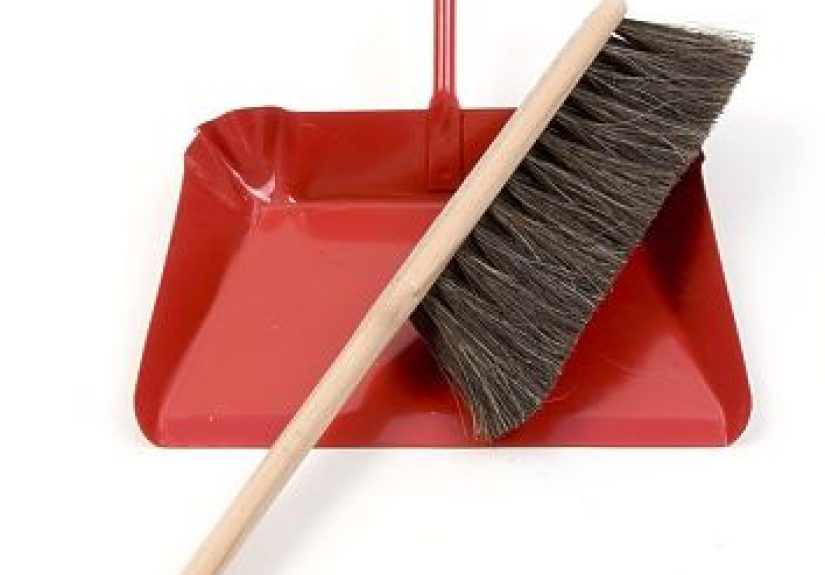
The genius of the KIOSK sensibility is that it gives attention back to these small tasks. A red metal dustpan is not just a cleaning accessory; it is a tiny design decision that can brighten a utility closet. A horsehair hand broom is not merely a crumb collector; it is a tactile object made from natural material, shaped for the hand, and built for repeated use. Powder-coated steel garden tools are not just yard gear; they are an argument that even dirty work deserves good color, balance, and durability.
Why Red Works So Well
Red is a clever color for domestic tools. It is energetic without being precious. It is easy to spot in a shed, a pantry, or a crowded drawer. It adds warmth to tasks that otherwise feel like chores. A red dustpan says, “Yes, you are cleaning, but must you suffer aesthetically?” Apparently not.
In the original Domestic Science feature, the highlighted items included cheery red household implements connected to sweeping, gardening, and can-opening. That color thread matters because it turns maintenance into ritual. When the tools are visible, pleasing, and easy to grab, the chore becomes less annoying. No one is claiming a beautiful broom will make you love sweeping. But it may reduce the dramatic sighing by at least 18 percent, which is a domestic victory.
KIOSK as a Store, Archive, and Design Philosophy
KIOSK began in New York City in 2005 and developed into something more layered than a shop. It functioned as a store, an archive, a travelogue, a material culture study, and occasionally a museum-like installation. Its founders collected everyday goods from different countries, often choosing objects that were locally made, regionally recognizable, inexpensive, useful, or visually odd in the best way.
This matters because KIOSK challenged the usual retail formula. Instead of selling objects because they were famous brands, it often celebrated anonymous design. Instead of presenting housewares as lifestyle trophies, it treated them as evidence of human problem-solving. The result was a kind of “anti-glossy” design world where a bottle stopper, a laundry soap, a cheese press, a can opener, or a dustpan could become fascinating.
That is the quiet power of domestic science: it asks us to look closely at the ordinary. Who made this? Why is it shaped this way? Why does this tool survive while trendier products disappear? What does it feel like in the hand? Can it be repaired? Does it do one thing beautifully, or does it try to do twelve things badly while wearing a shiny logo?
The Swedish Household Tools That Steal the Show
The Kiosk Kiosk domestic collection often brings Swedish practicality into focus. Sweden has a long design reputation for clean lines, functional beauty, and an almost suspicious ability to make practical objects look calm. The featured handmade horsehair broom and red metal dustpan capture that spirit perfectly. The broom offers natural texture and a comfortable scale; the dustpan brings powder-coated durability and a color that refuses to hide in shame behind the mop bucket.
Then there is the wall-mounted can opener associated with Sigvard Bernadotte, a designer linked with Swedish industrial design. A wall-mounted can opener may sound quaint until you use one and realize it solves several problems at once: it stays in place, avoids drawer chaos, gives leverage, and does not mysteriously vanish right when you are trying to open tomatoes for dinner. It is domestic engineering with manners.
Why Small Factories Still Matter
One of the most appealing parts of the KIOSK story is its attention to small manufacturers and local production. Ordinary goods often disappear not because they fail, but because cheaper copies flood the market. The replacement may look similar in a product photo, but the difference shows up in the hand: flimsy hinges, weak handles, plastic that cracks, bristles that shed like a nervous cat.
When a tool is made by a small factory or a long-running workshop, it may carry knowledge that cannot be easily reverse-engineered. The curve of a handle, the stiffness of bristles, the weight of steel, the angle of a dustpan lipthese details come from repetition, use, correction, and pride. That is domestic science in its most practical form: the study of what actually works.
Everyday Design Is Also Sustainable Design
A well-made household tool is not just nicer to use; it can also be a more responsible choice. The most sustainable object is often the one you do not have to replace every six months. Buying fewer, better tools supports a slower rhythm of consumption. It also reduces clutter, waste, and the strange modern hobby of owning five bad versions of the thing you should have bought once.
This is where Kiosk Kiosk connects naturally with sustainable materials thinking. A durable broom, a repairable tool, or a metal dustpan with a long useful life fits into the broader idea of using materials more productively. Reuse, repair, maintenance, and thoughtful purchasing are not glamorous buzzwords; they are household strategies. They save money, reduce waste, and make the home easier to manage.
The “Buy Once, Use Often” Rule
A good domestic tool should pass three tests. First, it should do its job well. Second, it should feel good enough that you do not avoid using it. Third, it should last long enough to become familiar. The best household objects almost disappear into routine. You reach for them without thinking. They are always where they belong. They age honestly. They acquire marks of use instead of looking ruined.
That is very different from buying novelty gadgets that promise to “revolutionize” your kitchen and then spend four years wedged behind the blender. Domestic science is not about owning more. It is about owning better, using smarter, and respecting the daily work that keeps a home functional.
How to Bring the Kiosk Kiosk Mindset Into Your Home
You do not need to live in a design magazine or have a Scandinavian utility room with sunlight landing perfectly on a linen apron. The Kiosk Kiosk mindset is practical and accessible. Start by looking at the tools you use every week. Which ones annoy you? Which ones are ugly in a way that brings no joy? Which ones break, wobble, rust, jam, or hide when needed?
Then replace slowly and intentionally. Choose a dustpan that sits flat. Choose a broom with bristles suited to your floors. Choose garden tools with comfortable handles. Choose a can opener that does not require a prayer circle. Favor natural materials when they make sense, metal where durability matters, and simple mechanics over fragile complexity.
Make Utility Visible
One overlooked lesson from KIOSK is that useful objects do not always need to be hidden. A beautiful broom can hang on a hook. A red dustpan can live in plain sight. Garden tools can be organized like a working collection instead of abandoned in a bucket of soil and regret. When tools are easy to see and reach, maintenance becomes easier. Design is not only about appearance; it is about reducing friction.
Domestic Science as a Way of Seeing
The deeper value of Domestic Science: Kiosk Kiosk is not simply that red Swedish tools look good. It is that the home deserves intelligence. The everyday object deserves attention. The people who make practical goods deserve recognition. The person doing the sweeping deserves a broom that does not feel like punishment.
In a culture obsessed with novelty, KIOSK invites us to admire continuity. Some tools remain in production for decades because they solve a problem cleanly. Some materials remain beloved because they feel right. Some objects survive because they are not trying to become smarter than the user. A good can opener does not need Wi-Fi. A good broom does not need an app. A good dustpan does not need to collect your data, though at this point we should probably be grateful.
Experience Notes: Living With the Domestic Science Mindset
The best way to understand Domestic Science: Kiosk Kiosk is to test the idea during an ordinary week at home. Start with the messes that repeat. The coffee grounds near the grinder. The flour after baking. The leaves by the back door. The drawer that refuses to close because it contains three broken peelers, two mystery lids, and a kitchen tool shaped like ambition but used exactly once.
When you replace one frustrating item with a better version, the change is surprisingly noticeable. A sturdy hand broom makes small cleanups feel immediate instead of irritating. A metal dustpan with a proper edge collects dirt instead of pushing it into a tragic little line on the floor. A wall-mounted opener stays put, saves drawer space, and gives the kitchen a faint workshop confidence. These are small improvements, but homes are made of small improvements. Nobody fixes domestic life in one grand gesture. You fix it by making Tuesday easier.
There is also an emotional benefit to using objects with character. A handmade brush has warmth. A powder-coated tool has personality. A red dustpan makes a dull task less dull. Over time, these objects become part of the household rhythm. You know their weight. You know where they hang. You know they will work. That reliability creates a tiny form of trust, and trust is underrated in home design.
The Kiosk Kiosk approach also changes shopping habits. Instead of asking, “What is the newest thing?” you begin asking better questions: “Where was it made? What problem does it solve? Is it comfortable? Will it last? Can I imagine using it 500 times?” This is where domestic science becomes almost philosophical. The home stops being a place to fill and becomes a place to edit.
Try applying this to one zone: the cleaning closet, the garden shelf, or the kitchen drawer. Remove duplicates. Keep the tools that perform well. Donate what is useful but unnecessary. Recycle what is broken beyond repair. Then choose one object worth upgrading. Maybe it is a broom. Maybe it is a dustpan. Maybe it is a can opener that does not chew cans like a raccoon with deadlines. The result will not be dramatic in the television makeover sense. No one will gasp. There may be no reveal music. But the next time you need that tool, you will feel the improvement instantly.
That is the quiet genius of this topic. Domestic Science: Kiosk Kiosk is not about worshiping objects. It is about respecting the daily acts that objects support. Sweeping, gardening, opening, storing, repairing, wiping, carryingthese are the verbs of home. When the tools are thoughtfully chosen, those verbs become easier. And when ordinary life becomes easier, the home becomes more humane.
Conclusion
Domestic Science: Kiosk Kiosk celebrates the humble household tool as a piece of design, culture, and practical wisdom. It reminds us that a broom can be beautiful, a dustpan can be joyful, and a can opener can be a small masterpiece of problem-solving. More importantly, it encourages a healthier relationship with the things we bring into our homes. Buy less, choose better, use often, repair when possible, and give everyday objects the attention they deserve.
The home is not maintained by magic. It is maintained by tools, habits, materials, and hands. KIOSK’s gift is helping us see those tools againnot as clutter, but as companions in the strange, repetitive, deeply human science of keeping house.