Table of Contents >> Show >> Hide
- Why This Strategy Works So Well in the Desert Southwest
- Start with the Site, Not the Shopping List
- Retaining Walls: The Unsung Heroes of Desert Design
- Xeriscaping Principles That Matter in Real Yards
- How Retaining Walls and Xeriscaping Work Together
- Practical Design Examples
- Mistakes to Avoid
- Conclusion: Build a Yard That Acts Like It Lives Here
- Experience Notes: What This Looks Like in Real Life
If you live in the Desert Southwest, you already know the rules are different. Summer is not a season so much as a personality trait. Rain may disappear for weeks, then come back all at once like it has a point to prove. Soil can be sandy, rocky, compacted, alkaline, or all four before lunch. In that setting, a lawn-heavy landscape can feel less like a design choice and more like a hostage negotiation with your water bill.
That is exactly why retaining walls and xeriscaping work so well together. Xeriscaping helps you design with the climate instead of arguing with it. Retaining walls help you shape tricky grades, control erosion, and create useful planting spaces where slopes would otherwise send water and mulch downhill in a hurry. Put them together, and suddenly a hard-to-manage yard starts behaving like it got a good night’s sleep.
The best Desert Southwest landscapes are not bare gravel lots with a sad cactus and a decorative boulder the size of a compact car. They are layered, intentional, and surprisingly comfortable. They use water wisely, place plants where they make sense, and turn hardscape into something more than a border between “yard” and “regret.”
Why This Strategy Works So Well in the Desert Southwest
Xeriscaping is often misunderstood as “landscaping with no water.” That is not the idea. It is really about efficient, climate-appropriate landscaping: smart planning, hydrozoning, soil awareness, efficient irrigation, mulch, and ongoing maintenance. In desert regions, that approach matters because every part of the site behaves differently. One corner may bake in reflected heat. Another may collect runoff during monsoon storms. A south-facing slope may dry out fast, while the base of that same slope stays damp longer than expected.
Retaining walls step in where topography starts causing trouble. They terrace space, slow erosion, create safer grades, and make irrigation more manageable. A sloped yard without structure often sheds water too quickly. A terraced yard can hold moisture where plants can actually use it. That is a big difference in a place where every deep watering should count.
This is also why desert landscaping should start with layout, drainage, and grading before anyone gets emotionally attached to a plant palette. The prettiest red yucca in the county cannot fix poor runoff patterns. A bad wall design cannot be rescued by adding more agave. Structure comes first. Then beauty gets to show off.
Start with the Site, Not the Shopping List
Read the Yard Like a Desert Detective
Before choosing plants or materials, study how the property works. Watch where rain moves. Notice where puddles form, where water sheets across hard surfaces, and where soil washes out. Pay attention to sun exposure, wind, views, utilities, and existing trees. Desert yards reward observation. The landscape is always giving clues; most people are just busy pricing decorative gravel.
If your lot includes slopes, map the steep sections and decide which ones need terracing, which ones can be softened with groundcovers, and which ones should stay mostly undisturbed. If you already have mature trees, be especially careful about grade changes. Adding fill around trunks or burying the base of a tree can cause long-term decline. In some cases, a retaining wall is the better way to preserve the original soil level around valuable trees instead of raising grade everywhere.
Test Soil and Respect Drainage
Desert soil can be fast-draining, painfully compacted, or somewhere in the awkward middle. That matters because irrigation timing, amendment choices, and plant survival all depend on what water does after it hits the ground. Compacted soil increases runoff. Sandy soil drains quickly and may need slower, deeper applications. Clay-heavy soil holds moisture longer but absorbs it slowly, which is a great way to create runoff if you water too fast.
This is where simple planning pays off. A soil test, a jar test, or even careful observation after irrigation can tell you more than a dozen pretty photos on social media. Desert landscaping is not anti-style. It just prefers style with receipts.
Retaining Walls: The Unsung Heroes of Desert Design
What Retaining Walls Actually Do
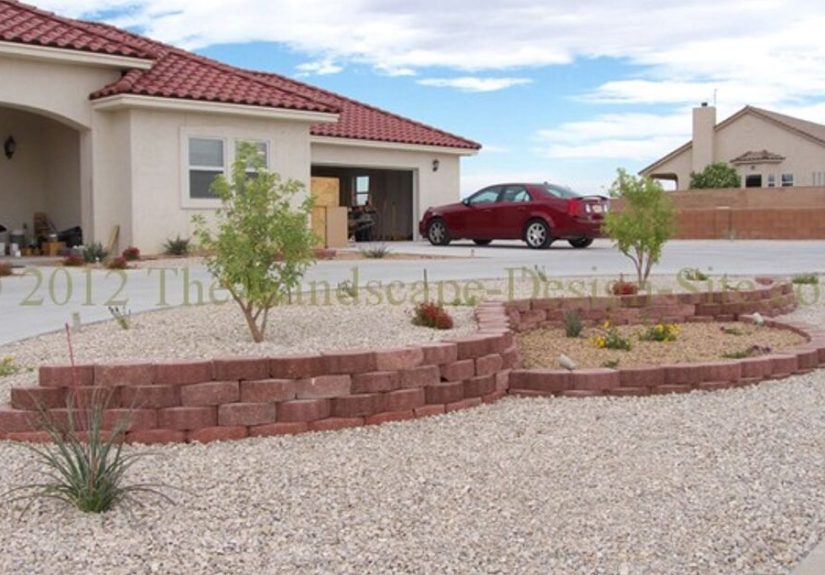
In the Desert Southwest, retaining walls are not just decorative edges. They are practical tools. They create terraces on slopes, define outdoor rooms, protect patios, carve out level planting areas, support pathways, and help control erosion. On larger lots, they can organize a yard into distinct zones: entertainment space above, planting terrace in the middle, stormwater capture or native slope planting below.
Done well, a retaining wall can also create stronger visual rhythm. Repeating lines, stepped grades, and layered planting beds make a landscape feel deliberate instead of accidental. That matters in desert design, where structure carries a lot of the aesthetic weight year-round.
Drainage Is the Whole Ballgame
Here is the non-glamorous truth: retaining walls usually fail because of water pressure behind them, not because the universe dislikes hardscape. If water cannot drain down and away from the wall, it builds pressure in the backfill. Over time, that can crack, lean, bow, or shift the wall. That is why drainage details matter just as much as stone, block, or finish.
A smart wall design usually includes compacted base material, appropriate backfill, and a path for water to escape. For structural walls, especially taller ones, that may also mean drainpipe, drainage composite, and weep holes depending on the wall type and site conditions. On desert properties, people sometimes assume low rainfall means drainage is optional. Then monsoon season arrives and politely disproves that theory.
Walls and Trees Need Boundaries
Large trees, wall footings, and grade changes should never be treated like random puzzle pieces. If you alter grade too aggressively near existing trees, roots can lose access to oxygen and water. If you plant a large, vigorous tree too close to a wall, future root growth may cause trouble. Keep the long game in mind. Desert landscapes look better when the hardscape and plant palette are mature at the same time, instead of one trying to evict the other.
Xeriscaping Principles That Matter in Real Yards
1. Plan in Hydrozones
Hydrozoning means grouping plants with similar water needs together. This is one of the most useful principles in a Desert Southwest yard because it keeps you from watering the entire property for the thirstiest plant on the lot. Put arid-adapted plants together. Group moderate-water plants near living areas where they earn their keep. If you keep a small turf area, separate it from shrubs and trees so it can be irrigated independently.
Think of hydrozones as neighborhoods, not a random roommate situation. A desert willow, a red yucca, and a brittlebush can usually agree on lifestyle. A rose bush, a patch of turf, and a cactus are going to need counseling.
2. Improve Soil Carefully
Healthy soil improves infiltration, root growth, and water retention, but desert landscapes do not always need massive amendment everywhere. The right approach depends on plant choice. Native and desert-adapted species often perform best when the soil is not overworked into a fluffy, moisture-holding sponge. Meanwhile, planting beds near patios or entries that include adapted perennials may benefit from selective amendment. The goal is not to make the whole property feel like a vegetable garden. The goal is to support the plants you actually intend to grow.
3. Choose Plants That Belong There
The Desert Southwest offers far more variety than the old “rocks and cactus” stereotype suggests. You can build a rich planting scheme with trees, shrubs, grasses, succulents, groundcovers, and seasonal color. Depending on your subregion, useful choices may include desert willow, Texas sage, chuparosa, red yucca, blackfoot daisy, damianita, agave, hesperaloe, deer grass, globe mallow, penstemon, palo verde, and low-water-use vines for softening walls or screening views.
The best plant palettes mix form, texture, height, bloom season, and wildlife value. You want spiky plants, mounded plants, airy plants, flowering shrubs, and a few anchors that look good even when nothing is blooming. That is how you get a landscape with year-round presence instead of a brief spring performance followed by nine months of waiting.
4. Irrigate Efficiently
Drip irrigation is especially useful in desert landscapes because it applies water slowly at the root zone, reduces evaporation and runoff, and works well in narrow beds, on terraces, and around individual shrubs and trees. The key is to water deeply and less often, then adjust seasonally. New plants need regular help while establishing. Mature desert-adapted plants should not be babied forever.
One of the most common mistakes in xeriscaped yards is the daily “just a little water” habit. That encourages shallow rooting, salt buildup, and unnecessary water use. Trees and shrubs generally respond better to deeper watering that reaches the active root zone. For trees, emitters and basins should move outward toward the drip line as the canopy expands. Watering right at the trunk is like bringing dinner to the mailbox and wondering why nobody comes to the table.
5. Mulch With Purpose
Mulch is not an accessory. It is a working part of the system. In desert landscapes, mulch helps moderate soil temperature, reduce evaporation, suppress weeds, and limit erosion. Organic mulch can improve soil over time, while mineral mulch can give a cleaner desert look and suit cacti or very arid plantings. The trick is matching the mulch to the planting style and heat exposure.
A layer around three to four inches is often effective in planting beds, but keep mulch pulled away from trunks and stems. Also remember that rock mulch reflects and stores heat. That can be fine for agaves and cactus gardens, but rough on plants that do not appreciate becoming air-fried in July.
6. Limit Turf to Functional Areas
If you want some lawn, keep it small and purposeful. Use it where it serves a real function, such as a play area, pet zone, or small recreation space. Keep it on level ground where irrigation is more efficient. Do not stretch it across slopes just because a brochure somewhere made it look “refreshing.” In the desert, turf should be a deliberate decision, not a default background color.
7. Maintain the Landscape, Don’t Over-Manicure It
Xeriscapes are lower maintenance, not no maintenance. Emitters clog. Mulch shifts. Weeds appear after rain. Controllers drift out of sync with the season. Shrubs get hacked into geometric meatballs when they should have been lightly thinned. The healthiest desert landscapes are maintained with restraint: inspect irrigation, prune to natural form, refresh mulch, check for erosion after storms, and watch plants for signs of under- or overwatering.
How Retaining Walls and Xeriscaping Work Together
Terraces Make Water Smarter
Retaining walls make hydrozoning easier because each terrace can behave as its own planting zone. The upper level might hold a tough, low-water palette with strong sun exposure. A middle terrace near a seating area might support moderate-water color and fragrance. The lowest zone might be shaped to receive runoff through a basin, swale, or rain garden approach. Instead of fighting gravity, you start using it as part of the plan.
Walls Create Microclimates
Walls affect sun, shade, reflected heat, and wind. A south- or west-facing masonry wall can create a hot pocket that suits heat-loving succulents and reflective desert species. A north or east exposure may allow for softer textures and a slightly less intense planting mix. Understanding that relationship makes your design feel custom instead of copied.
Walls Can Guide Stormwater, Too
In a desert yard, the smartest designs often capture and redirect runoff instead of sending it racing to the curb. Low walls, berms, basins, and planted depressions can work together to keep water on-site, where it supports the landscape. On moderate slopes, retaining walls can be integrated with rain-garden style areas or passive water-harvesting basins, as long as overflow is directed safely away from the house and drainage is planned from the start.
Practical Design Examples
Example 1: A Front Yard on a Mild Slope
Use two low retaining walls to create stepped planting terraces. Add a decomposed granite path that zigzags gently instead of running straight uphill. Place a palo verde or desert willow as the canopy anchor. Fill the terraces with red yucca, agave, damianita, blackfoot daisy, and deer grass. Use drip irrigation by hydrozone, and form shallow basins around larger plants to hold deep watering. The result feels structured, colorful, and far easier to manage than one broad slope of struggling gravel.
Example 2: A Backyard With a Patio and Privacy Problem
Build a retaining wall that also functions as seating at the patio edge. Behind it, raise a planting bed slightly to create privacy without building a fortress. Use layered shrubs and accent plants, such as Texas sage, chuparosa, and columnar succulents or upright grasses where appropriate. Add a vine to soften a side wall. The elevation change gives the planting enough presence to screen views without blocking air flow.
Example 3: An HOA-Friendly Corner Lot
Keep the framework simple and clean: one main wall line, repeated plant masses, and a controlled color palette. Use desert-adapted shrubs in repeating groups, with two or three accent species rather than twelve unrelated plant experiments. Add boulders sparingly, not like you are starting a geology museum. The design stays tidy, but it still reads as lush by desert standards.
Mistakes to Avoid
- Building a retaining wall without proper drainage behind it.
- Running drip irrigation too often and too shallowly.
- Placing emitters at the trunk instead of the active root zone.
- Using the same watering schedule for every plant in the yard.
- Covering the entire property in rock and calling it done.
- Choosing plants for bloom color only, without considering mature size, exposure, or water need.
- Creating grade changes around mature trees without protecting their original root environment.
- Sending overflow toward the house, patio, or wall footing.
- Attempting a tall structural wall as a casual weekend project.
Conclusion: Build a Yard That Acts Like It Lives Here
The best Desert Southwest landscapes do not imitate wetter climates. They do something smarter: they respond to sun, slope, soil, and water movement with intention. Xeriscaping gives you the planning framework. Retaining walls give you physical control over terrain and runoff. Together, they make it possible to create outdoor spaces that look sharp, function better, and demand less from both your irrigation system and your patience.
A well-designed desert yard can be lush without being thirsty, structured without being harsh, and low-water without looking like the landscaping equivalent of giving up. That is the real goal. Not deprivation. Not austerity. Just a landscape that finally stops acting surprised it is in Arizona, New Mexico, Nevada, Utah, west Texas, or inland Southern California.
Experience Notes: What This Looks Like in Real Life
One of the most telling experiences with this kind of landscape usually happens the first time a homeowner watches a monsoon storm after a redesign. Before the work, water often moves fast and badly. It sheets off compacted soil, splashes mulch into walkways, carves little channels through planting beds, and collects where nobody wants it. After a thoughtful combination of retaining walls, terraces, basins, and xeriscape planting, the same storm feels completely different. Water slows down. It pauses. It spreads into planted areas instead of sprinting for the patio. The yard starts behaving less like a slip-and-slide and more like a system.
Another common experience is the shift in how people think about “lush.” In the Desert Southwest, lush does not have to mean a solid green lawn from fence to sidewalk. A layered desert yard can feel richer than turf once the planting matures. A palo verde casting filtered shade over red yucca, blackfoot daisy, and a ribbon of decomposed granite path can feel far more inviting than a thirsty patch of grass that always looks one hot weekend away from surrender. Homeowners often discover that texture, shadow, bloom cycles, and structure do more emotional work than sheer square footage of lawn ever did.
There is also the learning curve with irrigation, and honestly, this is where the real education begins. Many people start out assuming desert plants want almost no water immediately. Then they lose new plants because “low water” got translated into “good luck out there.” Establishment matters. Desert-adapted plants still need consistent care while roots spread into surrounding soil. The more experienced approach is patient: water deeply, observe the plant, check the soil, then lengthen the interval as it matures. Over time, the landscape teaches you to stop watering by panic and start watering by evidence.
Retaining walls bring their own lessons. People often expect the wall itself to solve every slope problem. In practice, the wall is only part of the experience. The grade above it, the drainage behind it, the soil below it, and the way irrigation is applied nearby all influence whether that wall becomes a long-term asset or an expensive cautionary tale. Experienced desert designers pay attention to what happens after watering, not just after installation. If moisture lingers where it should not, if a bed starts settling, or if runoff keeps cutting along the wall edge, those are signals to adjust before damage becomes visible.
Then there is the comfort factor, which surprises a lot of people. A well-planned xeriscape with walls, shade trees, and layered planting often makes outdoor living better, not worse. Walls can define seating areas, block glare, and create sheltered spaces. Properly placed trees cool patios. Vines or shrubs soften reflected heat. Water harvesting basins support healthier growth with less waste. The yard begins to feel intentional and inhabited, not just maintained.
Perhaps the most satisfying experience, though, is delayed gratification paying off. Desert landscapes rarely look finished the day they are installed. They grow into themselves. A wall that seems visually strong at first becomes more balanced as plants soften its edges. A small tree starts casting meaningful shade. Repeating shrubs begin to knit the design together. What looked sparse in month one can look polished and deeply rooted in year three. That is the rhythm of a good Desert Southwest landscape: less instant drama, more long-term intelligence.