Table of Contents >> Show >> Hide
- The big picture: genetics + hormones (with a cameo by timing)
- Penis growth 101: when growth happens (and when it doesn’t)
- So… what actually affects penis size?
- Average size: what research suggests (and why most people misjudge)
- When “small” is actually medical: micropenis and other conditions
- Can you increase penis size?
- Does size matter for sexual satisfaction?
- Experiences people commonly report (and what they usually mean)
- Conclusion
- SEO Tags
If you’ve ever wondered what determines penis size, you’re not alone. Penis-size curiosity is basically a universal hobbyright up there with trying to fold a fitted sheet and pretending you know how taxes work.
The good news: most of what you’ve heard is exaggerated, misunderstood, or sponsored by someone selling a “miracle” pill that definitely, absolutely, totally works (spoiler: it doesn’t). The better news: science gives a clear, surprisingly boring answerso we can all get back to living our lives.
The big picture: genetics + hormones (with a cameo by timing)
Penis size is primarily shaped by your biologyespecially genetics and hormonesduring two key windows: development before birth and puberty. In other words, your body does most of the “construction work” long before you’re old enough to worry about it.
After puberty ends, penis growth is generally complete. Adult size doesn’t keep increasing naturally with age, workouts, supplements, or vibes. What can change later is how your penis appears (for example, because of weight changes, certain medical conditions, or scarring), but that’s different from true growth.
Penis growth 101: when growth happens (and when it doesn’t)
1) Before birth: the “blueprint” stage
During fetal development, the formation of external genitalia depends heavily on androgens (male sex hormones), especially testosterone and its more potent derivative, dihydrotestosterone (DHT). If hormone production is low or the body can’t respond normally to these hormones, genital development can be affected.
For example, certain rare genetic or endocrine conditions can alter androgen production or sensitivity. These include issues involving DHT production (such as 5-alpha reductase deficiency) or the body’s ability to respond to androgens (such as androgen insensitivity). These are medical diagnosesnot lifestyle outcomes.
2) Puberty: the “renovation and expansion” stage
Puberty is when most visible penile growth occurs. Rising testosterone helps drive changes like growth of the testes and penis, body hair, voice changes, and muscle development. Penis growth typically happens over several years during adolescence, often growing in length first and then in girth.
The timing and tempo of puberty varies. Two people can end up with healthy, typical adult bodies even if one starts puberty earlier and another later. That said, if puberty is significantly delayed or interrupted by an underlying hormonal issue, development can be affectedso it’s worth discussing concerns with a clinician rather than doom-scrolling at 2 a.m.
So… what actually affects penis size?
Genetics: yes, but it’s not one “magic gene”
Genetics plays a major role, but it’s not as simple as inheriting a single trait like eye color. Think of it more like height: many genes contribute, plus the body’s hormone environment during development. Family resemblance can show up as overall body proportions, timing of puberty, and hormone-related traits.
Hormones and hormone sensitivity
Testosterone and DHT influence genital development, but the body also needs working receptors to respond properly. If hormone levels are unusually low during key developmental windowsor receptors don’t respond as expectedpenile development can be altered.
In childhood, certain endocrine conditions (for example, forms of hypogonadotropic hypogonadism) can be associated with micropenis or delayed pubertal development. These are uncommon but important to identify because early evaluation can open the door to evidence-based treatment options.
Overall health and nutrition (especially in early life)
General health matters during growth years. Severe chronic illness, significant undernutrition, or untreated endocrine disorders can affect overall developmentincluding puberty. This doesn’t mean “eat kale, grow overnight.” It means the body needs basic building blocks and normal hormone signaling to develop as intended.
Body composition: the “optical illusion” factor
Weight doesn’t usually change the actual length of penile tissue, but it can change how much of the shaft is visible. Extra fat in the suprapubic area (the pad above the penis) can make the penis appear shortersometimes described as a “buried” or “hidden” penis in medical contexts. This is about visibility and surrounding tissue, not a sudden vanishing act of anatomy.
Temperature, stress, and the flaccid wildcard
Flaccid size varies wildly with temperature, anxiety, arousal, and blood flow. That’s why flaccid length is a terrible “scoreboard” for anything. Some people are “growers” (bigger change from flaccid to erect), others are “showers” (less dramatic change). Both are normal.
Average size: what research suggests (and why most people misjudge)
Large studies that use standardized measurement methodsoften taken by healthcare professionalsgenerally find that average erect penis length is around the mid–5-inch range, with natural variation above and below. Many people overestimate “average” because of selection bias (porn, bragging, and the loud confidence of that one guy on the internet).
Another common issue: self-measurement errors. Measuring at an angle, starting at skin instead of the pubic bone, or “rounding up” (because math is hard when feelings are involved) can distort results. Even how much the suprapubic fat pad is compressed can change the number.
How to measure correctly (the way clinicians try to do it)
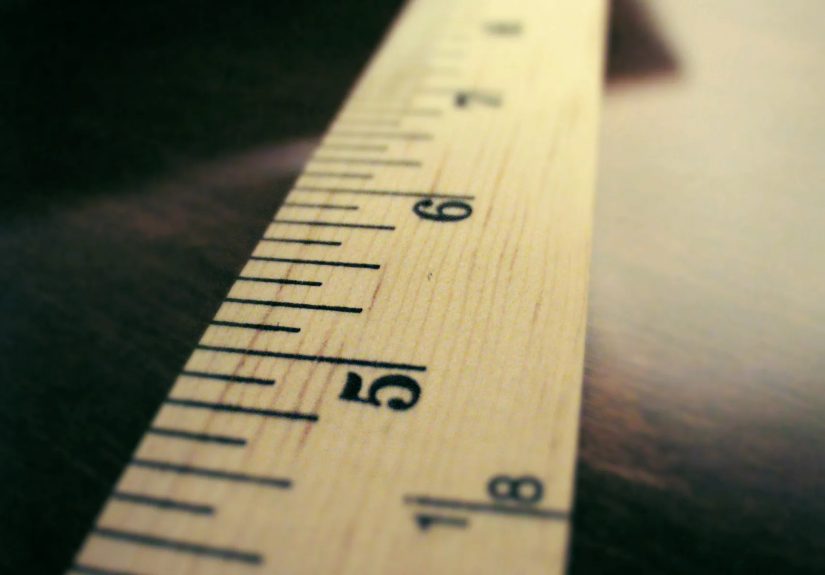
If you measure, be consistent: use a rigid ruler, measure along the top side, and measure from the pubic bone to the tip. Compress the fat pad gently until you feel bone. For comparisons over time, repeat under similar conditions rather than treating every measurement like a new Olympic event.
Also: non-erect length doesn’t reliably predict erect length. So if the “soft” version of you looks smaller after a cold swim, congratulationsyou are experiencing physics, not tragedy.
When “small” is actually medical: micropenis and other conditions
The term micropenis has a specific medical meaning. It’s not “smaller than the guy in a movie.” It’s typically defined by a stretched penile length significantly below the average for age (often described as more than about 2.5 standard deviations below the mean). Diagnosis requires correct measurement and clinical context.
Micropenis can be associated with hormonal differences (such as insufficient testosterone during fetal development), genetic factors, or conditions affecting the brain’s hormone signaling pathways. In some cases, early hormonal treatmentunder medical supervisionmay help. The key word is early: evaluation is most useful in infancy or childhood, not after puberty is long finished.
Separate from micropenis, some conditions can cause apparent shortening later in lifesuch as scarring disorders like Peyronie’s disease, which can change curvature and sometimes reduce erect length. If changes are new, painful, or distressing, that’s a “talk to a clinician” moment, not a “buy suspicious powder online” moment.
Can you increase penis size?
Let’s be direct: most over-the-counter enlargement pills, oils, and “secret exercises” are not supported by strong evidence and can be risky. If a product promises dramatic, permanent increases with no downsides, it’s selling hopenot physiology.
Devices and procedures: the reality check
- Vacuum devices are designed for erectile function (helping blood flow) and are not reliable tools for permanent lengthening. Misuse can cause bruising or injury.
- Traction/extender devices have some clinical research suggesting modest gains in certain contexts, but results vary, require consistent long-term use, and should be discussed with a qualified clinician.
- Surgery exists, but it carries real risks (scarring, altered sensation, dissatisfaction) and is typically reserved for specific medical situationsnot cosmetic expectations built on unrealistic comparisons.
If your concern is mainly appearance, addressing things like weight distribution, grooming, and body image can often improve confidence far more safely than “enhancement” interventions.
Does size matter for sexual satisfaction?
For most people, sexual satisfaction is driven more by communication, comfort, arousal, and relationship factors than by a specific measurement. Bodies vary. Preferences vary. Real-life intimacy is not a geometry testdespite what the internet comment section would like you to believe.
If anxiety about size is affecting confidence or relationships, it may help to talk with a medical professional to rule out health issues and consider a counselor or sex therapist for the mental side of the equation. Worry is powerfulsometimes more powerful than reality.
Experiences people commonly report (and what they usually mean)
Because penis size is a sensitive topic, a lot of “experience-based” stories get shared in private conversations, forums, and locker rooms. While every person is different, certain patterns show up again and againand they’re often more about perception than anatomy.
The “comparison trap” experience
Many men describe their first serious wave of worry starting in adolescenceusually after comparing themselves to peers in a setting that is basically designed to create insecurity. The problem is that flaccid size varies dramatically with temperature and stress, and teenagers are not exactly known for their calm, spa-like nervous systems. People who later measured correctly often found they were well within typical adult rangesbut the early “I must be behind” feeling stuck around longer than it deserved.
The “mirror vs. ruler” experience
Another common story: someone measures one way, then measures again from the pubic bone and gets a different number. Or they look in the mirror and feel smaller than they “should,” but photographs (or a clinician’s measurement method) tell a different story. A frequent culprit is the suprapubic fat pad: even a modest change in body composition can make the visible portion look shorter or longer. People who lose weight sometimes report feeling like they “gained” sizewhen what really changed was visibility and angle.
The “grower/shower identity crisis” experience
Plenty of people report being unimpressed by their flaccid size but surprised by their erect size. That’s the classic “grower” pattern, and it’s normal. Others look more consistent between flaccid and erect“showers.” The experience often becomes a confidence issue only because culture treats one version as “better,” even though both patterns can function the same way sexually.
The “I thought average was bigger” experience
Many adults say they assumed “average” meant 7 inches or more because that’s what they saw in porn or heard in bragging conversations. When they later learned the research-based averages cluster closer to the mid–5-inch range, the emotional response was often relief mixed with mild annoyance: “So we all worried for nothing?” Pretty much, yes. A lot of anxiety comes from a distorted benchmark.
The “new change” experience (when you should get checked)
Some people notice changes later in life: more curvature, discomfort, or the feeling that erections aren’t as full as before. These experiences can be connected to erectile function, cardiovascular health, medication effects, or conditions like Peyronie’s disease. In these cases, the most helpful “experience” is seeing a clinician earlybecause timing matters and peace of mind is underrated.
The “mental loop” experience
Finally, there’s the experience of spiraling: constant checking, repeated measuring, avoiding intimacy, or feeling “not enough” despite being typical. This pattern can resemble body-image distress and may benefit from counseling. A practical truth shows up in many people’s stories: once the obsession quiets down, confidence and satisfaction often improvewithout any physical change at all.
Conclusion
Penis size mainly depends on genetics and hormone-driven development before birth and during puberty. After puberty, true growth is generally complete, though appearance can shift with weight, health, and certain medical conditions. If you’re worried, measure correctly, compare yourself to real research (not internet mythology), and talk with a qualified clinician if something feels medically off. Your sanity will thank you.