Table of Contents >> Show >> Hide
- What Are Dandux Extra Duty Laundry Trucks?
- Why These Laundry Trucks Have Stayed Relevant for So Long
- Key Features That Make Dandux Extra Duty Laundry Trucks Stand Out
- Who Uses Dandux Extra Duty Laundry Trucks?
- How to Choose the Right Dandux Extra Duty Laundry Truck
- Dandux Extra Duty Laundry Trucks vs. Plastic Bulk Trucks
- Maintenance and Longevity
- Are Dandux Extra Duty Laundry Trucks Worth It?
- Real-World Experience With Dandux Extra Duty Laundry Trucks
- Conclusion
If laundry carts had a hall of fame, Dandux Extra Duty Laundry Trucks would be polishing a plaque near the front door. These rugged rolling workhorses have built a reputation in commercial laundries, hotels, hospitals, textile facilities, mail rooms, and industrial plants because they do one very important thing well: they move a lot of stuff without acting dramatic about it.
That might not sound glamorous, but in facilities where speed, durability, and workflow matter, a dependable commercial laundry truck can make the difference between smooth operations and a hallway traffic jam starring tangled linens, irritated staff, and one squeaky wheel begging for retirement. Dandux trucks are popular because they are simple in the best way: fabric body, steel frame, hardwood base, quality casters, and a design that focuses on real-world use instead of flashy nonsense.
This guide breaks down what makes these trucks stand out, how to choose the right size and setup, where they work best, and why so many buyers still prefer a classic industrial laundry hamper with proven bones over a trendy cart with the lifespan of a paper towel.
What Are Dandux Extra Duty Laundry Trucks?
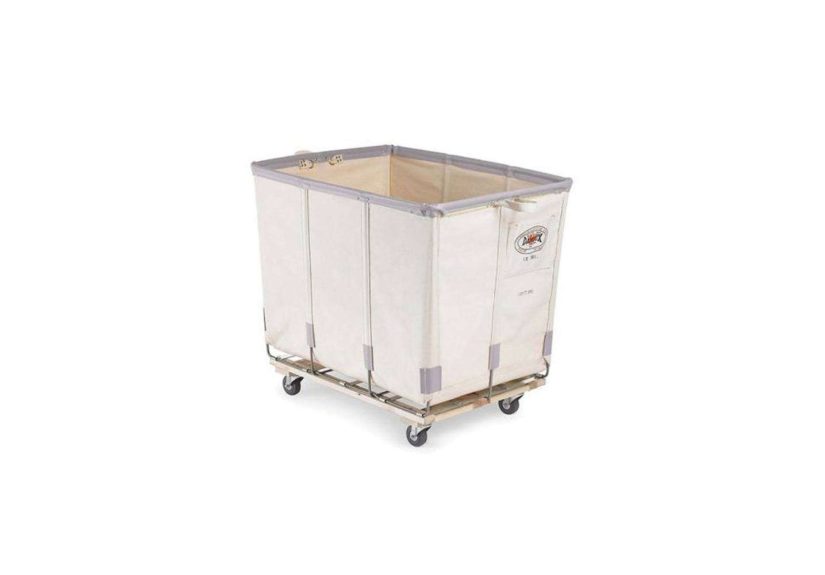
Dandux Extra Duty Laundry Trucks are heavy-duty rolling fabric trucks designed for moving, sorting, storing, and protecting bulk materials. While the name points straight at laundry, these trucks are used for much more than towels and sheets. Depending on the facility, they may carry uniforms, garments, recycled materials, mail, textiles, soft goods, packing materials, or parts that need a gentler touch than a rigid plastic bin.
They are typically built with a fabric body made from either traditional white canvas or coated Glosstex material, supported by a high-tensile electro-welded spring-steel frame. Underneath, the frame is paired with plated steel supports, kiln-dried hardwood runners, caster boards, and rolling casters in several configurations. In plain English, that means they are built like somebody expected them to be pushed hard, loaded often, and bumped into door frames for years.
Many sellers offer them in bushel sizes commonly ranging from 6 to 24 bushels, with some spec sheets showing smaller options as well. That makes the line flexible enough for compact sorting stations and large-scale bulk transport alike.
Why These Laundry Trucks Have Stayed Relevant for So Long
Dandux is not the new kid in the cart aisle. The brand traces back to C.R. Daniels, a long-established American manufacturer with roots going back to 1918. That history matters because the design philosophy feels refreshingly practical. These trucks were not invented for showroom admiration. They were built to survive repeated loading, rolling, storing, and cleaning in demanding environments.
That is also why they remain popular in settings that care less about trendy styling and more about uptime. A facility manager is not looking for a laundry cart that is “cute.” They want one that does not rip at the stress points, wobble under weight, or throw a wheel tantrum halfway through a shift.
In that sense, Dandux Extra Duty Laundry Trucks are a lot like a cast-iron skillet, a hammer, or that one employee who never creates problems and somehow always fixes everyone else’s. They are boring in the most profitable way.
Key Features That Make Dandux Extra Duty Laundry Trucks Stand Out
Reinforced wear points
One of the most important details is the reinforcement at critical wear points, including the top rim. That matters because top-edge failure is one of the first ways cheaper canvas laundry carts begin to look tired. Constant grabbing, lifting, scraping, and overstuffing can destroy a weak rim fast. Reinforcement helps these trucks stay useful much longer.
Spring-steel frame construction
The frame is typically described as high-tensile, electro-welded spring steel. That combination gives the truck structure without making it absurdly bulky. It is strong enough for heavy commercial use, yet still appropriate for environments where soft-sided handling is preferred.
Hardwood runners and plated steel support
Dandux trucks are not just fabric bags on wheels. The lower structure includes welded plated flat steel attached to kiln-dried hardwood runners and caster boards. That foundation helps the truck absorb repeated movement and loading while keeping the base stable.
Fabric handles and card pocket
Simple details matter. Fabric handles improve control when pushing or repositioning the truck, and a card pocket is useful for sorting labels, route notes, room assignments, or inventory tags. In busy operations, those tiny conveniences save time because nobody has to guess what belongs where.
Caster flexibility
Casters are available in multiple sizes and patterns, with seller listings commonly showing 3-inch and 4-inch options and some offering larger sizes up to 6 inches. Soft rubber casters are a common standard, and some configurations include thread guards. Buyers can also find different caster arrangements, such as all-swivel or mixed rigid-and-swivel layouts, depending on how much maneuverability or straight-line tracking the operation needs.
Material choices
White canvas remains the classic choice, but many sellers also offer Glosstex fabric, often in yellow and other colors such as red, green, blue, gray, black, or white. That color flexibility is more useful than it first appears. In multi-department facilities, color coding can simplify sorting and reduce cross-contamination or routing errors.
Who Uses Dandux Extra Duty Laundry Trucks?
These trucks show up in far more places than the phrase “laundry truck” suggests. Yes, they are common in laundries and linen service operations. But they are also used in hospitality, healthcare, locker rooms, dry cleaning operations, textile mills, garment plants, commercial buildings, government facilities, warehouses, and mail rooms.
That broad appeal comes from a simple advantage: soft-sided transport. A hard plastic or metal cart can scuff walls, bang into equipment, and be rough on delicate materials. A rolling laundry cart with a reinforced fabric body can handle bulk loads while being gentler on both the product and the surrounding space.
For example, a hotel may use one truck for clean linens and another for soiled sheets. A hospital might dedicate separate trucks to different streams of textiles. A garment facility could use color-coded trucks to move work in progress between sewing, inspection, and packing. A mail room might use them for bagged deliveries. A textile warehouse may simply appreciate that the soft body is less likely to mark finished goods.
How to Choose the Right Dandux Extra Duty Laundry Truck
Start with bushel size
The right size depends on load volume, aisle width, doorway clearance, and how far the truck travels. Smaller units are easier to control in tight spaces. Larger trucks reduce the number of trips but demand more room and can tempt people to overload them because, well, empty space is a dangerous invitation.
If your operation handles moderate daily loads and narrow pathways, a mid-range truck may be the sweet spot. If you are moving bulky linen or garments in fewer trips, larger bushel sizes make more sense. Some sellers list a 16-bushel unit with a capacity around 500 pounds, which gives a useful benchmark for how serious these trucks can be when properly configured.
Pick the right fabric
Canvas laundry carts appeal to buyers who want a traditional look and feel. Glosstex, by contrast, is a coated material that many facilities prefer for easier wipe-downs and color options. If cleanliness, moisture resistance, or visual sorting matters, Glosstex may be the better choice. If the application is straightforward and budget-sensitive, canvas can still be an excellent fit.
Think hard about caster setup
This is where buyers either make a smart choice or create daily regret. All-swivel casters are great for maneuverability in crowded rooms and turns. Mixed rigid-and-swivel patterns can help with directional travel across longer routes. Larger casters may improve rolling over thresholds or rougher surfaces, while smaller ones may be sufficient on smooth indoor floors.
Do not treat caster selection like an afterthought. The cart body gets the attention, but the wheels decide whether staff love the truck or mutter about it every day.
Consider accessories
Sanitary caps and liners are worth considering, especially in healthcare, hospitality, and controlled handling environments. Accessories can help keep dust and dirt off contents during storage or transit, and they may also help reinforce process separation in operations with clean and soiled streams.
Dandux Extra Duty Laundry Trucks vs. Plastic Bulk Trucks
Not every facility should automatically choose fabric. Plastic bulk trucks have their own strengths, especially where moisture, wash-down procedures, or rigid-wall containment matter most. But Dandux Extra Duty Laundry Trucks offer several advantages that keep them highly relevant.
First, the soft body is friendlier to delicate goods and surrounding surfaces. Second, the steel-and-fabric design can feel easier to handle in environments where workers are constantly loading and unloading by hand. Third, fabric trucks often make visual sorting easier when paired with color choices and labeled pockets.
In other words, if your workflow depends on moving soft goods, protecting materials, and navigating interior workspaces, a heavy duty laundry hamper in the Dandux style can be a better operational fit than a rigid tub.
Maintenance and Longevity
These trucks earn their keep when they are not abused like shopping carts in a supermarket parking lot. Fortunately, maintenance is pretty straightforward. Facilities should inspect the fabric for wear, confirm the frame remains true, keep casters free of wrapped debris, and replace worn wheels before they start affecting productivity.
That sounds basic because it is basic. The point is that the product is designed to be serviceable and durable. Buyers are not paying for fancy electronics, breakable accessories, or unnecessary complexity. They are paying for a practical tool that can remain useful over a long service life when treated with ordinary common sense.
That long-life value is part of the appeal. A truck that costs more upfront but lasts longer, rolls better, and avoids frequent replacement may easily outperform a bargain cart that gives up after a season of real work.
Are Dandux Extra Duty Laundry Trucks Worth It?
For many commercial users, yes. They are worth it because they solve a boring problem exceptionally well. They move bulk material. They protect soft goods. They fit into established industrial and institutional workflows. They offer multiple sizes, color options, and caster setups. And they come from a product family that has been trusted for generations in demanding environments.
They are not the cheapest option in every catalog, and they should not be purchased carelessly. Buyers still need to match the bushel size, fabric, and caster pattern to the job. But once that decision is made correctly, the result is often a truck that keeps showing up, keeps rolling, and keeps doing its job long after a cheaper alternative has become an expensive lesson.
So if you are shopping for Dandux Extra Duty Laundry Trucks, the real question is not whether they look impressive. It is whether they will make your operation cleaner, faster, and less frustrating. In the right facility, the answer is a very confident yes.
Real-World Experience With Dandux Extra Duty Laundry Trucks
Here is the part buyers usually care about most: what is it actually like to live with one of these trucks every day? In real operations, the experience is less about dramatic “wow” moments and more about the quiet satisfaction of equipment that behaves exactly the way you hoped it would.
Imagine a hotel housekeeping team working a busy turnover day. Rooms are flipping fast, laundry bags are multiplying like rabbits, and nobody has time for a cart that tips awkwardly or jams at every corner. A Dandux extra duty truck in that setting tends to feel steady, predictable, and easy to understand. Staff grab the fabric handles, load the truck quickly, and move on. No training seminar required. No engineering degree needed. Just push, roll, unload, repeat.
In healthcare or institutional laundry, the experience often comes down to separation and flow. Managers like that trucks can be assigned by size or color, and workers appreciate that the soft-sided body is less punishing when they are loading bags or bundled linens all shift long. The card pocket seems like a tiny feature until a department starts using it for route cards, room numbers, or sorting notes. Then suddenly it becomes one of those details people miss the instant it is not there.
Another thing users tend to notice is how “honest” the truck feels. That may sound strange, but some equipment looks sturdy and then becomes suspiciously flimsy under pressure. Dandux trucks usually give the opposite impression. They look simple, and then they prove stronger than expected. The reinforced rim matters. The frame matters. The hardwood base matters. Those are not glamorous design choices, but they create the kind of durability that workers feel over time.
There is also a practical comfort factor. Soft-sided trucks are often easier to work around than rigid bins in interior spaces. They are less likely to leave the room looking like it lost an argument with a battering ram. In facilities with tight corridors, room entries, elevators, and constant hand loading, that softer profile can be a real advantage.
Of course, no truck is magical. Pick the wrong size and even a great cart becomes annoying. Too large, and it feels like steering a parade float through a coat closet. Too small, and staff make extra trips all day, which is the operational equivalent of death by a thousand paper cuts. The best experiences usually come from buyers who think carefully about route length, floor conditions, load type, and how often the truck needs to turn, stop, or park.
Facilities that maintain their trucks also tend to report the best long-term results. Keep casters clean, avoid absurd overloading, and replace worn parts before failure becomes a group activity. Do that, and these trucks often become background heroes: not flashy, not fragile, just dependable. And in commercial settings, dependable usually beats exciting by a mile.
That is probably the strongest real-world takeaway. Dandux Extra Duty Laundry Trucks are not designed to impress people scrolling through product photos. They are designed to help real teams move real loads in real buildings day after day. When a product manages to feel useful, durable, and low-drama at the same time, that is not boring. That is operational gold.
Conclusion
Dandux Extra Duty Laundry Trucks remain a smart choice because they combine durable materials, practical design, flexible sizing, and real-world usefulness. From hotels and hospitals to textile facilities and commercial buildings, these trucks continue to earn attention because they do exactly what professional users need: move bulky loads efficiently, protect materials during handling, and hold up under routine abuse.
If you want a commercial laundry truck that balances strength, maneuverability, and long service life, Dandux deserves a close look. Choose the right size, pick the right fabric, match the caster pattern to your floor and route, and you will likely end up with a tool that quietly makes your whole operation better. Not flashy. Not fussy. Just extremely good at its job. Honestly, that is the dream.