Table of Contents >> Show >> Hide
- What “Great Wall of Energy” Actually Means (Spoiler: Not One Single Wall)
- Why Build It in the Kubuqi Desert?
- The “Power an Entire City” Claim: Let’s Talk Numbers
- The Secret Sauce: Transmission Lines and Grid Muscle
- Storage and Hybrid Builds: Not Just a Sea of Panels
- Not Just Power: The Desertification Angle (and Why It’s Not Totally Wild)
- The Unsexy Challenges Nobody Puts on the Billboard
- Why the Rest of the World Should Care
- Bottom Line
- Experiences: What It’s Like (In Real Life) When a Desert Becomes a Power Plant
- Conclusion
If you’ve ever looked at a desert and thought, “This place could really use a job,” China apparently agreedthen handed the dunes a hard hat, a construction schedule, and a truly unreasonable number of solar panels.
In Inner Mongolia’s Kubuqi Desert (yes, a real place, and yes, it used to be nicknamed the “sea of death”), China is assembling what’s being widely described as a “Solar Great Wall”: a long, band-shaped buildout of photovoltaic (PV) projects designed to generate enough electricity to meet demand on the scale of a major metropolis. The headline claim“it can power an entire city”isn’t just marketing glitter. The numbers are big, specific, and (mostly) the point.
What “Great Wall of Energy” Actually Means (Spoiler: Not One Single Wall)
First, let’s clear up the mental image. This isn’t a single, continuous row of panels stretching like a shiny blue runway from horizon to horizon. Think of it more like a renewable-energy corridora series of utility-scale solar sites built in a long, narrow zone across the desert, with additional wind, storage, and transmission upgrades layered in as the project matures.
Depending on which slice of the project you’re reading about, you’ll see different dimensions quoted:
- A broader “solar great wall” plan discussed in satellite-based reporting describes a buildout that could reach roughly 400 kilometers long and 5 kilometers wide, targeting a maximum generating capacity of about 100 gigawatts by around 2030.
- Some coverage zooms into a specific section tied to local development plans (and associated grid export), describing a segment around 133 kilometers long and 25 kilometers wide, with production targets framed in annual kilowatt-hours.
Translation: multiple projects, multiple phases, and multiple ways to draw a rectangle around “the wall.” That’s not a contradictionit’s what happens when you describe a massive infrastructure program that’s built in parts and reported by different agencies.
Why Build It in the Kubuqi Desert?
Solar developers everywhere love the same things: lots of sun, lots of space, and as few neighbors as possible who can complain about glare. The Kubuqi checks those boxes with the enthusiasm of a toddler checking “YES” on every cereal choice in the grocery aisle.
1) Sun + Flat Land = Solar’s Favorite Equation
Deserts are brutally sunny and often relatively flatideal for large PV arrays. The Kubuqi’s conditions make it a natural candidate for utility-scale solar, especially when the goal is to deploy capacity in huge blocks.
2) Proximity to Industry (and a River) Helps Logistics
While deserts can be remote, this region sits within reach of industrial centers and major infrastructure corridors. That matters for construction, maintenance, labor, andmost importantlygetting electricity from “where the panels are” to “where the people are.”
3) Desert Control Is Part of the Pitch
Here’s the twist: the solar isn’t only about electrons. It’s also tied to long-running efforts to slow desertification. The panels can reduce wind at ground level and stabilize sand movement. In other words: the desert becomes less “free-range.”
The “Power an Entire City” Claim: Let’s Talk Numbers
The project’s ambition is not subtle. One widely cited target is roughly 180 billion kilowatt-hours (kWh) per year by 2030. For context, Beijing’s reported electricity consumption in 2023 was about 135.8 billion kWh. If the project meets the higher annual output targetand if demand doesn’t outrun projectionsthen yes, the math supports the “power Beijing” storyline.
There’s also a helpful reality check: capacity (gigawatts) and annual energy (kWh) are different beasts. Solar doesn’t run at full output 24/7; it’s governed by daylight, weather, dust, and seasonal swings. That’s why annual kWh targets are the more honest metric when people ask, “Can it power a city?”
“Okay, but is it real today?”
Not fully. As of late 2024 reporting, installed solar capacity in the area described as part of the “solar great wall” had reached about 5.4 gigawatts, which is meaningful but nowhere near the ultimate 100-gigawatt aspiration. This is a marathon build, not a weekend DIY project.
The Secret Sauce: Transmission Lines and Grid Muscle
If solar panels are the headline, transmission is the plot.
Building 100 gigawatts of solar in a desert is impressive. Delivering that power to dense urban demand centersreliably, at scaleis the part that separates “cool satellite photo” from “national energy strategy.”
Ultra-High Voltage (UHV): China’s Long-Distance Extension Cord
China has invested heavily in ultra-high-voltage AC and DC transmission to move electricity thousands of kilometers, linking remote generation with coastal load. Engineers and grid planners often describe UHV DC as the big ship that hauls bulk power long distances, with UHV AC acting like the port infrastructure that helps distribute and absorb it across regional grids.
This matters because large renewable bases can otherwise run into a classic problem: you can generate a lot of power where nobody lives, but if the grid can’t move itor can’t flex around itthen electricity gets curtailed (i.e., clean power that could have been generated is basically told, “Thanks, but no thanks”).
Curtailment: The Awkward Phase Renewables Go Through
China has dealt with significant wind and solar curtailment in some northwestern regions in the past, driven by a mix of administrative barriers, market rules, and grid constraints. Research has highlighted how policy and market design can either block or unlock renewable utilization, and how improved coordination and market mechanisms can reduce wasted potential.
In plain English: if you build the panels first and the grid later, your solar farm can turn into a very expensive mirror.
Storage and Hybrid Builds: Not Just a Sea of Panels
“Powering a city” also implies being there when the city needs powermorning ramps, evening peaks, winter demand spikes, and all the messy stuff that happens when millions of people decide to charge phones, cook dinner, and run the subway at the same time.
That’s why many large-scale projects aren’t pure solar. They’re increasingly hybrid systems: solar plus wind, plus storage, sometimes with firming resources included to guarantee delivery.
One notable example of this “integrated base” approach reported in 2024 involved a major planned investment in Ordos, Inner Mongolia, combining solar, wind, coal-fired capacity, and energy storage, with electricity delivered via an ultra-high voltage line to the Beijing–Tianjin–Hebei region. Whether you love or hate the inclusion of coal support, it illustrates the real-world grid mindset: make the output dependable, not just impressive.
Not Just Power: The Desertification Angle (and Why It’s Not Totally Wild)
“Solar in the desert” sounds obvious. “Solar to fight the desert” sounds like a movie plot. But there’s a practical logic to it, and similar concepts show up under the umbrella of agrivoltaicsdesigning solar installations so land can serve multiple functions.
Shade Can Be a Feature, Not a Bug
Research and field studies (including U.S.-based agrivoltaics work) show that vegetation under and around solar infrastructure can influence soil moisture and temperature dynamics. In some contexts, shade reduces evaporation stress, which can improve growing conditionsespecially in hot, arid environments. The “panels as umbrellas” concept isn’t magical; it’s microclimate.
That doesn’t mean every crop thrives under panels (some do poorly), and it doesn’t mean every site becomes an oasis. But it does mean the land-use conversation can be more nuanced than “solar versus nature.”
Sand Control + Cleaner Power = Two Wins (If Done Right)
Several desert solar initiatives in China have also been framed as ecological restoration toolsreducing shifting sands, enabling shrubs and grasses to establish, and protecting surrounding areas from windblown erosion. It’s a long game, and outcomes vary by water availability, design, and long-term maintenance.
The Unsexy Challenges Nobody Puts on the Billboard
1) Dust, Soiling, and Maintenance
Desert solar comes with a built-in enemy: dust. Soiling reduces output, increases cleaning needs, and adds water/logistics pressure. The project scale magnifies everythingone cleaning problem becomes a regional cleaning problem.
2) Land Use and Ecology
“Mostly barren” does not mean “ecologically irrelevant.” Large installations can fragment habitats, alter surface temperatures, and change local conditions. Good site selection and mitigation matter.
3) Grid Integration Is Harder Than Building Panels
The world has gotten extremely good at installing PV capacity quickly. The tougher challenge is integrating variable power into a grid built for predictable generationand doing it without wasting a chunk of your clean electricity through curtailment.
4) The “Power Beijing” Claim Depends on Demand Growth
Cities don’t sit still. If Beijing’s electricity use grows significantly by 2030, then “enough to power the city” becomes a moving target. The project can still be massive and important, even if the marketing line needs a footnote later.
Why the Rest of the World Should Care
This project isn’t just a China story. It’s a preview of the scale needed for deep decarbonization everywherealong with the practical lessons that come with it.
- Scale is the point: You don’t decarbonize a major economy with “a nice little solar farm.” You do it with industrial-level buildouts.
- Transmission is climate infrastructure: Long-distance lines and grid flexibility are as important as generation capacity.
- Multi-use land design is becoming mainstream: From pollinator habitat to grazing to desert control, solar is increasingly expected to do more than sit there and look shiny.
- Hybridization is growing: Storage and mixed-resource “bases” are one pathway to make renewables behave more like traditional power plantswithout abandoning the emissions goals.
Bottom Line
Calling it a “Great Wall of Energy” is a metaphor, surebut the buildout is very real. In the Kubuqi Desert, China is pushing a model that pairs enormous solar deployment with grid expansion, long-distance transmission, and (in some cases) hybrid generation and storage.
If the project reaches its ambitious 2030 targets, it won’t just be a landmark you can see from space. It’ll be a case study in how to turn empty land, intense sunlight, and national-level infrastructure planning into enough clean electricity to make a megacity’s lights look… well, less coal-flavored.
Experiences: What It’s Like (In Real Life) When a Desert Becomes a Power Plant
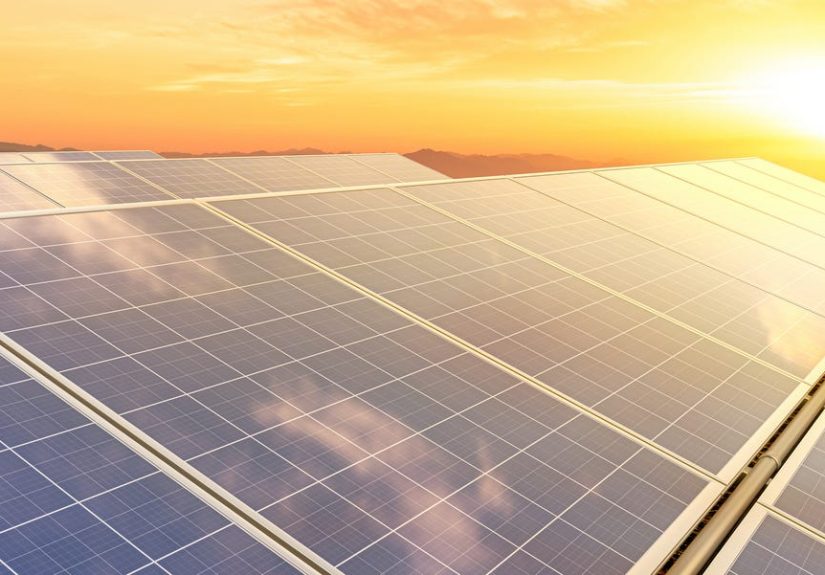
You don’t really understand the phrase “utility-scale” until you try to describe what you’re seeing without resorting to hand-waving and phrases like “a lot” or “more than seems reasonable.” Picture standing at the edge of a dune field where the sand used to be the main character. Now the panels are. The horizon doesn’t end in “desert,” it ends in geometry: row after row of dark rectangles, each one angled like it’s trying to catch the best gossip from the sun.
In the morning, the site feels oddly calm. The desert air is crisp, and the panels still look almost black-blue, like the surface of a lake before the wind wakes up. You can hear maintenance vehicles long before you see themsmall convoys rolling down service roads that slice through the arrays like zipper seams. Everything is planned for repeatability: inspection routes, inverter stations, transformer yards, monitoring systems, spare parts. The vibe is less “science fair” and more “airport operations,” except instead of planes you’re managing photons.
Then the sun climbs and the place starts “working.” It’s not loud like a fossil plant, but it’s not silent either. There’s a steady hum from electrical equipment, a faint buzz if you’re near certain stations, and the sound of windalways the windpushing across the site. If you walk beneath elevated sections (where designs allow clearance), the temperature shift is noticeable. Shade in a desert is a luxury item, and here it’s mass-produced. That shaded microclimate is part of why people talk about pairing solar with vegetation or grazing. It’s not romantic; it’s physics: less direct sun on soil, less evaporation stress, and a better chance for hardy plants to survive if water and management cooperate.
The most surprising “experience” is realizing how much of the project isn’t the panels at all. The panels are the Instagram content. The real effortwhat keeps grid operators awakeis everything downstream: dispatch plans, curtailment risk, forecasting, and transmission constraints. If you talk to people focused on operations, the conversation turns quickly into timing: when the power peaks, when demand peaks, and how storage or hybrid resources can bridge that gap. When someone says, “This can power a city,” the unspoken follow-up is, “Yes, but can it do it at 7 p.m. in winter when everyone is home?”
You also notice the human scale tucked inside the megaproject scale. Workers eat lunch in temporary facilities that look like they were dropped from the sky. Engineers argue over minor efficiency gains that add up to huge energy differences across a massive fleet of panels. Local officials talk about sand control and land rehabilitation with the seriousness of people who’ve watched dunes swallow roads. Even the famous solar-horse installation nearby (the one that looks like a galloping horse from above) hits differently in person: it’s both art and infrastructure, a cultural nod and a very practical generator. In a place once defined by “nothing grows here,” the dominant impression becomes: “Something is happening hereat scale.”
By late afternoon, the light turns golden and the arrays look less like a wall and more like a stitched fabric laid across the dunes. It’s beautiful in a slightly unsettling waybecause it’s not a landscape you stumbled upon. It’s a landscape you built. And whether you’re thrilled or nervous about that depends on what you think the future should look like: smaller and local, or massive and engineered. The Kubuqi “energy wall” suggests China is betting on massive and engineeredand daring the rest of the world to keep up.
Conclusion
China’s “Great Wall of Energy” in the Kubuqi Desert is a reminder that clean energy is no longer limited by imaginationit’s limited by execution: transmission, storage, grid rules, land design, and long-term operations. If those pieces keep advancing alongside the panels, “powering an entire city” shifts from headline bravado to an achievable, measurable outcome.