Table of Contents >> Show >> Hide
- What Is the “Child With a Raft on His Head” Photoshop Challenge?
- Why Photoshop Battles Like This Go Viral
- How to Join a Photoshop Challenge Like This (Even as a Beginner)
- The Community Side: Why People Love Bored Panda–Style Challenges
- Staying Respectful and Ethical With Real-Person Images
- Ideas to Spark Your Own Raft Kid Edit
- of Real-World Experience: What This Challenge Teaches Us
If you’ve spent any time on the internet, you know that it only takes one weird picture
to send the entire world into a Photoshop frenzy. Enter: the legendary
“Challenge: Photoshop This Child With A Raft On His Head” – a delightfully
absurd image that has become a playground for digital artists, meme-makers, and anyone
who loves a good visual joke.
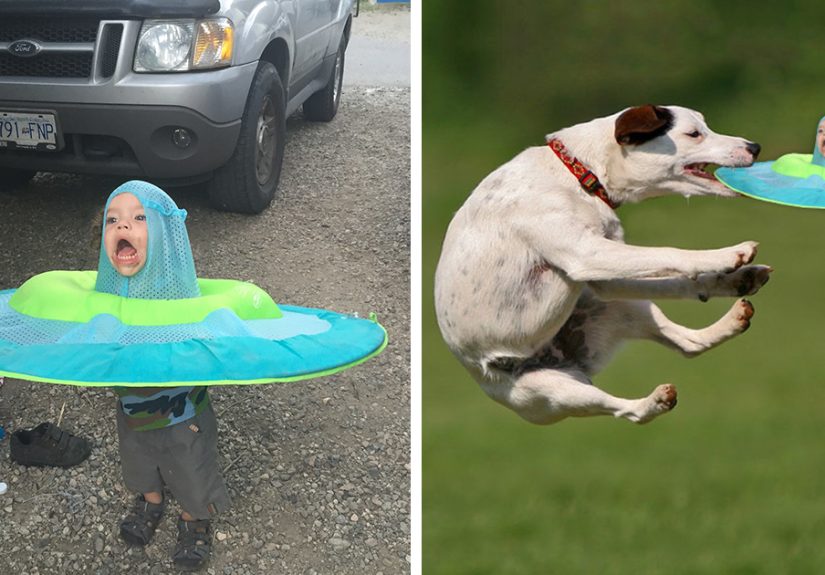
Picture it: a kid, standing casually, balancing an inflatable raft on their head like
it’s the most normal thing in the world. No explanation, no context – just pure,
meme-able chaos. It’s exactly the kind of photo Bored Panda readers adore and the
kind of prompt that Photoshop battles on the internet were born to exploit.
In this guide, we’ll dive into why this particular challenge works so well, how
Photoshop contests like this evolved into a beloved internet sport, and how you can
jump in with your own hilarious edits without needing a degree in graphic design.
What Is the “Child With a Raft on His Head” Photoshop Challenge?
The premise is beautifully simple: take one oddball photo and re-imagine it in as many
ridiculous, cinematic, or downright surreal scenarios as possible. The raft kid
is the perfect subject because the image is:
- Ambiguous: There’s no clear story, which invites creative storytelling.
- Visually distinct: The bright raft and the child’s pose stand out against most backgrounds.
- Easy to cut out: Designers can quickly isolate the subject and drop them into new scenes.
On sites like Bored Panda, challenges like this usually feature the original image
followed by community submissions: movie poster parodies, fantasy creatures, ad
mock-ups, sci-fi battle scenes, and everything in between. People vote, share, and
comment, turning one snapshot into an entire mini-universe of jokes.
Why Photoshop Battles Like This Go Viral
There are thousands of images posted online every second, but only a few become the
foundation for viral Photoshop challenges. So what makes something like the raft-headed
child so compelling?
1. A Strong, Simple Visual Hook
Viral Photoshop prompts are instantly understandable, even at a glance on a crowded
social feed. A child balancing a raft on their head is visually weird yet easy to parse:
you don’t need a caption to “get” why it’s funny.
Strong silhouettes and recognizable shapes – like a round raft, an umbrella, a hat, or a
dramatic pose – make it easier for editors to drop the subject into new environments
without losing clarity.
2. Built-In Story Potential
Any good meme, especially one primed for Photoshop, contains a built-in question:
What on earth is happening here? With the raft child, people immediately wonder:
- Is the raft an alien spaceship?
- Is the kid a tiny superhero hauling emergency equipment?
- Is this the world’s most intense game of make-believe?
Because the original photo doesn’t answer those questions, the community steps in to
write the story – frame by frame, edit by edit.
3. Low Barrier to Entry, High Ceiling for Skill
One reason Bored Panda–style challenges thrive is that they welcome everyone:
beginners with simple cut-and-paste edits and seasoned designers with cinematic
color-grading and flawless compositing.
A newcomer might paste the raft kid into a stock photo of a stormy ocean. A pro might
rebuild the entire scene from scratch, adding lighting effects, splashes, and dramatic
shadows. Both contributions can be funny and well-received – the community values
creativity as much as technical skill.
How to Join a Photoshop Challenge Like This (Even as a Beginner)
Think participating in a Photoshop battle is only for professionals? Not at all.
Here’s how you can jump in with your own spin on the raft-headed child.
Step 1: Grab the Original Image
Most challenges share the original photo at the top of the post or thread. Save it to
your device and, if available, download the highest-resolution version so your final
edit doesn’t look mushy or pixelated when viewed full screen.
Step 2: Cut Out the Subject
Use your favorite photo editor – Adobe Photoshop, Affinity Photo, GIMP, or even
advanced mobile apps – to isolate the child and the raft from the background.
Helpful tools include:
- Object Selection or Magic Wand: Quickly select the raft and the child’s silhouette.
- Refine Edge / Masking: Clean up hair, edges, and small details.
- Layer Masks: Non-destructive editing lets you tweak the cutout later.
Don’t stress about perfection on your first try. Most viewers are too busy laughing at
the concept to zoom in and judge every pixel.
Step 3: Choose a Scene That Amplifies the Joke
This is where the magic happens. The secret to a great Photoshop battle entry is
pairing your subject with a scene that amplifies the absurdity. For the kid with the
raft, think:
- Disaster movie posters: The kid calmly walking through a CGI tidal wave.
- Classic paintings: Replacing a mythological figure with the raft child.
- Sci-fi battles: The raft is now a personal force field or spaceship.
- Advertising parodies: “New ultra-portable flotation device for kids on the go.”
The best ideas often come from asking, “What’s the opposite of this photo’s energy?”
Calm kid? Put them in the middle of chaos. Silly toy? Turn it into high-stakes equipment.
Step 4: Match Lighting and Perspective
If you want your edit to look polished – the kind that gets upvoted and shared – spend a
bit of time matching the lighting of your new scene to the original subject:
- Check where the light hits the child’s face and raft.
- Add shadows on the ground or nearby objects in your new background.
- Use color balance or curves to nudge the subject toward the scene’s overall tone.
Even small adjustments make a huge difference. A soft drop shadow or slight color
grading can instantly pull the whole image together.
Step 5: Add Final Details and Text
Want your entry to feel like a finished piece, not just a quick paste job? Add little
touches:
- Motion blur on splashing water or flying debris.
- Particles, dust, or light rays for drama.
- Fake titles, taglines, or “coming soon” text if you’re doing a movie poster parody.
Then export your final image at a web-friendly resolution, and you’re ready to upload it
to the challenge thread or community.
The Community Side: Why People Love Bored Panda–Style Challenges
Challenges like “Photoshop This Child With a Raft on His Head” aren’t just about the
edits themselves – they’re about the sense of shared creativity and participation.
Creative Collaboration Without Pressure
Unlike formal contests with strict rules, many Photoshop battles are casual, playful,
and community-driven. People comment with puns, react with emojis, and build running
jokes across different edits.
One person might turn the raft into a dinosaur frill, another into a UFO, another into
a giant hat in a high-fashion runway show. Each idea sparks the next, and suddenly the
raft kid is a recurring character in a hundred mini universes.
Learning by Doing (and Laughing)
For many digital artists, these challenges double as practice. Instead of staring at a
blank canvas, they’re given a funny prompt, a clear subject, and a community waiting to
see what they create.
Over time, people improve their:
- Masking and selection skills
- Lighting and shadow realism
- Typography and layout for parody posters
- Speed and efficiency – an underrated skill!
It’s one of the most enjoyable ways to build a portfolio full of eye-catching, shareable
images that showcase both humor and technical skill.
Staying Respectful and Ethical With Real-Person Images
While we’re all here for the laughs, it’s also important to talk about boundaries. When
a real child’s photo is used as the subject of a meme or challenge, creators should be
mindful of how their edits might be perceived.
A few simple guidelines:
- Avoid cruel or demeaning scenarios. The joke should be about the situation, not attacking the child.
- Skip graphic or violent imagery. It might be “just Photoshop,” but it still involves a real person’s likeness.
- Respect platform rules. Most communities have clear guidelines on what’s off-limits.
The best edits showcase creativity and wit, not cruelty. Think clever, not cruel; surreal,
not shocking just for the sake of it.
Ideas to Spark Your Own Raft Kid Edit
Staring at the blank workspace and not sure where to start? Here are themed prompts you
can use with the raft child:
- The Hero of the Flooded City: Turn the child into a tiny, determined rescuer navigating a cartoonishly flooded street.
- Space Explorer: The raft becomes a zero-gravity pod as the child floats through a colorful nebula.
- Retro Video Game: Pixelate the child and raft, then drop them into an 8-bit platformer level.
- Fantasy Summoning: The raft glows with runes as the child “summons” water spirits in a magical forest.
- Theme Park Mascot: Mock up a fake water park ad featuring “Raft Kid” as the official character.
The more unexpected your twist, the more likely your edit is to stand out – especially
if you pair it with a clever caption.
of Real-World Experience: What This Challenge Teaches Us
On the surface, a challenge titled “Photoshop This Child With a Raft on His Head” sounds
like pure silliness – and it definitely is. But underneath the memes, there are genuine
lessons about creativity, community, and how the modern internet works.
First, challenges like this showcase how powerful constraints can be. Give people a
blank canvas and many will freeze. Give them a single, oddly specific photo – a kid with
a raft on his head – and suddenly ideas start flowing. Some creators lean into disaster
movie clichés, others think of fantasy or sci-fi, and some go for quiet, poetic humor,
like the child calmly walking through a museum or floating through a dreamscape. The
limitation of having to use that same subject forces people to think harder and dig
deeper for original angles.
Second, these battles reveal how collaboration can be playful instead of competitive.
Sure, there might be upvotes, “winners,” or featured edits, but the real fun comes from
scrolling through the entire thread or gallery. You see one edit that turns the raft into
a giant glowing halo, another that transforms it into a spaceship, and another that
reimagines it as part of a fashion editorial. Each interpretation builds on the last,
almost like a visual conversation. Even when creators don’t know each other personally,
they’re riffing off the same joke together.
There’s also a major confidence boost that comes from participating. A lot of people
who dabble in Photoshop or mobile editing apps feel hesitant to show their work. A
challenge like this gives them an excuse: “It’s just for fun.” That lower pressure makes
it easier to post that first entry, even if they feel it’s not “good enough.” And once
they start receiving likes, comments, and encouragement, they often feel motivated to
learn more techniques and keep practicing.
From a technical standpoint, editing a single subject across multiple different scenes
is an incredible exercise. You quickly learn how important lighting direction is – if the
background has light coming from the left but the child is lit from the right, something
feels off. You learn how shadows anchor a subject to the ground, how color grading can
unify elements from different sources, and how small mistakes become obvious once you
see the image on a larger screen. Every new attempt teaches you something, even if no
one else notices the detail you obsessed over.
There’s also a subtle media literacy element. When you spend time creating seamless
edits, you become more aware of how easily images can be manipulated. You start
recognizing when a promotional shot or “candid” photo online doesn’t look entirely
natural. Instead of making you cynical, though, participating in light-hearted
Photoshop battles often does the opposite – it reminds you that not all image editing is
about deception. Sometimes it’s just about shared laughter, creativity, and turning a
random, unexplained moment into a tiny piece of internet joy.
Finally, this challenge highlights one of the best sides of online culture: the ability
to take something small and ordinary and collectively turn it into something memorable.
The original picture could have stayed a forgotten snapshot on someone’s camera roll.
Instead, it became the seed for a wave of artwork and jokes that reached people who
might never meet in real life. That’s the real charm of “Photoshop This Child With a
Raft on His Head” – it proves that imagination plus community can turn even the strangest
little moment into a shared story the whole internet can enjoy.
So whether you’re an experienced designer or someone who just discovered the “add layer”
button, don’t be shy about joining the next round. Download the image, fire up your
editor, and see where your imagination takes the raft kid next. Worst case, you learn
something. Best case, your edit becomes the one everyone shares, laughs at, and remembers.