Table of Contents >> Show >> Hide
- Why This Story Matters Beyond One Dish
- The Dish: From NASA-Era Support to Museum Landmark
- How a “Retired” Dish Came Back to Life
- Why Carnarvon’s Location Is a Big Deal
- The Difference Between NASA’s DSN and Carnarvon’s OTC Dish
- What This Means for Space Heritage and the Local Community
- What Happens Next
- Experiences Related to Carnarvon’s Dish Revival (Extended Section)
- Conclusion
Every town has a landmark. Some have a clock tower. Some have a giant ball of twine. Carnarvon, Western Australia, has a giant satellite dish that helped connect humanity to the space age and after sitting mostly idle for decades, it is talking to space again.
The comeback is more than a feel-good restoration story. It is a smart, strategic example of how old space infrastructure can be reborn for modern needs like satellite tracking, orbital awareness, and future lunar-era communications. In other words: this is not just a museum piece getting a fresh coat of paint. It is an old workhorse being called back onto the field.
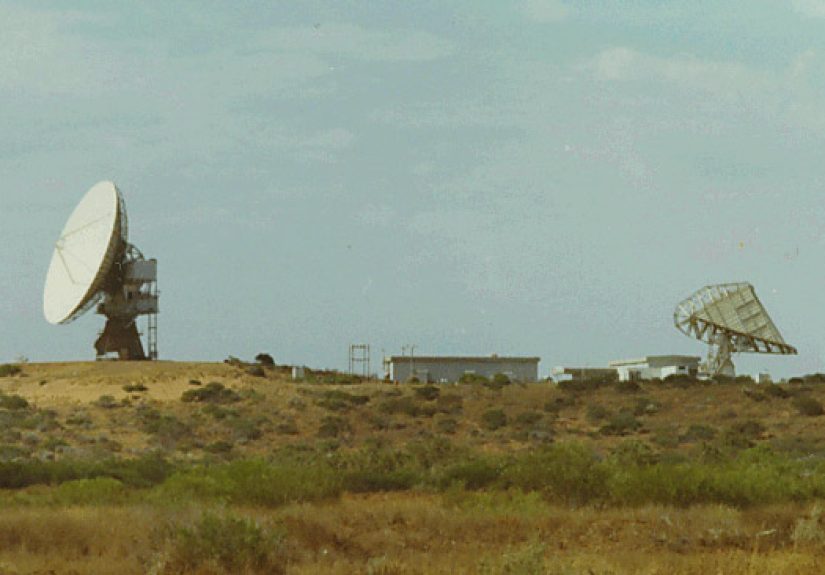
The dish in question is Carnarvon’s historic OTC (Overseas Telecommunications Commission) satellite dish, a roughly 29.6-meter steerable antenna that once supported communications tied to NASA missions and global satellite links. It was decommissioned in 1987 and later became part of the Carnarvon Space and Technology Museum site. Then came a second act that nobody would have written better: a private space company leased it, refurbished it, and recently proved it could receive signals again after nearly 40 years of silence.
Why This Story Matters Beyond One Dish
At first glance, this might sound like local nostalgia with bolts and bird droppings. (To be fair, the bird-droppings part is real.) But the project matters because it sits at the intersection of three big trends:
1) Space traffic is getting crowded
Geostationary orbit remains one of the most important neighborhoods in space. This is where many communications and weather satellites operate, because satellites in geostationary orbit appear fixed over one point on Earth, making them incredibly useful for broadcasting, communications, and constant regional coverage. That makes tracking them and anything moving near them a major operational and security priority.
2) Old infrastructure still has real value
Building a brand-new, large steerable dish is expensive, slow, and politically complicated. Reusing an existing structure can be faster and cheaper if the hardware is still fundamentally sound. Carnarvon’s dish had rust, grime, and long-term wear, but it still had something priceless: location, size, and a strong structural legacy.
3) Australia remains a critical part of global space communications
NASA’s modern Deep Space Network (DSN) depends on global geometry: three major complexes positioned about 120 degrees apart in longitude so spacecraft can stay in contact as Earth rotates. The Canberra complex is one of those essential pillars. Carnarvon is not the same as Canberra’s DSN site, but it belongs to the same broader story Australia’s long-running role as a global communications bridge for space missions.
The Dish: From NASA-Era Support to Museum Landmark
Carnarvon’s space history is richer than many people realize. The region hosted multiple facilities tied to the early space era, including the Carnarvon Tracking Station and the OTC Satellite Earth Station. These were related but distinct parts of the communications ecosystem.
The Carnarvon Tracking Station supported NASA’s Gemini, Apollo, and Skylab programs and played a key role in mission communications during the 1960s and 1970s. The Shire of Carnarvon and local museum records note that the station was the last to communicate with capsules leaving Earth orbit and the last before Pacific splashdown, with staffing peaking at around 220 people. That is a huge footprint for a regional town and a big reason Carnarvon still carries this history as part of its identity.
The OTC side of the site also became historic in its own right. In 1966, the Casshorn antenna (nicknamed the “Sugar Scoop”) was used for an early international TV broadcast from Australia to the BBC. During Apollo 11, that same Casshorn antenna relayed Neil Armstrong’s first steps on the Moon from Honeysuckle Creek to TV audiences in Western Australia via the Moree earth station. Later in 1969, the larger 29.6-meter OTC steerable dish was built to improve communications links.
After its working life, the OTC dish became a heritage landmark and tourist attraction. The broader site evolved into the Carnarvon Space and Technology Museum, which celebrates the region’s contribution to the manned space program and Australian satellite communications. The museum itself is a living community project, developed in phases and opened by notable astronauts including Buzz Aldrin, Andy Thomas, and Gene Cernan.
How a “Retired” Dish Came Back to Life
The modern revival starts with ThothX, a Canadian aerospace company that signed a 20-year renewable lease for the dish in 2022. The company’s plan is ambitious: restore the OTC antenna and use it for radar-based tracking of satellites and spacecraft, particularly in geostationary orbit and beyond.
This is where the story gets delightfully unglamorous. Space history loves dramatic music, but restoration work sounds more like this:
- Flush the bearings with fresh oil
- Remove decades of pigeon buildup
- Clean the dish optics by hand
- Repair welding issues
- Upgrade power and backend radio systems
- Repaint and protect the structure from corrosive coastal winds
In other words, the dish did not wake up like a movie robot. It needed a full spa treatment, a mechanical checkup, and probably an apology for being ignored so long.
By late 2024, the team achieved a major proof-of-concept: the dish received its first radar signal since 1987. According to local reporting, the target was the geostationary object NSS-12, and the test required precise alignment, manual adjustments, and a lot of patience. In one of the most human details in the whole story, a heavy dish weighing hundreds of tons was manually rotated using a power drill attached to the rotator mechanism while the team watched signal data and fine-tuned the pointing.
That first signal was not the final goal. It was the beginning of the next phase. ThothX has said the dish could eventually support a broader tracking network and, once fully upgraded, help monitor spacecraft at distances up to about 50,000 kilometers from Earth with high precision. The company has also pointed to the strategic value of Carnarvon’s location for monitoring activity across the Pacific region.
Why Carnarvon’s Location Is a Big Deal
Space tracking is a global problem, not a local one. If you want persistent awareness of satellites in high orbit, you need coverage across longitudes and hemispheres. A dish in one country can only “see” so much before Earth’s rotation and geometry work against you.
That is exactly why NASA’s Deep Space Network uses a three-site architecture across California, Spain, and Australia. The same logic applies to commercial and hybrid tracking networks focused on geostationary and cislunar operations: geography is infrastructure.
Carnarvon’s position in Western Australia makes it particularly useful for filling a coverage gap in a global network. ThothX has said it needed facilities in Europe and Australia to complement its Canadian operations, and Carnarvon gives it a southern-hemisphere node with historic antenna hardware already in place.
And because geostationary satellites appear fixed relative to Earth’s rotation, operators need highly reliable, well-positioned systems to maintain tracking and custody. This is not just about astronomy. It is about communications resilience, collision awareness, defense signaling, and continuity of services people use every day from TV delivery to banking networks to emergency systems.
The Difference Between NASA’s DSN and Carnarvon’s OTC Dish
Let’s clear up one common confusion: Carnarvon’s revived OTC dish is not one of NASA’s current Deep Space Network antennas.
NASA’s DSN is a separate global system operated through JPL, with major complexes at Goldstone (California), Madrid (Spain), and Canberra (Australia). Those facilities handle communications with deep-space missions and are an entirely different operational backbone.
However, Carnarvon absolutely belongs in the same historical conversation. Australia has been central to space communications for decades, from Mercury-era tracking support to Apollo-era relays to modern DSN operations. The Canberra complex is still indispensable today including for communications with Voyager 2 in the southern sky and NASA continues to invest heavily in Australia, with a new DSN antenna in Canberra planned for completion later this decade.
So while Carnarvon is not “the DSN dish,” it is part of the wider architecture of space history in Australia. Its revival underscores a bigger point: old space sites are not dead ends. With the right mission, they can become active assets again.
What This Means for Space Heritage and the Local Community
One of the best things about this story is that it is both futuristic and local.
For the space industry, Carnarvon offers a practical lesson in infrastructure reuse. We are entering an era of heavier orbital traffic, more contested space operations, and growing interest in Moon-to-Mars logistics. Rehabilitating legacy systems where it makes sense is not just sentimental it is strategic.
For Carnarvon, the project helps preserve an icon. Locals have described the dish as a homecoming marker: something you see on the horizon and know you are nearly back. The lease and refurbishment plan give the structure maintenance, purpose, and a stronger future than “slowly rusting into local legend.”
There are trade-offs, of course. Parts of the museum visitor flow may need to change, and public access around the dish itself is more limited when an antenna returns to active service. But even that feels like a good problem to have. The landmark is no longer just a monument to what happened in the 1960s. It is participating in the 2020s.
What Happens Next
The short version: more work, more upgrades, and more testing.
The successful signal lock proves the dish can be pointed, tuned, and used again, but full operational capability will take time. Restoration projects like this rarely move in a straight line. There are structural upgrades, electronics integration, calibration work, environmental hardening, and regulatory or customer milestones still ahead.
The good news is that the hardest part of any historic revival is often proving the thing still has a heartbeat. Carnarvon’s dish has already done that.
And in a world where “new” usually gets all the headlines, there is something deeply satisfying about a giant analog-era machine earning a second life in the age of orbital software, autonomous systems, and satellite congestion dashboards.
Sometimes the future arrives with AI chips and sleek launch graphics. Sometimes it arrives with a hand drill, a cleaned-out optics tube, and a 40-year-old dish that still knows exactly where to point.
Experiences Related to Carnarvon’s Dish Revival (Extended Section)
One of the most interesting parts of the Carnarvon story is that it is not just a technical milestone it is a layered human experience. For engineers, volunteers, museum staff, and visitors, the dish revival feels different depending on where you stand. If you are an engineer, it is a precision problem. If you are a local, it is a familiar landmark getting a second life. If you are a visitor, it is a reminder that the space race did not only happen in Houston or Cape Canaveral; it also happened in small towns with dusty roads, shift workers, and transmission equipment.
Start with the restoration experience itself. Reports from the refurbishment describe the kind of work most people never imagine when they think “space technology”: cleaning optics by hand, flushing bearings, dealing with corrosion, and removing years of pigeon mess from a dish that had been mostly dormant since the late 1980s. That image is strangely powerful. It shows how space infrastructure ages like everything else. Even a dish that once handled mission-critical communications can end up needing scrapers, paint, and persistence before it can do anything impressive again.
Then there is the experience of the first successful signal test. The visual wasn’t cinematic in the Hollywood sense no roaring rockets, no countdown clock but it was cinematic in the engineering sense: a line chart finally behaving the way it should, tiny adjustments translating into measurable signal quality, and a team reading data in real time while manually rotating a massive dish. The story of using a power drill on the rotator mechanism to fine-tune a 300-ton structure is exactly the kind of detail that makes space work feel real. It is high technology and practical improvisation at the same time.
The community experience is just as important. Carnarvon’s museum materials and local accounts make it clear that this is not an anonymous industrial site. The museum is volunteer-driven, heavily rooted in local history, and full of artifacts, replicas, and stories that connect visitors to Gemini, Apollo, Skylab, and the communications era that followed. When a landmark dish returns to active use, residents are not just watching a machine get repaired. They are watching a town’s identity get revalidated.
Visitors also get a unique “double timeline” experience in Carnarvon. On one hand, you can stand in a museum environment filled with historic consoles, capsules, and memorial displays tied to the earliest decades of human spaceflight. On the other hand, the same broader site now points toward modern concerns like orbital traffic management, geostationary asset protection, and strategic monitoring. It is rare to find a place where Apollo-era storytelling and contemporary space operations sit so close together.
Maybe that is the real reason this revival resonates. It compresses generations of space history into one structure. The dish represents the era of relay links and moonwalk broadcasts, the long quiet period of decommissioning and heritage preservation, and now a new chapter in commercial tracking and space security. You do not need to be a radio engineer to feel the significance of that. You just need to see the dish, hear the stories, and realize that in Carnarvon, space history did not end it just paused, waited, and started transmitting again.
Conclusion
Carnarvon’s decommissioned NASA-era satellite dish is back in service after nearly 40 years, and the milestone is much bigger than a restoration headline. It highlights the ongoing value of legacy infrastructure, Australia’s long-running role in global space communications, and the growing need for better tracking in an increasingly crowded orbital environment. Most of all, it proves that space history can be preserved without being frozen. In Carnarvon, history is not sitting behind glass it is being tuned, rebuilt, and pointed back at the sky.