Table of Contents >> Show >> Hide
- What “Measles-Free” Actually Means
- Why Canada’s Loss Is a Warning for the U.S.
- The Vaccination Math Has Turned Ugly
- Measles Is Not “Just a Rash”
- How the U.S. Could Still Avoid Canada’s Path
- What Families and Communities Should Do Right Now
- Experiences From the Measles Resurgence: Composite Snapshots From Clinics, Schools, and Families
- Conclusion
Measles is having a comeback tour that absolutely nobody bought tickets for. For years, North Americans treated it like a disease from the history-book aisle: dramatic, dangerous, and mostly gone from modern daily life. Then came the slow erosion of vaccination coverage, the widening pockets of under-immunized communities, and the kind of outbreak math public health people lose sleep over. Canada has now officially lost its measles elimination status after more than a year of sustained transmission. That headline is not just Canada’s problem. It is also a flashing warning sign for the United States.
The U.S. still technically holds measles elimination status, but the cushion looks thinner than it has in decades. Case counts have surged, multiple outbreaks have spread through under-vaccinated communities, and experts have spent months asking a grim question: Is the country still dealing with separate flare-ups, or is it drifting toward sustained transmission again? That distinction matters. A lot.
This is not a story about bureaucratic labels for the sake of bureaucratic labels. It is a story about what happens when vaccination rates slide just enough for one of the most contagious viruses on Earth to squeeze through the cracks. And measles, to put it politely, is extremely good at squeezing.
What “Measles-Free” Actually Means
First, a quick reality check: “measles-free” does not mean a country never sees measles cases. Public health officials use the term more precisely. Elimination status means there is no continuous local transmission of measles for 12 months or more in a defined geographic area, supported by a functioning surveillance system. In plain English, imported cases can still happen. Small outbreaks can still happen. What should not happen is the virus digging in, passing from person to person long enough to become established again.
That is why Canada’s loss of status matters. It means the virus was not merely popping up at the border, causing a brief mess, and leaving. It means transmission lasted long enough to trigger a formal conclusion: the chain did not break in time.
For the United States, the same rule is the looming concern. If outbreaks that started in one place are genetically or epidemiologically linked to later outbreaks elsewhere, the country’s status could be reevaluated. That is why experts keep talking about “sustained transmission” instead of just “a lot of cases.” Volume is bad. Continuity is worse.
Why Canada’s Loss Is a Warning for the U.S.
Canada’s situation did not appear out of thin air like some villain in a low-budget sci-fi movie. It followed a familiar pattern: declining childhood vaccination coverage, clusters of under-vaccinated communities, and enough opportunities for the virus to keep moving. Once measles gets into a community with immunity gaps, it does not need a dramatic national collapse. It just needs openings.
The United States has those openings too. National numbers tell part of the story, but measles does not spread according to national averages. It spreads through rooms, schools, churches, households, waiting areas, and travel corridors. A state can look decent on paper while a county, school network, or close-knit community falls far below the level needed for strong community protection.
That is the real problem with the phrase “national vaccination rate.” It sounds reassuringly broad. Measles, meanwhile, behaves like the ultimate neighborhood gossip. It goes where people gather, lingers in the air, and makes itself very comfortable in places where immunity is patchy.
The U.S. Numbers Are Not Just “A Blip”
The recent U.S. trend is difficult to dismiss. The country reported its highest measles totals in decades during 2025, and 2026 started with the kind of momentum nobody in public health wanted to see. Large outbreaks in places such as Texas, South Carolina, Arizona, and Utah have fueled concern that the nation is no longer dealing with isolated sparks alone. In some outbreaks, the overwhelming majority of cases have occurred in people who were unvaccinated or whose vaccination status was unknown.
Even more troubling, these outbreaks have not been random lightning strikes. They have repeatedly appeared where coverage is low and spread where social connections are strong. That does not make communities the enemy. It makes under-vaccination the vulnerability.
The Vaccination Math Has Turned Ugly
Measles is one of the most contagious infectious diseases known. A susceptible person exposed at close range has a very high chance of getting infected. The virus can also remain in the air for up to two hours after an infected person leaves an area. So when experts say communities need very high measles vaccination coverage, they are not being dramatic. They are doing basic outbreak math.
The commonly cited benchmark for community protection is about 95% coverage with measles-containing vaccine. The problem is that U.S. kindergarten MMR coverage has dropped to 92.5%. That may not sound catastrophic to the casual observer. Three percentage points? Surely civilization can survive that. Unfortunately, measles is not casual. It is the kind of virus that sees a three-point drop and says, “Excellent. We begin at dawn.”
Worse, the national figure hides local weak spots. Only a minority of states are now above the 95% threshold, and some communities sit much lower. Once those local immunity gaps line up with travel, social gathering, or delayed diagnosis, outbreaks become much easier to ignite and much harder to extinguish.
Why Small Drops Create Big Consequences
Vaccination declines do not scale in a neat, polite, linear way. They can trigger threshold effects. When coverage slips below the level needed to interrupt transmission, outbreaks can grow faster, last longer, and reach more vulnerable people, including babies too young to be vaccinated, pregnant women, and immunocompromised individuals who rely on everyone else’s immunity for protection.
Modeling research has reinforced the warning. When vaccination rates fall, the risk is not merely “more cases this season.” The long-term danger is the reemergence of endemic transmission. That is the nightmare scenario public health experts are trying to avoid: measles not as a rare imported crisis, but as a recurring domestic fact of life.
Measles Is Not “Just a Rash”
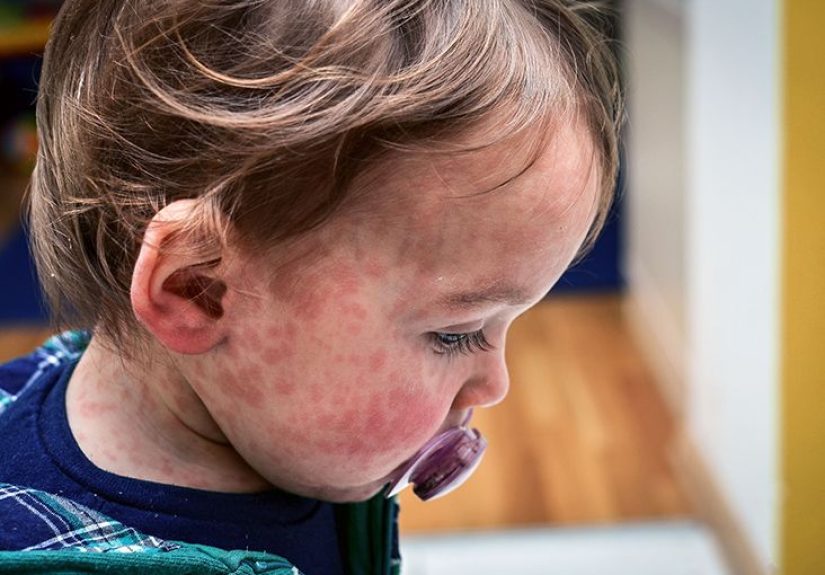
One reason measles keeps getting underestimated is that people remember the rash and forget the rest of the script. Yes, the disease often begins with fever, cough, runny nose, and red eyes before the rash appears. Yes, those symptoms can seem familiar enough to shrug off early. But measles is not a cute retro childhood inconvenience. It can be severe, and sometimes deadly.
Among unvaccinated people in the United States who get measles, hospitalization is common enough to matter a great deal. Pneumonia remains a major complication, especially in young children. Encephalitis, or swelling of the brain, can leave permanent damage. Death still occurs. And some people later develop subacute sclerosing panencephalitis, a rare but fatal neurological disease that can emerge years after the initial infection.
There is also the issue of so-called immune amnesia, a nasty little bonus feature measles does not deserve. Infection can weaken parts of the immune system’s memory, leaving people more vulnerable to other infections afterward. In other words, measles does not merely cause one bad illness. It can leave behind a biological mess.
The Vaccine Works. Very Well.
Against all this, the central public health tool is refreshingly boring in the best possible way: vaccination. One dose of the MMR vaccine is highly effective against measles, and two doses are even better, providing about 97% protection. Most fully vaccinated people will never get measles. Breakthrough cases can happen, but they are uncommon, and when they do occur, illness is often milder.
That matters because outbreak control is not built on vibes, natural remedies, or wishful Facebook comments. It is built on immunity. Vitamin A may play a role in clinical treatment under medical supervision in some settings, but it does not prevent measles infection or stop transmission. Vaccination does that heavy lifting.
How the U.S. Could Still Avoid Canada’s Path
The good news is that measles is not some mysterious force of nature that arrived by dragon. The pathways of prevention are well known. If the U.S. wants to avoid losing elimination status, the playbook is not hidden in a locked vault. It includes restoring high local vaccine coverage, identifying under-immunized pockets quickly, improving access to routine pediatric care, supporting school immunization enforcement, and responding fast when cases appear.
Speed matters. Measles spreads before communities have much time to get organized. A delayed diagnosis in one urgent care center can ripple into exposures in classrooms, day cares, churches, and emergency departments. That means clinicians need to think about measles early, especially during active outbreaks and after travel-related exposures. It also means families need easy access to vaccine records and catch-up vaccination, not three phone calls, two hold songs, and a receptionist shrug.
Public trust matters too. Outbreaks do not spread only because of biology. They spread through confusion, misinformation, political fatigue, and the everyday friction of modern healthcare. People miss well visits. Clinics have staffing issues. Parents are inundated with junk science dressed up as concern. When confidence erodes and access gets harder, measles gets easier.
The Cost of Outbreaks Is Bigger Than the Case Count
Every measles case brings a long tail of public health work: contact tracing, testing, quarantine guidance, exposure notifications, infection control, school coordination, and emergency vaccination campaigns. Researchers have estimated that the average cost per measles case can run into the tens of thousands of dollars, and sometimes much more, depending on the size and complexity of the outbreak.
So no, this is not just about whether a country can keep a gold star on a public health report card. It is about hospital strain, community disruption, avoidable medical trauma, and a bill nobody needed.
What Families and Communities Should Do Right Now
For families, the first step is gloriously unglamorous: check vaccination status. Make sure children are on schedule. If records are unclear, call the pediatrician or state immunization registry. Adults who are unsure about immunity should ask their healthcare provider what documentation or vaccination they may need, especially if they plan to travel internationally or live near an active outbreak.
For schools and child care settings, this is the moment for less paperwork theater and more practical readiness. Immunization compliance needs to be real, records need to be current, and exposure response plans need to be something more useful than “we’ll circle back.”
For health officials, communication has to be fast, plainspoken, and relentlessly local. Communities need to hear where exposure happened, who is at risk, what symptoms to watch for, and where to get vaccinated without hassle. The more complicated the message, the more measles wins by default.
And for the broader public, the lesson is simple: measles control is not an old success we can coast on forever. It is a maintenance project. Stop maintaining it, and the virus reminds everyone why earlier generations fought so hard to bring it down.
Experiences From the Measles Resurgence: Composite Snapshots From Clinics, Schools, and Families
The following snapshots are not single named case studies. They are composite experiences based on the kinds of situations clinicians, public health workers, schools, and families have repeatedly described during recent outbreaks. Together, they show what measles looks like when it stops being an abstract headline and starts rearranging real lives.
In one common scene, a parent gets a message from school that a student or staff member may have been exposed. Suddenly, the family dinner table turns into a command center. Someone is digging through old vaccine cards. Someone else is trying to remember whether the child got both MMR doses or just one. Grandma swears everybody was vaccinated. Dad is on hold with the pediatric office. The baby in the house is too young for the routine first dose, which raises the emotional volume immediately. What felt like a normal Tuesday becomes a crash course in immunization records, incubation periods, and the subtle panic of not knowing whether your child is protected.
Then there is the clinic experience. A child arrives with fever, cough, runny nose, and red eyes. Early measles can look annoyingly ordinary, which is part of why it can spread before people realize what they are dealing with. When a clinician recognizes the possibility, the mood changes fast. Masks go on. Isolation steps begin. Staff start asking about travel, vaccine history, known exposures, and household contacts. Rooms are cleaned with unusual urgency. Everyone in the building suddenly remembers that measles can hang in the air after the patient leaves. It is not dramatic television medicine. It is quiet, high-stakes logistics.
School nurses and administrators often describe a different kind of strain: balancing calm with speed. They have to identify who may have been exposed, figure out who is fully vaccinated, contact families, coordinate with health departments, and answer a flood of anxious questions. Parents want certainty, but outbreaks do not hand out certainty very generously. They hand out timelines, probabilities, and instructions. That can be frustrating in a culture that expects instant answers and same-day shipping for absolutely everything, including reassurance.
Public health workers face another layer. One confirmed case can mean dozens or hundreds of contacts. Each contact can generate calls, recommendations, documentation, follow-up, and the occasional rumor that rockets through a community faster than the official guidance. Some contacts need post-exposure counseling. Some need urgent vaccination. Some need quarantine guidance. And many just need someone patient enough to explain, again, that measles is not harmless and that vaccination is not optional window dressing in an outbreak response.
Families who do vaccinate often describe a strange mix of relief and anger. Relief because their children are protected. Anger because their protection still does not erase the inconvenience and fear that come with community spread. Sports events get canceled. Child care plans fall apart. Medical appointments get postponed. Parents miss work. Vulnerable relatives avoid gatherings. Even people who did everything right can end up living around the disruption created when community immunity erodes.
That may be the most important lived lesson of all: measles is never just an individual choice issue once transmission starts. It becomes a community experience. It changes how schools operate, how clinics triage, how parents plan, and how public health departments spend limited time and money. The headline may sound like a warning about status, labels, and international review. On the ground, it feels much more personal. It feels like uncertainty in a waiting room, a missed week of school, a worried call to a grandparent, and a whole lot of preventable stress.
Conclusion
Canada’s loss of measles elimination status should be read as a warning, not a curiosity. The United States is not doomed to follow the same path, but it is no longer comfortably distant from it either. The ingredients that allowed measles to regain a foothold in Canada exist in parts of the U.S. as well: lower vaccination coverage, concentrated immunity gaps, delayed responses, and a public environment where misinformation can spread almost as eagerly as the virus itself.
The encouraging part is that the solution remains remarkably clear. Measles is preventable. The vaccine works. Communities that sustain high coverage can stop outbreaks before they become national embarrassment, international review, and family-level chaos. The question is not whether public health knows what to do. The question is whether the country will do it before the virus gets another year to settle in.