Table of Contents >> Show >> Hide
- What a 10x Team Really Means
- Pillar 1: Grow Mindfully
- Pillar 2: Promote Organically
- Pillar 3: Compensate Democratically
- Pillar 4: Manage Proactively
- Why the Generalist Model Works
- How to Start Building Your Own 10x Team
- Final Thoughts
- Extended Experience Section: What Building a Generalist Team Feels Like in Real Life
Every founder says they want a high-performing team. Every manager says they want people who “think like owners.” And every company, at some point, discovers that hiring a few impressive resumes does not magically produce a squad of business superheroes. Sometimes it produces the corporate version of a potluck where everyone brought forks and nobody brought food.
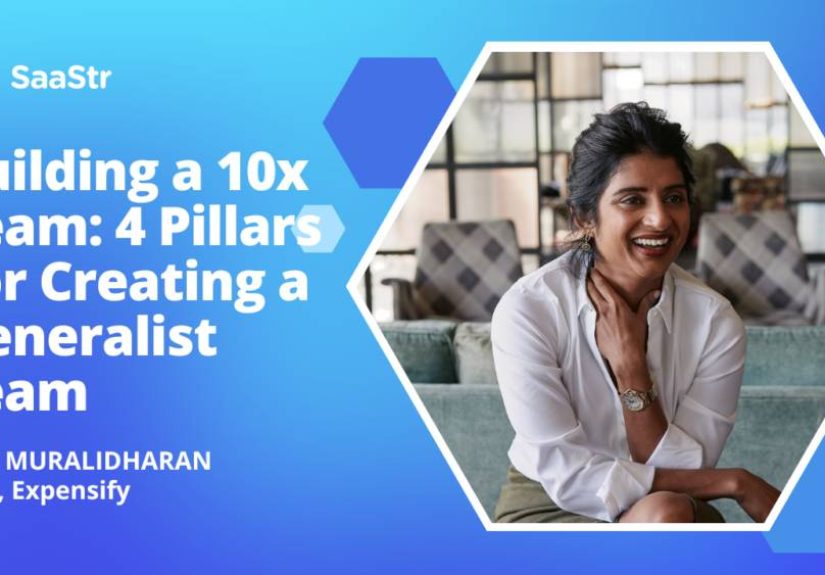
That is what makes the idea behind a 10x team so compelling. In the SaaStr conversation featuring Anu Muralidharan, then COO of Expensify, the focus is not on chasing a mythical “10x engineer” or stuffing an org chart with specialists who never leave their lanes. The bigger idea is more practical: build a generalist team that stays fast, curious, collaborative, and deeply accountable as the company grows.
This approach stands out because it does not worship headcount. It questions the lazy assumption that “bigger” automatically means “better.” Instead, it argues that the most effective teams preserve what small, strong teams do best: they see the whole business, prioritize ruthlessly, and solve problems without waiting for six departments, three committees, and one very tired slide deck.
So what does it actually take to build that kind of organization? According to Muralidharan’s framework, it comes down to four pillars: grow mindfully, promote organically, compensate democratically, and manage proactively. Together, these pillars create the conditions for a generalist team that can move quickly without becoming chaotic, stay lean without becoming fragile, and grow without turning into a maze of silos.
What a 10x Team Really Means
A 10x team is not ten times louder in meetings, ten times more caffeinated, or ten times more likely to say “circle back.” It is a team whose output, adaptability, and judgment massively outperform what its size would suggest. That usually happens when people understand the mission, trust one another, and are empowered to contribute beyond a narrow job description.
A generalist team does not mean a company full of random amateurs dabbling in everything. It means building a workforce made up of people who can learn fast, work across functions, connect dots, and take ownership outside a rigid box. They may still have strong core skills, but they do not act like their role ends where the next department begins.
That distinction matters. Specialist-heavy organizations can become efficient in stable environments, but when priorities shift, customers change, or new products emerge, the handoff culture gets expensive. Generalist teams are often better equipped to absorb change because they are trained to think in systems, not silos.
Expensify’s operating philosophy offers a clear version of this. The company has described itself as having a flat, generalist, transparent, and inclusive structure, and it emphasizes qualities like talent, ambition, and humility. That combination matters because curiosity without ambition becomes trivia, ambition without humility becomes politics, and talent without collaboration becomes a solo act no one wants to tour with.
Pillar 1: Grow Mindfully
Hire for the company you are becoming, not just the seat you need filled
The first pillar is about hiring philosophy. Muralidharan’s point is sharp: if your recruiting process is optimized only to find the perfect person for a specific opening, you may get an effective specialist, but not necessarily someone who strengthens the whole organization. In her framing, companies should identify an “X factor” that appears across roles and hire for it consistently.
At Expensify, that meant looking for people with a blend of talent, ambition, and humility. In practical terms, those traits matter because they support learning speed, internal mobility, and collaboration. A curious person figures things out. An ambitious person pushes forward. A humble person listens, adjusts, and makes the team smarter instead of merely louder.
This is where many hiring strategies go sideways. Companies write job descriptions like grocery lists for unicorns: twelve years of experience, mastery of six tools, three niche certifications, and perhaps the ability to time travel. Then they wonder why they keep missing adaptable talent with real upside.
A more effective approach is to hire for skills, judgment, and learning ability, then build systems that let those people grow across projects. If your future depends on agility, your hiring process should test for adaptability. If collaboration is a strategic advantage, your interviews should reveal how candidates think with others, not just how well they rehearse alone.
Mindful growth also means refusing to add layers just because revenue, funding, or ego makes it possible. Some teams grow in ways that increase output. Others grow in ways that increase meetings. Sadly, the second category tends to buy nicer office chairs.
Pillar 2: Promote Organically
Grow leaders instead of shopping for them every quarter
The second pillar may be the most emotionally intelligent part of the whole framework. Muralidharan argues that companies should grow leaders, not buy them. That idea sounds simple, but it addresses a deep cultural problem: when an organization constantly imports leadership from outside, employees get the message that the real opportunities belong to strangers.
And once people believe that, two things happen. Your strongest employees leave for places where growth feels possible, and the people who stay start treating the job like rented time. Neither outcome is great for building a high-trust, high-output team.
Promoting organically does not mean refusing all outside hires. It means making internal development the default strategy rather than a sentimental side project. People should be able to see a future inside the company. They should have stretch assignments, cross-functional exposure, mentorship, and visible pathways to bigger responsibility.
This is especially important in a generalist model. If you want employees who can operate broadly, then you must give them chances to build breadth. Put strong operators on adjacent projects. Let someone from operations help shape a product rollout. Ask a customer-facing employee to contribute to process redesign. That is how people become versatile enough to lead in a flatter, faster organization.
Organic promotion also builds legitimacy. A leader who has worked across the company often carries context that outsiders need months to learn. They understand the culture, the product, the quirks, and the unofficial rules that never make it into onboarding documents. In many organizations, that lived credibility is worth more than a polished executive biography.
Pillar 3: Compensate Democratically
Reward collaboration, not political theater
Compensation shapes behavior. Every company says culture matters, but the pay system usually reveals what actually wins. If promotions and pay increases depend mostly on impressing one manager, employees learn to manage up. If rewards depend on creating value that peers can see and respect, employees become more collaborative and accountable across the organization.
Muralidharan’s third pillar is a bold one: align compensation with collaborative value. Expensify has described a peer-informed, algorithmic approach to compensation designed to reduce the usual hierarchy-driven games. That is not a plug-and-play model for every organization, but the principle behind it is powerful.
If you want a generalist team, you cannot reward people only for local wins. You have to recognize the behaviors that make the broader system better. That includes helping another team unblock a launch, mentoring newer employees, documenting processes, solving ugly cross-functional problems, and making decisions that help the business rather than just the department.
Too many companies accidentally build anti-collaboration incentives. Sales gets paid for closing whatever can be signed. Product gets rewarded for shipping features on schedule. Operations gets praised for cutting cost. Then leadership acts shocked when nobody wants to own the messy work that sits between those goals.
Democratic compensation does not mean everybody earns the same, nor does it mean the loudest peer opinions should run payroll. It means your system should consistently reward visible contribution, trust, fairness, and team-level impact. When people believe the system notices real value, they spend less energy performing importance and more energy creating it.
Pillar 4: Manage Proactively
Catch drift early and coach before small issues become cultural mold
Even great teams drift. A high performer gets bored. A role changes faster than the person inside it. A once-hungry employee becomes comfortable. A manager avoids a hard conversation until the problem grows teeth. None of this is unusual. What matters is how quickly leadership notices and responds.
Muralidharan’s fourth pillar is to identify issues fast and course-correct quickly. Proactive management is not micromanagement. It is active stewardship. It means leaders stay close enough to the work, the energy, and the people to notice when something is slipping.
In a generalist team, this matters even more because the model depends on trust and autonomy. If you are going to give people broad responsibility, you need a strong feedback culture, clear standards, and fast learning loops. Otherwise, “autonomy” becomes a polite synonym for “nobody is steering the boat.”
Proactive management usually looks boring from the outside, which is why it is so often ignored. It is recurring check-ins. Clear expectations. Honest feedback. Quick realignment when priorities shift. Recognition when people stretch well. Support when they are overextended. Leaders who do this consistently build resilient teams. Leaders who avoid it usually end up planning dramatic reorganizations that could have been prevented by three timely conversations and one spreadsheet.
Why the Generalist Model Works
The beauty of a generalist team is not that everyone does everything. It is that people understand enough of the broader system to make better decisions. Cross-functional awareness improves prioritization. Internal mobility improves retention. Strengths-based cultures improve engagement. Psychological safety improves learning and candor. Team-based incentives improve collaboration. The result is a company that is better at adjusting while still moving forward.
That is also why this model often feels more human. People are not treated like replaceable parts built for one narrow function. They are treated like developing contributors with the capacity to learn, stretch, and lead. In return, the organization gets better judgment, stronger ownership, and fewer “not my job” moments.
Of course, there are risks. A generalist culture can become fuzzy if expectations are unclear. Flat structures can become confusing if accountability is weak. Internal promotion can become insular if fresh thinking never enters. The answer is not to abandon the model. It is to build discipline around it.
How to Start Building Your Own 10x Team
1. Rewrite your hiring filters
Audit your job descriptions. Remove inflated credential requirements that do not predict performance. Add assessments that reveal learning speed, problem-solving, communication, and collaborative behavior.
2. Make internal mobility visible
Create clear paths for stretch work, rotational projects, and emerging leadership opportunities. If employees cannot see growth, they will assume there is none.
3. Reward team contribution explicitly
Update performance reviews and compensation criteria so they include cross-functional impact, coaching, documentation, and problem-solving beyond a narrow lane.
4. Tighten your feedback loops
Set regular operating rhythms for check-ins, retrospectives, and course correction. You do not need more drama. You need faster truth.
5. Protect the culture as you scale
The larger the company becomes, the easier it is for bureaucracy to sneak in wearing a sensible blazer. Preserve transparency, trust, and shared ownership before they get replaced by permission chains and territorial behavior.
Final Thoughts
The smartest takeaway from Anu Muralidharan’s framework is that a 10x team is less about finding magical individuals and more about designing a system where great people can compound one another’s strengths. That system must hire thoughtfully, develop leaders internally, reward collaborative value, and manage performance before drift becomes dysfunction.
If you build those four pillars well, your team gets something rare: the speed of a startup, the judgment of an experienced company, and the adaptability to survive real growth. That is the promise of a strong generalist team. It is not a trendy org chart. It is an operating advantage.
And in a business world full of bloated processes, awkward handoffs, and people hiding behind job titles like raccoons behind trash cans, that advantage is worth a lot.
Extended Experience Section: What Building a Generalist Team Feels Like in Real Life
In practice, building a generalist team rarely looks glamorous at first. It usually starts with a company realizing that its specialists are individually strong but collectively slow. Work keeps bouncing from one lane to another, and every project somehow requires more coordination than creativity. A product change waits on operations, operations waits on finance, finance waits on legal, and legal waits for “a little more context,” which is business-speak for “please send a deck with fewer buzzwords.”
The first real shift happens when leaders start rewarding people for solving whole problems instead of defending territory. Suddenly, the best operator is not the person who says, “That is outside my scope.” It is the person who says, “I can help connect the right people and move this forward.” That one change can alter the emotional texture of a team. People become more useful to one another. Meetings get shorter because context is shared earlier. Handoffs get cleaner because the work is no longer treated like a relay race where everyone drops the baton and blames the lighting.
Another common experience is that internal promotions become dramatically more meaningful once employees believe leadership roles are earned through contribution, not imported through prestige. People start paying closer attention to how decisions are made. They volunteer for harder projects. They build judgment because they can see a future where judgment matters. That creates a healthier kind of ambition. It is less about title-chasing and more about becoming the kind of person the company trusts with bigger problems.
Compensation is often the awkward chapter because it forces organizations to admit what they really value. Teams say they want collaboration, but their reward systems often celebrate isolated heroics. Once leaders begin tying recognition to team outcomes, mentoring, and cross-functional contribution, behavior changes fast. People document things better. They help peers more freely. They stop hoarding information like squirrels preparing for winter. The culture becomes more generous because the system finally supports generosity.
The hardest lesson usually comes from proactive management. In a generalist team, freedom is powerful, but it exposes drift quickly. Someone who was exceptional in one phase may struggle in the next. A high performer may need a sharper challenge. A talented employee may need clearer boundaries. Companies that thrive in this model are the ones willing to address those realities early, respectfully, and directly. They do not confuse kindness with avoidance.
Over time, the experience of a strong generalist team becomes noticeable in small ways. People ask better questions. New ideas move faster. Leaders spend less time forcing alignment because more alignment exists by default. Employees understand enough about neighboring functions to make smarter decisions before conflict starts. And perhaps most importantly, the company feels less like a stack of departments and more like a group of adults building something together. That is the real magic. Not mythical 10x individuals. Just a team designed to multiply talent instead of trap it.