Table of Contents >> Show >> Hide
- Why Your Hair Is Bailing on You
- Tier 1: FDA-Approved First-Line Hair Loss Treatments
- Tier 2: Promising Medical Options Beyond the Basics
- Hair Transplant Surgery: When You Want Permanent Real Hair
- Shampoos, Supplements, and Lifestyle: What Actually Helps?
- How to Build Your Hair-Saving Game Plan
- Safety First: Side Effects and When to See a Doctor
- Real-World Experiences: What Men Actually Go Through
- The Bottom Line
If your hairline is slowly retreating like it just saw your search history, you are not alone. Millions of men deal with thinning hair and male pattern baldness. The good news: we’re no longer stuck with snake oil, mystery tonics, and comb-overs that could catch a breeze. Modern hair loss treatments for men range from affordable over-the-counter options to high-tech lasers and surgical hair transplants.
This guide walks you through the best hair loss treatments for men, how they work, what results to expect, and when it’s time to talk to a dermatologist instead of just talking to your bathroom mirror.
Why Your Hair Is Bailing on You
The most common cause of hair loss in men is androgenetic alopecia, also known as male pattern baldness. If your dad, uncles, or grandpa rocked the “shiny crown” look, your genetics are already hinting at the script. Hormones also play a starring role, especially dihydrotestosterone (DHT), which gradually shrinks hair follicles in genetically sensitive men.
Early signs often include:
- Receding hairline at the temples
- Thinning at the crown (top/back of the head)
- Hair that looks finer and weaker over time
While there are many different causes of hair loss (stress, illness, medications, nutritional issues, autoimmune diseases), male pattern baldness has the clearest evidence-based treatment options. That’s what we’ll focus on here, with plenty of notes on safety, expectations, and when you need a professional diagnosis.
Tier 1: FDA-Approved First-Line Hair Loss Treatments
1. Minoxidil: The Everyday Workhorse
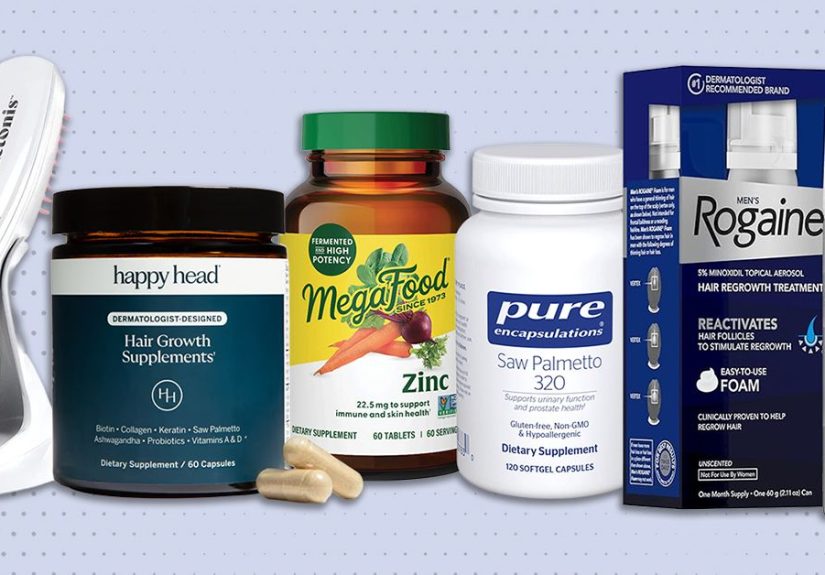
Minoxidil (brand name Rogaine and many generics) is a topical solution or foam you apply directly to your scalp. It’s available over the counter and is one of the most widely used hair loss treatments for men.
How it works: Minoxidil is thought to increase blood flow around hair follicles and extend the growth (anagen) phase of the hair cycle. Translation: more time growing, less time shedding.
Pros:
- Easy to buy without a prescription
- Helps slow shedding and can promote modest regrowth for many men
- Works best for early or mild to moderate hair loss
Cons:
- Needs to be used consistently, usually once or twice daily
- Results often take 3–6 months to notice
- If you stop using it, new hair gains are typically lost within months
- Possible side effects: scalp irritation, dryness, flaking, unwanted facial hair if it drips or runs
Best for: Men who want a relatively low-cost, low-barrier starting point and are willing to build a “scalp skincare” routine into their daily life.
2. Finasteride: The DHT Blocker (With Important Warnings)
Finasteride is a prescription medication that blocks the enzyme 5-alpha-reductase, which converts testosterone into DHT. By lowering DHT levels in the scalp, finasteride can help slow or stop male pattern hair loss and sometimes encourage regrowth.
Forms:
- Oral finasteride tablets – the classic, FDA-approved version for male pattern baldness in men.
- Topical finasteride – compounded creams or solutions often sold via telehealth platforms; these are not FDA-approved and have prompted recent safety alerts.
Pros:
- One of the most effective medications for male pattern hair loss
- Helps maintain existing hair and can thicken thinning areas over time
- Often used together with minoxidil for a “two-pronged” approach
Cons & safety considerations:
- Requires a prescription and medical supervision
- Can cause sexual side effects in a minority of men (low libido, erectile issues, reduced semen volume)
- Some men report mood changes such as depression, anxiety, or brain fog
- Regulators in the U.S. and Europe have strengthened warnings about psychiatric and sexual side effects; in rare cases, symptoms may persist after stopping the drug
- Topical finasteride made by compounders is not FDA-approved and has been specifically flagged for safety concerns in recent alerts
Bottom line: Finasteride can be a powerful tool, but it’s not something to grab off a random website and start taking casually. Have a detailed conversation with a dermatologist or primary care provider about your medical history, mental health, fertility plans, and what to monitor over time.
3. Low-Level Laser (Light) Therapy (LLLT): The Sci-Fi Helmet
Low-level laser or light therapy (LLLT) sounds futuristic, but it’s a real, FDA-cleared option for pattern hair loss. Devices look like helmets, caps, combs, or headbands that bathe the scalp in specific wavelengths of light.
How it works: LLLT appears to stimulate hair follicles at a cellular level, improving energy metabolism, blood flow, and growth factor activity. Think of it as a gentle “wake-up call” for sleepy follicles.
Pros:
- Noninvasive and painless
- Home-use devices are widely available
- Can be used alongside minoxidil or finasteride for added effect
Cons:
- Good devices are pricey up front
- Not all products are FDA-cleared or backed by strong clinical data
- Requires consistent use (often several times per week for many months)
Best for: Men willing to invest in a device and stick with a routine, especially as a complement to other proven treatments.
Tier 2: Promising Medical Options Beyond the Basics
Once you’re familiar with the “big three” (minoxidil, finasteride, LLLT), you’ll start hearing about newer or off-label options. These may be great tools in the right hands, but they require even more discussion with a hair-savvy clinician.
Dutasteride: The Stronger Cousin
Dutasteride is another 5-alpha-reductase inhibitor that blocks more enzyme subtypes than finasteride, which may make it more potent at lowering DHT. It’s FDA-approved for enlarged prostate in men, but not officially approved for hair loss in the U.S., so its use for baldness is off-label.
Key points:
- May be more effective than finasteride for some men, but potentially with a similar or higher side-effect burden
- Usually considered when finasteride has not worked well enough and after thorough risk–benefit discussion
Low-Dose Oral Minoxidil
Originally a blood pressure medication, oral minoxidil at low doses is increasingly used off-label for hair loss in both men and women. Dermatologists may prescribe it for men who can’t tolerate topical minoxidil or want a more convenient pill version.
Potential benefits: Some studies and clinical experience suggest stronger and more widespread thickening of hair compared to topical formulations, especially in men who are consistent with daily dosing.
Risks: Because it’s systemic, low-dose oral minoxidil can affect blood pressure and cause side effects such as swelling in the legs, increased heart rate, headaches, or excess hair growth on the face/body. It should only be used under close medical supervision, particularly if you have cardiovascular risk factors.
Platelet-Rich Plasma (PRP) Injections
PRP therapy uses your own blood, which is spun in a centrifuge to concentrate platelets and growth factors. The PRP is then injected into the scalp to stimulate follicles.
Pros:
- Uses your own blood (no foreign medication)
- Some men notice improved hair thickness and reduced shedding
- Can be combined with minoxidil or finasteride
Cons:
- Multiple sessions are usually needed (and they’re not cheap)
- Injections can be uncomfortable
- Results vary; not everyone responds
Microneedling and Mesotherapy
Microneedling involves using tiny needles to create microchannels in the scalp, which may stimulate healing pathways and improve the absorption of topical treatments like minoxidil. Some clinics also use mesotherapya technique that injects small amounts of substances such as vitamins, growth factors, or medications into the scalp.
These techniques are still evolving, and protocols vary, so you’ll want to work with a dermatologist or hair restoration specialist who can explain the evidence (and limits) clearly.
Hair Transplant Surgery: When You Want Permanent Real Hair
If medications and noninvasive treatments aren’t cutting itor you already have significant thinninghair transplant surgery may be the most effective option.
The two main techniques are:
- FUT (Follicular Unit Transplantation): A strip of scalp with dense hair is removed from the back of the head, then dissected into small grafts.
- FUE (Follicular Unit Extraction): Individual follicular units are harvested one by one with tiny punches, leaving small dot scars instead of a linear one.
Pros:
- Uses your own real, growing hair
- Results can look very natural in experienced hands
- Permanent in the transplanted areas (those follicles are usually DHT-resistant)
Cons:
- Expensive (often several thousand dollars or more)
- Requires enough donor hair in the back and sides
- Results depend heavily on the surgeon’s skill and planning
- You still need to manage ongoing hair loss in non-transplanted areas
Ideal candidates: Men with stable hair loss, realistic expectations, and good donor hair who are ready to commit to long-term maintenance (often including medications) so transplanted hair isn’t surrounded by ever-expanding bald zones.
Shampoos, Supplements, and Lifestyle: What Actually Helps?
Shampoos and Topicals
Walk into any drugstore and you’ll see shelves of “thickening,” “fortifying,” or “anti-hair loss” shampoos. Many of these products mainly improve how hair looks and feels rather than changing the underlying genetics or DHT sensitivity.
Some ingredients that may play a supporting role include:
- Ketoconazole in anti-dandruff shampoos, which may have mild anti-androgen or anti-inflammatory effects on the scalp
- Gentle, sulfate-free formulas that reduce irritation and dryness
- Conditioners and leave-ins that reduce breakage and make hair appear fuller
Think of these as teammates, not star players. They’re helpful as part of a wider plan, but rarely strong enough on their own for true male pattern baldness.
Supplements
The supplement aisle can be wild. Biotin, collagen, zinc, marine protein complexes, saw palmettoyou name it. For men who have genuine nutritional deficiencies (for example, low iron or vitamin D), correcting those issues can definitely help hair health. But for many otherwise healthy men, mega-dosing hair vitamins does not magically reverse a genetically driven receding hairline.
Smart approach:
- Get basic blood work if a doctor suspects nutritional issues
- Use supplements to address proven deficiencies, not just marketing promises
Lifestyle and Scalp Health
While you can’t out-meditate your genetics, you can support your remaining hair by:
- Managing stress with sleep, exercise, and realistic work–life balance
- Eating a balanced diet rich in protein, healthy fats, and micronutrients
- Avoiding tight hairstyles that pull on hair (man-buns and tight braids, we’re side-eyeing you)
- Protecting your scalp from harsh sun with hats or sunscreen
How to Build Your Hair-Saving Game Plan
Finding the best hair loss treatment for men is less about copying someone’s TikTok routine and more about tailoring a plan to your situation. A simple, practical approach looks like this:
- Get an actual diagnosis. A dermatologist can rule out other causes such as patchy autoimmune hair loss, thyroid disease, or medication-related shedding.
- Start with proven basics. Many men begin with topical minoxidil and, if appropriate, consider prescription options like finasteride after careful discussion.
- Layer in noninvasive extras. LLLT devices, ketoconazole shampoo, and scalp care can support your core treatment.
- Consider advanced procedures if needed. PRP, microneedling, or hair transplant surgery become options when you want more noticeable structural changes.
- Review regularly. Revisit your plan with your doctor every 6–12 months to reassess benefits, side effects, and goals.
Safety First: Side Effects and When to See a Doctor
Hair is important, but your overall health is more important. Reach out to a professional promptly if you notice:
- New or worsening depression, anxiety, mood swings, or suicidal thoughts while using prescription hair loss medications
- Significant changes in sexual function, such as persistent erectile issues or very low libido
- Chest pain, rapid heartbeat, or swelling of legs/ankles when using oral medications like minoxidil
- Severe scalp pain, infection, or scarring after any procedure
Never start, stop, or switch prescription treatments solely based on internet adviceeven well-meaning advice. Your doctor can help you weigh the potential benefits against the risks, especially if you have other medical conditions or take multiple medications.
Real-World Experiences: What Men Actually Go Through
Hair loss treatment isn’t just a list of ingredients and clinical trials; it’s a long, emotional journey that usually starts the moment a guy sees too much scalp in a photo or notices extra hair in the shower drain.
Picture Alex, 28, who first noticed his thinning crown when his barber snapped a photo of his fresh fade. At first, he laughed it off. Then he saw the same thin spot under gym lighting, and suddenly it wasn’t funny anymore. He started with topical minoxidil because it was easy to buy and didn’t require an awkward doctor visit. The first month felt pointless. His hair looked exactly the same, maybe even worse during a “shedding phase.” But after four to five months, he noticed fewer hairs on his pillow and a bit more density at the crown. Not a miracle, but enough to make him keep going.
Then there’s Marcus, 35, who went straight to a telehealth site and got finasteride after answering a few online questions. For him, the medication slowed his hair loss dramatically, and he saw modest regrowth near his temples. But a few months in, he noticed changes in his libido and random waves of anxiety. He talked with his provider, tapered off the medication, and the side effects gradually faded. Now he’s using minoxidil plus an LLLT cap and is considering PRP with a local dermatologist. His hair isn’t back to his high-school glory days, but he feels more in controland more informed.
On the other end of the spectrum, you might meet someone like Jordan, 42, who tried nearly everythingtopicals, pills, lasersand still felt frustrated by the thinness at his hairline. After years of research (and scrolling through before-and-after pictures), he finally booked a consultation with a reputable hair transplant surgeon. They mapped out a long-term plan that included surgery plus ongoing medical therapy to protect the native hair. A year after his FUE procedure, his hairline looks fuller in photos, and, more importantly, he doesn’t feel the need to hide under caps all the time. He still has to manage expectationshe’s not suddenly a shampoo commercial modelbut he’s happy with the trade-offs.
The common thread in these stories isn’t a magic product. It’s realistic expectations and consistency. Hair grows slowly, so every optionfrom minoxidil to transplant surgerydemands patience. Most men who see the best results do a few key things well:
- They start early instead of waiting until hair loss is severe
- They choose proven treatments instead of chasing miracle cures
- They get medical guidance instead of relying solely on social media reviews
- They accept that some shedding and awkward “in-between” stages are normal
Emotionally, it helps to reframe the situation. Yes, hair loss can hit confidence hard, especially in dating or in front-facing jobs. But it doesn’t have to define you. Some men go all-in on treatment and maintenance, others shave their heads and lean into the look, and many land somewhere in the middle. The “best hair loss treatment for men” is ultimately the one that fits your health, budget, lifestyle, risk tolerance, and sense of self.
If you’re starting this journey now, think of it as a long-term project. Take photos every couple of months, track how you feel physically and mentally, and make adjustments with your doctor as you go. You’re not just treating hair; you’re investing in how you feel about yourself for years to come.
The Bottom Line
There is no single perfect cure for male pattern baldness, but there are more effective tools than ever to slow, soften, or partially reverse it. Minoxidil, finasteride (with careful medical oversight), and LLLT form the core of many men’s routines. Advanced options like low-dose oral minoxidil, dutasteride, PRP, and hair transplant surgery can offer stronger results for the right candidates.
The key is to combine realistic expectations with evidence-based treatments and regular conversations with a knowledgeable professional. Your hair may not go fully back to its teenage density, but with a smart plan, you can keep more of what you have, improve what you can, and feel better every time you see your reflectionhat or no hat.