Table of Contents >> Show >> Hide
- What Is Armstrong SAHARA Scored II 24 x 48?
- Key Specs Homeowners Actually Care About
- Why SAHARA Scored II Looks Better Than Basic Drop Ceiling Tile
- Acoustics: What NRC 0.50 and CAC 35 Mean in Plain English
- Moisture, Mold, and Basement Reality
- Installation Planning: What You Need Before You Start
- Where This Ceiling Tile Works Best
- Maintenance, Cleaning, and Warranty Notes
- Buying Tips Before You Click “Add to Cart”
- Final Verdict
- Real-World Experiences With Armstrong SAHARA Scored II 24 x 48 (Extended Notes)
If your basement ceiling currently looks like it came free with a fax machine, Armstrong Ceilings SAHARA Scored II 24 in x 48 in. is one of the easiest ways to upgrade the look without turning the project into a full renovation. This ceiling tile is designed for suspended (drop) ceiling systems, but it gives you a cleaner, more refined appearance than the old-school “office tile” vibe many homeowners want to retire.
What makes this product interesting is the combo of looks and performance: it is a mineral fiber acoustical ceiling tile, it is scored to mimic a 2 ft x 2 ft layout, and it is built for practical spaces like basements and home theaters where sound control, humidity resistance, and a tidy finish matter. In other words, it is trying to be the rare ceiling tile that is both useful and decent-looking. Honestly, that is a strong career move for a ceiling tile.
What Is Armstrong SAHARA Scored II 24 x 48?
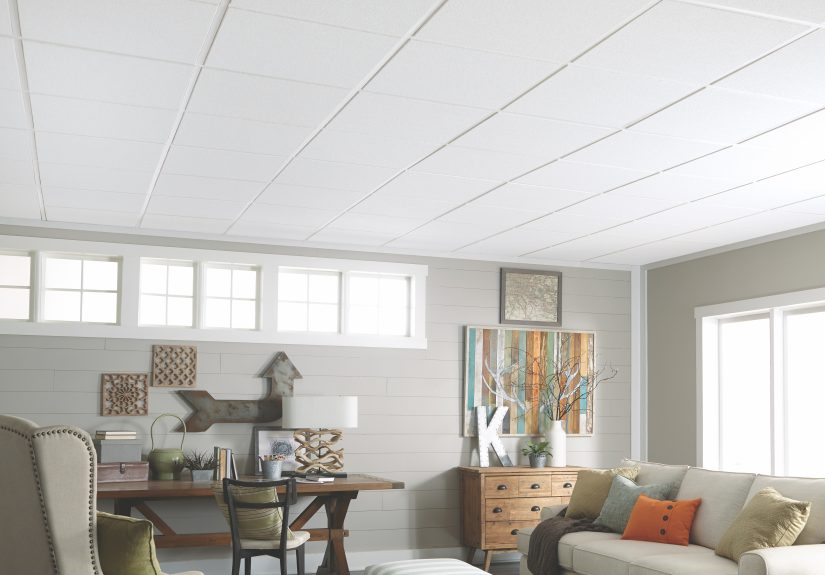
Armstrong SAHARA Scored II (model 9768) is a white mineral fiber drop ceiling tile made for a standard suspended ceiling system. The panel is 24 inches by 48 inches and is scored to visually simulate two 24 x 24 panels. That means you can get a more modern “smaller tile” look without installing extra cross tees in the grid.
It uses a tegular edge, which helps reduce the visibility of the metal grid and creates a slightly more finished look than flat lay-in panels. It is typically installed in a 15/16-inch grid system, and Armstrong’s own product materials also note compatibility with its Prelude suspended ceiling system and residential QuickHang installation options.
Key Specs Homeowners Actually Care About
Size, Coverage, and Pack Details
- Model: 9768 (SAHARA Scored II)
- Nominal size: 24 in x 48 in
- Actual size: about 23.688 in x 47.688 in (common for lay-in panels)
- Thickness: typically listed as 3/4 in in product literature (some retail spec tables show approx. 0.69 in actual thickness)
- Carton quantity: 8 panels
- Coverage per carton: 64 sq. ft.
- Grid compatibility: 15/16-in suspended grid
If you are planning a larger project, some retailers also sell pallet quantities. For example, Home Depot lists a pallet configuration that covers 1,536 sq. ft. (24 cartons / 192 pieces), which can be useful for multi-room basements, church classrooms, or light commercial projects.
Performance Snapshot
- Material: Mineral fiber
- NRC (sound absorption): 0.50
- CAC (sound blocking): 35
- Light reflectance: 0.83
- Fire rating: Class A
- Humidity/sag resistance: HumiGuard Plus (superior)
- Mold resistance: BioBlock (superior)
That spec list is a big reason this tile is popular. It is not just a decorative panel; it is made for performance in real-life spaces where sound, moisture, and maintenance all matter.
Why SAHARA Scored II Looks Better Than Basic Drop Ceiling Tile
The Scored 2×2 Look Without Extra Grid Work
The signature feature of SAHARA Scored II is the visual trick: a 2 ft x 4 ft panel scored to look like two 2 ft x 2 ft panels. Armstrong’s product materials and brochure content highlight this as a budget-friendly way to modernize an older ceiling, especially if you are replacing sagging 2×4 tiles and want a more updated style without rebuilding the entire grid layout.
This is especially smart for DIYers because fewer grid changes usually means fewer opportunities to invent new curse words.
Tegular Edge = Less “Grid Grid Grid”
The tegular edge detail helps recess the tile slightly so the metal grid is less visually dominant. On many ceilings, that small detail makes a surprisingly big difference. It shifts the look from “utility ceiling” toward “finished basement ceiling.” If you care about aesthetics but still need access to pipes, ducts, or wiring, this is the sweet spot.
Non-Directional Pattern Helps Reduce Waste
Retail product listings also call out the non-directional pattern, which is a practical bonus during installation. When tiles do not have a strict directional grain or face pattern, you can rotate pieces more freely. That typically reduces scrap, speeds up layout, and makes replacing a damaged tile easier later.
Acoustics: What NRC 0.50 and CAC 35 Mean in Plain English
Ceiling specs can look like alphabet soup, but these two ratings are genuinely useful:
NRC 0.50 (Noise Reduction Coefficient)
NRC measures how much sound a material absorbs. Armstrong’s technical FAQ explains that NRC is the average sound absorption coefficient across key speech-related frequencies, and the rating runs from 0.00 to 1.00. A ceiling tile with NRC 0.50 provides moderate sound absorption, which helps reduce echo and soften the “hard room” effect.
That is one reason this tile works well in basements, family rooms, and hobby spaces where sound can bounce off drywall, flooring, and furniture.
CAC 35 (Ceiling Attenuation Class)
CAC measures how well a ceiling system blocks sound transmission between adjacent rooms through a shared plenum (the space above the suspended ceiling). Armstrong defines CAC as a barrier-performance rating for airborne sound in spaces that share that overhead cavity.
With CAC 35, SAHARA Scored II offers respectable sound blocking for a residential drop ceiling setup. It will not turn your basement into a recording studio, but it can help reduce sound transfer between rooms and make the space feel more acoustically controlled.
Moisture, Mold, and Basement Reality
HumiGuard Plus: Good for Humid Rooms, Not a Swimming Pool
Armstrong’s HumiGuard Plus language is important: this is intended for higher-humidity interior environments, but not for standing water conditions or exterior applications. That lines up with Armstrong’s warranty conditions, which also exclude outdoor use and situations where moisture directly contacts the ceiling or standing water is present.
Translation: great for many basements, not great for a chronic leak you have been “meaning to check since last winter.” Fix the leak first.
BioBlock and Long-Term Mold/Mildew Resistance
Armstrong’s warranty documentation specifically lists 9768 SAHARA Scored II and notes BioBlock treatment with mold and mildew resistance coverage. The warranty also describes how coverage changes depending on the suspension system: longer coverage when installed with an Armstrong suspension system, shorter coverage when another grid is used.
That matters because a lot of homeowners focus only on the tile and forget the grid system is part of the performance and warranty equation.
Installation Planning: What You Need Before You Start
Know the Basic Parts of a Suspended Ceiling
Armstrong installation materials and glossary terms are helpful here, especially if this is your first drop ceiling project. You will typically work with:
- Main beams: the primary structural members of the grid
- Cross tees: the shorter connectors that create the panel openings
- Wall molding / perimeter trim: trim around the room perimeter that supports tile edges
- Hanger wire: wire that suspends the grid from the structure above
- Plenum: the space above the ceiling where ducts, pipes, and wiring sit
Armstrong’s product literature for the SAHARA Scored II line also identifies the install skill level as intermediate, which feels fair. It is absolutely DIY-friendly for a careful homeowner, but it is not a “watch one short video and start cutting” kind of project.
Grid System and Kits
SAHARA Scored II installs in a 15/16-inch suspended grid system, and Armstrong’s materials point to the Prelude system specifically. Some product pages also mention QuickHang for residential applications, which can simplify planning for homeowners.
Armstrong’s install materials also describe grid kits that contain the core components (main beams, cross tees, wall molding, and hanger wire) for 64 sq. ft. This can make shopping much easier if you do not want to build a parts list from scratch.
How Much to Buy (And Why You Should Order Extra)
A standard carton covers 64 sq. ft., so estimating is straightforward. Still, it is smart to order extra for cuts, future repairs, and the occasional “I measured that perfectly” moment that turns out to be aggressively optimistic.
Online retailers commonly recommend adding around 10% extra material for cuts and reserve stock. That is solid advice for ceiling tile projects, especially if your room has soffits, pipes, or uneven walls.
Where This Ceiling Tile Works Best
Basements
Multiple retailer and manufacturer sources position the Sahara family for basements, and SAHARA Scored II is especially strong here. You get accessibility to utilities, decent acoustics, good light reflectance, and a more polished look than basic utility tiles.
If your basement is a family room, gaming room, or flex office, the 0.83 light reflectance can also help brighten the space by bouncing more light around the room.
Home Theaters and Media Rooms
Armstrong’s product materials specifically list home theater among room solutions for model 9768. The combination of NRC 0.50 and CAC 35 is not “pro studio” performance, but it is absolutely helpful in a media room where you want less echo and better sound control than drywall alone.
Utility Spaces, Workshops, and Multi-Use Rooms
Because this is still a practical drop ceiling tile with mold, mildew, and sag resistance, it also makes sense in laundry-adjacent spaces, hobby rooms, and utility-heavy basements. It is a nice middle ground: more attractive than plain contractor-grade tiles, but still designed for real-world wear.
Maintenance, Cleaning, and Warranty Notes
Do Not Assume “Paintable” Means “Good Idea”
This is one of the most overlooked points. Some people see a white ceiling tile and think, “Cool, I’ll just paint it the same color as my walls.” Armstrong’s product and warranty materials are very clear: field painting can change acoustical performance, fire performance, dimensional stability, and light reflectance, and it can void the warranty.
Also, some retail specs list this tile as not paintable. So if you want a different ceiling color, it is better to choose a product designed for that look instead of improvising with a roller.
Keep It Dry, Ventilated, and Clean
Armstrong’s warranty and SDS guidance both reinforce good handling practices: store materials dry, install in appropriate conditions, and use proper ventilation when cutting. For indoor air quality, EPA notes that building materials and furnishings can be a source of indoor pollutants, which is one reason product emissions and ventilation matter during installation.
If you care about green-building alignment, USGBC’s LEED low-emitting materials framework also specifically includes ceilings in its low-emitting coverage calculations, which is relevant when selecting ceiling products for healthier interiors.
Buying Tips Before You Click “Add to Cart”
1) Verify You Are Buying Model 9768
Armstrong has both SAHARA Scored II and SAHARA Scored I products in the same family. The scored pattern is different, so double-check the model number before ordering.
2) Confirm Grid Compatibility
This tile is designed for a 15/16-inch system. If your existing grid is a different size or profile, confirm compatibility before ordering a full pallet.
3) Order a Sample If You Are Matching an Existing Ceiling
Retailers often list sample options, and that is worth using if you are patching an older ceiling. White is not always “the same white,” and texture differences show up faster on ceilings than people expect.
4) For Big Jobs, Compare Carton vs. Pallet Purchasing
If your project is large, pallet listings can simplify logistics. Just make sure your installer (or your back) is ready for delivery day. Ceiling tile cartons are bulkier than they look online.
Final Verdict
Armstrong Ceilings SAHARA Scored II 24 in x 48 in. is a strong choice for homeowners who want a cleaner-looking drop ceiling without giving up accessibility. It combines practical performance (NRC/CAC acoustics, Class A fire rating, humidity and mold resistance) with design upgrades like a scored 2×2 look and tegular edges.
It is especially well-suited for basements, home theaters, and multi-use spaces where you need a ceiling that works hard but does not look purely utilitarian. As long as you pair it with the right grid, plan for extra material, and follow the handling and installation guidance, it is one of the better “smart upgrade” options in the suspended ceiling category.
In short: this is the ceiling tile equivalent of wearing clean sneakers with a blazerpractical, polished, and surprisingly effective.
Real-World Experiences With Armstrong SAHARA Scored II 24 x 48 (Extended Notes)
One of the most common experiences homeowners report with this style of tile is that the room looks more “finished” immediately after installation, even before paint, trim, or furniture are done. That makes sense. A scored 2×2 visual pattern looks more intentional than large plain 2×4 panels, and the tegular edge softens the exposed-grid look. In a basement remodel, that can be the difference between “temporary rec room” and “actual living space.”
Another very practical experience is how much the non-directional pattern helps during install. On paper, it sounds like a small feature. In real life, it saves time. When you are cutting around pipes, a support post, or a duct drop, being able to rotate a tile and still have it look right can reduce waste and frustration. That is especially helpful for first-time DIYers, who usually spend the first hour wondering whether they should have become a painter instead.
For home theater or media-room users, the acoustic performance is often described as a noticeable improvement over a hard drywall ceiling. It is not silence, and it does not replace wall treatment or insulation strategies, but it helps reduce echo and makes the room feel more controlled. People usually notice this most with dialogue-heavy TV, gaming voice chat, or a room with a lot of hard surfaces. If your basement used to sound like a racquetball court, this tile can move things in the right direction.
There are also practical lessons from installation day that repeat across projects. First: order extra tiles. Even careful installers can crack an edge, mis-cut a piece, or discover a room corner that is not remotely square. Having a few spares prevents a mid-project scramble. Second: check the grid before you start dropping in new tiles. Many older basements have slightly bent tees or an uneven layout, and new tiles will make those flaws more obvious. Third: handle tiles with clean hands and a clean work area. White mineral fiber shows dirt quickly, and nobody wants a new ceiling with mysterious thumbprints.
Humidity-related experiences are also worth mentioning. In basements with decent moisture control, SAHARA Scored II tends to perform well. In basements with active leaks, condensation issues, or very poor ventilation, no ceiling tile is going to be a miracle. The product is built for humidity resistance, not water abuse. Homeowners who get the best long-term results usually solve the moisture source first, then install the ceiling. It is less exciting than shopping for new materials, but it is the move that saves money later.
Finally, a lot of homeowners appreciate the long-term convenience of a drop ceiling once the room is finished. You can still access plumbing shutoffs, wiring, or cable runs, but the room looks clean and intentional. That is really the strongest “experience” argument for this product: SAHARA Scored II gives you the serviceability of a suspended ceiling without forcing you to accept the old-school institutional look. It is a very practical compromise, and in home renovation, practical compromises are often the best kind.