Table of Contents >> Show >> Hide
- Acer’s Laptop Avalanche Wasn’t Just Noise
- The Biggest Consumer Headliner: Acer Swift 3 OLED
- Spin 5 and Spin 3: Acer’s Case for the Convertible
- Chromebooks Got Serious: Spin 714 and Tab 510
- Vero: Sustainability Becomes a Real Selling Point
- TravelMate: Quietly One of Acer’s Smartest Plays
- Why So Many Acer Laptops Actually Make Sense
- The Good, the Confusing, and the Slightly Funny
- Who Should Pay Attention to Which Models?
- Experience: What It Feels Like When Acer Announces a Small Army of Laptops
- Conclusion
- SEO Tags
If you ever wanted proof that laptop makers enjoy chaos just a little bit, Acer provided it in spectacular fashion. Instead of unveiling one hero device and calling it a day, the company rolled out a whole parade of machines across the Swift, Spin, Aspire, Vero, Chromebook, and TravelMate families. It was less “here is our new laptop” and more “please enjoy this entire electronics aisle.”
That flood of announcements was not random. Acer was showing exactly how it wants to compete: offer something for the shopper who wants an OLED productivity laptop, the student who needs a Chromebook, the professional who loves a convertible, the business buyer who wants extra security, and the eco-minded customer who wants a machine with a greener story. In one swoop, Acer turned its catalog into a map of the laptop market.
So what actually mattered in this avalanche of hardware? Quite a lot, honestly. Beneath the dizzying number of names and model numbers, Acer’s strategy was clear: better displays, newer Intel processors, stronger webcam and microphone features, more flexible 2-in-1 designs, and a stronger sustainability pitch. The trick was sorting the meaningful upgrades from the product-listing wallpaper.
Acer’s Laptop Avalanche Wasn’t Just Noise
The easiest reaction to Acer’s mega-announcement is to laugh and say, “Great, another company released seventeen laptops before lunch.” Fair enough. But this launch mattered because it showed how broad the Windows and ChromeOS laptop market had become in 2022. Buyers no longer wanted one generic notebook. They wanted very specific combinations: premium display, better battery life, creator-friendly hardware, school-ready durability, business-grade security, or eco-friendly materials.
Acer responded by blanketing nearly every category. The Swift line leaned into premium portability. The Spin family kept the 2-in-1 crowd happy. The Chromebook side targeted both mainstream buyers and education users. The Vero line pushed sustainability from marketing slogan to product identity. And the TravelMate family reminded everyone that enterprise buyers still want laptops that can survive meetings, airport trays, and the occasional coffee-spill panic attack.
In short, Acer was not just dropping a ridiculous number of laptops for sport. It was trying to make sure that wherever a customer landed in the market, there was an Acer machine waiting with a slightly too long name and a very specific pitch.
The Biggest Consumer Headliner: Acer Swift 3 OLED
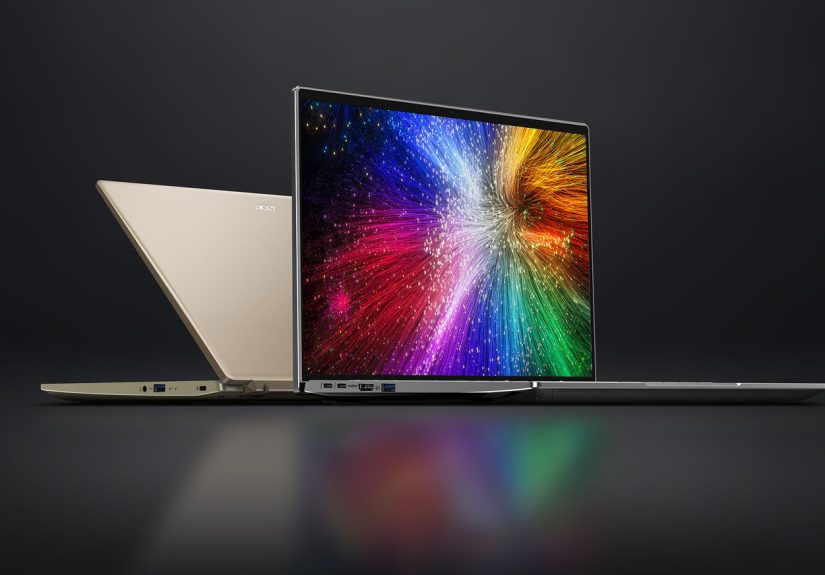
If there was one machine that best captured Acer’s ambition, it was the Swift 3 OLED. This was the laptop that said, “Yes, we can do slim and mainstream, but we can also make it look expensive.” The standout feature was obvious: a 14-inch 2.8K OLED display. At a time when OLED was still treated like a premium flex in many laptops, Acer brought it to a more approachable part of the market.
The Swift 3 OLED also packed 12th Gen Intel Core H-series processors, Intel Evo verification, fast storage, LPDDR5 memory, and a design aimed at people who wanted mobility without feeling like they had bought a compromise machine. Acer essentially gave its affordable thin-and-light line a caffeine shot and a wardrobe upgrade.
That matters because mainstream laptops often live in the land of “good enough.” Good enough screen. Good enough performance. Good enough keyboard. The Swift 3 OLED tried to escape that trap. It suggested Acer understood that ordinary buyers increasingly notice display quality, video-call clarity, and overall polish. People do not just want a laptop that opens spreadsheets. They want a laptop that feels nice while opening spreadsheets, which is the modern definition of progress.
Spin 5 and Spin 3: Acer’s Case for the Convertible
Acer also refreshed its Spin 5 and Spin 3, and these two models showed why 2-in-1 laptops continue to hang around instead of quietly retiring to the tech museum. Plenty of users still want a machine that can type like a laptop, sketch like a tablet, prop up in tent mode during a presentation, and generally behave like it is trying very hard to be useful.
The Spin 5 came in as the more premium option. It offered a 14-inch 16:10 WQXGA touch display, 12th Gen Intel silicon, stylus support, and a lighter, sleeker build aimed at professionals and creative users. This was the laptop for the person who says things like “workflow” and actually means it.
The Spin 3 took a more affordable route while still offering a convertible form factor and a dockable active stylus. It was less glamorous but arguably more practical for students, note-takers, and users who love flexibility but would also like to continue paying rent. Together, the two Spin models reinforced Acer’s belief that convertibles still deserve a real place in the lineup, especially when hybrid work and study habits reward devices that can adapt quickly.
Chromebooks Got Serious: Spin 714 and Tab 510
Acer did not stop with Windows laptops. It also gave ChromeOS users plenty to look at, and this is where the launch became especially interesting. The Chromebook Spin 714 was positioned as a premium convertible Chromebook, not a bargain-bin backup machine. With 12th Gen Intel processors, a 14-inch 16:10 touchscreen, a stylus, improved video-call features, and durable construction, it aimed squarely at people who wanted ChromeOS without the usual compromise jokes.
That was a smart move. Chromebooks had already expanded beyond school carts and “I only need a browser” households. Buyers were starting to want better build quality, more performance, and displays that did not look like they were designed during a budget crisis. The Spin 714 answered that demand by treating ChromeOS as a legitimate premium platform.
Then there was the Chromebook Tab 510, which leaned into portability and durability. It was the rugged little traveler of the group, with optional LTE, a stylus, and a tablet-first design that made sense for school, field work, and light on-the-go productivity. It was not glamorous, but it was practical in a very Acer way.
By announcing both a premium Chromebook and a rugged ChromeOS tablet at the same event, Acer effectively said the Chromebook market was no longer one-size-fits-all. That is a bigger statement than it sounds.
Vero: Sustainability Becomes a Real Selling Point
One of the more distinctive parts of Acer’s laptop flood was the expansion of the Aspire Vero line. These laptops were not just “green” because the marketing team discovered the color sage. Acer built the Vero pitch around post-consumer recycled plastic, ocean-bound plastic in the touchpad, recyclable packaging, easier repairability, and lower-emission manufacturing choices.
In a market where many laptops blur together into aluminum rectangles with slightly different logos, Vero gave Acer a stronger identity. The company was not just selling a processor and a screen. It was selling a values-based product story. That matters because more buyers, especially younger ones and business procurement teams, want to know how a device is made and whether it is easier to repair or upgrade later.
The refreshed Vero 14 and Vero 15 also made sure the sustainability story did not come at the cost of relevance. They still brought modern Intel hardware, contemporary connectivity, and practical features to the table. Acer was basically saying, “You can care about recycled materials and still want your laptop to be fast.” Reasonable position, that.
TravelMate: Quietly One of Acer’s Smartest Plays
Consumer launches get the flashy headlines, but Acer’s TravelMate announcements may have been the most strategic part of the whole event. Business laptops are not usually sexy, unless you find phrases like “vPro,” “Pluton,” and “Secured-core PC” emotionally thrilling. But they are a huge part of the market, and Acer clearly wanted in.
The TravelMate P4 and Spin P4 families covered both Intel and AMD options, included 14-inch and 16-inch models, and focused on the things enterprise buyers actually care about: 16:10 displays for more workspace, strong security, conferencing tools, durability, and better connectivity. These are the machines bought in batches, deployed in fleets, and judged less on glamour than on whether they can survive a fiscal year without becoming the IT department’s newest enemy.
Acer’s business push also complemented the consumer lineup. It showed that the company did not just want to win the “best value laptop” conversation. It wanted to be taken seriously across personal, educational, and commercial markets. That is how you turn a product launch into a market-positioning exercise.
Why So Many Acer Laptops Actually Make Sense
Different buyers want different priorities
A student shopping for an affordable notebook, a remote employee who lives on Zoom, a creative user who wants pen input, and an IT manager buying fifty machines for a sales team are not looking for the same thing. Acer’s many-laptops strategy recognizes that reality instead of pretending one flagship can do it all.
Features are now the battleground
Processors alone do not sell laptops like they once did. Buyers compare webcam quality, screen shape, panel type, repairability, battery claims, stylus support, recycled materials, and port selection. Acer’s lineup was broad because the feature matrix now matters just as much as raw speed.
It lets Acer own the middle of the market
Acer has long been strong in the value segment, but this launch showed a company trying to move upward without abandoning affordability. OLED screens, premium Chromebooks, and sleeker convertibles helped Acer look more ambitious, while Vero and TravelMate kept it practical.
The Good, the Confusing, and the Slightly Funny
The good part was easy to spot. Acer offered meaningful improvements: better displays, stronger chips, more polished conferencing features, improved 2-in-1 options, and a sustainability story that was more concrete than usual. The company looked thoughtful rather than lazy.
The confusing part was also easy to spot. There were so many families, variants, and size options that a normal shopper could start reading the lineup and wake up two hours later in a puddle of spec sheets. Acer loves product segmentation the way some people love fantasy football: passionately and perhaps a little too deeply.
And the funny part? Acer somehow managed to make an avalanche of laptops feel both excessive and logical at the same time. It was ridiculous, yes. But it was organized ridiculousness. A spreadsheet with ambition. A catalog with cardio.
Who Should Pay Attention to Which Models?
Best for mainstream productivity
The Swift 3 OLED was the clearest choice for buyers who wanted a stylish everyday Windows laptop with a display that punches above its class.
Best for flexibility and note-taking
The Spin 5 and Spin 3 made the most sense for students, mobile professionals, and anyone who likes flipping a laptop around dramatically during meetings.
Best for ChromeOS fans
The Chromebook Spin 714 was the premium pick, while the Tab 510 leaned toward portability, field use, and education-friendly durability.
Best for eco-minded users
The Aspire Vero line was for buyers who want performance with a clearer sustainability story and easier repair potential.
Best for business fleets
The TravelMate P4 family was built for offices, managed deployments, and people whose laptop purchase decisions involve security checklists and procurement forms.
Experience: What It Feels Like When Acer Announces a Small Army of Laptops
There is a very particular experience that comes with watching Acer unveil a ridiculous number of laptops at once. At first, it feels impressive. Then it feels confusing. Then, after you sort through the names, sizes, processors, hinges, platforms, and price tiers, it starts to feel strangely comforting. Acer’s giant release did not say, “We built the one laptop for everyone.” It said, “We know everyone is shopping differently now.” That is an important distinction.
Imagine being a shopper in that moment. Maybe you are replacing an old college laptop that sounds like it is preparing for takeoff every time you open six browser tabs. The Swift 3 OLED suddenly looks tempting because it brings a sharper screen and more premium feel without going fully luxury-priced. Then maybe you are the kind of person who likes handwriting notes, marking up PDFs, or flipping your laptop into tent mode while pretending you are very organized. Now the Spin 5 starts calling your name. Maybe you are all-in on Google’s ecosystem and want something that feels nicer than the average Chromebook. Hello, Spin 714. Maybe you care about repairability and recycled materials because you are tired of disposable tech culture. That is Vero territory.
That is the real experience Acer was trying to create: recognition. Not every buyer wants the same thing anymore, and Acer’s sprawling lineup reflected that with surprising honesty. The company was not pretending that the market had one center. It knew the market had splintered into niches, and it tried to show up for all of them at once.
Of course, there is also the slightly exhausting side of the experience. When a company launches this many laptops, comparing them becomes its own side quest. You start asking yourself questions like whether you need OLED, whether Intel Evo matters to your daily routine, whether a stylus will change your life or just disappear into a drawer, and whether eco-friendly plastics are enough to sway you from a more powerful alternative. It turns the shopping process into a choose-your-own-adventure story written by a committee of product managers.
Still, there is something refreshingly human about it. Acer’s launch did not feel minimal. It felt messy, ambitious, practical, and eager to please. In a tech world that often worships simplicity to the point of boredom, Acer offered the opposite: options, edge cases, overlapping use cases, and enough sub-brands to keep reviewers hydrated. Oddly enough, that can be helpful. Buyers are not simple, so why should the lineup be?
In the end, the experience of Acer dropping details about a ridiculous number of laptops was a reminder that the PC market is alive precisely because it is not neat. Some people want an eco-conscious clamshell. Some want a premium Chromebook. Some want a business tank with enterprise security. Some want a sleek OLED everyday machine. Acer looked at that entire crowd and said, “Fine, we brought all of them.” Excessive? Absolutely. Effective? Also yes.
Conclusion
Acer’s giant laptop reveal was easy to joke about, but it was harder to dismiss. Behind the crowded product slate was a company making a serious play across almost every major category: mainstream Windows laptops, convertibles, Chromebooks, rugged tablets, eco-conscious notebooks, and business machines. The message was not subtle. Acer wanted to be everywhere a laptop shopper might look.
The smartest part of the strategy was that the machines were not all copies of one another wearing different hats. The Swift 3 OLED emphasized display quality and portability. The Spin models focused on flexibility. The Chromebook Spin 714 aimed to elevate ChromeOS. Vero pushed sustainability into the center of the pitch. TravelMate went after business reliability and security. That is real segmentation, not fake variety.
So yes, Acer dropped details about a ridiculous number of laptops. But once the dust settled, the bigger takeaway was simple: this was a company betting that buyers want more choice, more specialization, and more reasons to care about what kind of laptop they carry. Judging by the lineup, Acer was not interested in making one safe bet. It wanted the whole board.