Table of Contents >> Show >> Hide
- 1) The Weight We Count: Lives Lost, Systems Strained, and Long COVID
- 2) The Weight We Carry: Stress, Mental Health, and Social Strain
- 3) The Weight on Wallets: Jobs, GDP, and the Shockwaves That Followed
- 4) The Weight in Our Bodies: “Pandemic Pounds,” Movement, and Chronic Health
- 5) The Weight on School and Childhood: Learning Loss and Disrupted Routines
- 6) The Weight on Trust: Communication, Fatigue, and the Information Mess
- 7) The Weight We Can Shift: What Recovery Looks Like Now
- Conclusion: The Real Measure of “Weight”
- Experiences: What “Weight” Looked Like in Real Life (A 500-Word Add-On)
COVID-19 has a funny way of “weighing” more than a virus should. Not in the cartoonish,
bowling-ball sense (though it sure dropped hard), but in the way it piled onto everything:
hospitals, paychecks, classrooms, relationships, and yesour waistbands. The pandemic didn’t
just interrupt life; it added a kind of invisible resistance training to daily living. Suddenly,
every errand had a mental checklist, every cough was a suspense thriller, and every family
gathering came with a “choose-your-own-risk-level” menu.
This article looks at the weight of COVID-19 in the broadest sense: the measurable burdens
(deaths, long COVID, unemployment, learning setbacks) and the harder-to-measure ones
(stress, burnout, trust, grief, and fatigue). It also looks at how the weight shifted over time:
from acute emergency to long-term aftermath, from “two weeks to flatten the curve” to the
reality that recovery is a long game.
1) The Weight We Count: Lives Lost, Systems Strained, and Long COVID
Some of COVID-19’s weight is brutally straightforward: lives lost. The United States has recorded
a very large number of deaths involving COVID-19, tracked through national mortality surveillance.
These counts are “provisional” because reporting and coding take time, but the overall picture is
clearCOVID-19 became one of the most consequential public health events in modern U.S. history.
It reshaped how we think about infectious disease, preparedness, and what happens when a
fast-moving threat meets a busy society.
Hospitals didn’t just get busythey got bent
In wave after wave, hospitals were forced to stretch. Beds, staffing, protective equipment, oxygen,
and ICU capacity became household vocabularyright alongside sourdough starters and video calls.
Care got delayed, non-emergency procedures were postponed, and healthcare workers carried
intense loads over long periods. The “weight” here wasn’t only patient volume; it was uncertainty,
moral stress, and the constant demand to adapt.
Long COVID: the weight that lingers
Even when the acute infection ends, COVID-19 can leave lasting effects for some people.
“Long COVID” is an umbrella term used for ongoing symptoms or health issues after infection.
Federal survey data have shown that a meaningful share of adults report current long COVID, and
many report limitations in daily activities. That matters at a national scale: when millions of people
feel less able to work, exercise, or think clearly, the burden isn’t just medicalit’s economic and
social, too.
The lingering nature of long COVID helps explain why COVID-19’s weight can feel confusing:
you can look “fine,” test negative, and still struggle weeks or months later. It’s a reminder that
the scoreboard for a pandemic isn’t just hospitalization numbers; it includes the long tail of
chronic symptoms and recovery time.
Uneven weight: disparities weren’t an accident
Another measurable part of the burden is how unevenly it landed. Mortality data show disparities
by race and ethnicity, influenced by factors like occupation, housing density, access to healthcare,
preexisting conditions, and broader structural inequities. In plain terms: the virus didn’t create
inequality, but it absolutely exploited it.
2) The Weight We Carry: Stress, Mental Health, and Social Strain
COVID-19’s emotional weight didn’t always announce itself with sirens. Often it showed up as
quiet exhaustion: decision fatigue, isolation, worry about older relatives, and the relentless
uncertainty of “what’s safe right now?”
Adults: a sustained spike in distress
During the pandemic, national surveys documented elevated symptoms of anxiety and depression,
along with unmet needs for mental health careespecially among younger adults. That doesn’t mean
everyone developed a clinical disorder. It does mean the baseline stress level for millions of people
rose and stayed high for long stretches, which affects sleep, relationships, productivity, and
physical health.
Teens: disrupted development and a mental health alarm
For adolescents, the pandemic collided with a life stage that already runs on social connection and
identity-building. National youth survey results reported high levels of persistent sadness or
hopelessness and poor mental health among high school students. Add remote learning, canceled
milestones, family financial stress, and reduced access to supportive adultsand the load got heavy fast.
Stress isn’t “all in your head”it lives in your body
The American Psychological Association has reported that many adults felt so stressed by pandemic-related
concerns that it affected basic functioning, including decision-making. That’s the sneaky part: stress
doesn’t just make you feel bad; it makes everyday tasks harder. When everything takes more effort,
life feels heaviereven if your calendar looks “normal” again.
3) The Weight on Wallets: Jobs, GDP, and the Shockwaves That Followed
COVID-19 didn’t merely cause a recession; it caused a sudden stop in parts of the economy. In April 2020,
the U.S. unemployment rate hit a modern record high, reflecting mass layoffs and shutdowns. That is
economic weight in its most concrete form: rent due, bills stacking up, and uncertainty about whether
“temporary” would become permanent.
The biggest drop, the fastest: output collapsed
Research summarizing national accounts described an extraordinary drop in GDP from the first to the
second quarter of 2020 (reported as a sharp annualized decline), driven largely by reduced consumer spending.
This wasn’t the usual downturn where people slowly tighten budgets. It was an emergency brake.
Recovery wasn’t a straight line
Over time, many sectors reboundedbut not equally. Some people shifted to remote work, kept stable income,
and even saved money. Others faced frontline exposure, unstable hours, childcare disruptions, and higher
risk of job loss. When people say “we were all in the same boat,” it’s more accurate to say we were in the
same stormon very different vessels.
And then came the aftershocks: supply chain disruptions, shifts in what people bought (more goods, fewer services),
and inflation pressures. Pandemic economics were weird in a very specific way: demand moved faster than supply
could follow, and the mismatch showed up at checkout lines and in delivery delays.
4) The Weight in Our Bodies: “Pandemic Pounds,” Movement, and Chronic Health
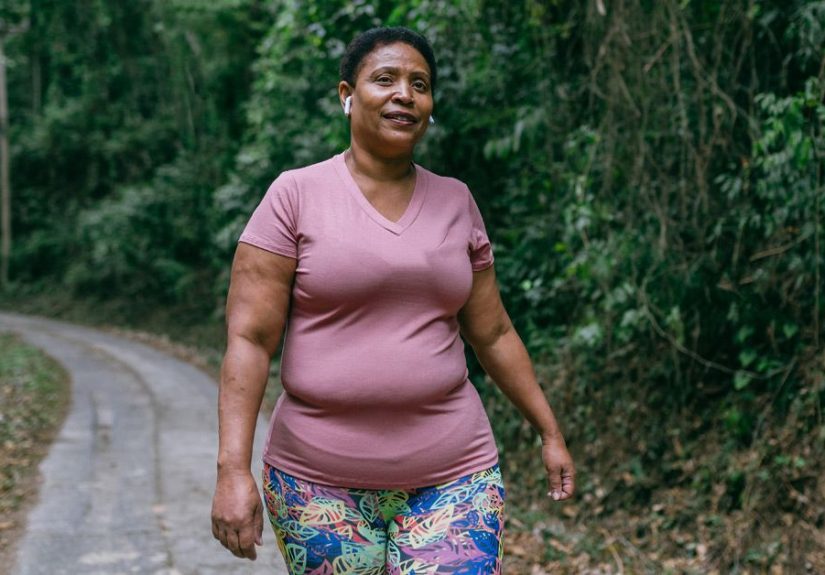
Let’s talk about the weight people joked aboutbecause humor is a survival toolbut with real context.
“Pandemic weight gain” became a meme, and like many memes, it was funny because it was partly true:
routines fell apart, stress went up, and the kitchen was suddenly the closest “open” recreational facility.
What the data suggest about weight change
Studies tracking body weight during shelter-in-place periods found measurable average weight gain
trends in certain samples. Not everyone gained weight, and the averages differ by age, starting weight,
and circumstance. But the overall story is consistent with lived experience: less daily movement,
more sedentary time, and stress-driven eating patterns for many households.
Meanwhile, broader U.S. data continue to show high obesity prevalence among adults. Obesity was already
a major public health challenge before COVID-19, and the pandemic’s disruptions didn’t help. When routine
medical visits are delayed, gyms close, sports seasons pause, and stress rises, long-term health habits can
take a hit.
It wasn’t just willpowerit was environment
A key lesson: health behaviors are not only personal choices; they’re built into systems. If your job became
remote and your commute disappeared, you lost “incidental exercise.” If your kids were home all day,
your schedule changed. If your neighborhood wasn’t safe for outdoor activity, “just take a walk” wasn’t
simple adviceit was a privilege disguised as a tip.
How to lighten this particular load (without diet culture nonsense)
The goal after a disruptive event isn’t punishmentit’s rebuilding. Small changes beat dramatic ones:
a short daily walk, regular sleep, realistic grocery planning, and stress management that doesn’t depend on
perfection. If COVID-19 taught us anything, it’s that “all-or-nothing” plans break easily. “Some is better than none”
tends to survive.
5) The Weight on School and Childhood: Learning Loss and Disrupted Routines
For students, COVID-19 added weight in two directions: academic and developmental. Learning depends on routine,
feedback, and stable relationships. When schools pivoted to remote or hybrid models, many students did the best
they couldbut access to devices, internet, quiet spaces, and adult support varied widely.
Academic signals: national scores tell a sobering story
Analyses discussing post-pandemic learning trajectories have pointed to declines in national assessment performance
compared with pre-pandemic baselines, with differences by grade level and cohort. This isn’t just about “missing content.”
It’s about disrupted practice, reduced real-time support, and the cumulative nature of skills like math and reading.
The burden also landed on parents and caregivers, who became part-time teachers while trying to work, manage stress,
and keep households running. Many families describe that period as exhausting not because they “failed,” but because
they were asked to do too much at oncewithout a manual.
6) The Weight on Trust: Communication, Fatigue, and the Information Mess
Trust became one of COVID-19’s invisible battlegrounds. Guidance changed as scientists learned more and as variants
shifted the playing field. That’s normal in science, but it can feel unsettling in everyday life. When people want certainty
and the best answer is “it depends,” frustration grows.
Vaccines helped, but they weren’t magic armor
Vaccination remains a key tool for reducing severe illness. Vaccine effectiveness varies by season, variant, age group,
and time since vaccination. Recent federal estimates have shown measurable protection against hospitalization in older
adults, even when protection against milder outcomes is more modest. The practical takeaway isn’t “perfect or useless.”
It’s that vaccines shift the oddsespecially for higher-risk groups.
COVID-19 also demonstrated how quickly misinformation spreads, how political identity can seep into health choices,
and how exhausted people become when they’re asked to care about something urgent for years on end. Pandemic fatigue
is realand it affects behavior, compliance, and empathy.
7) The Weight We Can Shift: What Recovery Looks Like Now
We can’t un-live a pandemic. But we can reduce its ongoing weight by focusing on what works:
Protect health systems by protecting workers
Healthcare burnout didn’t end when ICU numbers fell. Federal guidance has emphasized building a thriving health workforce,
including system-level changes (staffing, workflow, safety, mental health support) rather than telling people to “be more resilient.”
Resilience is great. Adequate staffing is better.
Use technology wisely: telehealth as a pressure valve
Telehealth expanded rapidly during the pandemic, offering continuity of care when in-person visits were harder.
The challenge now is to keep what works (access, convenience, chronic care check-ins) while ensuring quality,
privacy, and equitable access for people with limited broadband or devices.
Rebuild routines and community supports
Recovery is often unglamorous: consistent sleep, regular meals, movement, and social connection. For communities,
it’s also policy: paid sick leave, stable childcare, school supports, mental health resources, and public health communication
that treats people like adultscapable of nuance and honest tradeoffs.
Conclusion: The Real Measure of “Weight”
The weight of COVID-19 isn’t one number. It’s a stack of burdenssome counted in charts, others felt in quiet moments.
It’s the strain on hospitals, the persistence of long COVID, the economic shock, the learning setbacks, the stress,
and the trust issues that don’t disappear on schedule.
But weight can shift. We’ve seen progress: better tools, better knowledge, and better strategies than we had in early 2020.
The next chapter of COVID-19 is less about emergency mode and more about durable recoveryreducing risk, supporting
the people who hold the system together, and rebuilding health and community in ways that last.
Experiences: What “Weight” Looked Like in Real Life (A 500-Word Add-On)
A nurse in a midsize hospital describes the pandemic as “running a marathon while someone keeps moving the finish line.”
The hard part wasn’t only the busiest weeksit was the long stretch of alertness. Every shift required new rules, new PPE habits,
new protocols, and sometimes new grief. When the waves slowed, the emotional backlog didn’t. A quiet moment at home could feel
louder than a packed unit because the brain finally had time to replay everything it had postponed feeling.
A small business owner remembers the strange math of reopening: fewer customers, higher costs, and a constant decision loop.
Do you cut hours to survive? Raise prices and risk losing regulars? Spend money you don’t have to make the space safer?
The stress wasn’t always dramatic; it was repetitive. Each day asked the same question in different clothing: “How long can we do this?”
And the answer changed with every headline.
A high school teacher talks about teaching into a grid of black rectanglescameras off, microphones muted, connection lagging.
Sometimes a student would type a single sentence in the chat and it felt like a flare in the dark: proof someone was still there.
The teacher’s work expanded beyond academics. They became part tech support, part counselor, part motivational speaker.
Later, when classrooms reopened, the challenge shifted again: helping students relearn routine, confidence, and the social muscles
that don’t get exercised when your world shrinks to a bedroom and a laptop.
A parent of two describes the “invisible juggling” as the heaviest part: work deadlines, childcare gaps, and the constant hum of
worrying about older relatives. Grocery runs became strategy sessions. Birthday parties became negotiations. The family didn’t “do nothing”
during that era; they did a thousand small, careful thingseach one costing a bit of energy. The cumulative effect was exhaustion that
didn’t always look like exhaustion from the outside.
And then there’s the person whose infection ended but didn’t fully leave. They’re back at work, but they’re slower. Some days feel normal;
other days feel like walking through wet concrete. Friends mean well“Glad you’re better!”and the person smiles, because explaining is tiring.
The weight here is partly physical, partly social: learning to pace, to advocate, to accept that recovery is not always linear, and to hold onto
identity when your body keeps renegotiating the terms of what a “good day” is.
These experiences are different, but they rhyme. They show why COVID-19’s weight can’t be reduced to a single headline.
It’s what people carried while life kept movingand what many are still carrying as they rebuild.