Table of Contents >> Show >> Hide
- Why Tiffany Bracelets Are So Commonly Faked
- Start With the Seller Before You Start With the Bracelet
- Inspect the Hallmarks Like a Skeptic, Not a Fan
- Compare the Bracelet to Official Tiffany Product Photos
- Pay Attention to Weight, Metal Feel, and Finish
- Packaging Helps, but It Does Not Prove Authenticity
- Look for Craftsmanship, Not Just Branding
- Ask for Documentation, but Be Smart About It
- What to Do If You Already Bought One
- Real-World Experiences: What Buyers Learn the Hard Way
- Final Thoughts
- SEO Tags
Note: HTML body only for publishing; source-style artifacts removed as requested.
A fake Tiffany bracelet usually tries very hard to look expensive while quietly forgetting the part where it should actually be well made. That is the giveaway in a nutshell. Real Tiffany jewelry is known for precise craftsmanship, balanced proportions, clean hallmarks, and materials that feel like the genuine article the moment they hit your hand. Counterfeits, on the other hand, often lean on the famous blue box, a familiar heart tag, and a suspiciously tempting price tag. In other words, they show up wearing a tuxedo jacket with flip-flops.
If you are shopping for a pre-owned Tiffany bracelet, inherited one, or found a “can’t-miss” deal online, you need more than a quick glance at the logo. The smartest way to spot a fake Tiffany bracelet is to look at the whole picture: seller, price, hallmarks, metal quality, weight, construction, dimensions, and packaging. One clue by itself might not prove much. But when several things look off at once, that bracelet starts telling on itself fast.
Why Tiffany Bracelets Are So Commonly Faked
Tiffany & Co. sits in that sweet spot counterfeiters love: globally recognized, instantly identifiable, and packed with signature design details that even casual shoppers recognize. Heart tags, toggle bracelets, bead bracelets, and Return to Tiffany styles are especially frequent targets because buyers already know what they are supposed to look like.
That familiarity can work against shoppers. People see a heart tag, a pale blue box, and a bit of polished silver, then their brain says, “Yep, close enough.” Counterfeiters count on that. They also count on shoppers being distracted by bargain pricing. If a bracelet that normally sells at a luxury price point suddenly appears for the cost of dinner and a coffee, that is not a miracle. That is marketing with a fake mustache.
Start With the Seller Before You Start With the Bracelet
The first authenticity test is not the clasp or the engraving. It is the person selling it. Before you zoom in on photos, zoom out and look at the source.
Ask Where It Is Being Sold
A trustworthy seller should be able to explain where the bracelet came from, how long they have had it, whether they still have the original receipt or pouch, and why they are selling it. A vague story like “gift from an ex, maybe Tiffany, not sure” is not charming. It is a red flag wearing perfume.
Check the Price Against Reality
Luxury jewelry rarely sells for pennies on the dollar unless there is a very clear reason, such as heavy wear, damage, or a distressed resale situation. Even then, authentic Tiffany pieces usually retain recognizable resale value. A ridiculously cheap bracelet should immediately push you into detective mode. Great deals exist. Fantasy deals also exist, and they usually come with blurry photos.
Review the Listing Quality
A serious seller usually includes close-up photos of the bracelet front, back, clasp, hallmarks, and any packaging or paperwork. Counterfeit listings often rely on dark lighting, generic angles, or stock images lifted from brand websites. If you cannot inspect the details, assume the details may be the problem.
Inspect the Hallmarks Like a Skeptic, Not a Fan
Hallmarks are one of the biggest clues when you want to spot a fake Tiffany bracelet. Authentic Tiffany bracelets generally have precise markings that indicate the brand and the metal content. But this is where people get tripped up: the presence of a hallmark does not automatically make the bracelet real. Fakes can be stamped too. Badly, awkwardly, and often with all the grace of a rubber chicken, but stamped nonetheless.
What You Should Look For
On many authentic Tiffany bracelets, you should expect branding such as “Tiffany & Co.” or “T&Co.” along with a metal purity mark. Common examples include:
- 925 for sterling silver
- 750 for 18k gold
- 950 for platinum
The text should look crisp, centered, and intentional. Authentic hallmarks usually appear clean and evenly spaced, not fuzzy, crooked, shallow, or stuffed into the metal like an afterthought. Watch for letters that look too thick, too skinny, or inconsistent. If the font feels clumsy, the bracelet might be too.
Common Hallmark Red Flags
Be suspicious if the engraving is misspelled, uneven, oddly deep, or almost impossible to read because the stamping is messy. Also watch for hallmarks that do not match the style or metal. A bracelet claiming to be gold but marked like silver is not “vintage charm.” It is evidence.
Another smart move is checking placement. On authentic fine jewelry, marks are usually placed where they make structural and design sense, such as on the clasp, jump ring, back of the tag, or inner surface of a bangle. Random placement can signal careless manufacturing.
Compare the Bracelet to Official Tiffany Product Photos
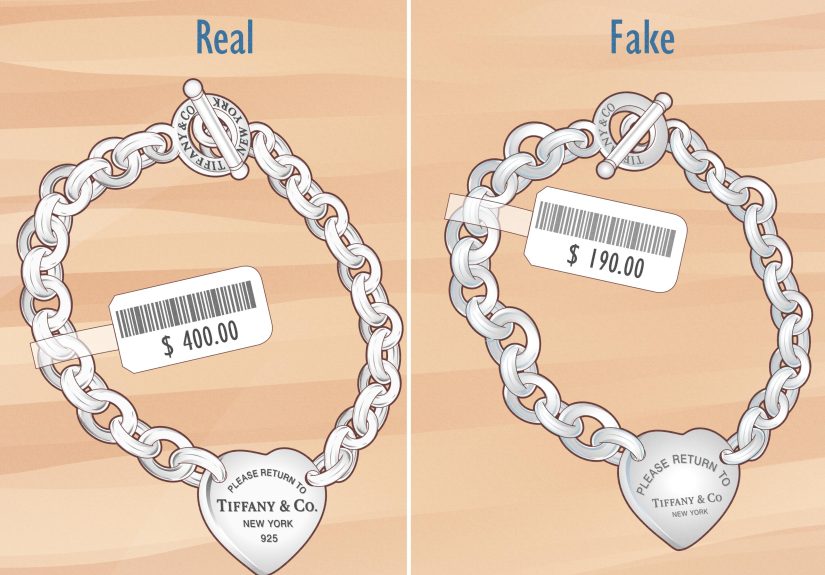
This step is wildly underrated. Open Tiffany’s official website and compare the bracelet in question to the genuine version. Compare the exact model if possible, not just “something similar.” Counterfeiters often get the broad idea right but miss the smaller details that real product pages make obvious.
Focus on Proportion, Not Just Shape
A fake heart tag may be too puffy, too flat, too large, too small, or slightly wrong in curve and spacing. The chain links may be thicker or thinner than they should be. A bead bracelet may have beads that look almost right until you compare them side by side and realize the sizing is off. This is where the fake starts to unravel like a cheap sweater.
Check the Typography on the Tag
Tiffany engraving tends to look balanced and elegant. The spacing, alignment, and letterform proportions matter. Counterfeit versions often mess this up. The words may crowd the edge, sit too high, or appear oddly bold. If the text looks like it was designed during a stressful group project, trust your instincts.
Compare Closures and Construction
Look closely at toggle bars, spring rings, lobster clasps, jump rings, and soldered connections. Authentic luxury jewelry usually has closures that feel smooth, sturdy, and refined. Fakes often feel rough, stiff, flimsy, or just plain awkward when opened and closed. You want precision, not hardware-store energy.
Pay Attention to Weight, Metal Feel, and Finish
Photos tell part of the story. Your hand tells the rest. Authentic Tiffany bracelets are made from precious metals and should feel substantial for their size. That does not mean every bracelet will feel heavy like a paperweight, but it should not feel hollow, featherlight, or tinny.
Real Sterling Silver Usually Behaves Like Sterling Silver
If the bracelet is sold as sterling silver, the metal should have a rich luster rather than a bright, chrome-like glare. Real silver can tarnish over time. That is normal. Counterfeit pieces sometimes use base metals with a too-perfect shine or a fake plating that starts rubbing off in embarrassing places.
A soft polishing cloth test can also tell you something. Real silver often leaves dark residue on the cloth due to oxidation. That does not authenticate a Tiffany piece by itself, but it can help confirm that you are dealing with actual silver rather than costume metal in fancy dress.
Try a Simple Magnet Check
Sterling silver is not magnetic in normal use. If a supposed silver Tiffany bracelet jumps toward a magnet like it just heard free pizza was available, that is a serious warning sign. This is not a perfect test, but it is a useful screening tool.
Packaging Helps, but It Does Not Prove Authenticity
This is where many buyers get fooled. Yes, Tiffany packaging is iconic. Yes, authentic purchases arrive in signature presentation packaging. No, that does not mean every bracelet with a blue box is real.
Counterfeiters know buyers are emotionally attached to packaging, so they fake that too. Sometimes badly, sometimes surprisingly well. A fake bracelet can absolutely come with a pouch, box, ribbon, and little shopping bag. The packaging may help support authenticity if everything else checks out, but packaging alone should never close the case.
What Packaging Should and Should Not Do
Use packaging as a supporting clue, not the star witness. If the bracelet looks wrong but the box looks right, trust the bracelet. Jewelry matters more than cardboard. Always.
Also remember that authentic pre-owned Tiffany bracelets may be sold without original packaging, especially if they were gifts, inherited, or purchased years ago. Missing box does not mean fake. Perfect box does not mean real. Luxury shopping would be a lot easier if cardboard solved everything, but here we are.
Look for Craftsmanship, Not Just Branding
A real Tiffany bracelet usually shows care in all the little places counterfeiters hate spending money on. Edges should feel smooth. Links should move properly. Solder points should look neat. Tags should lie correctly. Engraving should feel integrated into the design instead of slapped on like a last-minute school label.
Signs of Poor Craftsmanship
- Rough or sharp edges
- Uneven tag thickness
- Clunky chain links
- Loose joints or weak clasps
- Plating that chips or discolors
- Asymmetry that is clearly not intentional
Luxury jewelry should look confident up close. A counterfeit often looks decent from across the room and deeply nervous under a loupe.
Ask for Documentation, but Be Smart About It
Receipts, pouches, boxes, and service paperwork can all help. So can original purchase emails from Tiffany or insurance documentation. But documentation is supporting evidence, not the entire case. Receipts can be lost, and fake paperwork exists too.
If a seller has documentation, check whether the details actually match the bracelet being sold. Does the metal match? Does the style match? Does the date make sense? If a receipt describes one bracelet and the listing photos show another, congratulations: the paperwork has joined the scam.
What to Do If You Already Bought One
If you already purchased the bracelet and you are having doubts, do not panic. Start by documenting everything: listing screenshots, messages with the seller, payment records, and photos of the bracelet from every angle. Then get a professional opinion from a reputable jeweler, luxury reseller, or authentication service with experience in branded fine jewelry.
This matters because Tiffany does not operate a general authentication program for outside merchandise. In practical terms, that means you should not assume you can walk into a boutique and get a tidy yes-or-no verdict. Independent expert evaluation is often the smarter route.
If the piece turns out to be fake, act quickly. File a dispute through the marketplace or payment provider, report the seller, and keep all evidence. Counterfeit jewelry is not just disappointing. It can also be part of a larger online shopping scam.
Real-World Experiences: What Buyers Learn the Hard Way
One of the most common experiences buyers describe goes something like this: they find a Tiffany bracelet online for what seems like a lucky price, maybe from a resale account with polished photos and lots of confident language. The seller says it was “barely worn,” includes a box, maybe even tosses in a pouch, and the whole listing feels plausible enough to calm that little internal alarm bell. Then the bracelet arrives, and the first weird detail appears. The silver feels lighter than expected. The tag engraving looks slightly off. The clasp does not close with the smooth snap they imagined. Nothing screams fake immediately, but everything whispers it.
Another common experience happens with inherited or gifted pieces. Someone finds a bracelet in a jewelry box, notices the Tiffany-style tag, and assumes it is automatically valuable and authentic. Sometimes they are right. Sometimes they are holding a souvenir from a department-store counterfeiting era that fooled a previous owner years ago. What makes these situations tricky is that older authentic pieces can differ from current ones in subtle ways. The lesson here is not to panic just because a vintage bracelet does not match a modern product page exactly. The lesson is to compare the quality of the piece itself: the precision of the marks, the logic of the construction, the feel of the metal, and the overall craftsmanship.
Then there is the packaging trap. Buyers often admit that the blue box lowered their guard. It felt official, polished, and comforting. The ribbon looked close enough. The pouch felt soft enough. But once they compared the bracelet to official photos or handled an authentic Tiffany piece in person, the difference became obvious. Packaging can create confidence, but confidence is not proof. Plenty of fake bracelets travel in very convincing little costumes.
Some of the smartest buyers learn through side-by-side comparison. They pull up official Tiffany images, compare link shape, tag size, font spacing, and closure style, and suddenly the problems become impossible to ignore. What seemed “basically the same” becomes “why is the heart shape wrong, why is the lettering crowded, and why does this bead bracelet look like it borrowed parts from three different factories?” Side-by-side comparison is not glamorous, but it is incredibly effective.
The best experience, of course, is the buyer who slows down before paying. They ask for close-up photos, request measurements, compare the bracelet to verified references, and check the seller’s history. They accept that luxury shopping requires a little skepticism. And because of that skepticism, they either avoid a fake entirely or buy with real confidence. That is the goal: not becoming paranoid, just becoming harder to fool. When a bracelet is authentic, the details usually support each other. When it is fake, the story falls apart under pressure.
Final Thoughts
If you want to spot a fake Tiffany bracelet, do not let one attractive detail make the whole decision for you. Not the blue box. Not the logo. Not the seller’s charming caption. Authenticity lives in the combination of details: correct hallmarks, believable seller history, precise design, solid weight, refined craftsmanship, and a price that makes sense in the real world.
The good news is that counterfeit bracelets usually reveal themselves when you slow down and inspect them properly. The bad news is that many buyers rush because the deal looks exciting. So take the less glamorous approach. Ask more questions. Compare more photos. Trust quality over hype. In luxury jewelry, the details are not decoration. They are the evidence.