Table of Contents >> Show >> Hide
- What Is a Gentle C-Section?
- Why This Approach Matters
- Who Can Have a Gentle C-Section?
- Gentle C-Section Birth Plan: What to Ask For
- What a Gentle C-Section Day Can Look Like
- Safety Comes First: Non-Negotiables in a Gentle C-Section
- Recovery: What Changes (and What Doesn’t)
- Future Births: Repeat C-Section or VBAC?
- Common Myths About Gentle C-Section
- Questions to Ask Your Provider (Copy/Paste This List)
- Conclusion
- Real-World Experiences (Approx. )
Let’s be honest: most people don’t dream about fluorescent lights, beeping monitors, and a surgical drape when they imagine giving birth.
But for many families, a cesarean birth is the safest pathand sometimes the planned one. A gentle C-section (also called a family-centered C-section) is an approach that keeps medical safety front and center while making the birth feel more personal, connected, and calm.
In plain English: same surgery, better experience. You still have a skilled team, sterile technique, and operating-room safety protocols.
But you can often add options like seeing your baby born through a clear drape, immediate skin-to-skin, early breastfeeding, calming music, and partner support.
Think of it as moving from “high-stress hospital scene” to “safe surgical birth with human warmth.”
This guide walks through what a gentle C-section is, who it may suit, what to include in your birth plan, what options are realistic, how recovery differs, and what questions to ask your care team before delivery day.
We’ll keep it evidence-informed, practical, and refreshingly non-robotic.
What Is a Gentle C-Section?
A gentle C-section is a family-centered cesarean delivery model. The operation itself doesn’t change in purpose: your baby is delivered through incisions in the abdomen and uterus.
What changes is how the experience is designedwhen safe and appropriateto support bonding, communication, and emotional comfort.
How It Differs From a Traditional C-Section Setup
- More parent participation: You may be offered a clear drape so you can see your baby’s birth.
- Immediate bonding: Skin-to-skin in the OR or very soon after, if parent and baby are stable.
- Early feeding support: Breastfeeding/chestfeeding support starts earlier when feasible.
- Personalized environment: Music choices, calm communication, and support-person presence.
- Hands-free adjustments: IV and monitoring placement may be arranged to help you hold baby safely.
Important reality check: “gentle” does not mean “less serious.” A C-section is still major abdominal surgery.
The goal is not to remove safety protocolsit’s to reduce unnecessary separation and make a medically necessary birth feel less medicalized.
Why This Approach Matters
Cesarean birth is common in the U.S., and for many people it is life-saving. Because it is so common, improving the experience is not a “nice-to-have”; it’s a quality-of-care issue.
When family-centered practices are used appropriately, many parents report feeling more involved, less frightened, and more connected right after birth.
Evidence has repeatedly linked early skin-to-skin after cesarean with improved short-term breastfeeding outcomes and earlier first latch in many settings.
Some studies also report better maternal satisfaction and improved newborn transition when safe skin-to-skin is facilitated.
Translation: the first hour can be powerful, even in an operating room.
Who Can Have a Gentle C-Section?
Usually, gentle C-section options are most feasible when birth is planned or non-emergent and both parent and baby are stable.
That includes many scheduled cesareans and some unplanned intrapartum cesareans.
You May Be a Good Candidate If:
- You are having a scheduled C-section and want a more participatory birth experience.
- Your baby is expected to be stable at delivery.
- Your hospital has a protocol for family-centered cesarean care.
- Your OB team and anesthesia team are aligned with your preferences.
When Some Options May Not Be Possible
- Emergency situations requiring rapid delivery.
- Heavy maternal bleeding or unstable vital signs.
- Baby needing urgent resuscitation/NICU transfer.
- Anesthesia or surgical concerns requiring stricter positioning.
Bottom line: your birth plan should include your preferences and your safety plan.
Not because anyone wants to ruin the vibe, but because labor and surgery can change quickly.
Gentle C-Section Birth Plan: What to Ask For
A good gentle C-section plan is specific, flexible, and shared earlyideally by 32–36 weeks if your cesarean is likely.
Bring it to prenatal visits, pre-op calls, and the hospital intake conversation.
1) Before Surgery (Pre-Op Preferences)
- Who can be present (partner, doula, etc.).
- Whether you can listen to your own playlist.
- How you’d like communication handled (step-by-step narration helps many people).
- Request for anti-nausea and anti-shivering support if needed.
- Plan for anxiety: breathing coaching, grounding cues, reassurance check-ins.
2) During Delivery (Intra-Op Preferences)
- Clear drape or drape-lowering moment for birth viewing.
- One arm kept as free as possible to hold baby safely.
- Delayed cord clamping when clinically appropriate.
- Skin-to-skin in OR as soon as safe for parent and baby.
- Partner participation in initial bonding when parent-baby contact is delayed.
3) First Hour After Birth
- Prioritize uninterrupted skin-to-skin if stable.
- Early feeding attempt in OR or recovery.
- Routine procedures done bedside whenever possible.
- Keep parent and baby together unless medically necessary.
4) If Plan A Changes, Then What?
Add a short “if/then” section:
- If baby needs NICU: partner goes with baby; photos/video updates to parent.
- If immediate skin-to-skin isn’t possible: start as soon as clinically safe.
- If general anesthesia is needed: partner informed quickly; first contact plan for recovery.
This is where your plan becomes resilient instead of fragile. A birth plan is a guide, not a courtroom document.
What a Gentle C-Section Day Can Look Like
Step 1: Arrival and Prep
For scheduled procedures, many hospitals provide pre-op instructions (sometimes including antiseptic wash protocols and timing calls).
You’ll typically have IV placement, labs, consent review, and anesthesia discussion.
Step 2: Anesthesia and Positioning
Most cesareans use regional anesthesia (spinal/epidural), so you’re awake and can usually see and hear your baby soon after birth.
General anesthesia is usually reserved for emergencies or specific clinical situations.
Step 3: Birth Moment
In family-centered setups, the team may lower or switch drapes at birth so you can witness delivery.
If all is stable, baby may be assessed briefly and brought to you for skin-to-skin during surgery or promptly in recovery.
Step 4: Recovery and First Feeding
Early feeding support often starts in recovery.
If direct breastfeeding/chestfeeding is delayed, hand expression, assisted latch later, or skin-to-skin with your support person can still protect bonding momentum.
Safety Comes First: Non-Negotiables in a Gentle C-Section
The best gentle C-section programs are not “soft” on safety. In fact, they often rely on stronger communication and coordination.
Professional groups emphasize standardized surgical checklists and clear team roles for maternal and newborn safety.
- Continuous monitoring for parent and baby.
- Sterile field protection in OR.
- Rapid response readiness for bleeding, anesthesia complications, or fetal issues.
- Explicit communication on when bonding steps are safe to start.
Think of it this way: gentle C-section is not less medicineit is better choreography.
Recovery: What Changes (and What Doesn’t)
A gentle approach may improve emotional experience and early bonding, but recovery is still C-section recovery.
You’ll need pain control, wound care, mobility, rest, and follow-up.
Typical Recovery Realities
- Hospital stays vary, often around 2–4 days depending on health status and hospital protocol.
- Pain and fatigue are expected initially; medication plans should support comfort and feeding goals.
- Check incision daily for redness, swelling, drainage, fever, or worsening pain.
- Move early but gently as instructedmobility helps recovery and lowers clot risk.
Postpartum Follow-Up Matters
Many practices schedule early incision checks around two weeks after cesarean, plus comprehensive postpartum follow-up after that.
Use those visits for pain, mood, sleep, feeding concerns, contraception, and future pregnancy planning.
Future Births: Repeat C-Section or VBAC?
If this is your first C-section, future planning matters.
Some people are good candidates for VBAC (vaginal birth after cesarean), while others need repeat cesarean delivery.
Successful VBAC can reduce surgical recovery burden, but it is not right for everyone.
Ask early about your uterine incision type, your reason for cesarean, and your hospital’s VBAC capabilities.
Also discuss family size goals: repeat surgeries can increase scar tissue and risks in future pregnancies.
Common Myths About Gentle C-Section
Myth: “Gentle means risky.”
Reality: gentle protocols are intended to happen within safety boundaries, not outside them.
Myth: “You can’t bond if it’s a C-section.”
Reality: early skin-to-skin and feeding support can still happen, including in OR/recovery when stable.
Myth: “If my plan changes, I failed.”
Reality: flexibility is a success strategy, not a compromise of values.
Myth: “A birth plan is pointless for surgery.”
Reality: a thoughtful plan improves communication, expectations, and shared decision-making.
Questions to Ask Your Provider (Copy/Paste This List)
- Do you offer a family-centered or gentle C-section protocol?
- Can I request a clear drape or drape-lowering at delivery?
- How do you handle delayed cord clamping in cesareans?
- Can skin-to-skin happen in the OR if baby and I are stable?
- Can my partner or doula stay with me throughout surgery?
- Can routine newborn procedures be done while baby is on my chest?
- What pain-control plan best supports early feeding and mobility?
- If complications arise, how will my birth preferences be adjusted?
- What does postpartum follow-up look like after C-section?
- Am I a possible VBAC candidate in a future pregnancy?
Conclusion
A gentle C-section is a practical bridge between two truths: a cesarean is major surgery, and birth is a deeply personal life event.
You don’t have to pick one. You can ask for both safety and dignity, both precision and warmth.
The strongest plan is one that is collaborative, specific, and adaptable.
When your team knows your prioritiesseeing your baby born, skin-to-skin, early feeding, calm communicationyou’re more likely to feel informed and empowered, even if the script changes.
And in birth, the script sometimes always changes.
Real-World Experiences (Approx. )
Note: The stories below are realistic composite experiences based on common clinical scenarios and patient-reported themes.
They’re here to help you picture optionsnot to replace medical advice from your own care team.
Experience 1: “I still got my first-hour moment.”
Alina had a planned C-section for breech presentation at 39 weeks. She told her OB she wanted two things above all: to see the birth and to hold her baby quickly.
In the OR, the team used a clear drape at delivery, and her IV and blood pressure cuff were set on her non-dominant side so her right arm could move more freely.
She heard the first cry, cried herself, laughed at the same time (“which should be illegal in surgery, right?”), and got skin-to-skin in the OR after a quick newborn assessment.
Breastfeeding started in recovery with a football hold and lots of pillow engineering.
Her takeaway: “I didn’t get a vaginal birth, but I got a connected birth.”
Experience 2: “My plan changed, but my values didn’t.”
Brianna planned a gentle repeat C-section, including music, delayed cord clamping, and immediate skin-to-skin.
During surgery, her baby needed extra breathing support right away. Instead of skin-to-skin in the OR, her partner accompanied the baby for evaluation while the nurse kept Brianna updated in real time.
Thirty minutes later in recovery, skin-to-skin happened and feeding began.
She said the hardest part was the unexpected separation, but the prewritten backup plan reduced panic: everyone already knew what mattered to her and what to do next.
Her takeaway: “Flexibility didn’t erase my birth preferencesit protected them.”
Experience 3: “Anxiety got a seat at the table.”
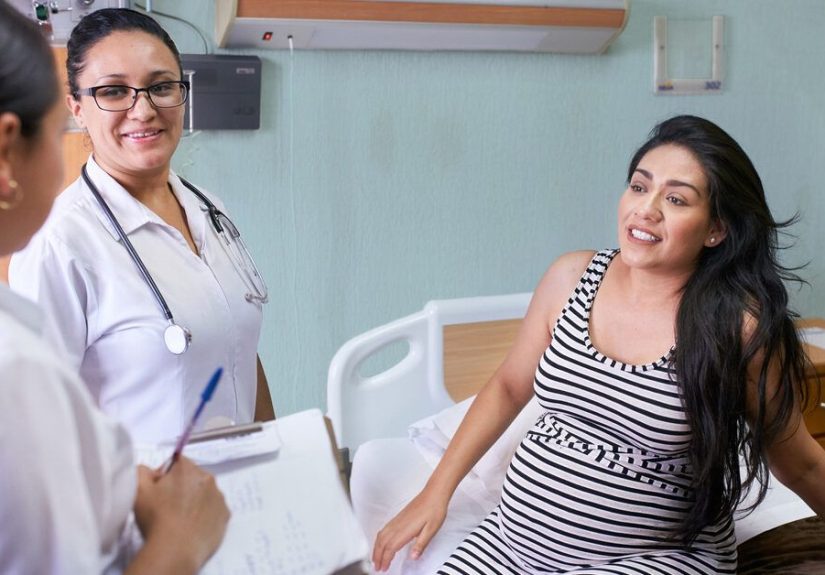
Dani had severe pre-op anxiety and feared feeling out of control. At prenatal visits, she asked for a “talk-me-through-it” approach: one staff member to narrate each stage in short, calm updates.
She also asked for anti-nausea support and grounding cues (“breathe in four, out six”).
Her team agreed. They explained pressure sensations before they happened, reminded her she was safe, and told her exactly when baby would be brought up for skin-to-skin.
She described it as “still intense, but not terrifying.”
Her takeaway: planning for emotional safety is as real as planning for surgical safety.
Experience 4: “Feeding took a little creativity.”
Maya expected breastfeeding to be instant and magical. Instead, she felt sore, shaky, and awkward about positioning after surgery.
A lactation consultant helped with side-lying and football holds to reduce pressure on her incision.
Her partner helped with latch setup, water refills, snack logistics, and the glamorous work of stacking six pillows at 3 a.m.
Feeding wasn’t perfect on day one, but frequent skin-to-skin and steady support helped.
By discharge, she felt more confident and less defeated.
Her takeaway: successful feeding after C-section is often a series of small wins, not one cinematic moment.
Experience 5: “Recovery was physical and emotional.”
Nora bounced between gratitude and grief after an unplanned cesarean. She loved that her baby was healthy but felt sad that labor ended differently than expected.
At her two-week incision check, her provider normalized mixed emotions and screened for postpartum mood symptoms.
Nora started short daily walks, kept pain meds on schedule, and asked family for help instead of trying to “power through.”
She also joined a postpartum support group where she heard other C-section stories that sounded like her own.
Her takeaway: healing includes your incision, your sleep, your feeding rhythm, and your story about what happened.