Table of Contents >> Show >> Hide
- 1) Racetrack Playa, California The “Sailing Stones” That Finally Snitched on Themselves
- 2) Marfa Lights, Texas Ghost Orbs, Highway Mirage, or Desert Light Show?
- 3) Great Serpent Mound, Ohio A Giant Earthwork With a Story Still Being Debated
- 4) Coral Castle, Florida One Man, Massive Stones, and a Lot of Side-Eye
- 5) Area 51 (Groom Lake), Nevada The Most Photographed “No Photos” Place in America
- 6) Devils Tower, Wyoming A Geological Monolith With Cultural Gravity
- 7) Winchester Mystery House, California Architecture That Looks Like a Puzzle Box
- 8) Stonehenge, England The Original “How Did They Do That?” Group Project
- 9) The Nazca Lines, Peru Giant Desert Drawings You’re Not Supposed to “Get” From the Ground
- 10) Socotra Island, Yemen The “Alien Planet” Look That’s Actually Biodiversity
- How These Places Create “Magical Images” (A Quick Pattern Recognition Cheat Code)
- Experience Add-On (About ): What It’s Like to Chase “Mysterious Location” Photos in Real Life
- Conclusion
Some places look like they were designed by a committee of wizards, geologists, and one mildly chaotic interior decorator. They’re real, they’re photogenic, and they come with stories that range from “ancient genius” to “how is that even legal, physics?” Below are ten locations that consistently produce magical imagesthe kind you post and immediately get asked, “Okay, but is that Photoshopped?” (Answer: no. Your planet is simply dramatic.)
This guide isn’t just a list of pretty backdrops. It’s a breakdown of what you’re actually seeing, why the place feels mysterious, and how to capture the shot without turning your trip into a slapstick documentary.
1) Racetrack Playa, California The “Sailing Stones” That Finally Snitched on Themselves
The signature image here is a lonely stone with a long trail etched behind it across a dead-flat lakebed. For decades, the rocks’ movement sounded like folklore: stones “walk” when nobody’s watching. Then science did what it does bestset up instruments and patiently wait for nature to stop being shy.
Why it feels mysterious
The tracks look intentional, like a giant dragged pebbles across wet clay with a ruler. And because the playa is so wide and quiet, your brain starts inventing explanations. (Aliens. Ghosts. A very determined tumbleweed.)
What the best “magical image” looks like
A low-angle shot at sunrise: cracked mud polygons glowing warm, the rock in crisp detail, its trail leading your eye like a breadcrumb path to nowhere.
Reality check: the elegant explanation
Under the right conditions, a shallow winter pond forms and thin “windowpane” ice breaks into floating panels. Light winds can push ice that nudges rocks, leaving those perfect tracks in soft mud. The mystery didn’t vanishnow it’s a different kind of magic: physics with impeccable timing.
How to shoot it (without suffering)
- Go for golden hourtexture on the playa is everything.
- Use a wide lens low to the ground for maximum “trail drama.”
- Stay on durable surfaces and follow park guidance; this landscape is more fragile than it looks.
2) Marfa Lights, Texas Ghost Orbs, Highway Mirage, or Desert Light Show?
If you’ve seen photos of glowing dots hovering over a dark horizon, you’ve seen the Marfa Lights aesthetic: tiny lanterns floating in the West Texas night, sometimes splitting, merging, or vanishing like they remembered they left the stove on.
Why it feels mysterious
The phenomenon has been reported for well over a century, and the lights often behave in ways that don’t match the tidy “single car headlight” mental model. Add empty desert, big sky, and late-night suspense, and your imagination will do the rest.
What the best “magical image” looks like
A long-exposure shot from a viewing area: the Chinati Mountains as a black silhouette, with small glowing spheres suspended over the landscapelike someone poked holes in the night and light leaked out.
Reality check: multiple sources, one vibe
Observers and researchers have proposed explanations ranging from atmospheric refraction and mirage-like effects to distant vehicle lights distorted by layers of warm and cool air. The fun part? Even when you know the likely ingredients, the experience still feels uncannybecause your eyes weren’t designed for desert optics at midnight.
How to shoot it
- Bring a tripod and experiment with 5–20 second exposures.
- Lock focus manually; autofocus will hunt in the dark like a confused raccoon.
- Include a horizon line for scaleotherwise your lights could be “anything,” including dust on your lens.
3) Great Serpent Mound, Ohio A Giant Earthwork With a Story Still Being Debated
From ground level, you see a grassy ridge winding through the landscape. From above, the “image” snaps into place: a massive serpent shapetail coiled, head poisedengineered into the earth with prehistoric precision.
Why it feels mysterious
The scale is the first surprise. The second is the lingering question of intent: ceremony, astronomy, cosmology, community identity? Different Native American cultures shaped the region across centuries, and the site sits at the intersection of archaeology, history, and living cultural significance.
What the best “magical image” looks like
Aerial or elevated viewpoint photography that frames the full serpent, ideally with soft morning light emphasizing contours. It’s the kind of shot that makes you understand why people describe landscapes as “written.”
How to shoot it respectfully
- Use designated overlooks and visitor guidancethis is heritage, not a prop.
- Try a telephoto from a safe vantage to compress the curves and highlight the head and coils.
- Let the site’s silence be part of the photoavoid cluttered framing when you can.
4) Coral Castle, Florida One Man, Massive Stones, and a Lot of Side-Eye
Coral Castle produces the kind of images that make viewers squint at their screen: huge limestone blocks shaped into walls, furniture, and sculptures, supposedly built largely by one personEdward Leedskalninover decades.
Why it feels mysterious
The “how” is baked into every photo: heavy stones precisely arranged, with stories of nighttime work and techniques never fully documented in a way that satisfies modern curiosity. Mystery thrives in the gap between “possible” and “personally unimaginable.”
What the best “magical image” looks like
A late-afternoon shot of monolithic stone forms casting long shadowshalf sculpture garden, half ancient ruin, and entirely “wait, this is in Florida?”
Reality check: documented history, lingering wonder
Coral Castle is a recognized historic site, and records place its construction across much of the mid-20th century. The mystery isn’t that stone can’t be moved; it’s how ingenuity plus time can create something that looks like it arrived from a different era.
5) Area 51 (Groom Lake), Nevada The Most Photographed “No Photos” Place in America
The iconic “image” here is often indirect: warning signs, long empty roads, heat shimmer, and distant mountains that look like they’re guarding a secret. It’s less postcard, more cinematic tension.
Why it feels mysterious
Secrecy is a storytelling engine. When a place is associated with classified aviation programs, it becomes a magnet for myths. The absence of information becomes the contentand people fill the void with whatever genre they prefer (spy thriller or UFO saga).
Reality check: official history exists
Declassified material tied to Cold War reconnaissance programs has publicly acknowledged the site’s role in aircraft testing and development. That doesn’t answer every rumor, but it does ground the mystery in something very human: technology, defense, and a lot of paperwork.
How to capture the vibe legally
- Photograph public roads and landscapes only; respect all signage and boundaries.
- Use a long lens for desert compression shotslayers of heat haze can look surreal.
- Lean into minimalism: emptiness is the “subject” as much as any landmark.
6) Devils Tower, Wyoming A Geological Monolith With Cultural Gravity
Devils Tower is one of those places where the “image” is instantly recognizable: towering vertical columns rising from the plains like a stone organ pipe played by the Earth itself.
Why it feels mysterious
The formation is visually unusual, and it carries deep significance for multiple Indigenous nations. That combinationrare geology plus cultural meaningcreates a powerful atmosphere that goes beyond aesthetics.
What the best “magical image” looks like
Blue-hour shots with the tower silhouetted against a cobalt sky, or sunrise compositions that catch light on the columnar texture. In spring and summer, you’ll often see prayer cloths tied near trailsphotograph with sensitivity and context.
Reality check: columnar jointing, super-sized
Devils Tower is famous for dramatic columnar jointingfractures that form as igneous rock cools. Knowing that doesn’t reduce the awe; it simply gives your wonder a name.
7) Winchester Mystery House, California Architecture That Looks Like a Puzzle Box
If you want “mysterious location” images that feel like a fever dream designed by a staircase, this is your spot. The visuals: doors to nowhere, odd angles, and a mansion that seems to have been built by someone trying to outwit a ghost with carpentry.
Why it feels mysterious
The story of Sarah Winchester has been mythologized for generationsgrief, fortune, spiritualism, and decades of construction. The house became a canvas where rumors and reality overlap, which is basically catnip for the internet.
What the best “magical image” looks like
Interior shots with repeating arches or staircases that end abruptly. The best photos here aren’t “wide”; they’re “confusing” (in the best way), using lines that lead your eyes into delightful dead ends.
Shooting tips
- Look for symmetry that isn’t quite symmetricalit creates unease on purpose.
- Use a fast lens or higher ISO indoors; keep details sharp to enhance the surreal.
- Capture texture: stained glass, carved wood, and the house’s layered era-by-era feel.
8) Stonehenge, England The Original “How Did They Do That?” Group Project
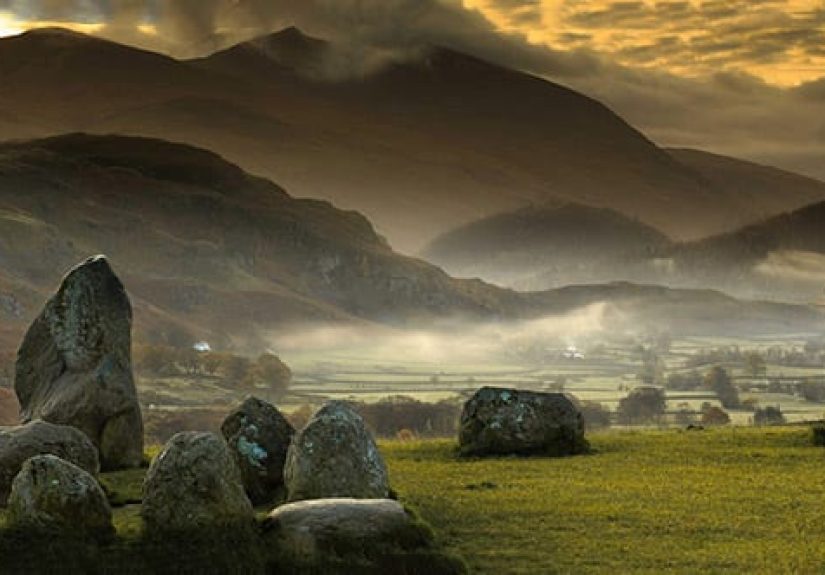
Stonehenge photographs often look staged because the monument is so iconic: massive stones arranged with deliberate geometry, framed by wide skies and rolling grassland.
Why it feels mysterious
The mystery has multiple layers: how stones were transported, why the layout matters, and what ceremonies or meanings surrounded it. It’s also strongly associated with solar alignmentsso the sky becomes part of the structure’s “design.”
What the best “magical image” looks like
Sunrise images near solstice season: low light threading through stones, the monument casting long shadows like a sundial for the imagination.
Reality check: two main stone types, very long journeys
Research has identified different stone sources, including bluestones linked to Wales. The distances involved are one reason the site keeps its aura: effort at this scale feels ritual, even before you know the rituals.
9) The Nazca Lines, Peru Giant Desert Drawings You’re Not Supposed to “Get” From the Ground
The Nazca Lines are a masterclass in scale. The best images are aerialspider, hummingbird, spirals, and long straight lines carved into desert by removing darker surface stones to reveal lighter ground beneath.
Why it feels mysterious
They’re enormous, ancient, and best appreciated from abovean angle human beings didn’t naturally have until relatively recently. That mismatch makes the lines feel like they were created for someone else’s eyes.
What the best “magical image” looks like
Clean overhead framing: a single figure isolated in desert emptiness, with crisp edges that look impossibly modern.
Reality check: clever method, dry climate
The geoglyphs were made by clearing away surface material to create contrast. The region’s arid conditions helped preserve them, turning careful human marks into long-lived desert art.
10) Socotra Island, Yemen The “Alien Planet” Look That’s Actually Biodiversity
Socotra photos are the closest you can get to “this can’t be real” without leaving Earth: dragon’s blood trees with umbrella canopies, otherworldly plants, and landscapes that look like sci-fi concept art.
Why it feels mysterious
Isolation breeds uniqueness. Socotra’s long separation from other landmasses helped create high levels of endemismspecies found nowhere else. The result is a place that visually breaks your brain’s pattern-matching.
What the best “magical image” looks like
A dragon’s blood tree silhouetted against a pastel sunset, with rocky highlands behind it. The shape is so unusual that the tree reads like a symbol, not a living organism.
Reality check: beauty under pressure
Recent reporting and conservation concerns highlight threats to these ecosystems, including severe weather events and grazing pressures that make regeneration difficult. The mystery here isn’t “what is it?”it’s whether we can protect it in time.
How These Places Create “Magical Images” (A Quick Pattern Recognition Cheat Code)
Most mysterious-location photography works because it triggers one of three reactions: scale confusion (Nazca Lines), behavior confusion (Marfa Lights, sailing stones), or origin confusion (Stonehenge, Coral Castle). Your camera records light; your mind tries to explain it. When explanation lags behind what you’re seeing, the result feels magical.
If you want your images to pop, build them around a single question: “What, exactly, am I looking at?” Then frame the photo to make that question unavoidable.
Experience Add-On (About ): What It’s Like to Chase “Mysterious Location” Photos in Real Life
The first experience you learn is that mystery has a scheduleand it’s usually inconvenient. Ghost-light hunting (like Marfa) teaches patience in the dark, the kind where every distant car becomes either “the explanation” or “the plot twist,” depending on your mood. You’ll stand with strangers who quickly become co-conspirators, all of you whispering like you’re in a library that checks out the supernatural. When the lights appear, the group reaction is always the same: a soft wave of disbelief, followed by everyone scrambling for tripods like it’s an emergency room for cameras.
The second experience is learning that “magical” often means “the environment is in charge.” Racetrack Playa looks simple in photos until you’re there, realizing the landscape is both delicate and stubborn. You’ll watch wind skate across empty space and understand why people once blamed unseen forces. The awe comes not from spooky vibes, but from the humility of being outmatched by slow-motion natural processes that don’t care about your timeline, your battery, or your need for a clean composition.
The third experience is the emotional whiplash of places with real cultural gravity. At Devils Tower, the image isn’t just stone; it’s meaning. You start noticing the quiet cuesprayer cloths, signage asking for respect, the way certain viewpoints feel less like “a shot” and more like a moment you’re borrowing. Photographing responsibly becomes part of the experience: you still get a powerful frame, but you also leave with a deeper sense that some mysteries aren’t puzzles to solvethey’re relationships to honor.
Then there’s the “human-made mystery” experience: Coral Castle and the Winchester Mystery House. These are places where the camera loves angles, shadows, and odd geometry, and you can practically feel the stories trying to climb into your lens. You’ll overhear people repeating legends with absolute confidence, and you’ll notice how quickly myths become “facts” when a building looks weird enough. The trick is to enjoy the folklore without letting it flatten the truth. The best photos here are the ones that capture craftsmanship and eccentricitybecause that’s real, and it’s already fascinating.
Finally, if you ever chase the big global iconsStonehenge at solstice, Nazca from above, Socotra’s dragon’s blood treesyou learn that “mysterious” is sometimes just shorthand for “we don’t fully grasp the scale of time and adaptation.” Ancient engineering, desert preservation, island evolution: these are not lesser stories than aliens or ghosts. They’re grander, because they’re true. When you come home, your favorite images won’t just be the prettiestthey’ll be the ones that still make you pause, zoom in, and quietly say, “How is this real?”