Table of Contents >> Show >> Hide
- What Happens In The Viral “Coffee Toss” Clip
- Why “Instant Karma” Hits Our Brains Like A Snack
- The Science Of A Bad Throw: Wind, Speed, And Liquid Reality
- Aggressive Driving Vs. Road Rage: Not The Same Thing, Both Bad
- How Common Is Aggressive Driving In The U.S.?
- Why People Lose It Behind The Wheel
- The Not-Funny Part: Why Coffee-Tossing Is A Big Deal
- What To Do When You Encounter An Aggressive Driver
- Dashcams, Viral Videos, And The New Age Of Accountability
- How To Keep Your Cool Before Your Coffee Becomes A Projectile
- FAQ: Quick Answers About Road Rage And “Instant Karma” Clips
- Conclusion: The Funniest Part Should Stay On The Internet
- Everyday “Instant Karma” Moments On The Road: Real-World Experiences And Lessons (Extra)
There are two kinds of people on the road: the ones who treat driving like a shared public activity, and the ones who treat it like
a personal audition for “Fast & Furious: Midlife Crisis.” The internet loves a clip that exposes the second groupespecially when
their “big moment” ends with a splashy reality check.
That’s why a viral dashcam-style video showing a passenger trying to throw coffee at another driveronly for the drink to whip right back
into the thrower’s facehas been making the rounds as a perfect little package of instant karma. It’s funny in that “you can’t script it”
way. It’s also a weirdly useful reminder that road rage doesn’t just look embarrassing. It’s dangerous, expensive, and way easier to avoid
than people think.
What Happens In The Viral “Coffee Toss” Clip
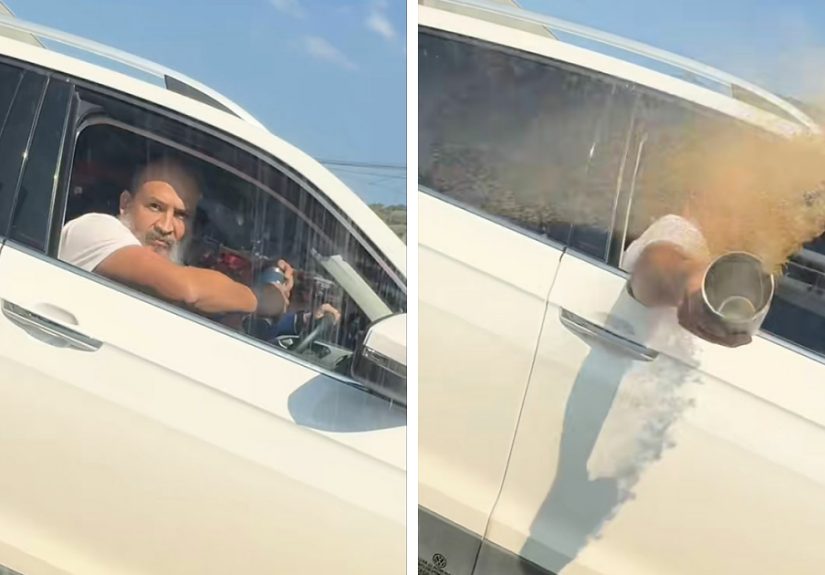
In the widely shared video, a white SUV gets involved in a tense driving moment with another car. The SUV’s passenger leans out and launches
a cup of coffee toward the other driveran attempt at intimidation that lasts about as long as a soap bubble in a hurricane. At road speed,
airflow catches the liquid and flings it back, drenching the person who threw it. The internet crowned it “instant karma” and did what the
internet does: replay, remix, and collectively point and laugh.
If the clip made you chuckle, you’re not alone. The moment is basically a live demonstration of the ancient rule: don’t fight physics with
vibes.
Why “Instant Karma” Hits Our Brains Like A Snack
The appeal isn’t just the slapstick. It’s the emotional math. When someone acts aggressively, we want the universe to respond with a firm,
immediate “No thank you.” Instant-karma clips deliver that response in under ten seconds, no courtroom paperwork required.
Psychologists have long pointed out that anger behind the wheel is a special blend of stress, time pressure, and that weird anonymity of
being sealed in a metal bubble. Add a dash of “How dare you exist in my lane?” and you’ve got a recipe for behavior people would never try
in a grocery store aisle. (Imagine hurling your latte at someone because they grabbed the last bag of chips. That’s not a personality
that’s a problem.)
The Science Of A Bad Throw: Wind, Speed, And Liquid Reality
Here’s the not-so-mysterious reason the coffee backfires: cars move through air, and air pushes back. When a vehicle is traveling at speed,
it creates strong airflow around it. A tossed drink doesn’t fly like a movie projectile; it’s a messy, lightweight splash with a huge surface
area. That means wind drag grabs it immediately.
Translation: at typical road speeds, throwing a liquid out of a moving vehicle is basically tossing it into a powerful, invisible fan. The
“fan” does not care about your feelings. The “fan” does not respect your road dominance. The “fan” will redecorate your face.
Aggressive Driving Vs. Road Rage: Not The Same Thing, Both Bad
People use “road rage” to describe everything from tailgating to full-blown confrontation, but safety experts often separate aggressive
driving (dangerous driving behaviors) from road rage (hostile or violent behavior tied to anger). In real life, one can slide into the other
fastespecially when someone feels “triggered” and decides retaliation is the move.
The coffee-throw moment falls firmly into the “this is no longer about driving” category. It’s not a lane change issue. It’s a “someone is
using a beverage as a weapon” issueexactly the kind of escalation that turns a dumb moment into a serious one.
How Common Is Aggressive Driving In The U.S.?
The uncomfortable truth: aggressive driving is not rare. In a national study, the AAA Foundation for Traffic Safety found that the vast
majority of drivers reported engaging in at least one aggressive driving or road-rage-related behavior in the past year, and a notable slice
reported engaging in behaviors that cross into “violent” territory. That doesn’t mean everyone is out here throwing coffee, but it does mean
the emotional temperature on American roads runs hotter than most of us want to admit.
The same research also points to a key driver of the problem: “culture.” If people perceive that aggressive behavior is common where they
live, they’re more likely to do it too. In other words, road rage spreads like yawnsexcept yawns don’t end in insurance claims.
Why People Lose It Behind The Wheel
Road rage is rarely about one specific lane change. More often, it’s a stress balloon meeting a sharp pin. Psych experts highlight a few
common triggers:
- Time pressure: Running late makes every red light feel personal.
- Perceived disrespect: A merge becomes “They cut me off on purpose.”
- Dehumanization: It’s easier to be rude to a vehicle than a person.
- Car-as-armor thinking: Some drivers feel protected enough to act out.
- Stress carryover: Work stress, family stress, life stressthen traffic is the final boss.
The good news is that anger isn’t fate. Techniques that combine calming the body (slow breathing, relaxation) with changing the thought loop
(“this is annoying” instead of “this is war”) can help reduce blow-ups over time. The goal isn’t to become a saint. It’s to avoid becoming a
headline.
The Not-Funny Part: Why Coffee-Tossing Is A Big Deal
Laughing at instant karma is one thing. Copying the behavior is another. Throwing anything from a vehicle can create real hazards:
distractions, reduced visibility, startled reactions, swerving, and crashes. Even if nobody wrecks, you’re still turning a minor conflict
into an unpredictable situation at speed.
It can be illegalsometimes in multiple ways
Laws vary by state, but the general legal risk is obvious: throwing a drink at someone can be treated as offensive contact (or an attempt at
it), and it can also be a traffic or litter-related violation. Some states have specific rules about preventing items from escaping a vehicle
and about littering from vehicles. If it hits another person or causes a crash, you’ve just upgraded your bad decision into a very expensive
one.
It can turn a “moment” into a pattern
One of the sneakiest parts of aggressive behavior is how it trains your brain. Retaliation feels powerful for a secondthen your nervous
system learns that driving equals conflict. Over time, you start expecting hostility everywhere, and your fuse gets shorter. That’s how people
become the main character in their own stress spiral.
What To Do When You Encounter An Aggressive Driver
Safety agencies and defensive driving programs are boring for a reason: they’re built on what actually reduces risk. A few strategies show up
again and again:
- Don’t engage. No gestures, no yelling, no eye contact contests.
- Create space. Safely change lanes, slow down, or let them pass.
- Stay predictable. Sudden moves can escalate the situation.
- If you feel threatened, get help. In many places, you can call police if someone is following or harassing you.
- Protect your attention. Your job is to drive, not to “win.”
It’s not “letting them win.” It’s refusing to play a game where the grand prize is a crash.
Dashcams, Viral Videos, And The New Age Of Accountability
Clips like this go viral partly because cameras are everywhere now. Dashcams used to be niche gadgets for car enthusiasts and professional
drivers. Now they’re mainstream, often bought for insurance protection or peace of mind.
Consumer safety experts note that dashcam footage can help clarify what happened in an incident and can be more reliable than conflicting
witness memories. In the court of public opinion, video also acts like a flashlight: it reveals who escalated, who behaved recklessly, and who
should probably not be trusted with open-cup beverages.
A quick privacy note: if you record regularly, be mindful about what you share. Capturing video for your own records is one thing; posting it
publicly is another. Blur plates and faces when appropriate, and don’t turn “accountability” into a harassment campaign.
How To Keep Your Cool Before Your Coffee Becomes A Projectile
Nobody wakes up thinking, “Today I will be the villain in someone else’s dashcam montage.” Road rage usually starts smallertight shoulders,
clenched jaw, aggressive thoughts, a sense of urgency. That’s your cue to intervene early.
Try a simple “reset” routine
- One slow breath in, longer breath out. Do that twice before reacting.
- Label the feeling. “I’m annoyed.” Naming it reduces its grip.
- Reframe the story. “That was careless” beats “That was personal.”
- Give yourself a margin. Leave earlier when you can; time pressure fuels rage.
- Choose a calm cue. Music, a podcast, or a phrase like “Not worth it.”
If anger behind the wheel is frequent or intense, it can help to address underlying stress and coping skills off the road. Think of it like
maintaining your car: you don’t wait until smoke is coming from the hood to check the engine.
FAQ: Quick Answers About Road Rage And “Instant Karma” Clips
Is road rage a crime?
Road rage isn’t one single legal charge everywhere. But behaviors associated with road ragethreats, intentional contact, assault, reckless
driving, and throwing objectscan trigger criminal charges, traffic citations, and civil liability depending on what happened.
Should you confront an aggressive driver to “teach them a lesson”?
No. Even if you feel morally correct, confrontation raises risk. Defensive driving guidance emphasizes de-escalation: create space, avoid
engagement, and focus on getting safely away.
Are dashcams worth it?
Many drivers buy dashcams for documentation in crashes, disputes, or harassment situations. If you get one, choose a model that records
clearly and learn how to store footage safely.
Conclusion: The Funniest Part Should Stay On The Internet
The viral coffee-toss clip is funny because it’s a clean, immediate reversal: the aggressor becomes the victim of their own decision. But
the bigger takeaway is simple. Road rage turns small frustrations into high-speed risks, and the only reliable “win” is arriving safely.
So enjoy the instant karmathen let it do what good comedy does: remind you to act smarter than the guy trying to weaponize his morning
caffeine.
Everyday “Instant Karma” Moments On The Road: Real-World Experiences And Lessons (Extra)
Not every lesson about road rage comes from a viral video. Plenty of “instant karma” moments happen in everyday drivinglittle cause-and-effect
scenes that don’t make headlines but do make a point. If you’ve spent any time on a busy highway, you’ve probably seen a version of at least
one of these.
1) The tailgater who meets the red light
You’re cruising at a reasonable speed. Someone glues themselves to your back bumper like drafting is an Olympic sport. They flash their
headlights, weave a little, and finally whip around youonly to end up stopped at the very same red light 300 feet later. You pull up beside
them and suddenly they’re studying their steering wheel like it contains the meaning of life.
The lesson: aggression doesn’t always save time. A lot of “fast” driving is just stress with extra stepsand sometimes extra tickets.
2) The impatient merge that backfires
In heavy traffic, someone forces a merge into a tight gap, making three cars brake. They “win” one car length… and then traffic compresses
again. Meanwhile, they’ve annoyed multiple drivers, raised crash risk, and gained basically nothing. It’s instant karma in slow motion:
frantic behavior, zero reward.
The lesson: “getting ahead” often means “staying stressed.” A calmer merge usually works out the same within a mile or two.
3) The coffee you spill on yourselfwithout anyone throwing it
This one is painfully relatable: you’re holding a drink, someone cuts you off, you brake hard, and your coffee becomes a lap accessory. No
villain needed. No revenge required. Just physics and a lid that was apparently designed by a prankster.
The lesson: road chaos punishes everyone equally. It’s another reason why retaliation is so riskyyou’re already operating in a world where
one sudden brake can ruin your day.
4) The horn-honking spiral that makes things worse
A driver makes a mistake. Another driver leans on the horn like it’s a musical instrument they paid too much for. The first driver gets
flustered, makes a second mistake, and now the situation is even more dangerous. Nobody feels better. Everybody’s heart rate is higher. The
entire moment expands from “oops” to “why are we like this?”
The lesson: your reaction can be the difference between a minor error and a chain reaction. Sometimes the safest move is to let the moment
pass and keep distance.
5) The “I’ll show you!” decision that becomes an expensive story
People trade stories about the time they “stood their ground” in trafficbrake-checking, blocking a merge, yelling through a window. The
punchline is almost never “and then everything improved.” The punchline is usually “and then we had to talk to insurance,” or “and then I
realized I didn’t even remember what started it.”
The lesson: anger shortens your memory and shrinks your judgment. If you can’t clearly explain your decision later without cringing, it
probably wasn’t worth doing.
6) The calm driver who quietly wins
Here’s the least viral experience and the most useful: you see someone driving aggressively, and you choose not to engage. You leave space,
let them pass, and continue your day. Nothing dramatic happens. That’s the point. The real “instant karma” is that you keep your safety,
your time, and your peace of mind.
The lesson: the best road-rage strategy often looks like “boring driving.” Boring is underrated. Boring gets you home.
Viral clips are entertaining because they compress consequences into seconds. Real life is less tidy, which is exactly why it’s smarter to
avoid escalation in the first place. The road is not a debate stage, a boxing ring, or a comment section. It’s a shared space where the
smartest flex is self-control.