Table of Contents >> Show >> Hide
- Why “Bad” Celebrity Drawings Can Be So Good
- Who Is TheBadDrawer (And What Makes the Style Feel Legendary)
- What Makes a Celebrity Caricature Funny (Without Being Mean)
- The Gallery: 38 Funny Celebrity Drawings (Grouped for Easy Scrolling)
- What These Drawings Say About Celebrity Culture
- Want to Try Drawing “Bad” Celebrity Caricatures Yourself?
- of “Been There” Energy: The Experience of the TheBadDrawer Rabbit Hole
- Conclusion
Some artists chase perfection. TheBadDrawer chases the exact oppositethen somehow sticks the landing anyway.
If you’ve ever laughed at a doodle that looked like it was drawn during a bumpy bus ride… and still instantly
knew who it was? That’s the magic at work here.
In this roundup of 38 funny celebrity drawings, the humor isn’t just in the wobbly lines and the “did my pen
just trip?” shading. It’s in the oddly impressive accuracy hiding inside the chaos. These portraits feel like
a prank and a party trick at the same time: exaggerated, a little unflattering, and weirdly recognizable.
Why “Bad” Celebrity Drawings Can Be So Good
Caricature has always been about “loading” a face with emphasispushing distinctive traits forward until your
brain goes, “Yup, that’s them,” even if the drawing looks like it survived a tumble dryer. TheBadDrawer’s style
leans into that tradition, just with a more chaotic, internet-native twist.
Here’s the secret sauce: recognition doesn’t require realism. Your brain doesn’t identify a celebrity by
measuring cheekbones with a ruler. It grabs a handful of signature cueshair shape, facial proportions, a
famous expression, an iconic vibeand fills in the rest. When an artist exaggerates those cues, recognition can
get easier, not harder. (Which is both comforting and slightly alarming if you’ve ever relied on a driver’s
license photo for validation.)
That’s why “funny celebrity drawings” work so well as a format. They turn fame into a quick visual puzzle.
You’re not just lookingyou’re guessing. And the moment you solve it, your brain hands you a tiny dopamine
trophy that says, “Congratulations, you live on Earth with Wi-Fi.”
Who Is TheBadDrawer (And What Makes the Style Feel Legendary)
TheBadDrawer persona is built on a playful contradiction: the drawings look intentionally rough, yet the
likeness still lands. That “I swear I’m bad at this” energy is part of the jokebecause the punchline is
usually that it’s actually pretty brilliant.
The approach also fits the modern way we consume celebrity culture. We don’t just know celebrities from movies
or songs; we know them from memes, reaction images, red-carpet snapshots, viral interviews, and a thousand
accidental screenshots. TheBadDrawer’s portraits feel like that same cultural soupdistilled into scribbles.
In other words: these aren’t formal oil portraits for a museum wall. They’re the visual equivalent of a
friend doing a spot-on impression at a partyslightly ridiculous, instantly recognizable, and impossible not to
watch.
What Makes a Celebrity Caricature Funny (Without Being Mean)
1) Exaggeration with a target
The best celebrity caricatures pick one or two defining elements and commit. Not everything needs to be
distortedjust the “tell.” When the tell is right, the rest can be chaos.
2) The “recognition snap”
Humor often comes from the split second between “What is that?” and “Oh no… I know exactly who that is.” That
snap is the laugh.
3) Punching up, not down
Celebrity drawing humor works best when it feels like affectionate teasing or cultural commentarynot cruelty.
There’s a difference between being satirical and being nasty, and audiences can feel it immediately.
The Gallery: 38 Funny Celebrity Drawings (Grouped for Easy Scrolling)
Below are the 38 celebrities and pop-culture figures featured in this seteach one a reminder that fame is
basically a face your brain recognizes in half a second… even when it’s drawn like a napkin survived a storm.
Musicians and Pop Icons
- Ed Sheeran A face that reads “music” even when rendered in maximum chaos.
- Justin Bieber The kind of likeness you recognize before your logic catches up.
- Beyonce Proof that star power survives even the sketchiest linework.
- Ariana Grande A modern pop silhouette that’s instantly identifiable in caricature form.
- Billie Eilish A vibe-heavy celebrity style that translates well into exaggeration.
- Lady Gaga Iconic looks make caricature feel like speed-running recognition.
- Nicki Minaj Big persona energy that matches the boldness of “bad” art humor.
- Taylor Swift An example of how familiarity makes even rough portraits click.
- Shawn Mendes A recognizable celebrity face that becomes a visual guessing game.
- Shakira A global pop image that holds up even when the lines don’t.
Actors, Movie Stars, and Screen Legends
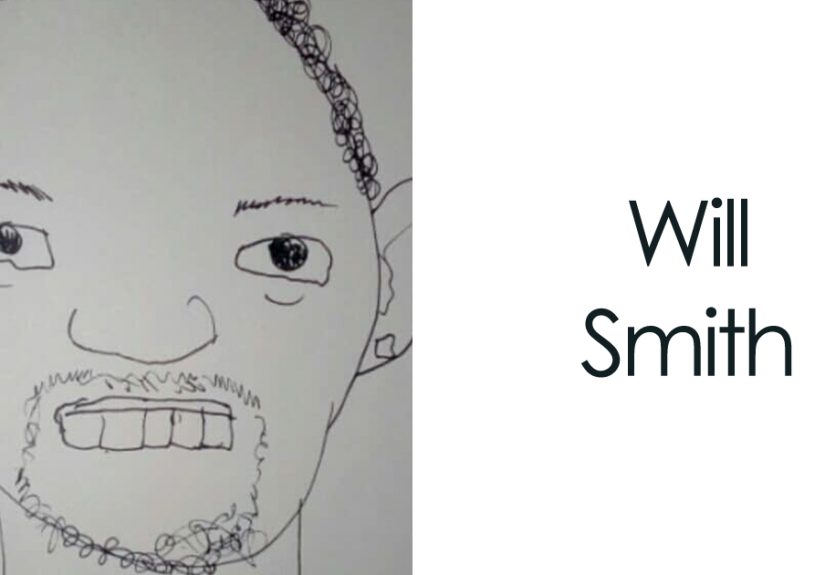
- Will Smith Expressive and familiar enough that a caricature barely needs details.
- Robert De Niro A legendary face where attitude does half the work.
- Tom Holland Modern celebrity recognition meets playful distortion.
- Dwayne Johnson A larger-than-life presence that caricature loves.
- Joaquin Phoenix A face that invites “serious” features turned into funny cues.
- Robert Pattinson The kind of celebrity image the internet has remixed for years.
- Leonardo DiCaprio Proof that a famous face can survive almost any artistic decision.
- John Travolta/Nicholas Cage: Face/Off A two-for-one pop-culture reference built for parody.
- Jennifer Aniston A familiar TV/film icon whose features read fast in caricature.
- Jennifer Lawrence Another “you know it instantly” celebrity presence.
- Keanu Reeves A face that the internet collectively recognizes on sight.
- Emma Watson A recognizable figure whose pop-culture footprint makes caricature easier.
Reality, Models, and Internet-Famous Faces
- Kylie Jenner Celebrity branding meets caricature exaggeration.
- Kim Kardashian A pop-culture staple that reads clearly even in messy lines.
- Kendall Jenner Model familiarity turned into a fast visual punchline.
- Jordyn Woods Internet recognition factor makes the “bad drawing” hit quicker.
- Gigi Hadid A modern celebrity image that caricature can “code” with minimal cues.
Sports, Tech, and Business Celebrities
- Cristiano Ronaldo Sports stardom translates well into exaggerated portrait cues.
- Mark Zuckerberg Tech fame becomes a recognizable caricature template.
- Gary Vee A modern business personality turned into visual shorthand.
Politics, History, and Activism
- Donald Trump Political fame and caricature go together like headlines and caffeine.
- Abraham Lincoln A historical face so iconic it works even as a playful sketch.
- Greta Thunberg A contemporary public figure whose recognizability fuels the format.
Fictional Characters and Pop-Culture Legends
- Loyd (From Dumb & Dumber) Comedy character energy that fits the “bad drawing” joke perfectly.
- Kylo Ren A modern franchise character with instantly recognizable visual cues.
- Harry Potter One of the most recognizable fictional identities in modern pop culture.
- Thanos (From The Avengers) A villain silhouette that’s practically built for exaggeration.
One Wildcard That Makes the Set Even Better
- Netta Barzilai A reminder that celebrity culture isn’t just Hollywood; it’s global, too.
Together, the lineup mixes musicians, actors, politicians, athletes, fictional characters, and internet-famous
personalitiesexactly the kind of cultural buffet that makes this format so bingeable.
What These Drawings Say About Celebrity Culture
Celebrity caricatures are a strange compliment. On one hand, they reduce a person to a handful of features and
vibes. On the other hand, that reduction only works if the subject is famous enough for millions of brains to
recognize them from a few clues.
That’s why this kind of humorous portrait art feels like a mirror for the internet. We’re all walking around
with a mental catalog of faces and references. TheBadDrawer just pokes that catalog with a stick and says,
“Admit it. You know.”
Want to Try Drawing “Bad” Celebrity Caricatures Yourself?
Start with three recognizable cues
Pick one signature feature (hairline, eyebrows, smile shape), one “vibe” (serious, playful, intense), and one
iconic reference (a role, a meme, a well-known look). You don’t need realismyou need clarity.
Exaggerate confidently
Timid lines look accidental. Bold exaggeration looks intentional. Ironically, committing hard is what makes
“bad” art feel good.
Keep it playful
A funny drawing should feel like a wink, not a punch. If your joke relies on cruelty, it stops being a joke
and starts being a comment section.
of “Been There” Energy: The Experience of the TheBadDrawer Rabbit Hole
Here’s a very common experience: you see one drawing and think, “Okay, that’s silly.” Then you scroll to the
next one, and your brain does that immediate pattern-match thinglike it’s speed-running a celebrity trivia
quiz you didn’t sign up for. Suddenly you’re leaning closer to the screen, not because the art is detailed,
but because you’re trying to solve the face faster than your own internal narrator can say, “Wait… is that…”
The best part is the emotional whiplash. One moment, you’re judging the drawing like a stern art teacher.
(“Why is the nose doing that?”) The next moment, you’re defending it like a sports fan.
(“No, no, it totally looks like themyou just have to squint and accept chaos.”) And then the recognition hits,
and you laugh, because the likeness is somehow undeniable. It feels like the drawing just pulled off a magic
trick using only questionable line choices and pure confidence.
If you share these with friends, the experience gets even better. People don’t react with calm appreciation;
they react with dramatic disbelief: “That can’t possibly beOH MY GOD IT IS.” You start sending screenshots
like you’re distributing important cultural documents. Group chats become a courtroom where everyone argues
whether the caricature is genius, cursed, or both. And because the subjects are celebrities, everyone brings a
different mental reference: a movie role, a meme, an interview clip, a headline. It’s less like looking at art
and more like watching everyone’s pop-culture memory get activated at the same time.
There’s also a strangely wholesome side: “bad” drawings lower the stakes. They remind people that creativity
doesn’t have to be polished to be entertaining. The style says, “You can be messy and still communicate.”
That’s liberating in a world where everything online feels edited, filtered, and optimized. These portraits are
the opposite of perfectionand that’s precisely why they feel refreshing.
And when you finally reach the end of the set, you get that specific internet feeling: the satisfied laugh of
finishing a fun scroll, plus the mild shock that your brain correctly identified dozens of famous faces from a
handful of distorted cues. You close the tab thinking, “I should go outside.” Then you reopen it to show one
more person. Because this is how legends are made: not in galleries, but in the joyful chaos of a shared laugh.