Table of Contents >> Show >> Hide
- What “Hey Pandas” Means (And Why the Frog Prompt Works)
- Why the Internet Can’t Quit Frogs
- Frog Facts That Make Your Drawing Better
- A No-Stress Frog Drawing Tutorial
- 12 Prompts to Make Your Frog Unforgettable
- How to Capture the “Hey Pandas” Spirit
- Frog-Friendly Creativity: A Tiny Reality Check
- Conclusion: The World Needs More Frogs (On Paper, Too)
- Experiences People Commonly Have When They Try “Hey Pandas, Draw A Frog” (And Why It’s Addictive)
Somewhere on the internet, a delightful little prompt hopped into existence: “Hey Pandas, Draw A Frog.” It’s short. It’s weirdly specific. It’s the kind of creative dare that doesn’t require talent, fancy supplies, or a tragic artist backstoryjust a willingness to make a frog-shaped attempt and share it with other humans who also think amphibians are funny.
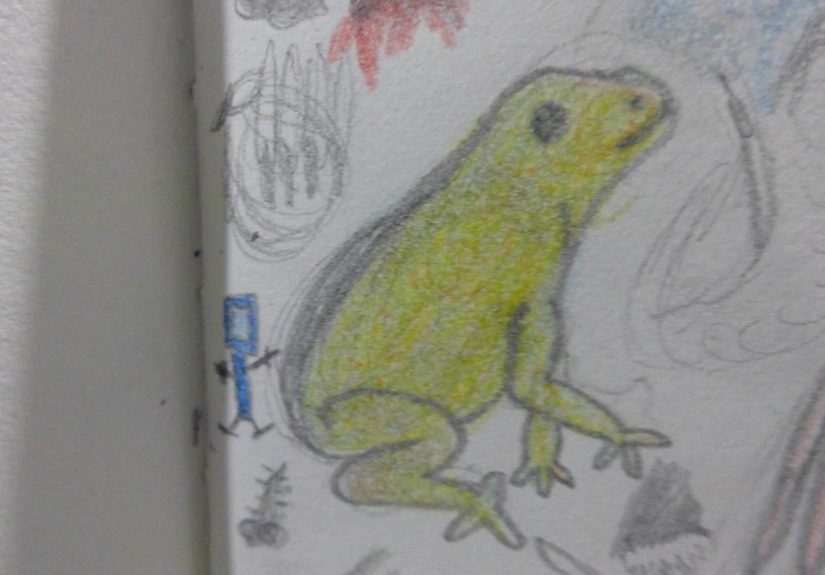
The phrase comes from Bored Panda’s “Hey Pandas” community challengesposts where readers respond with stories, opinions, photos, or artwork. In this case, the ask was beautifully uncomplicated: draw a frog. The results (as you’d expect) range from “tiny wholesome blob with eyes” to “sir, that is a frog superhero and he pays taxes.”
This article is your friendly guide to understanding the “Hey Pandas, Draw A Frog” vibe, why frogs are internet royalty, and how to create your own frog drawing (cartoon, realistic, or gloriously unhinged). We’ll also sneak in some real frog factsbecause if you’re going to draw a frog, you might as well know why its skin is basically a scientific drama queen.
What “Hey Pandas” Means (And Why the Frog Prompt Works)
“Hey Pandas” is essentially a community call-and-response format: a prompt goes up, and people jump in with answers. The magic is that it’s not a high-stakes art contest. It’s more like a digital potluckeveryone brings something, even if what you brought is a slightly lopsided frog with one eye drifting into another ZIP code.
“Draw a frog” is a perfect prompt because frogs sit right in the sweet spot of creativity: they’re recognizable with a few simple shapes, but they’re also flexible enough to become anythingwizard, astronaut, croissant enthusiast, you name it. Plus, frogs have built-in comedic features: big eyes, squat bodies, and legs that look like they were designed by someone who’s really into jumping.
Why the Internet Can’t Quit Frogs
They’re tiny, expressive, and basically cartoon-ready
Even real frogs often look like they were drawn by someone who loves circles. Big eyes. Rounded bodies. Little hands. Their natural silhouette reads clearly from across the roomexactly what you want in a doodle challenge.
Metamorphosis is the ultimate “character arc”
Frogs start life as eggs, become tadpoles, then transform into froglets and finally adults. That’s not just biologyit’s a story. A glow-up. A “new season, new me” situation that takes place in a pond. When you draw a frog, you’re drawing a creature with built-in narrative potential.
They’re wholesome… until you learn the science (still wholesome, but with stakes)
Frogs are also a symbol of healthy ecosystems because many species are sensitive to environmental change. Their skin can absorb water and substances from the environment, which is useful for livingbut not so great when pollution and disease enter the chat. That mix of cute + important gives frog content a surprising amount of staying power.
Frog Facts That Make Your Drawing Better
A quick anatomy cheat sheet (aka “how to frog without fear”)
- Eyes: Big and high on the head. Even a simple frog doodle becomes “frog” when the eyes sit up top.
- Body: Often squat or pear-shaped. Think “soft triangle” or “rounded bean.”
- Back legs: Longer than you expect. Frogs are jump specialistsgive them some leg real estate.
- Feet: Front feet are smaller; back feet often look wide, sometimes webbed.
- Skin vibe: Frogs generally read as smooth/moist; toads read as drier/bumpier.
Yes, frog skin is a whole thing
Many frogs rely heavily on their skin for interacting with the world. Some absorb water through specialized areas on their belly (often described as a “drink patch”), and frog skin is more permeable than human skinone reason amphibians can be sensitive to pollutants and disease. If you want your frog drawing to feel more “real,” consider subtle shading or texture rather than drawing scales (frogs are not tiny dragons, no matter how much they might deserve to be).
Metamorphosis in four beats (easy to turn into art)
- Eggs: Jelly-like clusters in water.
- Tadpole: Tail, gills, swimming life. Basically a head with a mission.
- Froglet: Legs show up, tail shrinks, awkward teen energy.
- Adult frog: Tail gone, lungs active, ready to jump into your sketchbook uninvited.
Why frogs matter beyond being cute
Amphibian populations have declined in many places due to habitat loss, pollution, climate impacts, invasive species, and diseases like chytrid fungus. You don’t need to turn your frog doodle into a documentary, but it’s worth knowing that “draw a frog” can also be a tiny doorway into caring about wetlands, clean water, and biodiversity. (And yes, your frog can still wear a tiny top hat while being ecologically meaningful.)
A No-Stress Frog Drawing Tutorial
You don’t need to be “good at drawing.” You need a plan you can follow even when your brain is running on iced coffee and vibes. Here are three ways to draw a frog, from quickest doodle to “I accidentally tried” realism.
Option 1: The five-shape cartoon frog (fast, cute, forgivable)
- Head/body blob: Draw a rounded oval or bean shape.
- Eye bumps: Add two small circles sitting on top of the head like lil’ periscopes.
- Eyes: Put pupils inside (make them slightly cross-eyed for instant comedy).
- Smile line: A simple curved mouth. Add tiny nostrils if you’re feeling fancy.
- Legs: Two short front legs (like elbows), two longer back legs (like bent lightning bolts).
- Feet: Three-to-five rounded toes. Webbing optional. Confidence mandatory.
- Accessory: Tie, crown, mushroom hat, headphonesanything that screams “this frog has lore.”
Option 2: The “more realistic” frog (still friendly)
Realistic frogs aren’t complicatedthey’re just more specific. Focus on proportion and posture: a wider head, eyes slightly to the sides, and back legs that look built for launch. Add gentle shading under the belly and along the legs. If you want extra realism, hint at the frog’s environment: a lily pad edge, water ripples, reeds, or a log.
Option 3: The “wow, that frog has patterns” approach
If you love color, take inspiration from species with bold markings (think bright stripes, spots, or contrasting limbs). Even if you keep the body simple, patterning can make your frog feel instantly alive. Pro tip: repeat shapes (dots, stripes, little chevrons) to make the design look intentional rather than “I panicked and colored aggressively.”
12 Prompts to Make Your Frog Unforgettable
- Frog-Man: A frog superhero with a cape (or at least a dramatic leaf).
- Smol Freg: The tiniest frog you can drawgive it huge eyes for maximum emotional manipulation.
- Frog barista: Serving “matcha fly latte.”
- Frog astronaut: Helmet fogged up from pond humidity.
- Frog detective: Magnifying glass, trench coat, suspicious lily pad.
- Frog prince: Crown slightly crooked. Royal confidence fully intact.
- Frog DJ: Spinning tracks at the “Croak Club.”
- Frog in a hoodie: Mood: introvert on a rainy day.
- Frog and mushroom duo: Whimsical forest vibes.
- Frog doing yoga: “Downward frog” is not a real pose, but it should be.
- Frog with a tiny backpack: Ready for a long hike to the next puddle.
- Frog monster: Still cute. Just… with a few more teeth than expected.
How to Capture the “Hey Pandas” Spirit
The secret sauce of “Hey Pandas, Draw A Frog” isn’t technical skillit’s participation. People show up, post what they made, react to others, and the whole thing becomes a miniature festival of creativity. If you’re recreating that energy for your own audience (a blog, classroom, Discord, workplace Slack, family group chat that somehow has 73 cousins), keep it simple:
- Use a low-pressure prompt: “Draw a frog” works because everyone can attempt it.
- Set a time limit: 5 minutes (doodle) or 30 minutes (more detail).
- Encourage variety: Cartoon, realistic, abstract, collageeverything counts.
- Celebrate weird: A frog with a mustache is not a mistake. It’s a choice.
- Share a few starter examples: Like the prompts above, to break the “blank page” curse.
Frog-Friendly Creativity: A Tiny Reality Check
If your frog obsession turns into “I must touch every frog I see,” please don’t. Wild amphibians can be stressed by handling, and they can be vulnerable to pathogens and environmental contaminants. Enjoy frogs with your eyes (and your sketchbook) instead of your hands. You’ll still be a frog fan. You’ll just be a responsible one.
Conclusion: The World Needs More Frogs (On Paper, Too)
“Hey Pandas, Draw A Frog” is proof that creativity doesn’t have to be complicated to be meaningful. A small prompt invites people to make something, share it, laugh, andsometimeslearn a little about the real animal behind the doodle. Whether your frog ends up as a minimalist blob, a detailed rainforest icon, or a cursed amphibian wizard with tax problems, the win is the same: you made something instead of scrolling past life.
So grab a pen, a marker, a napkin, a receipt, the back of an envelopewhatever. Draw a frog. Give it a vibe. Give it a backstory. And if anyone asks why, just tell them: the Pandas requested it.
Experiences People Commonly Have When They Try “Hey Pandas, Draw A Frog” (And Why It’s Addictive)
If you’ve ever joined an online drawing challenge, you know the emotional roller coaster usually starts like this: “I can’t draw.” Thenfive minutes later“Okay wait, this frog is kind of adorable.” The “Hey Pandas, Draw A Frog” prompt tends to trigger that exact arc, because frogs are forgiving. A circle with two bumps and a smile reads as “frog” faster than your inner critic can file a complaint.
One common experience is the accidental personality effect. Someone draws two uneven eyes and suddenly the frog looks mildly concerned, like it just remembered an appointment it absolutely did not put on the calendar. Another person draws a too-wide mouth and ends up with a frog that looks aggressively friendly, like it’s trying to recruit you into a pyramid scheme made entirely of flies. These “mistakes” are often the best partbecause the prompt invites playful interpretation rather than perfection.
People also report the style-switching spiral: they start with one frog, then immediately want to try a different version. First: a basic cartoon frog. Second: a “more realistic” frog with actual legs that bend like legs. Third: a frog with patterns inspired by bright species, because color is tempting and your markers are sitting there like, “Use us. Become ungovernable.” Before you know it, you’ve drawn a whole frog cast: a frog prince, a frog barista, and a frog that is somehow both a detective and a croissant.
Another relatable moment: the background dilemma. Frogs look great as standalone characters, but once you add a lily pad or a pond, you’ve created a tiny worldand then the brain goes, “Well now it needs a dragonfly. And maybe cattails. And definitely a suspicious rock.” Many people discover that the frog is a gateway to drawing nature: ripples, leaves, mushrooms, reeds, raindrops. It’s like a beginner-friendly portal into environmental illustration, but with more jokes.
In group settings (classrooms, office teams, online communities), a frog challenge often becomes a social equalizer. The confident artists make gorgeous frogs with shading and texture. The beginners make charming frogs with bold lines and chaotic joy. And the funniest part is that both usually get equal lovebecause the shared prompt makes the community feel like a team rather than a ranking system. People comment on each other’s frogs, borrow ideas, remix prompts, and suddenly there’s a whole mini-culture: recurring frog characters, inside jokes, “frog lore,” and unofficial titles like “CEO of Lilypad Operations.”
Finally, many participants describe a small but genuine sense of calm. Drawing a frog is short enough to fit into a busy day, but focused enough to quiet the mental noise for a few minutes. It’s a tiny creative win you can finish. And that’s why “Hey Pandas, Draw A Frog” sticks: it’s not asking you to become an artist. It’s asking you to be a human who makes a thing, shares a laugh, and maybejust maybeends up caring a little more about the squishy, jumpy world outside your screen.