Table of Contents >> Show >> Hide
- What Are Bow Bins?
- Why “Domestic Science” Fits So Well
- The Bow Bin’s Core Trick: Make Repair Look Like the Point
- Craft Meets Plastic: The Material Conversation
- Collaboration, Fair Trade, and the People Behind the Weave
- How Bow Bins Landed in the Design World
- How to Use Bow Bins Without Turning Your Home Into a Museum
- What Bow Bins Teach Us About Trash (and Why That’s Not Overthinking It)
- Conclusion: A Bin With a Thesis (and a Sense of Humor)
- Real-Life Experiences: Living With Bow Bins (Extra )
There are two kinds of household objects: the ones you hide, and the ones you accidentally build a personality around.
A waste bin usually lives in the “hide it behind the cabinet door” categoryuntil Cordula Kehrer’s Bow Bins show up and
make your trash look like it has an interior designer and a strong point of view.
Kehrer’s Bow Bins sit at a weirdly perfect intersection: humble utility, playful color, visible repair, and craft that refuses to be
background noise. They’re the kind of object you buy “for the bathroom,” then realize you’ve been staring at for ten minutes because it
seems to be quietly roasting the whole idea of throwaway culturewhile also being, you know, a bin.
What Are Bow Bins?
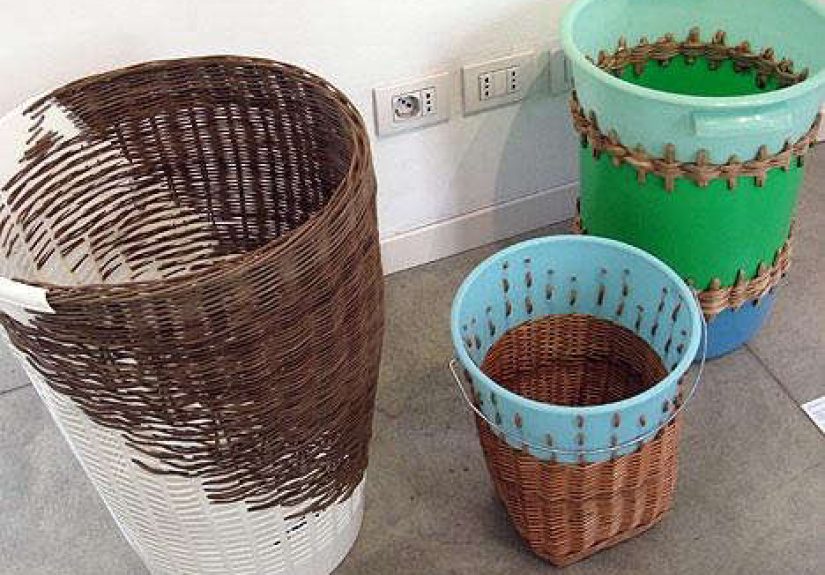
Bow Bins are hybrid wastebaskets made by combining colorful plastic containers (think buckets, tubs, and everyday bins) with hand-woven rattan
wickerwork. The result looks like a practical container got a tailored suitexcept the suit is woven, and it’s hugging the plastic in a way
that makes the contrast feel intentional rather than accidental.
Some versions look like the wicker “wrap” is cinched around the bin, forming a bow-like silhouette or banding that reads as both decoration and
reinforcement. Others feel like a repaired seam turned into a design featurebecause that’s basically what it is: damage or wear becomes the
starting point, not the embarrassing secret.
In the design-world spotlight, Bow Bins were shown in New York during Design Week/ICFF-era events and framed as more than cute storage: they were
presented as a conversation between mass-produced plastic and long-standing basketry traditions. That’s a big job for a trash can. Somehow it
handles it.
Why “Domestic Science” Fits So Well
The phrase “domestic science” can sound like a vintage textbook titleequal parts aprons and diagrams. In a modern design context, it’s also a
useful lens: the study of how everyday household tools shape behavior, comfort, and values. A bin isn’t just a bin; it’s a routine. It’s a habit.
It’s the place where “I might recycle this” either becomes real life or becomes a fantasy you tell yourself while holding a coffee cup.
Bow Bins treat the domestic environment like a laboratory where aesthetics and ethics are tested in small, repeated moments: tossing junk mail,
sorting laundry-room odds and ends, collecting toys, or catching the never-ending confetti of modern living (receipts, twist ties, packaging, the
mysterious screws that appear whenever you assemble anything).
The Bow Bin’s Core Trick: Make Repair Look Like the Point
Lots of “sustainable design” tries to look pristinelike the future will be spotless, frictionless, and somehow free of scuffs. Bow Bins go the
opposite direction. They make the seam visible. The contrast is the story.
In Kehrer’s earlier framing, worn plastic tubs and bucketsoften discarded when they crack or leakbecome the raw material. Instead of pretending
the damage never happened, the design leans into it by pairing plastic with woven natural materials like willow, rush, or rattan. The result is a
repaired object that doesn’t apologize for its past life. It documents it.
Why visible mending feels so satisfying at home
The psychology is sneaky. Visible mending can feel comforting because it tells you two things at once:
(1) the object has survived something, and (2) it’s still useful. In a house where everything from phones to furniture is designed to be replaced,
a “repaired and proud” object can feel oddly reassuringlike proof that durability still exists as a concept.
Bow Bins also avoid the trap of “material purity,” where design becomes dogmatic: plastic bad, natural good, end of story. Instead, they admit
reality: plastic is everywhere, and pretending it isn’t won’t help. The bin says, “Yes, this is plastic. Now watch what happens when we treat it
like something worth transforming instead of something destined for the landfill.”
Craft Meets Plastic: The Material Conversation
Rattan and wickerwork come with a long history in household goodsbaskets, chairs, storage, even furniture that cycles in and out of fashion like
it owns the place. Woven materials have been used for centuries across Asia and then widely adopted and adapted in Western markets, especially for
baskets and later furniture. This matters because Bow Bins aren’t just “cute weaving” glued onto plastic; they’re tapping into a deep vocabulary
of domestic craft and function.
The woven portion does several jobs at once:
- Structure: it reinforces and stabilizes the plastic form.
- Texture: it adds tactile interest and makes the object feel warmer and more “furnished.”
- Story: it signals skilled handwork, which changes how we value an everyday item.
- Contrast: natural weave against bright plastic makes the hybrid impossible to ignore.
That contrast is the whole point. Plastic is modern, cheap, and often short-lived. Basketry is time-intensive, learned, and traditionally rooted
in place. Put them together and suddenly the bin becomes a debate you can carry with one hand.
Collaboration, Fair Trade, and the People Behind the Weave
One of the most important parts of the Bow Bins story is that they were associated with collaboration and fair-trade pathways involving indigenous
makers in the Philippines and an NGO partner referenced in design coverage. That matters not as a marketing sticker but as a reminder: “handmade”
isn’t a texture; it’s labor, knowledge, and livelihoods.
Fair trade, at its best, is about building transparent, accountable, long-term trading relationships that prioritize producers and their
communities, not just the end consumer’s vibe. In practical terms, it’s about market access, fairer terms, and capacity-building rather than
one-off extraction of craft for trend purposes.
The makers often named in connection with Bow Bins are Aeta communitiesone of the Indigenous peoples of the Philippines. It’s worth saying this
carefully: broad umbrella labels sometimes used in older reference works can be blunt instruments. The respectful takeaway is simplethese are
distinct peoples with real cultural traditions, not a design “resource.” Bow Bins, at their most responsible, ask us to notice the human hands
and heritage behind what looks like a playful object.
How Bow Bins Landed in the Design World
Bow Bins didn’t become notable because they solved a mysterious, unsolved bin problem. They became notable because they made familiar things look
unfamiliar: the cheap plastic bucket, the old basketry tradition, the idea of repair, the very concept of “trash.”
Design coverage highlighted them in the context of New York design events and “green furnishings” conversationssometimes describing the mash-up as
humorous, smart, and refreshingly direct. That tone matters: sustainability can become preachy fast. A playful object can sometimes smuggle a
serious idea into your home more effectively than a lecture ever could.
What the Bow Bin symbolizes (without being dramatic about it)
- Adaptive reuse: giving post-consumer or worn objects a second life.
- Hybrid craft: blending industrial materials with traditional techniques.
- Visible ethics: making the supply chain feel present, not invisible.
- Everyday activism: turning routine objects into small prompts to think differently.
How to Use Bow Bins Without Turning Your Home Into a Museum
Bow Bins are functional firstso the best styling advice is: let them work. If you treat them like precious artifacts, you’ll defeat the whole
“domestic science” thesis. Here are practical ways people use Bow Bin–style hybrids in real rooms:
1) Bathroom waste, but make it intentional
The classic use is still the best: a bathroom bin you don’t feel compelled to hide. Add a liner if you want easy cleanup; the woven exterior does
the “looks good” work, so you don’t have to.
2) Laundry-room catch-all
Collect dryer lint (contained!), stray socks, empty detergent pods containers, or the “miscellaneous textiles” that appear when you fold laundry:
hair ties, stain sticks, clothespins, and that one glove that refuses to meet its twin.
3) Office and studio scraps
Paper scraps, packaging, failed sketches, thread endscreative spaces produce tiny debris constantly. A bin that looks interesting can make the
mess feel less like defeat and more like process.
4) Kids’ rooms: toy overflow without the visual chaos
Because Bow Bins are colorful, they don’t fight with playful spaces. They can hold plush toys, blocks, or “tiny treasures” kids collect (rocks,
stickers, plastic dinosaurs, the occasional mystery key).
What Bow Bins Teach Us About Trash (and Why That’s Not Overthinking It)
Household waste is one of the most repetitive behaviors we have. We make decisions about disposal every dayoften without thinking. And in the
United States, plastic is a huge part of that story, with national waste data showing just how much is generated and how little is recycled.
Bow Bins don’t solve the waste system. A bin can’t fix policy, packaging infrastructure, or corporate overproduction. But it can do something
sneakier: it can change the emotional temperature of the moment you throw something away.
When a bin looks like it was repaired and valued, it invites a tiny pause. Not a guilt tripjust a pause. “Do I really need to toss this?” “Is
there a different way?” “Why does a cheap, leaky bucket get discarded so fast?” Multiply that pause over a year and you start to understand why
design people get excited about a wastebasket.
Conclusion: A Bin With a Thesis (and a Sense of Humor)
Cordula Kehrer’s Bow Bins are domestic science in the best way: a study of everyday life, run through the experiment of repair, craft, and playful
honesty. They don’t pretend the modern home is free of plastic. They don’t pretend sustainability is simple. They don’t even pretend a trash can
can’t be charming.
Instead, they make one clear claim: the “lowly” household object is where values become real. Not in a manifesto, but in the five-second moment
when you decide what to keep, what to toss, and what might be worth mending.
Real-Life Experiences: Living With Bow Bins (Extra )
People who bring Bow Bins (or anything in that spiritupcycled, visibly mended, craft-forward) into their homes tend to describe a surprisingly
specific shift: they start noticing their habits. Not in a “new year, new me” waymore like, “Why am I throwing away so many plastic things that
still technically work?”
One common experience is the guest reaction test. Guests don’t usually compliment a trash can. Bow Bins are different. Someone
will inevitably say, “Wait… that’s a bin?” and then pick it up like it’s a sculpture that escaped from a gallery and decided to get a job in the
bathroom. That little moment is more than vanity. It’s proof that design can make the unnoticed visibleespecially the stuff we’d rather not look
at (waste, consumption, clutter).
Another experience is what you might call the “I’ll keep it out” upgrade. With normal bins, you plan hiding spots. With Bow Bins,
people often stop hiding the bin and start styling around it. It ends up beside a console, under a floating shelf, or near a deskbecause it
doesn’t visually “punish” the room. That changes behavior: when the bin is part of the room, you’re more likely to use it properly instead of
letting little trash piles form in corners (receipts on the counter, wrappers on the desk, the infamous “temporary” stack of junk mail).
In laundry rooms, the experience is practical and oddly satisfying. A Bow Bin–style container becomes a catch-all for the in-between:
socks that need matching, items that need stain treatment, or the “delicates limbo” that can’t go in the dryer. People often say it reduces visual
stress because the mess is contained in something that already looks textured and layeredso the clutter feels less chaotic.
In kids’ spaces, Bow Bins can become a cleanup shortcut. Because they’re colorful and not “serious-looking storage,” kids are more
likely to toss things in without feeling like they’re doing chores in a sad beige warehouse. Parents also mention the “happy accident” effect:
when the storage is attractive, you don’t mind leaving it in the living room. Toys get scooped up faster because the bin isn’t banished to a
closetit’s allowed to exist where life actually happens.
The most interesting experience, though, is the long-game one: people start respecting “ordinary” objects more. After living with
something that celebrates repair, many people report they become slower to replace things that still have life in them. A cracked planter becomes
a candidate for mending. A wobbly chair becomes a weekend fix instead of a curb alert. Even if you never become a full-time repair hero, the bin
plants a thought: “Maybe the goal isn’t perfect and new. Maybe the goal is useful and cared for.”
And yessometimes the experience is simply joy. It’s fun to own a bin that looks like it has a backstory, a sense of humor, and a tiny, polite
rebellion stitched into its sides. If domestic science is the study of home life, then Bow Bins are the study guide that doodles in the margins
and still gets an A.