Table of Contents >> Show >> Hide
- Why Volume Conversions Matter (and When They Don’t)
- The Core U.S. Volume Ladder (Memorize These and You’re Basically a Wizard)
- Quick Conversion Table (The “Just Tell Me” Section)
- Metric Conversions Without Tears
- Dry vs. Liquid Measuring: Same “Cup,” Different Reality
- The “Fluid Ounce” Trap (and Other Kitchen Pranks)
- Practical Conversions You’ll Use All the Time (With Specific Examples)
- When Volume Conversions Aren’t Enough: Ingredients That Should Be Weighed
- Quick Reference: The Mini “Tape It Inside a Cabinet” List
- Kitchen Experience Stories: Volume Conversions in the Wild (The Extra )
- Conclusion: Keep It Simple, Keep It Consistent
- SEO Tags
You’re in the middle of a recipe, your hands are covered in something sticky (it’s always something sticky),
and the instructions casually ask for 2/3 cup… but the only clean tool you can find is a tablespoon.
Congratulations: you’ve just joined the club of people who suddenly wish they’d paid attention in “Kitchen Math 101.”
This guide is your no-drama, real-world cheat sheet for volume conversions for recipe ingredientscups,
tablespoons, teaspoons, fluid ounces, and their metric cousins. We’ll cover the conversions that actually matter,
the traps that make good cooks question reality, and the best ways to stay consistent so your cake doesn’t turn into
a pancake with emotional baggage.
Why Volume Conversions Matter (and When They Don’t)
Most home recipes in the U.S. use volume: cups, tablespoons, teaspoons. It’s fast, familiar, and doesn’t require
owning a scale that beeps at you like a disappointed robot. Conversions become essential when you:
- Scale recipes up or down (hello, double batch cookies; goodbye, “just one” cookie).
- Switch measuring tools (no 1/3 cup? tablespoon math to the rescue).
- Cook from international recipes that use milliliters and liters.
- Follow older family recipes that speak in code (“add a gill of milk”a what now?).
The good news: for soups, sauces, and most everyday cooking, small rounding differences won’t ruin dinner.
The less-good news: baking can be dramatic, and your muffins will absolutely notice if you freestyle too hard.
The Core U.S. Volume Ladder (Memorize These and You’re Basically a Wizard)
If you remember nothing else, remember this ladder. It’s the backbone of most kitchen measurement conversion charts:
- 3 teaspoons (tsp) = 1 tablespoon (Tbsp)
- 16 tablespoons = 1 cup
- 2 cups = 1 pint
- 2 pints = 1 quart
- 4 quarts = 1 gallon
- 8 fluid ounces (fl oz) = 1 cup (fluid ounces, not weight ouncesmore on that soon)
Once you’ve got that, you can derive most other conversions on the flyno phone smudges required.
Quick Conversion Table (The “Just Tell Me” Section)
Small-to-Medium Volume Equivalents
| U.S. Measure | Equals | Helpful Notes |
|---|---|---|
| 1 Tbsp | 3 tsp | Also about 1/2 fl oz |
| 2 Tbsp | 1/8 cup | Also 1 fl oz |
| 4 Tbsp | 1/4 cup | Also 2 fl oz |
| 5 Tbsp + 1 tsp | 1/3 cup | Classic “no 1/3 cup” workaround |
| 8 Tbsp | 1/2 cup | Also 4 fl oz |
| 10 Tbsp + 2 tsp | 2/3 cup | Another common missing cup size |
| 12 Tbsp | 3/4 cup | Also 6 fl oz |
| 16 Tbsp | 1 cup | Also 8 fl oz |
Big-Picture Volume Equivalents
| U.S. Measure | Equals | In Fluid Ounces |
|---|---|---|
| 1 cup | 16 Tbsp | 8 fl oz |
| 1 pint | 2 cups | 16 fl oz |
| 1 quart | 2 pints / 4 cups | 32 fl oz |
| 1 gallon | 4 quarts / 16 cups | 128 fl oz |
Metric Conversions Without Tears
Metric recipes often measure liquids in milliliters (mL) and liters (L). U.S. recipes lean on cups and fluid ounces.
Converting between them is easy once you know a few anchors:
Anchor Conversions
- 1 U.S. fluid ounce ≈ 29.57 mL
- 1 cup ≈ 236–237 mL (depending on rounding conventions)
- 1 pint ≈ 473 mL
- 1 quart ≈ 946 mL
- 1 gallon ≈ 3.785 L
Here’s the mildly annoying truth: you’ll see two “correct-looking” metric versions of U.S. spoon and cup sizes
in the wild. Some charts use tidy numbers like 1 tsp = 5 mL and 1 Tbsp = 15 mL.
Others use more precise values around 4.93 mL per teaspoon and 14.79 mL per tablespoon.
Both approaches can workwhat matters most is consistency inside a single recipe. If you convert everything
using one method, you’ll stay balanced. If you mix methods mid-recipe, you’re basically doing improv comedy with chemistry.
Fast Metric Cheat Sheet (Common Kitchen Numbers)
| U.S. Measure | Approx. Metric | When to Use |
|---|---|---|
| 1 tsp | 5 mL (or ~4.93 mL) | Spices, extracts, small amounts |
| 1 Tbsp | 15 mL (or ~14.79 mL) | Oil, vinegar, peanut butter, etc. |
| 1/4 cup | ~60 mL | Dressings, sauces, small batters |
| 1/3 cup | ~80 mL | Common in baking and marinades |
| 1/2 cup | ~120 mL | Everything from milk to chocolate chips |
| 1 cup | ~240 mL (or ~237 mL) | Liquids and dry ingredients by volume |
| 1 liter | ~4.2 cups / ~34 fl oz | Bigger liquid batches |
Dry vs. Liquid Measuring: Same “Cup,” Different Reality
One of the biggest reasons people struggle with recipe conversions isn’t the mathit’s the tools.
A dry measuring cup and a liquid measuring cup can both say “1 cup,”
but they’re designed to be used differently.
Dry Measuring Cups
- Designed to be filled to the top and leveled off.
- Best for flour, sugar, oats, shredded cheese, chocolate chips (yep, “dry-ish” ingredients).
- For accuracy: spoon in flour lightly and leveldon’t pack unless the recipe tells you to.
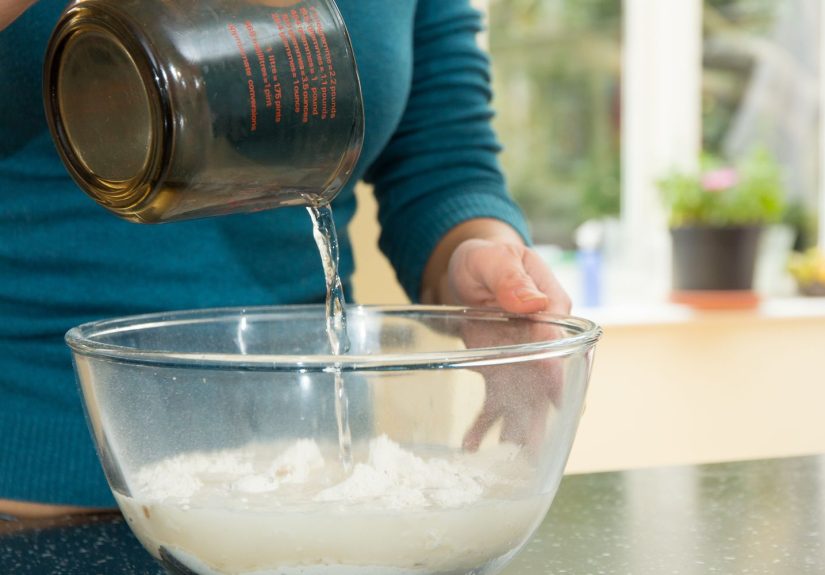
Liquid Measuring Cups
- Designed with a spout and extra headspace so you can pour without chaos.
- Best for water, milk, oil, broth, lemon juice, etc.
- For accuracy: place it on a flat surface and check at eye level (hello, meniscus).
When conversions feel “off,” it’s often because the ingredient was measured with the wrong tool,
or measured the right way with the wrong vibe (packing flour like you’re building a snowman).
The “Fluid Ounce” Trap (and Other Kitchen Pranks)
Let’s clear up the most common misunderstanding in American kitchens:
a fluid ounce (fl oz) measures volume, while an ounce (oz) usually measures weight.
They are not interchangeable, even if the abbreviations look like twins who shop at the same store.
Example: The “8 Ounces = 1 Cup” Confusion
You’ll often hear “8 ounces equals a cup.” That’s only reliably true for 8 fluid ounces (volume),
and it’s most accurate with water-like liquids. But if a recipe says “8 ounces of shredded cheese,”
that’s a weight measurement, and it will not magically become 1 cup unless the cheese
decides to rewrite physics for fun.
Another Gotcha: U.S. vs. U.K. Measurements
U.S. recipes use U.S. customary units. U.K./Commonwealth recipes may use different volumes for things like fluid ounces
and cups. If you’re converting international recipes, try to confirm the recipe’s origin before you convert.
(Your scones deserve peace.)
Practical Conversions You’ll Use All the Time (With Specific Examples)
Here are real situations where volume conversions save the dayespecially when the dishwasher is full
and the 1/3 cup is missing like it owes you money.
1) “I Need 2/3 Cup, But I Only Have a Tablespoon”
Use this: 2/3 cup = 10 Tbsp + 2 tsp. It’s not random; it’s built from the cup-to-tablespoon ladder.
This is one of the most useful conversions in everyday cooking.
2) “Half the Recipe Calls for 3/4 Cup”
Half of 3/4 cup is 3/8 cup. And 3/8 cup is 6 Tbsp. So you can measure it without needing a mystical 3/8 cup.
3) “Double the Sauce: 1/4 Cup Becomes What?”
1/4 cup doubled becomes 1/2 cup. Easy. But here’s a bonus conversion:
1/4 cup is 4 Tbsp, so doubled it’s 8 Tbsp, which is still 1/2 cup. The math checks out; the sauce remains delicious.
4) “Convert 1 1/2 Cups to Fluid Ounces”
1 cup = 8 fl oz, so 1 1/2 cups = 12 fl oz. This is handy for soups and cocktails alike
(and for being the person at brunch who casually knows things).
5) “What If My Measuring Spoons Don’t Include 1/8 Tsp?”
If you need 1/8 tsp and don’t have it, a common workaround is:
use 1/4 tsp and eyeball halfbut only for low-stakes ingredients like spices.
For baking soda or baking powder in delicate bakes, it’s worth getting an inexpensive set of small measuring spoons.
When Volume Conversions Aren’t Enough: Ingredients That Should Be Weighed
Volume conversions are great for liquids and many cooking tasks. But baking accuracy often improves dramatically
when you switch to weightespecially for flour, cocoa powder, and anything that can be packed or aerated.
The reason is simple: a cup of flour can vary depending on how you scoop, shake, sift, or pack it.
Many bakers prefer a standard weight (for example, a commonly cited reference is that
1 cup of all-purpose flour is about 120 grams). A kitchen scale turns “maybe” into “repeatable.”
Still, volume conversions remain useful even if you weigh ingredientsbecause recipes often mix systems:
a weighed flour amount plus teaspoons of baking powder and tablespoons of vanilla. The goal is not to swear loyalty
to one system forever; it’s to get consistent results you can brag about.
Quick Reference: The Mini “Tape It Inside a Cabinet” List
- 3 tsp = 1 Tbsp
- 2 Tbsp = 1 fl oz
- 4 Tbsp = 1/4 cup = 2 fl oz
- 8 Tbsp = 1/2 cup = 4 fl oz
- 16 Tbsp = 1 cup = 8 fl oz
- 2 cups = 1 pint
- 4 cups = 1 quart
- 16 cups = 1 gallon
Kitchen Experience Stories: Volume Conversions in the Wild (The Extra )
Volume conversions aren’t just “nice to know.” They’re the difference between feeling like a calm, competent cook
and standing in your kitchen whispering, “What is a tablespoon, really?” into the open refrigerator.
Here are a few very real, very relatable moments where conversions show up like the friend who arrives with snacks
and a fully charged phone.
First: the classic “teaspoon vs. tablespoon” incident. Almost everyone has done it once
usually with salt. You glance at the recipe, see “tsp,” and your brain reads it as “Tbsp” because your brain
is a chaos gremlin who doesn’t want you to be happy. Suddenly your soup tastes like the ocean filed a complaint.
Knowing that 1 Tbsp = 3 tsp doesn’t just help you convert; it helps you catch mistakes.
If something calls for “2 Tbsp salt” in a normal dinner recipe, your conversion instincts should kick in and say,
“Two tablespoons is six teaspoons. That seems… aggressive.”
Second: the missing measuring cup. The 1/3 cup is the first tool to vanish into the void
possibly because it’s the perfect size for peanut butter, and peanut butter is basically glue with better PR.
Conversions turn this from a crisis into a flex: 1/3 cup = 5 Tbsp + 1 tsp.
Suddenly you’re not “improvising”; you’re “executing a precise kitchen measurement conversion.”
Sounds fancy, tastes the same, feels 300% more competent.
Third: the “international recipe rabbit hole.” You find a gorgeous pasta sauce video that measures everything in mL.
At first, it’s intimidating. Then you realize most of your day-to-day conversions can be anchored quickly:
1 cup is roughly 240 mL (or about 237 mL if you’re being extra exact), 1 Tbsp is about 15 mL,
and 1 tsp is about 5 mL. You don’t need to convert every last milliliter with scientific precision.
You need to stay consistent so the sauce doesn’t end up watery or overly thick.
Fourth: the “fluid ounce illusion.” You buy a container that says 16 oz and your brain wants it to equal two cups.
Sometimes it doesif it’s 16 fl oz of a liquid. But if it’s 16 oz by weight of something like grated cheese,
chopped nuts, or a thick spread, the cup conversion depends on density and packing. That’s how people end up asking,
“Why is my cheesecake… tired?” Understanding the difference between volume and weight is a quiet superpower.
Fifth: scaling recipes for real life. Maybe the recipe feeds eight, but your household is you and a brave leftover container.
Halving becomes easier when you can translate fractions into tablespoons. Half of 1/4 cup is 2 Tbsp.
Half of 3/4 cup is 6 Tbsp. These are the kinds of conversions that save you from dirtying extra bowls
and from creating enough banana bread to qualify as disaster relief.
The best part? Once you practice volume conversions for recipe ingredients a few times, you stop “doing math”
and start recognizing patterns. The kitchen becomes less like a test and more like a place where things reliably
turn out the way you hopedplus or minus one missing measuring spoon that is definitely hiding behind the toaster.
Conclusion: Keep It Simple, Keep It Consistent
Volume conversions don’t have to be complicated. Master the core ladder (tsp → Tbsp → cup → pint → quart → gallon),
use the right measuring tools, and remember the big warnings: fluid ounces are volume, and
weight ounces are not the same thing.
When you convert, pick a method and stick with it for the whole recipeespecially when translating to metric.
And for baking, consider weighing tricky ingredients like flour for consistency. Do that, and you’ll spend less time
second-guessing your measuring cup and more time enjoying food that tastes like you meant it.