Table of Contents >> Show >> Hide
- Step One: Do a 10-Minute “Privacy Audit” (It’s Less Dramatic Than It Sounds)
- Quick Patio Privacy Ideas You Can Do This Weekend
- Semi-Permanent Privacy Screens That Look Built-In (Without a Full Remodel)
- Natural Patio Privacy Ideas That Feel Like Landscaping, Not a Fort
- Privacy From Above: When the Problem Is Upstairs Windows
- Small Patio and Balcony Privacy Ideas That Don’t Feel Cramped
- Budget-Friendly Patio Privacy Ideas That Still Look Intentional
- HOA- and Rental-Friendly Privacy Solutions
- Make It Feel Like an Oasis (Not Just a Barrier)
- Safety and Maintenance Checklist (Because Wind Is a Real Person With a Grudge)
- Real-World Patio Privacy Experiences ( of Lessons, Wins, and “Oops” Moments)
- Conclusion: Privacy Is a Layer Cake (And You’re Allowed to Eat It Outside)
- Research Outlets Used (No Links)
If your patio is technically “outside” but emotionally feels like you’re sitting in a fishbowl, you’re not alone.
Between fence gaps, second-story windows, and that one neighbor who waters their plants like it’s an Olympic sport,
patio privacy can feel… optional. The good news: you don’t need a moat or a medieval wall to create a calm, cozy
outdoor oasis. You just need smart patio privacy ideasthe kind that block sightlines, soften noise,
and still look like you have taste (not paranoia).
Below are practical, good-looking ways to add privacy to a patio, deck, balcony, or tiny outdoor nookranging from
“I can do this before lunch” to “this will make my yard feel like a boutique hotel.” Mix and match. Layering is
the secret sauce.
Step One: Do a 10-Minute “Privacy Audit” (It’s Less Dramatic Than It Sounds)
Before buying anything, stand (or sit) in the spots you actually use: your chair, dining set, grill, hot tub, or
the corner where you scroll on your phone pretending you’re reading. Then ask:
- Where are the sightlines? Street? Neighbor’s patio? Upstairs windows?
- What kind of privacy do you need? Full block, filtered view, or just “please don’t watch me eat chips.”
- Is the issue visual, windy, sunny, noisy… or all of the above?
- What’s allowed? HOA rules, rental restrictions, fence height limits, and shared-boundary etiquette matter.
The goal isn’t to build a bunker. It’s to create one or two “privacy zones” so your patio feels like a destination,
not a display window.
Quick Patio Privacy Ideas You Can Do This Weekend
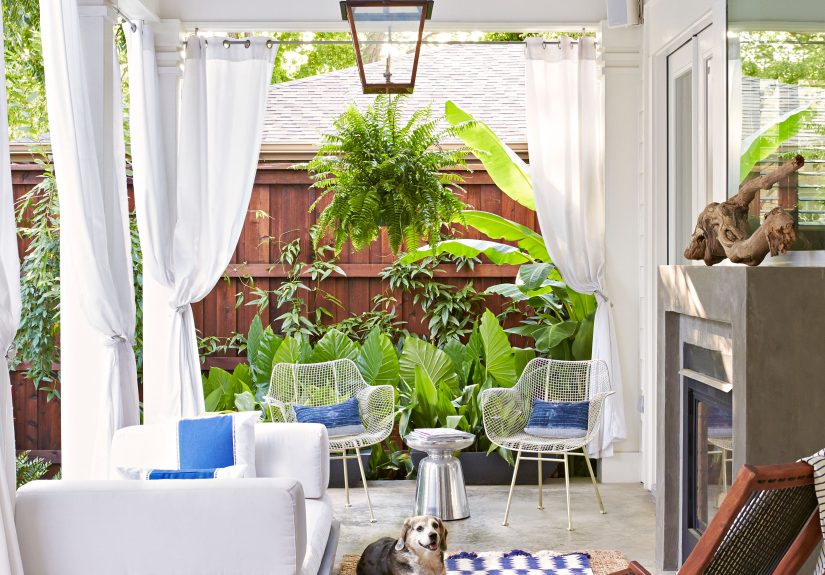
1) Outdoor Curtains: Instant “Cabana Energy”
Outdoor curtains are one of the fastest ways to soften a patio and add privacy without committing to permanent
construction. Hang them from a pergola, gazebo, porch beam, or a simple curtain wire. Choose outdoor-rated fabric
(or at least something that won’t turn into a soggy, mildew-scented science project).
- Best for: patios with overhead structure, apartment balconies with a top rail, covered porches
- Pro tip: Use tiebacks so you can open the view when you want light and airflow.
2) Roll-Up Bamboo/Reed Shades: Affordable, Breezy Screening
Roll-up shades (bamboo, reed, or outdoor roller shades) give you privacy on demand. You can mount them along a
pergola edge, porch opening, or balcony railing. They also help with harsh sun, which is basically privacy’s
annoying cousin.
- Best for: side exposure to neighbors, afternoon glare, renters (with non-damaging mounts)
- Style note: Works especially well with boho, coastal, modern organic, and tropical looks.
3) Cantilever Umbrellas + Side Panels: Shade That Also Shields
Umbrellas aren’t just for sunthey’re also great at blocking diagonal views, especially on compact patios where
you don’t have room for bulky structures. A cantilever style lets you position shade where you need it without
a center pole hogging the table.
4) Tall Planters as “Living Privacy Screens”
If you want privacy without building anything, go vertical with planters: big pots, trough planters, or raised
planters lined up along the edge of the patio. Fill them with tall ornamental grasses, columnar evergreens, or
lush shrubs for a soft green wall.
- Best for: patios, decks, and balconies; HOA-friendly setups; flexible layouts
- Low-fuss plant direction: pick plants that match your sun exposure and climate, and size pots generously.
5) Freestanding Folding Screens: The “Move It Where You Need It” Option
Outdoor folding screens and freestanding panels are great when you want privacy in one spot today and a different
spot tomorrow. Think of them as furniture, not construction.
- Best for: renters, small patios, awkward angles, temporary privacy needs
- Wind reality check: choose heavier designs or anchor with planters/weights in breezy areas.
Semi-Permanent Privacy Screens That Look Built-In (Without a Full Remodel)
6) Lattice Panels: Classic, Customizable, and Plant-Friendly
Lattice is popular for a reason: it blocks enough view to feel private while letting air and light through.
Paint it to match your trim for a “built-in” look, or stain it for warmth. Add a vine and suddenly it’s romantic.
(Or at least less “neighborly.”)
7) Horizontal Slat Wall: Modern Privacy With Clean Lines
A horizontal slat screen reads modern and architectural. You can build a short run to block the most annoying
sightline (like the view into the neighbor’s kitchen window). Pair it with a long planter at the base and it
looks intentionallike you hired someone who owns measuring tape.
- Best for: contemporary patios, mid-century vibes, tight spaces needing targeted blocking
- Material options: cedar, pressure-treated lumber, composite, or outdoor-rated metal panels
8) Privacy Screens With Planter Bases: No Digging Required
One of the smartest builds is a screen anchored to a heavy planter box. The planter provides stability; the screen
provides privacy; the plants add softness. It’s especially useful when you can’t dig (rental, HOA, or you just
don’t feel like dealing with roots and regret).
9) Repurposed Doors/Shutters: Personality + Privacy
Old doors, shutters, or reclaimed panels can become a charming privacy wall with minimal effort. Mount them to a
simple frame or posts set in weighted bases. You get privacy and a conversation piecebecause someone will ask
why you have a door that leads to your basil plant.
Natural Patio Privacy Ideas That Feel Like Landscaping, Not a Fort
10) Layered Planting: The “Looks Expensive” Trick
Professional-looking privacy rarely comes from one thing. It comes from layers: a taller plant in back (like a
columnar evergreen), medium height in the middle (shrubs), and texture in front (grasses or perennials). This
creates depth, blocks views, and feels like an outdoor room.
11) Vines on Trellises: Vertical Privacy That Doesn’t Eat Your Patio
Trellises are a patio privacy cheat code: they take up little floor space but add a lot of screening. Train
climbing plants up and across. If you want faster coverage, pick vigorous climbers suited to your region and
give them a sturdy support from day one.
- Best for: narrow patios, fence lines, balconies, and “I need privacy but I also want flowers” situations
- Maintenance truth: vines are wonderful until they’re on the grill. Prune like you mean it.
12) Clumping Bamboo (Not the Spreading Kind): A Sleek Green Screen
Bamboo can create tall privacy quickly, but the key is choosing clumping varieties (and following local guidance).
If you’re not sure what you’re buying, treat bamboo like a first date: do your research before you commit.
In containers, bamboo is easier to control and works well on patios.
13) Ornamental Grasses: Soft, Swaying, and Surprisingly Effective
Tall grasses create a semi-transparent screen that still feels airy. They’re perfect when you want privacy but
don’t want your patio to feel closed in. Bonus: the movement and rustle add a calming “spa” vibe.
Privacy From Above: When the Problem Is Upstairs Windows
14) Pergolas + Drapes or Retractable Canopies
If you’re overlooked from above, vertical screens won’t solve everything. Overhead coveragelike a pergola with a
retractable canopyhelps block top-down views and adds shade. Add outdoor curtains on the sides and you’ve basically
built yourself a flexible outdoor room.
15) Shade Sails: Modern, Minimal, and Great for Awkward Angles
Shade sails are lightweight and surprisingly transformative. They can improve privacy by blocking higher-angle
views and reducing the feeling of exposure. They also make your patio look like a cool café, which is never a
bad outcome.
- Install tip: use proper anchors and account for wind; taut is good, “flying kite” is not.
16) Cabanas and Gazebos: Full Oasis Mode
If you want maximum privacy (and maximum vacation energy), a gazebo or cabana-style structure with curtains or
panels creates an instant retreat. It’s especially helpful for hot tubs, lounge areas, or patios that face a busy
street.
Small Patio and Balcony Privacy Ideas That Don’t Feel Cramped
17) Railing Privacy Panels + Greenery
On balconies, the edge is usually the exposure point. Attach privacy panels to the railing and pair them with
slim planters. The combo blocks views without stealing precious square footage.
18) Corner-First Layout: Hide in Plain Sight
Instead of centering furniture, tuck seating into a corner and place a screen or tall plants on the open side.
This creates a “nook” that feels naturally private. It’s the outdoor version of sitting in the booth instead of
the middle of the restaurant.
19) Decorative Screen Panels: Style + Function
Laser-cut panels, slatted screens, and decorative partitions add privacy while acting like outdoor art. They’re a
smart choice when you want filtered light rather than a hard visual block.
Budget-Friendly Patio Privacy Ideas That Still Look Intentional
20) Outdoor Fabric on a Wire: Cheap, Flexible, Surprisingly Chic
For a fast, low-cost solution, hang outdoor fabric panels on a wire or curtain rod. Choose a neutral color for a
calm look, or a pattern if you want more personality. This is especially handy for renters and small patios.
21) Painted Lattice + Hooks for Plants and Lights
A simple lattice panel becomes far more stylish when you paint it (black and warm white are popular for a reason),
then add hooks for hanging plants or café lights. It’s privacy plus ambiance, and your patio deserves both.
22) Pallet or Slat Wall (With a Disclaimer)
A pallet wall can work as a DIY privacy screen, but use clean, safe wood and finish it for outdoor use. Think of
it less as “free lumber” and more as “a project that should not give me splinters.”
HOA- and Rental-Friendly Privacy Solutions
If you can’t dig, drill, or change permanent structures, focus on movable, reversible solutions:
- Planter-based screens (heavy base, no holes in the ground)
- Freestanding panels you can reposition or store seasonally
- Clamp-on balcony screens or railing attachments
- Outdoor curtains on tension rods (where safe and feasible)
Also: always check HOA guidelines and local rules before raising fence height or installing permanent structures.
It’s easier to build privacy than to negotiate it after the fact.
Make It Feel Like an Oasis (Not Just a Barrier)
Privacy is about comfort, not just blocking views. Once you’ve handled the sightlines, add “oasis cues”:
- Warm lighting: string lights, lanterns, solar stakes, or wall sconces
- Soft textiles: outdoor rugs, cushions, and throws for hotel-lounge vibes
- Sound masking: a small fountain or wind-friendly plants that rustle gently
- Scent: herb planters (rosemary, basil, mint in containers) near seating areas
The result: a space that feels private even when it’s not perfectly enclosedbecause it feels designed.
Safety and Maintenance Checklist (Because Wind Is a Real Person With a Grudge)
- Anchor screens properly: especially freestanding panels, sails, and curtain hardware.
- Choose outdoor-rated materials: rust-resistant hardware, weather-safe finishes, mildew-resistant fabric.
- Plan for water: pots need drainage; wood needs sealing; fabrics need drying time.
- Keep airflow in mind: fully solid walls can trap heat and feel stuffy on small patios.
- Be neighbor-smart: privacy is great; a surprise wall that blocks their light is… a conversation starter.
Real-World Patio Privacy Experiences ( of Lessons, Wins, and “Oops” Moments)
The best patio privacy ideas usually come from real constraintstiny spaces, picky HOAs, weird sightlines, and the
universal truth that wind shows up uninvited. Here are a few common “patio privacy stories” and what tends to work.
Scenario 1: The Townhouse Patio With the “Second-Story Stadium View”
In many townhouse setups, the patio itself is fineuntil you realize the neighbor’s upstairs window looks directly
into your seating area. The fix is rarely just a fence, because fences don’t block top-down angles. A layered
approach is where people see the biggest improvement: a pergola or shade sail overhead to break the vertical view,
plus a semi-open side screen (like lattice or a decorative panel) to handle side sightlines. Homeowners often add
tall planters with grasses along the most exposed edge, because the greenery softens everything and doesn’t feel
like a hard “keep out” message. The biggest lesson: overhead coverage changes the psychology of the space. Once
there’s something above you, your patio stops feeling exposedeven if it’s not fully enclosed.
Scenario 2: The Rental Balcony Where Drilling Is a No-Go
Renters get creative fast. A typical winning combo is railing privacy panels paired with slim planters (or even
vertical planters) to add height without losing walking room. Freestanding folding screens work well too, especially
when they’re positioned to block just one “hot spot” angle. The most common mistake is choosing screens that are
too lightweight; on higher floors, even a mild breeze can turn a flimsy panel into a dramatic event. The renters
who are happiest usually pick heavier bases or use planters to stabilize screens, then finish with outdoor curtains
only if they can be installed safely. The takeaway: in rentals, stability matters as much as stylebecause you want
privacy, not a rescue mission for your curtain panel.
Scenario 3: The Suburban Backyard With Close Neighbors (But Nice Neighbors)
When neighbors are close, people often worry that privacy solutions will feel aggressive. The friendliest-looking
solutions tend to be living ones: layered shrubs, columnar evergreens, or a trellis with flowering vines. The best
results usually come from designing a “green frame” around the seating area rather than trying to block the entire
property line at once. A short run of slatted screen + plants looks intentional and decorative, especially when it
matches existing finishes like deck stain or trim color. Many homeowners also discover that sound contributes to
the feeling of being watchedso adding a small fountain or rustling grasses makes the space feel calmer even if the
visual privacy isn’t 100%. The big lesson here: privacy doesn’t have to look like a wall. It can look like a garden.
Scenario 4: The “Budget First, Beauty Second” Patio Glow-Up
On tight budgets, the wins usually come from choosing one strong privacy move and then styling around it. Painted
lattice panels are a favorite because they’re affordable, lightweight, and easy to personalize. Add hooks for
hanging plants, string lights, or lanterns and suddenly the screen is both functional and decorative. People also
love roll-up shades because they’re flexible: down for privacy, up for daylight. The classic “oops” is using indoor
fabric outside or skipping weatherproofingleading to sagging panels and mildew. The smarter budget upgrades use
outdoor-rated materials where it counts (hardware, finishes, fabric) and save money by doing the install DIY.
The takeaway: cheap can look chic if it’s finished well.
Conclusion: Privacy Is a Layer Cake (And You’re Allowed to Eat It Outside)
The most successful patio privacy setups aren’t one giant solutionthey’re a few smart layers: a screen for the
worst sightline, greenery for softness, and a touch of shade or fabric for that resort feel. Start with the privacy
audit, pick one “big impact” move, then build from there. Your outdoor oasis doesn’t need to be perfect. It just
needs to feel like yours.
Research Outlets Used (No Links)
Better Homes & Gardens; HGTV; The Spruce; This Old House; Bob Vila; Family Handyman; Martha Stewart; Apartment Therapy;
Architectural Digest; Real Simple; Southern Living; House Beautiful; Gardenista; Popular Mechanics; Country Living.