Table of Contents >> Show >> Hide
- How to Shop Smart on Amazon (So You Don’t End Up With 12 Bins and Zero Progress)
- 12 Home Organization Products Under $35 to Shop on Amazon
- 1) Clear pantry and fridge bins (a.k.a. “Where did all the snacks go?” prevention)
- 2) A cabinet turntable (lazy Susan) for “deep shelf rescue”
- 3) Airtight food storage containers (the pantry upgrade that pays you back)
- 4) Expandable utensil and drawer organizers (because forks deserve a zip code)
- 5) Modular small bins for the junk drawer (turn chaos into categories)
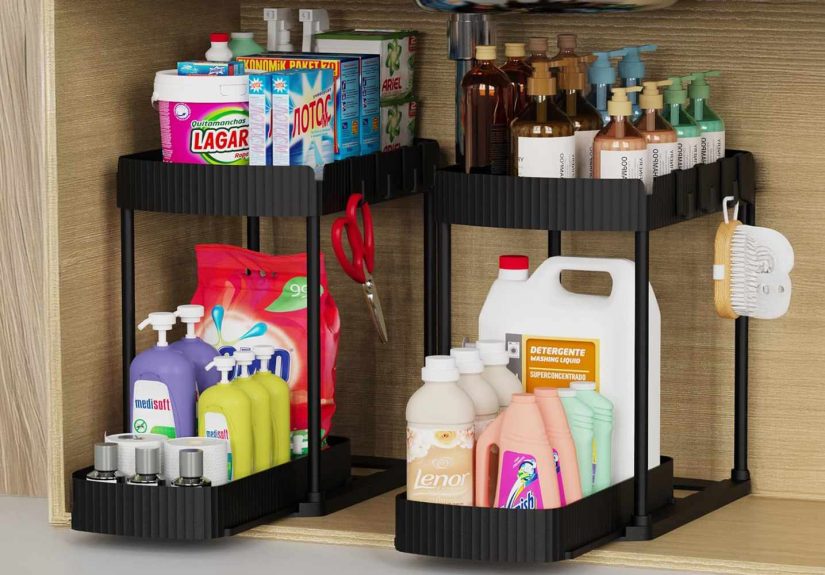
- 6) A two-tier under-sink organizer (a.k.a. plumbing-friendly storage)
- 7) An over-the-door pocket organizer (vertical space = free real estate)
- 8) Slim velvet hangers (make your closet feel bigger without moving walls)
- 9) Shelf dividers or shelf risers (stack smarter, not higher)
- 10) Fabric storage bags for bedding and off-season clothes (soft, squishy, and space-saving)
- 11) Labels that actually help (not labels that become “decorative lies”)
- 12) Cable management (because your charging station shouldn’t look like a sea monster)
- Room-by-Room Plan: What to Buy (and Where It Works Best)
- Common Mistakes When Buying Budget Organizers (Avoid These and You’ll Feel Like a Wizard)
- Experiences People Commonly Have When Shopping Amazon Organizers (and What They Learn)
- Conclusion: A $35 Reset That Actually Sticks
If your home feels like it’s slowly being swallowed by mail, mystery cords, and that one drawer that’s basically a
“junk museum,” you don’t need a full-blown renovation to fix it. You need a plan, a tape measure, and a few
surprisingly powerful home organization products that cost under $35 on Amazon.
The trick isn’t buying more stuff. It’s buying the right stuffsimple organizers that create “homes” for the
things you already own, so you stop playing hide-and-seek with your keys, scissors, and sanity. Below you’ll find
budget-friendly Amazon organization finds (bins, drawer organizers, under-sink shelves, labels, and more), plus a
room-by-room strategy so your new organizers don’t end up… in a pile… waiting to be organized.
How to Shop Smart on Amazon (So You Don’t End Up With 12 Bins and Zero Progress)
1) Pick one problem area, not your entire life
The fastest way to give up is to “organize the house.” Instead, choose one zone:
under the kitchen sink, the pantry shelf, the bathroom cabinet, or
the junk drawer. Small wins build momentumand keep you from rage-buying matching containers for
items you don’t even like.
2) Measure first. The internet is full of optical illusions.
Amazon photos can make an organizer look big enough to hold a winter coat collectionthen it arrives and fits
exactly three granola bars and a single regret. Before you click “Add to Cart,” measure:
width, depth, height, and door clearance (especially under sinks).
3) Favor modular and stackable pieces
Stackable bins, modular drawer organizers, and adjustable shelves tend to work in more than one space. If your needs
change (and they will), modular organizers can move from pantry → bathroom → craft supplies without starting an
identity crisis.
4) Choose “easy to wipe” over “cute but dusty”
Clear plastic bins, simple caddies, and wipeable organizers are popular for a reason: they’re easy to clean, easy to
see into, and easy to maintain. Pretty woven baskets are lovely, but if they require vacuuming and emotional support,
they may not be your best starter option.
5) Use reviews like a detective, not a fan club
Search within reviews for keywords like “fits under sink,” “sturdy,” “slides smoothly,” “doesn’t tip,”
and “size”. Also scan the “Customer images” sectionreal-life photos are a reality check that can
save you from buying something that only works in a mansion pantry with perfect lighting.
12 Home Organization Products Under $35 to Shop on Amazon
Prices change often online, so think of these as categories and best-bet picks that are commonly available under $35.
The goal is high impact for a low budgetno “aesthetic clutter” allowed.
1) Clear pantry and fridge bins (a.k.a. “Where did all the snacks go?” prevention)
Clear bins help you group items by categorysnacks, breakfast, baking, canned goodsso you can pull out one bin and
see everything at once. Many popular sets are sized for pantry shelves and refrigerators and are often priced under
$35.
- Best for: pantries, fridges, deep cabinets, kid snacks, meal-prep ingredients
- Look for: handles, stackability, straight sides (wastes less space), easy-to-clean plastic
- Pro move: label the front edge so everyone can put things back without guessing
2) A cabinet turntable (lazy Susan) for “deep shelf rescue”
If your cabinet is a dark cave where spices and vitamins go to retire, a turntable brings everything forward with a
spin. Versions with handles and raised sides help keep bottles from flying off like they’re auditioning for an action
movie.
- Best for: spices, oils, sauces, skincare, supplements, coffee syrups
- Look for: non-slip base, raised rim, diameter that fits your shelf depth
3) Airtight food storage containers (the pantry upgrade that pays you back)
Airtight containers can keep dry goods fresher and help pantries look less chaotic. You don’t need a $200 matching
setthere are brand-name options and starter sets frequently under $35 that cover basics like cereal, flour, sugar,
rice, and snacks.
- Best for: cereal, pasta, baking staples, pet treats, coffee
- Look for: good seals, stackable shapes, wide openings, labels you can change
- Reality check: only buy what matches the foods you actually store weekly
4) Expandable utensil and drawer organizers (because forks deserve a zip code)
Expandable drawer organizers are a classic for a reason: they adapt to different drawer sizes and create quick
compartments for utensils, tools, and random kitchen gadgets you swore you’d use “all the time.”
- Best for: kitchen drawers, desk drawers, bathroom drawers
- Look for: adjustable width, easy-clean material, compartments that match your tool sizes
5) Modular small bins for the junk drawer (turn chaos into categories)
The junk drawer isn’t the enemyit just needs boundaries. Small modular bins let you separate batteries, scissors,
tape, keys, pens, and “tiny important things that vanish.” You can mix sizes to fit your drawer and swap them around
later.
- Best for: junk drawers, makeup drawers, office supplies, tool drawers
- Look for: non-slip bases, multiple sizes, stackability if you’re organizing deep drawers
6) A two-tier under-sink organizer (a.k.a. plumbing-friendly storage)
Under-sink cabinets are awkward: pipes block space, bottles tip over, and you end up buying duplicates because you
can’t see what you already own. A two-tier organizer (often with pull-out drawers) creates levels and makes items
accessible.
- Best for: cleaning supplies, dish pods, sponges, trash bags, extra toiletries
- Look for: adjustable height, stable frame, smooth sliding drawers, pipe clearance
- Safety tip: store chemicals in a way kids and pets can’t access
7) An over-the-door pocket organizer (vertical space = free real estate)
Over-the-door organizers aren’t just for shoes. Clear-pocket versions can hold hair tools, accessories, cleaning
supplies, crafts, sunscreen, or pantry items. It’s one of the fastest “instant storage” upgrades for small homes.
- Best for: shoes, accessories, toys, bathroom items, cleaning cloths
- Look for: strong hooks, pocket depth, reinforced seams, clear pockets for visibility
8) Slim velvet hangers (make your closet feel bigger without moving walls)
Slim, non-slip hangers can reduce bulk and keep clothes from sliding off. Many multipacks are priced under $35 and
can create a “uniform” closet look that’s oddly motivatinglike your closet got a promotion.
- Best for: shirts, blouses, light jackets, matching hanger setups
- Look for: sturdy hooks, notches, and a pack size that fits your closet goals
9) Shelf dividers or shelf risers (stack smarter, not higher)
Shelf risers create a second “level” on a shelf so you can stack plates, mugs, canned goods, or folded clothes
without building a wobbly tower. Shelf dividers keep clothing piles from slumping into each other like they’re tired.
- Best for: closets, pantries, linen closets, kitchen cabinets
- Look for: stable materials, sizing that fits your shelf depth, easy installation
10) Fabric storage bags for bedding and off-season clothes (soft, squishy, and space-saving)
Under-bed or closet storage bags are great for bulky textilescomforters, sweaters, spare linens. Many sets are under
$35 and come with handles and label windows. If you’re dealing with very limited space, vacuum storage bags can
compress bulky items even more (just don’t store delicate items long-term if you’re worried about wrinkles).
- Best for: seasonal clothing, extra blankets, guest bedding, pillow storage
- Look for: sturdy zippers, reinforced handles, label windows, breathable fabric (for long storage)
11) Labels that actually help (not labels that become “decorative lies”)
Labels work best when they’re simple and flexible. Many organizers recommend labeling bins so items go back to the
right place without debate. Chalk-style labels or removable labels are helpful if you like to change categories over
time (because the “snack bin” can become the “school supplies bin” by mid-September).
- Best for: pantry bins, under-sink bins, kids’ storage, craft supplies
- Look for: removable labels, waterproof options, readable fonts (tiny labels help no one)
12) Cable management (because your charging station shouldn’t look like a sea monster)
Cord clips, cable sleeves, and small cable boxes can quickly clean up entertainment centers and desks. The best cable
organization is the one you’ll maintainsimple clips and labeled cords often beat complicated systems.
- Best for: desks, TV stands, bedside tables, gaming setups
- Look for: adhesive strength, clip sizes, easy removal, bundle packs under $35
Room-by-Room Plan: What to Buy (and Where It Works Best)
Kitchen & Pantry
- Clear bins: group snacks, baking, breakfast, and “grab-and-go” items
- Airtight containers: for dry goods you use weekly (cereal, flour, rice, pasta)
- Turntable: for oils, sauces, spices, vitamins, coffee stuff
- Drawer organizers: for utensils and the gadget drawer that’s trying its best
Bathroom
- Under-sink organizer: to add tiers and keep daily items reachable
- Small bins: to sort skincare, hair products, first-aid, backup toiletries
- Labels: so everyone knows where extras go (and stops “just setting it there”)
Closet & Bedroom
- Slim hangers: to reduce bulk and keep items from slipping
- Shelf dividers/risers: to keep stacks stable and visible
- Storage bags: for off-season clothing and bedding
- Over-the-door organizer: for shoes, accessories, hair tools, or workout gear
Entryway & Living Room
- Bins or baskets: for shoes, dog gear, hats, gloves, “things that always leave the house”
- Hooks: for keys, lanyards, small bags (bonus points if you label who gets which hook)
Home Office
- Modular drawer bins: for pens, sticky notes, chargers, paper clips
- Cable clips/sleeves: to tame cords and keep your desk usable
- Clear bins: to store printer paper, notebooks, and tech accessories
Laundry & Utility Areas
- Under-sink organizer or tiered shelves: for detergents, stain removers, dryer sheets
- Clear bins: for cleaning cloths, sponges, refills
- Labels: for “bathroom,” “kitchen,” “floors” so supplies stay separated
Common Mistakes When Buying Budget Organizers (Avoid These and You’ll Feel Like a Wizard)
Buying organizers before decluttering
Organizers don’t magically turn “too much stuff” into “perfectly curated.” Start by removing what you don’t use,
what’s expired, and what you have duplicates of. Then buy organizers for what remains.
Ignoring dimensions (or assuming your cabinet obeys your hopes)
Under-sink organizers, especially, can fail if pipes block drawers or the door hinge eats up space. Measure like you
mean it.
Over-specializing
One super-specific organizer can be great (hello, under-sink pull-out). But if every item you buy only works for one
exact purpose, you’ll be stuck when your needs shift. Mix in flexible staples: bins, dividers, labels.
Skipping labels “because you’ll remember”
You might remember. Your family, guests, and Future You (who is tired) will not. Labels keep systems alive.
Experiences People Commonly Have When Shopping Amazon Organizers (and What They Learn)
Buying home organization products online tends to follow a predictable emotional journeykind of like a rom-com, but
with more measuring tape. It often starts with optimism: you see a set of clear bins and imagine your pantry looking
like a magazine spread where every snack sits politely in its assigned seat. Then reality shows up in the form of
cabinet widths, awkward pipes, and the sudden realization that you own twelve half-used sauces that all expire “soon.”
One of the most common “aha” moments happens when people stop organizing by item type (“all the snacks”)
and start organizing by behavior (“what do we grab every day?”). That’s when budget organizers actually do
their job. A simple handle bin for school snacks can reduce daily kitchen chaos because it matches the routine:
grab, go, return the bin. People also report that clear bins reduce overbuying because you can see your inventory at a
glance. It’s hard to purchase your third bottle of cinnamon when the first two are staring at you through the clear
plastic like, “Really?”
Under-sink organizers are another classic experiencespecifically, the under-sink “Tetris phase.” Many shoppers find
that the first organizer they buy is slightly too tall, too wide, or not pipe-friendly. The lesson: measure the
narrowest point, account for plumbing, and remember door hinges steal space. Once the right fit is found, though, the
payoff is huge. Pull-out drawers mean you stop crawling into the cabinet like you’re exploring a cave system just to
find dishwasher pods. People often describe this upgrade as the moment the kitchen starts feeling “managed” rather
than “survived.”
Closet upgrades have their own emotional arc. Switching to slim hangers is one of those changes that feels too simple
to matteruntil the closet suddenly looks less packed. Many people say it’s easier to put clothes away when hangers
match and nothing slides to the floor. Pair that with a shelf divider or two, and stacks stop collapsing into a heap
that you promise you’ll “fix this weekend.” Spoiler: the weekend keeps moving.
Labels are where people either become organization enthusiasts… or learn humility. Some shoppers label everything
beautifully, then change their system a month later. That’s why removable labels and simple category names win. The
best labeling experiences come from choosing flexible terms like “Backstock,” “Lunch,” or “First Aid” rather than
hyper-specific labels that become outdated. And when cable management finally happenswhen cords get clipped, bundled,
and identifiedpeople often report a surprising benefit: cleaning becomes easier. Dusting around a TV stand is less of
a nightmare when you aren’t wrestling a spaghetti monster of wires.
The biggest shared experience is this: the most successful Amazon organization purchases are the ones paired with a
tiny habit. Put things back in the bin. Refill the container when it’s low. Return the caddy under the sink after
wiping the counter. Budget products can absolutely transform a spacebut the real magic is when the system is so easy
that you keep it going on a tired Tuesday, not just on an ambitious Saturday.
Conclusion: A $35 Reset That Actually Sticks
You don’t need a huge budget to create an organized homeyou need a few smart, under-$35 building blocks and a
simple plan. Start with one zone, measure it, declutter it, then choose organizers that match how you live:
clear bins for visibility, drawer dividers for order, under-sink tiers for access, and labels to keep it all from
unraveling.
If you’re not sure where to begin, pick just three:
clear bins, a drawer organizer, and an under-sink shelf. Those
alone can make your kitchen and bathroom feel dramatically calmerwithout you having to become a minimalist monk.