Table of Contents >> Show >> Hide
- Why the A-10 Warthog Retirement Has Taken So Long
- What Changed: The A-10’s Retirement Has Moved From Theory to Motion
- The Numbers That Define the “Final Descent”
- Why the Air Force Wants the A-10 Gone (Even Though Lots of People Don’t)
- Why So Many Want the A-10 to Stay
- If Not the A-10, Then What? The Replacement Question (And Why It’s Complicated)
- What Happens Next: The Retirement Timeline to Watch
- So… Is This Really the End?
- Quick FAQs About the A-10 Warthog Retirement
- Experiences From the A-10 Era (Extra )
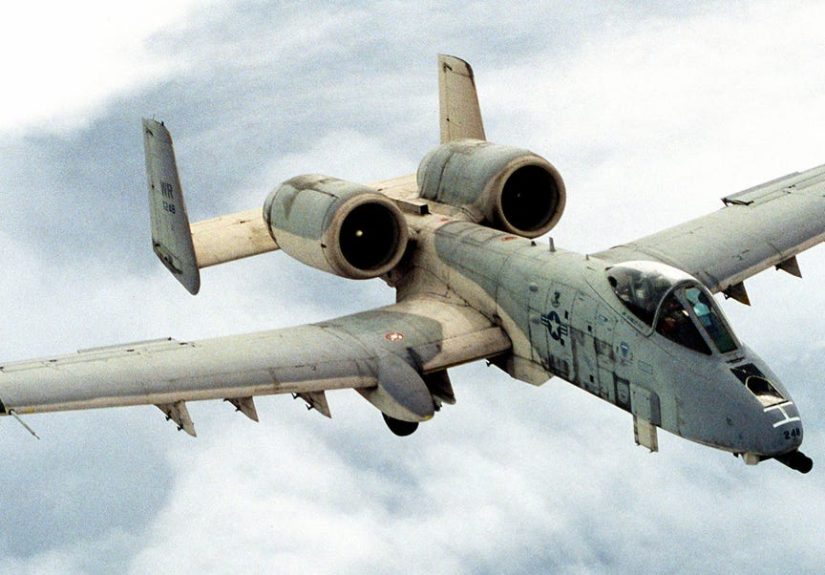
The A-10 Thunderbolt IIbetter known as the “Warthog,” “Hog,” or (if you’re a fan of onomatopoeia) the aircraft behind the
internet’s favorite “brrrt”has been “about to retire” for so long that it’s basically earned a pension just from surviving the rumors.
And yet, late 2025 is different: the Air Force’s plan, budget documents, and overseas moves all point in the same direction.
The A-10 retirement story has moved from “eventual” to “actively happening,” with a timeline that looks less like a cliff and more like a
long runway… leading to a very final hangar door.
This article breaks down what “final descent” really means, why the U.S. Air Force keeps trying to sunset the A-10 Warthog,
why Congress keeps grabbing the yoke, and what happens to close air support when a specialized aircraft leaves the stage.
We’ll keep it factual, a little funny, and very focused on what matters: capability, trade-offs, and what comes next.
Why the A-10 Warthog Retirement Has Taken So Long
Because the A-10 is a “single-purpose” legendand that’s both its power and its problem
The A-10 was designed for one brutally specific job: protect troops on the ground and destroy enemy armorespecially in
close air support (CAS) missions where time, accuracy, and staying power matter more than looking sleek on a poster.
Its reputation was built on loiter time, survivability features, and the ability to carry a wide variety of weapons.
The A-10’s upgrades over the yearsmost notably the A-10C modernizationkept it relevant in an era of precision targeting.
But that specialization also makes it an easy target in budget fights. When a service wants a “more capable and multi-role”
force, a dedicated CAS aircraft can look like a luxuryeven if it’s a luxury the Army and Marines would very much like to keep.
Because retirement isn’t just a decisionit’s a collision of strategy, money, and politics
For years, the Air Force has argued that modern threats demand aircraft that can survive in contested environments, integrate
sensors and data at speed, and deliver effects from farther away. Meanwhile, Congress has repeatedly slowed or blocked A-10
divestment, often requiring minimum inventory levels and asking for detailed transition plans before allowing major cuts.
Translation: the A-10 doesn’t just need a replacement aircraftit needs a replacement plan that lawmakers believe won’t leave a hole.
The result is a retirement saga that’s less “goodbye” and more “we’ll talk about this again next fiscal year.”
What Changed: The A-10’s Retirement Has Moved From Theory to Motion
Overseas drawdowns show the strategy is already in execution
One of the clearest signs the Air Force is serious is the phased withdrawal of A-10s from key overseas locations. In Korea, for example,
the Air Force announced a phased withdrawal of 24 A-10s beginning in January 2025, with completion expected by the end of fiscal year 2025.
That move pairs with upgrades to other fighter aircraft and a broader modernization approachnot just a paper plan.
Units are transitioning, not just “planning to transition”
Retirement doesn’t happen all at once. It happens unit by unit, squadron by squadron, community by community.
In 2024, Air Combat Command announced the inactivation of two historic A-10 squadrons at Davis-Monthan, with aircraft retired and transferred.
In 2025, the Maryland Air National Guard’s A-10 divestment became a highly visible example of how the A-10 retirement isn’t only about jets
it reshapes missions, careers, and even what a wing “is” (in Maryland’s case, part of the transition included a move toward cyber operations).
More aircraft are already going to storage (“the boneyard”) as the fleet shrinks
Another signal: more A-10s have been heading to long-term storage. Reporting in early 2025 noted that at least 39 A-10s were sent
to the boneyard in 2024 alonean acceleration that fits the broader divestment direction. Every aircraft moved to storage reduces the
“operationally relevant” fleet and makes a future full divestment easier to execute.
The Numbers That Define the “Final Descent”
The Air Force’s plan: retire the remaining 162 A-10s in FY2026
By mid-2025, the Air Force’s budget posture put a bright, bold number on the retirement plan: divest the remaining 162 A-10 aircraft in fiscal year 2026.
Department of Defense force structure documentation lists 162 A-10C retirements in FY2026, along with operational cost savings associated with divestment.
A separate Defense Department budget briefing also described accelerating the timelinemoving from a phased divestment through the late 2020s
to a plan centered on FY2026.
If you’re wondering why 162 matters so much: it’s not just a fleet number. It’s a political number.
It’s the difference between “we’re trimming” and “we’re ending an era.”
Congress’s pushback: keep a minimum A-10 inventory (at least for now)
Here’s where the story gets very “Washington”: even if the Air Force wants to retire all remaining A-10s in FY2026,
Congress can restrict or delay that plan. In late 2025, reporting around the FY2026 National Defense Authorization Act (NDAA) process
described lawmakers moving to block full divestment and requiring the Air Force to maintain a minimum A-10 inventory through the fiscal year.
One widely discussed framework would prevent the inventory from dropping below 103 aircraft (which effectively allows retirement of up to 59 from a 162-aircraft fleet),
while also requiring briefings and transition details.
The key takeaway: the Air Force can plan a rapid A-10 retirement, but Congress can slow the descentsometimes by yearsby attaching conditions to authority and funding.
Why the Air Force Wants the A-10 Gone (Even Though Lots of People Don’t)
1) Survivability in high-end conflict is the central argument
The Air Force’s strategic case is straightforward: the A-10 was built for a mission profile that assumes you can get close, stay low,
and keep coming back. In a contested environment with modern integrated air defenses, that assumption can break fast.
The Air Force has increasingly prioritized platforms and concepts that reduce exposure, rely on stealth or standoff, and integrate across domains.
2) Money is never the only reason, but it’s always a reason
Operating older aircraft costs money in maintenance, parts, depot time, and workforce hours. Budget documents tied to force structure changes
describe divestments as a way to avoid operating costs and reallocate resources toward modernization.
The Air Force frequently frames this as a trade: retiring legacy platforms creates room for future capability.
3) “Multi-role” is the buzzword with real consequences
In modern Air Force planning, “multi-role” isn’t just marketing. It’s a force-structure philosophy.
The service wants aircraft that can do air-to-air, strike, suppression, networking, and sensingoften in the same mission set.
The A-10 is excellent at what it does, but it is not a Swiss Army knife. It’s a precision screwdriver that also happens to sound like thunder.
Why So Many Want the A-10 to Stay
1) Close air support isn’t a “nice-to-have”it’s a promise
To people on the ground, close air support is not an abstract capability. It’s reassurance that help can arrive quickly,
stay overhead, and respond to changing conditions. The A-10 was built around this idea: long loiter time, a pilot’s visibility,
and a design that emphasizes survivability and mission persistence.
2) The A-10 is built for the ugly realities of supporting troops
The A-10 has design elements that became part of its legend: rugged landing gear, a structure designed to handle damage,
and a cockpit protection concept often described as “armored.” Its signature gunthe GAU-8/Abecame inseparable from its identity,
but the aircraft’s real strength is the combination of endurance, payload flexibility, and the ability to work closely with ground forces.
3) Trust is earnedand the A-10 has earned it over decades
Pilots, maintainers, forward air controllers, and troops have built a culture around the A-10 that is unusually intense for a piece of hardware.
Part of that is performance. Part of it is time. And part of it is the simple fact that the A-10 looks like it was designed by someone who
asked, “What if we made a plane that’s really good at one job?” and then actually did it.
If Not the A-10, Then What? The Replacement Question (And Why It’s Complicated)
The Air Force answer: a mix of aircraft, weapons, and networks
There is no single “A-10 replacement” in the way the A-10 replaced older ideas about CAS aircraft. Instead, the Air Force generally points to
a portfolio approach: multi-role fighters, precision-guided weapons, improved sensors, better targeting, and stronger command-and-control.
The F-35 often sits at the center of this conversationnot because it is an A-10 clone, but because it brings sensing and survivability advantages
that fit modern planning.
The skeptic’s reply: CAS is a mission, not a math problem
Critics argue that “portfolio” can turn into “nobody owns the mission.” The A-10 was a dedicated CAS platform.
If CAS becomes just one of many tasks for multi-role jetsespecially those pulled toward other prioritiesthen the question isn’t whether CAS exists.
The question is whether it exists at the right scale, with the right training focus, and with the right responsiveness under pressure.
The reality: some A-10 advantages are hard to replicate
Some strengths are straightforward to replace (precision weapons can be carried by many platforms).
Others are not: long low-speed loiter profiles, the aircraft’s particular “feel” in CAS integration, and the cultural specialization that comes from flying a platform
built around one mission. Even if other aircraft can do CAS, doing it the same way is a different claim.
What Happens Next: The Retirement Timeline to Watch
1) Fiscal year milestones matter more than calendar-year vibes
The A-10 retirement debate often hinges on fiscal years: what the Air Force requests, what Congress authorizes, and what is funded.
FY2026 is the pivotal year because it’s the year the Air Force plan concentrates the remaining 162-aircraft divestment.
But congressional restrictions can force a slower drawdown even if the service wants speed.
2) Transition plans for units are where the rubber meets the runway
When lawmakers demand transition briefings, they’re not just asking for paperwork.
They’re asking: What aircraft replaces the A-10 in each unit? When do pilots retrain? What happens to maintainers?
Do communities lose flying missions? Does readiness dip during transition?
Expect this to be the heart of the argument in 2026: not “should the A-10 retire someday,” but “how do we retire it without breaking the mission or the people.”
3) The boneyard growsand museums get ready
As more A-10s retire, more will move to storage at Davis-Monthan’s Aerospace Maintenance and Regeneration Group (AMARG),
while a smaller number may go to museums or static display. For aviation fans, that means the A-10 may gradually become less common at bases and airshows,
and more common behind velvet ropes with a placard that reads: “Yes, it really sounded like that.”
So… Is This Really the End?
The safest honest answer is: it’s the strongest “endgame” posture the A-10 retirement has had in years, but the pace still depends on Congress.
The Air Force has put forward a plan that treats FY2026 as the decisive retirement window for the remaining fleet.
Meanwhile, lawmakers have shownagainthat they can delay, limit, or condition divestment if they believe the replacement plan is incomplete.
What feels different now is that the retirement isn’t only being debated. It’s being executed in steps:
overseas withdrawals, squadron inactivations, Guard transitions, and steady movement of airframes to storage.
That’s why “final descent” fits: you can still pull up, but you’re already lined up for landing.
Quick FAQs About the A-10 Warthog Retirement
Is the A-10 already retired?
No. The A-10 is still in service in late 2025, but the fleet has been shrinking and major retirement actions are underway.
How many A-10s are left?
Air Force budget and force structure materials in 2025 described 162 remaining A-10s targeted for divestment in FY2026making “162” the headline number in the current debate.
Why does Congress keep blocking retirement?
Lawmakers often want assurance that close air support capacity won’t drop, that units have clear replacement aircraft,
and that personnel and community impacts are managed. Minimum-inventory requirements are a common tool to force that planning.
What replaces the A-10?
There is no one-for-one replacement aircraft. The replacement concept is usually described as a mix of multi-role fighters,
precision weapons, improved sensors, and better networkingplus the training and doctrine to ensure CAS remains strong.
Experiences From the A-10 Era (Extra )
The A-10 retirement conversation isn’t only a spreadsheet fight. It’s personalbecause the A-10 is one of those rare aircraft that people
don’t just respect, they emotionally adopt. If you spend time around bases that fly (or used to fly) the Hog, you’ll hear a pattern:
stories about trust, about persistence, and about a machine that felt like it was built by someone who understood the job wasn’t glamorous.
For pilots, the “experience” often gets described in terms of time and attention. A-10 pilots have long talked about
how the platform supports a style of close air support that values staying overhead, seeing the battlespace clearly, and working closely
with controllers on the ground. The aircraft’s endurance and slower speed compared with fast jets can make the coordination feel less like
a drive-by and more like a partnership. When people say “the A-10 was there,” they usually mean it literally: it stayed, it orbited,
it waited until the job was done.
For maintainers, the A-10 is remembered as a rugged workhorse that still demanded constant careespecially as it aged.
The A-10 community is full of practical pride: keeping a legacy aircraft mission-ready is part engineering, part artistry, and part stubbornness.
Many maintainers describe the satisfaction of seeing “their” jet launch, knowing how many hands touched it, how many inspections were done,
and how many fixes were made to keep it safe and effective. When a wing divests A-10s, it’s not just equipment leavingit’s an identity shift.
For ground forces, A-10 stories often focus on psychological relief. Even without getting into graphic specifics,
accounts frequently highlight how reassuring it can be to know air support is overhead and responsive. The A-10’s signature sound became a symbol,
but the deeper point is responsiveness: the belief that the aircraft and its crew were tuned to the ground mission.
That’s why A-10 retirement debates can get heatedbecause “replaceable” is not the same as “trusted,” and trust is built over time.
For aviation fans, the A-10 experience is almost universally described as unforgettable the first time you see it up close.
It doesn’t look like a typical fighter. It looks like it has a job, and it has been doing that job since before a lot of today’s fans were born.
At airshows, people talk about the visceral feel: the low passes, the aggressive turns, the sense that the aircraft is optimized for control and presence
rather than elegance. When the A-10C Demonstration Team ended its run, many fans treated it like the closing night of a long-running Broadway show:
not because the show was perfect, but because it was iconic.
And then there are the community experiences: the towns around A-10 bases, the families who built lives around the squadron rhythm,
the local pride in a mission that felt concrete and understandable. When a base transitions away from A-10s, it can feel like a hometown team changing leagues.
New missions can be excitingcyber, intelligence, or other aircraftbut they don’t always carry the same public visibility. The A-10 was easy to rally around.
It was loud, distinctive, and linked to a mission ordinary people could grasp: protect those on the ground.
If the A-10’s “final descent” really ends in retirement, the aircraft will likely live on in museums, stories, and the culture of the people who flew,
fixed, and depended on it. The Warthog may be leaving the runwaybut it’s not leaving the conversation.