Table of Contents >> Show >> Hide
- What Are Paratiisi Dinner Plates?
- Sizes, Shapes, and How People Actually Use Them
- Why Paratiisi Plates Make Food Look Better (Yes, Really)
- Styling Ideas: From Weeknight Pasta to Holiday Roast
- Mixing Paratiisi With Other Dinnerware Without Chaos
- Care and Handling: Keep the Pattern Bright and the Edges Chip-Free
- Buying Guide: New vs. Vintage, Authenticity, and Smart Shopping
- Are Paratiisi Dinner Plates Worth It?
- FAQ
- Real-World Experiences With Paratiisi Dinner Plates
Some dinner plates are just… plates. They do the job, they stack neatly, and they disappear into the background like a polite houseguest.
Paratiisi dinner plates do the opposite. They show up loud (in the best way), make your food look like it tried harder,
and somehow convince even a Tuesday night sandwich that it deserves a moment of applause.
If you’ve seen the Paratiisi pattern in the wild, you probably remember it: bold fruit, lush leaves, and florals that feel like summer moved in
and refuses to leave (good!). This article breaks down what Paratiisi dinner plates are, why people collect them, how to use and care for them,
and how to style them without turning your table into a pattern-fight.
What Are Paratiisi Dinner Plates?
“Paratiisi” means “paradise” in Finnish, and the name fits. The pattern is famously abundantfruit and flowers with a graphic, confident look
that reads as both vintage and surprisingly modern. Paratiisi is most commonly associated with the Finnish ceramics brand Arabia (often sold
through design-focused retailers and specialty shops), and it’s become one of those recognizable “design people know” tableware patterns.
The pattern: fruit, florals, and a little bit of drama
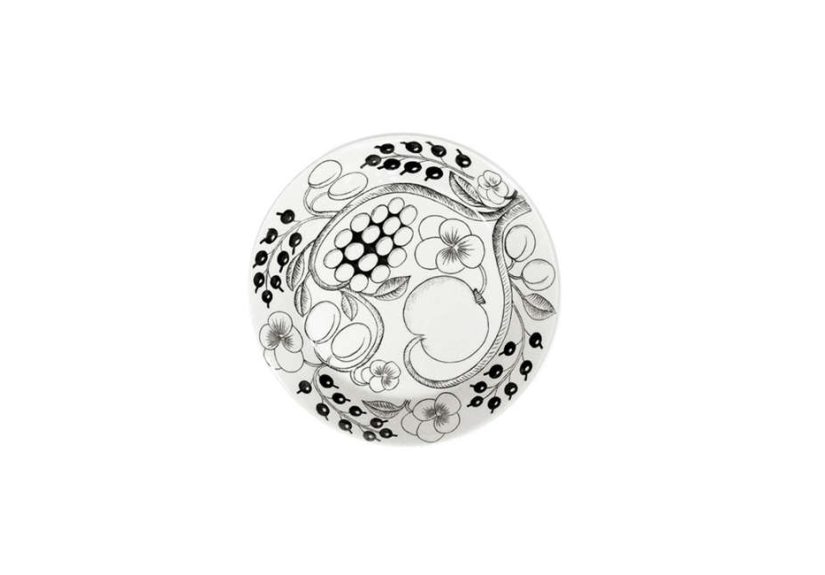
The classic look is the colorway many people picture first: vibrant yellows and deep blues against a creamy white base. There are also darker
variations (including black-and-white options) that lean more graphic and contemporary. Either way, the design has a “center-stage” personality:
you can build a whole tablescape around it, or use just one Paratiisi plate as an accent piece and let it do the heavy lifting.
The material: why “vitro porcelain” matters
Many Paratiisi plates are made of vitro porcelain (you’ll also see “vitro-porcelain” in some listings). In practical terms,
this points to a durable, everyday-friendly porcelain that’s designed to handle real lifemeals, reheats, dishwashers, and the occasional
“oops” momentbetter than delicate decorative ceramics. It’s also why Paratiisi plates can be both “special enough for guests” and “tough
enough for Tuesday.”
Sizes, Shapes, and How People Actually Use Them
“Dinner plate” sounds singular, but Paratiisi comes in multiple plate sizes and shapes. Depending on where you shop, you’ll see measurements
listed in centimeters (common in design retail) and inches (common in U.S. retail and replacements marketplaces). Here’s how the lineup usually
plays out in real kitchens:
Classic dinner plate (around 10 to 10.25 inches / 26 cm)
This is the workhorse. It’s the plate you serve a full dinner onprotein + sides + “yes, we’re adding bread, this is a safe space.” It also
doubles as a serving plate for pastries at brunch or a “family-style pile of tacos” moment.
Smaller plates (roughly 6.5 inches / 16.5 cm and around 8 inches / 21 cm)
Smaller Paratiisi plates are popular for desserts, salads, toast-and-eggs breakfasts, or the highly technical category known as “snacks that
accidentally become dinner.” They’re also a smart way to bring Paratiisi into your rotation without committing to a full set right away.
Oval plates and serving shapes
Oval shapes show off the pattern beautifully and feel a bit more “host mode,” even if you’re just hosting yourself and a bowl of grapes.
Ovals are especially good for fish, asparagus, pastries, or anything long and elegant that deserves the runway.
Why Paratiisi Plates Make Food Look Better (Yes, Really)
Food styling isn’t only about fancy lighting and tweezers. Plate design matters because it frames color, portioning, and contrast.
Paratiisi plates have two superpowers:
-
High contrast: The pattern creates a lively border that makes simple foods popthink avocado toast, roast chicken, pasta,
or even leftover pizza (especially leftover pizza). -
A built-in “wow” factor: When the plate is visually rich, the table instantly feels intentionaleven if dinner is “bag salad,
but in a bowl we respect.”
The trick is balance: because Paratiisi is bold, your plating can be simpler. A clean pile of roasted vegetables and a piece of salmon looks
restaurant-y without extra effort, because the plate is already doing the aesthetic work.
Styling Ideas: From Weeknight Pasta to Holiday Roast
Weeknight comfort: pasta night that looks like a magazine spread
Use the 26 cm dinner plate for pasta and keep everything else minimal: clear glassware, plain napkins, and simple flatware.
The Paratiisi border creates a “frame” that makes a basic marinara feel more special.
Brunch mode: stacks, color, and casual elegance
Paratiisi shines at brunch because the pattern naturally complements fruit, pastries, and bright foods. Use smaller plates for pastries and
a larger plate for eggs and greens. If your table is already colorful (berries, orange juice, herbs), Paratiisi looks like it belongs there.
Holiday or dinner party: make it dramatic without making it busy
For a bigger occasion, Paratiisi can be the “main character” while everything else goes neutral. Think white tablecloth or natural linen,
simple candles, and greenery. Let the plates bring the color.
Mixing Paratiisi With Other Dinnerware Without Chaos
If you love Paratiisi but don’t want every place setting to shout at once, mixing and matching is your friend. The best mixed tables usually
follow one of these strategies:
1) Use Paratiisi as the accent plate
Keep everyday white plates as your base and bring Paratiisi in as a salad/dessert plate or as a serving platter. This gives you the pattern’s
personality without turning the entire table into a botanical mural (unless you want thatno judgment).
2) Match by color palette, not by pattern
Paratiisi’s classic blues and yellows play nicely with whites, creams, navy, and warm neutrals. Black-and-white Paratiisi pairs well with
minimalist stoneware, matte black flatware, or clear glass.
3) Pick one “anchor” and let everything orbit it
A good anchor can be the plates, the napkins, or even the centerpiece. When Paratiisi is the anchor, keep your linens quieter.
When your linens are the anchor (striped napkins, patterned runner), use Paratiisi in a smaller dose.
Care and Handling: Keep the Pattern Bright and the Edges Chip-Free
The good news: Paratiisi plates are typically made for everyday use. The better news: you can keep them looking great for years with a few
habits that take basically zero extra time once you’re used to them.
Dishwasher tips that actually help
- Give plates space. Overcrowding increases the chance of edge-to-edge knocking (a common cause of chips).
- Angle plates toward the spray. Better cleaning, less gritty residue, fewer “why is there dried oatmeal?” mysteries.
- Avoid harsh, abrasive scrubbers. If something sticks, soak first or use a non-scratch sponge.
Microwave, oven, freezer: the “thermal shock” rule
Durable porcelain still has one enemy: sudden temperature changes. If a piece is labeled for oven/microwave/freezer use, it can usually handle
heatbut don’t go from freezer-to-hot-oven or oven-to-cold-wet-countertop in one dramatic move. Let the dish warm up or cool down gradually,
and place hot pieces on wood, cloth, or a trivet instead of a cold metal surface.
Vintage caution (especially if you thrift)
If you buy older Paratiisi pieces secondhand, check the backstamp and any safety markings. Vintage production can differ in materials and
heat tolerance. When in doubt, treat vintage pieces gently: hand-wash, avoid extreme heat, and use them as serving plates rather than as
“microwave this soup every day” dishes.
Buying Guide: New vs. Vintage, Authenticity, and Smart Shopping
Paratiisi dinner plates are widely sold through design retailers, specialty Scandinavian shops, and replacement marketplaces. Where you buy
depends on what matters most to you: price, condition, matching stamps, or finding a specific size/color that’s hard to track down.
How to spot the real deal
- Look for backstamps and maker marks. Authentic pieces typically have branding and origin info on the underside.
- Match the pattern quality. The print should look crisp and intentional, not blurry or misaligned.
- Check the listing details. Reputable sellers list size, material, and use/care notes (dishwasher/microwave/oven safe).
When buying vintage, ask about condition like a pro
Use this checklist before you buy:
- Any chips on the rim or base?
- Any hairline cracks (sometimes only visible under bright light)?
- Any utensil marks or dulling of the glaze?
- Does the seller guarantee inspection or accept returns?
Pro tip: If you’re building a set over time, take a quick photo of the backstamp you already own (or write it down). Matching stamps can make
your set feel more cohesiveespecially if you’re mixing eras or buying from multiple sellers.
Are Paratiisi Dinner Plates Worth It?
“Worth it” depends on how you eat and how you like your home to feel. If you want plates that:
(1) work for everyday meals,
(2) look special without being precious,
and (3) make your table feel styled even when life is messy
Paratiisi is a strong candidate.
The cost-per-use logic is where Paratiisi often wins. If you use them weekly (or daily), you’re not paying for “special occasion only” dishes.
You’re paying for a design you genuinely enjoy seeingand a material built to be used, not stored.
FAQ
Do Paratiisi dinner plates scratch easily?
Most well-made porcelain resists everyday wear well, but any plate can show utensil marks if you use heavy pressure with metal utensils.
A quick wash and a non-scratch sponge usually handle minor marks. Avoid abrasive cleaners that can dull the glaze over time.
Can I mix Paratiisi colorways in one table setting?
Yesespecially if you keep the rest of the table calm. Mixing classic blue/yellow with black-and-white can look intentional if you repeat
one element elsewhere (like a navy napkin, black flatware, or clear glass).
Are Paratiisi plates good for small kitchens?
They can be, because you don’t need a huge number of pieces for impact. A few plates plus a serving platter can carry an entire tablescape,
and you can build slowly rather than buying a massive set all at once.
Real-World Experiences With Paratiisi Dinner Plates
People who live with Paratiisi plates often describe the same funny phenomenon: the plates quietly change how you treat everyday meals.
Not in a “suddenly you’re a professional chef” waymore like a “you stop eating over the sink because the plate deserves a chair” way.
The pattern creates a sense of occasion, and that tends to nudge habits in a better direction.
One common experience is how forgiving Paratiisi is with “imperfect” food. A slightly lopsided grilled cheese? Looks charming. Leftover rice
and vegetables reheated into a lazy bowl situation? Looks like a composed plate if you spread it out a bit. Even basic foodstoast, fruit,
yogurt, a wedge of piefeel more styled because the plate is doing the visual framing. For busy households, that’s a win: you get the feeling
of a nicer meal without adding new steps.
Another real-life perk is how Paratiisi plates help when you’re mixing “whatever dishes we have left.” Many kitchens are a patchwork collection:
a few white plates, some inherited pieces, that one random bowl you love, and a couple of thrift-store finds you refuse to apologize for.
Paratiisi can act as a unifier because it has a clear identity. If you use Paratiisi as the accent (dessert plates or a serving piece),
it makes mismatched basics look curated rather than accidental. People often find that guests assume the table was planned, when really it was
“planned” in the sense that someone remembered to light a candle.
In day-to-day use, durability habits become part of the routine. Owners frequently learn to give patterned plates a little breathing room in
the dishwasher and avoid clanking stacks in the sink. That isn’t because Paratiisi is fragileit’s because once you’ve had a plate you truly
love, you naturally treat it like it’s worth keeping. A small behavior change (spacing plates, not stacking too aggressively) can reduce chips
for any dinnerware, and Paratiisi just happens to be the kind of plate that motivates you to do it.
Paratiisi also has a “seasonal flexibility” people don’t always expect. The classic fruit-and-flower design screams summer at first glance,
but it adapts. In spring and summer, it feels bright and fresh with citrus, berries, salads, and iced drinks. In fall, it looks cozy with
warm linens, wood serving boards, and roasted vegetables. In winter, the deeper tones in the pattern (especially the black-and-white versions)
can feel elegant and moody with candles and greenery. The plate doesn’t fight your menuit joins it.
There’s also the collector experience: building a set slowly can be genuinely fun. Some people start with one dinner plate and one small plate,
then add pieces when they spot good deals, discontinued shapes, or a colorway that fits their space. Over time, the set becomes personala mix
of “this one was my first,” “this one was a gift,” and “this one was the thrift-store miracle find.” That story factor is part of the charm.
Unlike generic dish sets that arrive in one big box and never feel special again, Paratiisi can feel like a collection you’re curating.
Finally, the most practical experience of all: these plates often become the “default.” Not because they’re the only ones you own, but because
they’re the ones you reach for. If you’re going to wash dishes anyway, you might as well eat off something you genuinely like. And that’s the
quiet magic of Paratiisi dinner plates: they don’t just hold dinnerthey make dinner feel like something you meant to do.