Table of Contents >> Show >> Hide
- When a PlayStation Becomes the Symbol of a Bigger Problem
- The Newborn Stage Is Not a Spectator Sport
- Why Gaming Can Cause Relationship Conflict After a Baby
- The Difference Between Healthy Gaming and Avoidance
- Why New Parents Fight More Than They Expected
- The Mother’s Breaking Point: Why “Help” Is the Wrong Word
- What the Father Should Have Done Instead
- Can Gaming Still Fit Into Fatherhood?
- The Screaming Exit: What It Reveals About Emotional Control
- Lessons for Couples Facing the Same Fight
- Why This Story Went Viral in Spirit
- The Bigger Message: Parenthood Requires a Priority Shift
- Experience-Based Reflections: What This Situation Teaches Real Families
- Conclusion
There are moments in life when a person discovers exactly what kind of adult they are. For some, it happens during a job interview. For others, it happens when the baby starts crying at 3:17 a.m., the laundry smells suspicious, dinner is a bowl of cereal eaten standing up, and the PlayStation controller is glowing like a tiny plastic temptation from another universe.
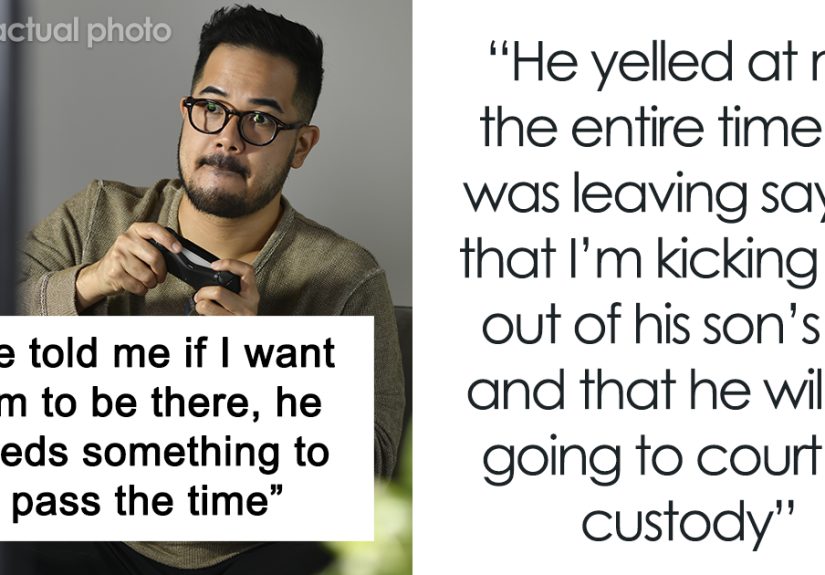
The viral-style story behind the headline “Man Forced To Choose Between His Newborn Son Or His PlayStation, Gets Kicked Out Screaming” hits a nerve because it is not really about one console. It is about priorities. It is about what happens when one parent is drowning in diapers, feedings, recovery, and exhaustion while the other acts as if fatherhood is a downloadable side quest.
Video games are not the villain here. Plenty of responsible parents play games, stream shows, watch sports, scroll memes, and enjoy hobbies without abandoning their families. The problem begins when a hobby becomes a hiding place. When the newborn needs a bottle, the mother needs support, and one partner says, “Just five more minutes,” for the ninth time, the issue is no longer entertainment. It is emotional absence wearing a headset.
When a PlayStation Becomes the Symbol of a Bigger Problem
In stories like this, the PlayStation is rarely just a PlayStation. It represents free time, old routines, and the life someone had before the baby arrived. Before parenthood, gaming for hours may have been harmless. After a newborn arrives, the entire household runs on tiny windows of survival. Sleep is chopped into pieces. Meals become optional. Showers feel like luxury spa appointments, minus the cucumber water.
Newborns need constant care. They wake often, feed frequently, and do not care whether a game is paused, ranked, or “almost over.” Babies are not impressed by boss fights. They are the boss fight. When one parent continues living like nothing has changed, resentment builds fast.
The conflict in this headline feels dramatic because the choice is framed so sharply: newborn son or PlayStation. But in real family life, the choice often appears in smaller moments. Will you take the baby so your partner can sleep? Will you wash bottles without being asked? Will you notice the diaper bag is empty? Will you turn off the console when your family needs you?
The Newborn Stage Is Not a Spectator Sport
Bringing home a baby can be beautiful, but it is also brutally practical. Someone has to track feedings. Someone has to change diapers. Someone has to soothe the baby when crying turns the living room into a tiny opera house. Someone has to notice when the other parent looks like they are one spilled cup of coffee away from becoming a cautionary tale.
This is why a father who disappears into gaming during the newborn stage can create such intense anger. It is not only that he is playing. It is that someone else is doing the invisible work while he escapes. The mental load of parenting is heavy because it includes remembering, planning, anticipating, and responding. A parent who only helps when instructed is not sharing the load; he is waiting for management.
A newborn does not need a perfect father. A newborn needs a present one. A partner does not need a superhero. She needs someone who can say, “I’ve got the next feeding,” and actually mean it.
Why Gaming Can Cause Relationship Conflict After a Baby
Gaming is a normal hobby for millions of adults. In fact, video games can offer stress relief, connection, creativity, and fun. The trouble comes when gaming becomes the default escape from adult responsibility. After a baby arrives, time becomes a family resource. Spending three uninterrupted hours online may feel normal to the gamer, but to the exhausted partner, it can look like abandonment with better graphics.
Many new-parent conflicts are not really about the object being argued over. A fight about a PlayStation may actually be about fairness. A fight about headphones may be about being ignored. A fight about “one more match” may be about a partner feeling unseen while recovering physically, emotionally, and mentally from childbirth.
That is why the kicked-out-screaming part of the story resonates. It sounds extreme, but it captures the boiling point. People rarely explode over one incident. They explode after repeated moments of asking for help, being dismissed, asking again, being minimized, and finally realizing they are parenting with someone who is technically in the house but emotionally logged out.
The Difference Between Healthy Gaming and Avoidance
Healthy gaming has boundaries. It fits around life. It does not swallow responsibilities whole. A healthy gaming parent can enjoy a session after the baby is asleep, after chores are handled, and after both adults have had a fair chance to rest. He can pause when needed. He can communicate. He can understand that “I need help” is not an attack; it is a family emergency in sweatpants.
Unhealthy gaming looks different. It becomes secretive, defensive, or compulsive. It creates arguments. It replaces bonding time. It causes one parent to neglect chores, sleep, work, or caregiving. It turns the console into a third person in the relationship, and somehow that third person is always holding the controller.
The key question is not, “Are video games bad?” The better question is, “Is this hobby making family life better, neutral, or worse?” If a hobby helps someone recharge and return as a kinder, more patient parent, great. If it leaves the other parent exhausted, resentful, and alone, the hobby is no longer harmless.
Why New Parents Fight More Than They Expected
Many couples are surprised by how much their relationship changes after a baby. Before the baby, they may imagine cozy mornings, matching pajamas, and peaceful stroller walks. Then reality arrives carrying burp cloths, medical bills, leaking bottles, and a sleep schedule designed by a tiny chaos goblin.
Sleep loss makes everything harder. Small comments sound sharper. Ordinary mistakes feel personal. A forgotten diaper change can become evidence in a mental courtroom. When both partners are exhausted, the household needs more patience, not less teamwork.
This is where emotional maturity matters. A mature parent understands that the newborn phase is temporary but demanding. He does not compete with the baby for attention. He does not treat his partner’s exhaustion as nagging. He does not make himself the victim because someone asked him to stop playing and hold his child.
The Mother’s Breaking Point: Why “Help” Is the Wrong Word
One of the most frustrating phrases in new-parent households is “I help with the baby.” Help is what a neighbor does when they carry groceries upstairs. Help is what a friend does when they drop off soup. A father caring for his own child is not “helping.” He is parenting.
When a man acts like baby care belongs primarily to the mother and his role is optional, the relationship becomes unbalanced. The mother becomes the default parent, default planner, default worrier, and default night-shift worker. Meanwhile, he gets applause for doing one bottle and calling it “babysitting.” Sir, that is your baby, not a seasonal internship.
In the story suggested by the headline, the ultimatum likely came after the mother had enough. It was not simply “choose the baby or the PlayStation.” It was “choose the family you created or the fantasy that nothing has changed.”
What the Father Should Have Done Instead
The better path is not complicated, though it does require humility. First, he should have acknowledged the obvious: life changes after a newborn. A gaming routine that worked before may not work now. Second, he should have built a schedule with his partner. For example, one parent gets an hour of rest while the other handles the baby, then they switch. Gaming can happen during agreed downtime, not during crisis moments.
Third, he should have learned the baby’s routine without needing constant instructions. Know where the diapers are. Know how to prepare a bottle safely. Know the pediatrician’s number. Know how to soothe the baby. Know when your partner last slept. Competence is attractive. Weaponized helplessness is not.
Fourth, he should have treated his partner like a teammate. That means checking in, listening without defensiveness, and taking initiative. A simple “You sleep, I’ve got him” can feel more romantic than flowers when someone has been awake since Tuesday.
Can Gaming Still Fit Into Fatherhood?
Yes, absolutely. Fatherhood does not mean deleting every hobby and becoming a diaper-folding monk. Parents need breaks. They need laughter. They need personal time that reminds them they are still human beings, not just bottle-washing machines with health insurance.
But hobbies must be resized for the season. A newborn’s first months are not the ideal time for marathon gaming nights, endless online matches, or tantrums over being interrupted. Games with pause buttons are friendlier to family life. Short sessions are smarter than long ones. Offline play may be less stressful than team-based competitive games where quitting feels like betraying a digital army.
The healthiest gaming parents are honest about time. They do not pretend a ten-minute match is ten minutes when everyone knows it has the lifespan of a historical empire. They communicate before starting. They ask, “Is now a good time?” They accept “not right now” without acting like they have been banished from joy forever.
The Screaming Exit: What It Reveals About Emotional Control
Getting kicked out screaming, if taken as part of the story, reveals another issue: emotional regulation. Adults are allowed to feel disappointed, embarrassed, angry, or overwhelmed. They are not allowed to turn every boundary into a dramatic performance.
A newborn household already has one person who screams because they cannot process discomfort. That person is the baby. There is no need for a grown man to join the choir.
If a partner sets a boundary and the response is yelling, blaming, or storming out, the conflict is bigger than gaming. It points to a lack of accountability. A responsible parent might say, “You’re right. I’ve been checking out. I’m sorry. Let’s fix this.” An immature one treats consequences as cruelty and accountability as persecution.
Lessons for Couples Facing the Same Fight
1. Create a Realistic Downtime Agreement
Both parents need breaks, but breaks should be fair. Make a simple weekly plan. Decide when each person gets uninterrupted rest, hobby time, or social time. Put baby care first, then divide personal time like adults who share a calendar and a home.
2. Use Specific Requests, Not Explosive Hints
Instead of saying, “You never help,” try, “Please take the baby from 8 to 10 so I can sleep.” Specific requests are harder to dodge. Of course, the other parent should not need instructions for everything, but clear communication can prevent some fights before they become volcanic.
3. Watch for Avoidance Behaviors
Gaming, work, scrolling, errands, and even “needing space” can become avoidance if they repeatedly remove one parent from family responsibilities. The test is simple: does the behavior restore the person, or does it dump more work on someone else?
4. Protect Sleep Like It Is a Family Asset
Sleep is not laziness. It is maintenance for the brain, body, mood, and relationship. New parents should trade shifts where possible, accept practical help, and avoid turning exhaustion into a competition. Nobody wins the “I’m more tired” Olympics. The medal is just resentment.
5. Get Support Early
If either parent feels persistently overwhelmed, detached, depressed, anxious, or unusually angry, professional support can help. Postpartum mental health challenges can affect mothers and fathers. Asking for help is not weakness. It is responsible parenting.
Why This Story Went Viral in Spirit
People react strongly to stories like “man chooses PlayStation over newborn” because the stakes are instantly understandable. A baby is vulnerable. A recovering parent needs support. A game console, however beloved, does not need burping, feeding, or emotional security.
The headline also triggers a broader cultural frustration. Many people have watched mothers become the default parent while fathers are praised for basic participation. They have seen women manage feedings, appointments, laundry, emotional labor, and household logistics while being told they should be grateful for occasional assistance. So when a story presents a man being asked to choose between a newborn and a console, readers already know the correct answer. It is not a difficult quiz.
The funny part is that the PlayStation would probably survive a few weeks of reduced attention. The baby, however, is building trust from day one. The partner is forming memories too. She will remember who showed up. She will remember who disappeared. She will remember whether she felt loved or left alone.
The Bigger Message: Parenthood Requires a Priority Shift
Parenthood does not erase personality, hobbies, or fun. But it does rearrange the furniture of life. The baby comes first. The recovering parent needs care. The household must function. Entertainment fits into the remaining space, not the other way around.
A man who cannot put down a controller when his newborn needs him is not being asked to give up happiness. He is being asked to grow up. That growth may feel uncomfortable, especially if he used gaming as his main way to relax or escape. But becoming a parent means learning new forms of joy: the first time the baby grips your finger, the first sleepy smile, the first moment you realize you are no longer just living for yourself.
The best fathers do not abandon their hobbies. They integrate them wisely. They know when to play and when to pause. They know the difference between self-care and selfishness. Most importantly, they understand that being present in the hard moments is what builds a family.
Experience-Based Reflections: What This Situation Teaches Real Families
Families who have lived through the newborn stage often describe it as a beautiful blur. One day you are installing a car seat with the seriousness of a NASA engineer, and the next you are googling whether babies normally make barnyard noises while sleeping. During this phase, even strong couples can struggle. The problem is not always lack of love. Sometimes it is lack of systems.
One common experience is the “invisible scoreboard.” Each parent silently counts what they have done: bottles washed, diapers changed, trash taken out, hours slept, tears swallowed. The scoreboard becomes dangerous because nobody else can see it. One parent thinks, “I did so much today,” while the other thinks, “I had no support today.” Without honest conversation, both people feel unappreciated.
Another familiar experience is the shock of identity change. A new father may miss his old freedom. A new mother may miss feeling like her body and time belong to her. These feelings do not make someone a bad parent. They make them human. But problems begin when one person manages that grief by escaping while the other has no escape at all.
Couples who handle this stage well usually stop aiming for perfect balance every single day and aim for active fairness over time. Maybe one parent handles more nights because the other has an early shift. Maybe the other parent takes over mornings on weekends. Maybe gaming happens after chores, not before. Maybe both parents agree that uninterrupted personal time must be earned by making sure the other person also gets some.
For gaming dads specifically, the most practical advice is simple: choose games that respect your real life. A game that cannot be paused may not fit well during newborn care. Competitive online matches can create pressure to ignore interruptions. Story-based games, casual games, or shorter sessions may work better. The controller should never become a reason to delay feeding, soothing, cleaning, or supporting your partner.
For mothers or partners feeling abandoned, the experience can be emotionally painful. It is not just about chores. It can feel like betrayal. You may wonder why the person who promised to build a family with you needs to be begged to participate in it. That hurt is real. A calm conversation during a quiet moment may help, but repeated neglect requires firmer boundaries. Love does not mean accepting endless disappointment.
For fathers who recognize themselves in this story, the good news is that change can happen quickly when pride gets out of the way. Apologize without excuses. Take a full shift with the baby. Learn the routine. Ask what your partner needs, then do it before she has to ask again. Put the console away during high-stress hours. Show with actions that your family is not competing with your hobby.
The newborn stage eventually changes. Babies sleep longer. Parents regain pieces of themselves. Hobbies return. But the way partners treat each other during those difficult first months can shape the relationship for years. A PlayStation can be replaced. Trust is harder to rebuild. A game can be paused. A baby’s early days cannot be replayed.
Conclusion
The story of a man forced to choose between his newborn son and his PlayStation is dramatic, funny in a painful way, and deeply revealing. It reminds us that the real issue is not gaming. The issue is whether a parent understands that love requires action, especially when life is inconvenient.
Newborns do not need flawless parents. Partners do not need mind readers. Families need teamwork, humility, and the ability to put first things first. A father can still be a gamer, but he has to be a father first. When the baby cries, when his partner is exhausted, when the house is running on fumes, the right move is obvious: pause the game, pick up the baby, and show up.