Table of Contents >> Show >> Hide
- What the Gattorna Lionetta Corkscrew actually is
- Design highlights: simple on purpose, charming by accident
- How to use the Lionetta (without turning it into an arm workout)
- Where the Lionetta shines (and where it’s not the hero)
- Buying one today: what to know (especially if it’s secondhand)
- Care and maintenance: keep it classy, keep it dry
- How the Lionetta compares to “best corkscrew” favorites
- Conclusion: the corkscrew for people who notice details
- Real-world experiences with the Gattorna Lionetta Corkscrew
Wine should be relaxing. The bottle, however, occasionally disagreesespecially when the cork is older than your “good” cutting board. That’s where the Gattorna Lionetta Corkscrew earns its cult status: it’s a compact, foldable pocket corkscrew with a throwback vibe that feels more like a well-made tool than a kitchen gadget with opinions.
If you’ve ever fought a wobbly winged opener (and lost), or watched a server pop a cork in ten seconds flat (and felt personally attacked), the Lionetta sits in an interesting middle ground: classic, minimalist mechanics paired with artisan presentation. It’s the kind of wine opener people buy once… then start “accidentally” gifting to themselves every holiday season.
What the Gattorna Lionetta Corkscrew actually is
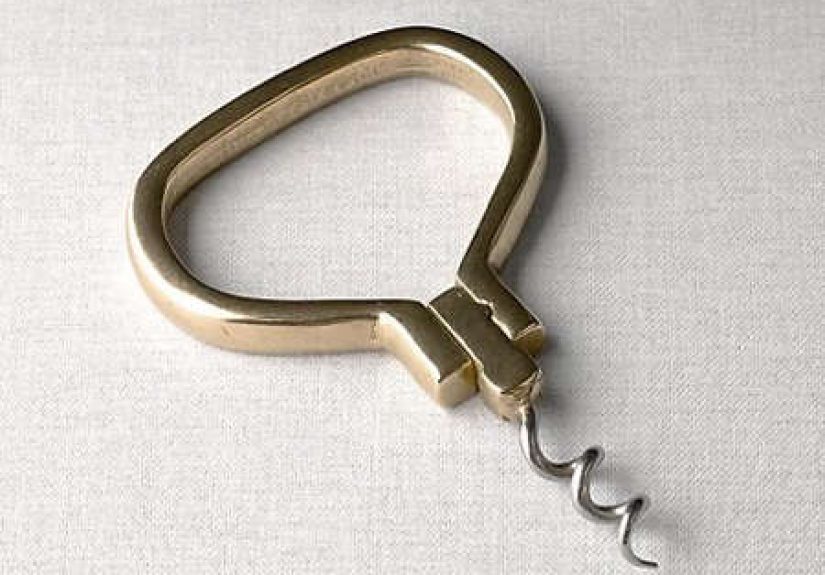
The Lionetta is best described as a folding brass pocket corkscrew inspired by older European designs. It’s been described as a replica of an Irish pocket corkscrew from the mid-18th century, with a form that prioritizes portability and simple leverage over modern multi-tools. The corkscrew folds for storage and is often paired with a protective felt bagsmall details that signal it’s meant to be carried, not buried in a junk drawer.
Why “pocket corkscrew” matters
Most people today meet corkscrews in two formats: waiter’s corkscrews (wine keys) and lever/wing contraptions. Pros tend to favor wine keys because they’re compact, reliable, and built around leverage rather than brute force. A pocket corkscrew like the Lionetta shares that same “do one job well” philosophy but strips things down even further. No gimmicks. No batteries. No panic.
Design highlights: simple on purpose, charming by accident
The Lionetta’s design is less “Swiss Army knife” and more “tiny piece of barware sculpture.” In practical terms, here’s what that usually means:
- Folding construction: built to close up neatly for storage or travel.
- Brass body: gives it satisfying weight and a warm, vintage patina over time.
- Worm (spiral screw): the part that grips the corksharpness and alignment matter more than fancy handles.
- Minimal moving parts: fewer hinges and gadgets to loosen, wobble, or break.
In other words, it behaves like a tool from a time when people expected objects to last longer than a streaming subscription. You’re not buying it because it has 11 functions. You’re buying it because it opens the bottle and looks good doing it.
How to use the Lionetta (without turning it into an arm workout)
Because the Lionetta is a pocket corkscrew, the technique is closer to classic cork pulling than the two-step “wine key” method. The good news: it’s straightforward. The slightly annoying news: it rewards patience (which, yes, is rude of it).
Step-by-step
- Cut the foil cleanly. If your opener doesn’t include a foil knife, use a small knife or dedicated foil cutter. Cut below the lip of the bottle so the wine doesn’t touch the foil when pouring.
- Center the worm. Place the tip of the spiral dead-center on the cork. Starting off-center increases the chance of tearing the cork.
- Twist in slowly and stay straight. Turn the handle while keeping the worm aligned. Stop before you punch through the bottom of the cork (leaving a little cork unpierced helps reduce crumbling).
- Extract with controlled pull + gentle wiggle. Pull upward steadily while adding a small rocking motion. If the cork resists, don’t yanktwist slightly and keep the force smooth.
- Finish by hand. When the cork is almost free, ease it out to avoid the “champagne pop” moment that sprays your shirt.
A quick reality check on stubborn corks
If the cork is old, dry, or visibly fragile, the smartest move is sometimes not to force it with any standard corkscrew. Wine pros often reach for tools like an Ah-So (two-prong) or a Durand for older bottles because they’re designed to support brittle corks rather than shred them.
Where the Lionetta shines (and where it’s not the hero)
It’s excellent for:
- Weekend bags, picnics, travel: foldable, portable, and less likely to jab your hand through a drawer.
- Host gifts: it has that “thoughtful, unusual, actually useful” energy.
- People who like simple tools: no plastic gears, no wing arms, no dramatic lever mechanism.
- Design lovers: brass looks better with agelike cast iron, but for wine.
It’s not ideal for:
- Speed service: a pro wine key is typically faster at table.
- Very fragile vintage corks: you’ll want an Ah-So or Durand-style tool for that.
- People who want one tool for everything: a classic waiter’s corkscrew includes a foil cutter and bottle opener in one.
Think of it this way: the Lionetta is like a well-made chef’s knife. It’s not trying to be a food processor. It’s trying to be the thing you reach for because it feels right in your hand and does the job cleanly.
Buying one today: what to know (especially if it’s secondhand)
The Lionetta has been listed as discontinued through at least one retailer catalog, which means many shoppers encounter it through resale listings, vintage marketplaces, or old-stock finds. If you’re buying secondhand, treat it like you would a quality hand tool: inspect condition and function, not just the photos.
Secondhand checklist
- Worm condition: look for a straight spiral and an intact tip (bent tips can make cork removal miserable).
- Hinge tightness: folding parts should feel secure, not floppy.
- Surface wear: patina is normal on brass; deep pitting or sticky residue is a red flag.
- Accessories: some sets include a felt bag or presentation packagingnice to have, not required for function.
Pro tip: if the listing uses words like “decor only” or “untested,” assume you’re buying a conversation piece, not a daily driver.
Care and maintenance: keep it classy, keep it dry
Corkscrews live a hard life: they meet moisture, wine sugars, cork dust, and the occasional “Oops, I dropped it into the sink.” A little basic care keeps the Lionetta working smoothly and looking intentional (rather than “found at the bottom of a boat”).
- After use: wipe the worm and body with a damp cloth to remove cork particles and wine residue.
- Occasional wash: warm, soapy water is finejust dry thoroughly right after.
- Avoid long soaks: especially for any joints or moving parts.
- Storage: keep it dry; brass develops character, but corrosion is not a personality trait.
How the Lionetta compares to “best corkscrew” favorites
If you read enough corkscrew testing roundups, a pattern shows up: experts and serious home cooks often recommend a double-hinged waiter’s corkscrew as the best all-around option. It’s compact, affordable, and uses leverage efficiently.
The Lionetta isn’t trying to replace that category. It’s a different lane: heritage-inspired pocket corkscrew versus restaurant-standard wine key. If you want a single, universal opener for every bottle on earth, grab a well-reviewed waiter’s corkscrew and call it a day. If you want something you’ll actually enjoy owningsomething that looks like it belongs next to a decanter, not a can openerthe Lionetta makes sense.
Conclusion: the corkscrew for people who notice details
The Gattorna Lionetta Corkscrew is a small object with big “keeper” energy. It’s portable, handsome, and mechanically honest: twist in, pull out, pour wine, repeat. It won’t be the fastest opener at a crowded dinner party, and it won’t rescue every crumbly antique cork. But for everyday bottlesand for anyone who appreciates design that earns its placeit’s the kind of tool that becomes a quiet favorite.
Real-world experiences with the Gattorna Lionetta Corkscrew
People don’t usually get sentimental about corkscrews… until they own one that behaves. The Lionetta tends to inspire exactly that sort of low-key loyalty, mostly because it changes the feel of opening wine. Instead of wrestling a bulky gadget, you’re using something compact, weighty, and deliberate. The experience is less “kitchen drawer chaos” and more “small ritual.”
One common scenario is the last-minute dinner invitation. You bring a bottle. Your host says, “We have an opener,” and produces something that looks like it came free with a questionable corporate gift basket. The handle squeaks. The arms wobble. Everyone politely pretends not to notice. That’s when a pocket corkscrew like the Lionetta becomes the heronot in a flashy way, but in a calm, competent way. It doesn’t need instructions, it doesn’t need charging, and it doesn’t threaten to snap the cork in half out of spite.
Another “Lionetta moment” is the picnic or weekend trip. Wine keys are great, but they can snag, unfold at the wrong time, or disappear into a tote bag like a stealthy metal grasshopper. A foldable pocket corkscrew with a protective bag is easier to toss in with minimal worry. You end up actually bringing it, which is the whole point. A corkscrew that stays at home is like an umbrella that lives in a drawerit has strong opinions about timing.
The tactile side matters, too. Brass has a satisfying heft, and it warms slightly in your hand as you work. That sounds poetic, but it also has a practical upside: the weight helps stabilize the motion when you’re twisting into the cork. For people who feel clumsy with flimsy tools, that steadiness can make the difference between “clean pull” and “why is this cork now confetti?” The Lionetta’s simplicity encourages a slower, straighter insertion, which is often what a cork needs.
Then there’s the gift experiencebecause this corkscrew has “gift” written all over it, even when the wrapping paper doesn’t cooperate. It’s the kind of present that gets opened, admired, and immediately tested “just for fun.” It also has a rare quality in gifting: it doesn’t feel generic. Even people who own multiple wine tools tend to react to it as something distinctmore personal, more collected, less mass-market. And because it’s not a big countertop lever device, it doesn’t force someone to reorganize their kitchen just to be polite about using it.
Of course, not every wine story is a victory lap. Owners also learn where the Lionetta fits in a broader wine toolkit. If someone starts exploring older bottleswines where the cork looks like it’s been thinking about retirement for a decadethe experience changes. That’s usually when people graduate to adding an Ah-So or Durand-style tool for fragile corks, keeping the Lionetta for everyday bottles. In real life, the Lionetta often becomes the “default opener,” while specialized tools come out for special bottles. That’s not a failureit’s the mark of a tool that’s good enough to be the everyday choice.
The most consistent “experience” people describe is confidence. Not the loud kind. The quiet kind: you reach into a bag or drawer, pull out a compact corkscrew, and you already know the bottle is going to open. The wine stays in the bottle until you decide otherwise. The cork stays mostly intact. Your hands stay unstabbed. And somehow that little moment makes the whole night feel more put-togetherlike you planned this, even if dinner is still “whatever we found in the fridge.”