Table of Contents >> Show >> Hide
- The Viral Outfit Experiment That Started the Debate
- Why the Message Resonated So Quickly
- But Not Everyone Was Convinced
- Social Media Makes the Standard Louder, Faster, and Meaner
- The Industry’s Own Numbers Suggest Allen Was Not Imagining Things
- This Conversation Is Bigger Than One TikTok
- Common Experiences Behind the Debate
- The Real Takeaway
- SEO Tags
Fashion loves to market itself as a universal language. In theory, anyone can wear the same cropped tee, tennis skirt, baggy shorts, or “model off-duty” scarf combo and magically look like they just stepped out of a coffee ad with excellent lighting. In practice, though, style is not judged in a vacuum. It is judged on bodies, through biases, and under the fluorescent glare of the internet. That is why Brooklyn Allen’s viral outfit recreations struck such a nerve. When she copied popular Pinterest and TikTok looks on her own plus-size body, she was not merely modeling clothes. She was testing a social hypothesis: does the same outfit get read as “cute,” “effortless,” and “trendy” on one body, but “too much,” “unflattering,” or “provocative” on another? A lot of viewers thought the answer was obviously yes. A lot of others rolled their eyes hard enough to sprain something. And that split is exactly what makes the story worth talking about.
The Viral Outfit Experiment That Started the Debate
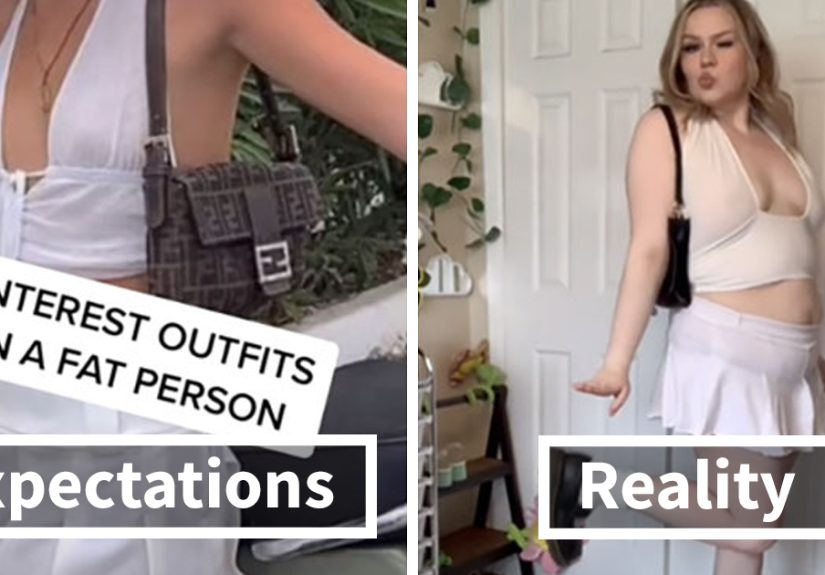
Allen, a TikTok creator who was 23 when her videos took off, began recreating popular Pinterest-inspired outfits after noticing that thin women were widely celebrated for participating in the trend. Her version of the idea was simple and sharp: copy the look as closely as possible, then let viewers see how the exact same styling landed on a larger body. In interviews with BuzzFeed and Business Insider, she explained that she chose Pinterest looks because the platform tends to showcase a narrow beauty standard in fashion imagery. In one of her most widely shared clips, she said the “key accessory” missing from her version of these outfits was a flat stomach. That line spread because it landed like a tiny grenade wrapped in a crop top. Funny, blunt, and painfully familiar, it captured how fashion trends often pretend to be about taste when they are also very clearly about who is allowed to be seen as aspirational.
Allen also pushed back on the idea that she was mocking thin women or attacking the outfits themselves. Her point, as she told Insider, was not that thin women should stop wearing trendy clothes. It was that plus-size women are often judged more harshly for wearing those same clothes, especially when the look shows skin, emphasizes the stomach, or refuses the old rule that bigger bodies should always minimize themselves. She framed the videos as a conversation starter about fatphobia, representation, and the way bigger bodies are often politicized just for existing in public. That distinction matters, because the project was less “look at me doing internet fashion theater” and more “let’s stop pretending the theater doesn’t already have a dress code.”
Why the Message Resonated So Quickly
The reason Allen’s clips traveled so fast is that they named a pattern many women already knew by heart, even if they had never said it out loud. Fashion culture has a long history of treating some bodies as canvases and others as problems to solve. A crop top on a thin body is often framed as playful, fresh, or editorial. The same crop top on a bigger body can suddenly be treated like a public debate topic, as if a person’s torso has filed paperwork to become controversial. That double standard is not unique to Allen’s videos. Glamour highlighted a similar reaction when Tess Holliday pointed out that the now-famous “Strawberry Dress” was mocked on her body, then celebrated once slender TikTok creators wore it. Allen’s experiment resonated because it turned a vague feeling into a side-by-side comparison viewers could not easily ignore.
It also resonated because the language around women’s clothing is often sneakier than it looks. Words like “flattering” and “appropriate” can sound harmless, but they are frequently used to steer larger women toward clothes that hide, slim, soften, minimize, and apologize. Allen specifically criticized the way “flattering” often becomes a polite instruction for fat women to disappear a little more neatly. That critique lines up with broader discussions in fashion and psychology about labels, representation, and body comparison. Psychology Today has noted that women who identify as “mid-size” often do so partly because straight-size clothing is designed for thinner bodies while plus-size clothing may still fail them, creating a market gap and a sense of not fully belonging anywhere. In other words, the fashion industry does not just sell clothes; it quietly sells body hierarchy too.
But Not Everyone Was Convinced
Of course, not every viewer accepted Allen’s argument. Some people online insisted that the issue was not bias but fit. Their logic went something like this: clothes look different on different bodies, certain cuts suit certain proportions, and nobody is entitled to have every trend flatter them equally. On the surface, that sounds sensible. It is true that fashion is physical. Fabric drapes differently. Waistbands hit differently. Necklines, hems, and silhouettes are not neutral engineering projects. Some of the resistance to Allen’s videos came from people who believed she was confusing the reality of fit with the politics of stigma. That response is not hard to understand, because people often prefer to think style is a technical issue. Technical issues feel tidy. Bias does not.
But that skeptical response also misses something important. Fit and bias are not opposites; they often work together. If the fashion system is built around thinner sample sizes, narrower visual ideals, and trend imagery that repeatedly centers one kind of body, then “it just doesn’t fit the same” is not a neutral observation. It is part of the outcome. Allure has reported that fashion frequently gravitates toward a “perfect plus” range, often around size 12 or 14, because that allows brands to appear inclusive without doing the harder work of designing for a wider range of bodies. So yes, proportions matter. But the question is who gets the infrastructure, design attention, styling imagination, and cultural goodwill that make those proportions look intentional rather than “wrong.” That is where the double standard lives.
Social Media Makes the Standard Louder, Faster, and Meaner
TikTok did not invent fashion bias, but it certainly put that bias on espresso. The platform has become a major engine for trends, aesthetics, and micro-rules about how to dress, from “clean girl” to “tenniscore” to whatever new phrase has been minted by the time you read this. The Associated Press has reported that TikTok changed what feels desirable online by rewarding content that seems spontaneous and intimate, which in turn makes viewers feel closer to creators and more likely to treat those looks as realistic benchmarks rather than polished fantasy. Meanwhile, Pew Research has found that TikTok remains one of the most widely used platforms among U.S. teens, and a notable share say they use it almost constantly. That means style judgment is no longer an occasional magazine experience. It is a live-in roommate with a ring light.
The mental-health side of this is not trivial. The American Psychological Association reported that teens and young adults who cut their social media use roughly in half for just a few weeks saw meaningful improvement in how they felt about their weight and overall appearance. Harvard researchers have similarly warned that repeated exposure to image-based social media can contribute to body dissatisfaction, eating-disorder risk, and unrealistic appearance ideals, especially for girls. Another Harvard-backed science summary cites experimental research showing that Instagram use can increase appearance comparison and decrease body satisfaction in young women. When a fashion trend goes viral under those conditions, it is not just being judged for color or silhouette. It is being filtered through comparison culture, algorithmic repetition, and the quiet panic of wondering whether your body has missed a software update.
The Industry’s Own Numbers Suggest Allen Was Not Imagining Things
If Allen’s critics want to say the internet is overreacting, the runway has some awkward numbers for them. Vogue’s Fall/Winter 2026 size inclusivity report found that 97.6% of looks shown across 182 presentations were straight-size, while just 2.1% were mid-size and only 0.3% were plus-size. In New York, plus-size looks made up 0.4% of the total. In Paris, the figure fell to 0.1%. Those are not the numbers of an industry that has solved representation and merely awaits better vibes. They are the numbers of an industry that still overwhelmingly treats thinness as the default setting for high fashion. Allen’s side-by-side TikToks hit people so hard in part because they exposed the everyday version of the same imbalance: trends are advertised as universal while the visual culture around those trends remains astonishingly narrow.
Other reporting points in the same direction. Glamour has written that plus-size women represent 68% of shoppers, yet they remain underrepresented among the people making decisions inside fashion. Writers and creators interviewed by the magazine described the extra labor required to dress stylishly above a size 12: hunting online, paying extra shipping, decoding inconsistent measurements, and showing up to fashion events where nothing actually fits them. Allure has also argued that brands often chase token inclusion rather than meaningful size diversity, using a limited range of curve models to get praise without redesigning how clothes are cut and sampled. Put differently, fashion sometimes says, “Everyone is welcome,” while quietly leaving the side door locked and the elevator broken.
This Conversation Is Bigger Than One TikTok
The same body-policing logic shows up far beyond social media trends. The U.S. Government Accountability Office found that public-school dress codes more frequently restrict items typically worn by girls, and that rules around hair, head coverings, and grooming can disproportionately affect Black students and students from certain religious or cultural backgrounds. Education Week, citing that report, noted that many school policies ban girls’ clothing at much higher rates and can be enforced in discriminatory ways. This matters because it shows that the argument Allen sparked is not only about hemlines and crop tops. It is about who gets read as distracting, excessive, inappropriate, or in need of correction. Once you see that pattern, it becomes very hard to pretend outfit judgment is just innocent feedback from the fashion fairy.
Even retail and online shopping reinforce the same pressures. Psychology Today summarized research showing that browsing clothing online, especially activewear, can reduce self-esteem and body image because shoppers are forced into detailed comparison with idealized model bodies. Harvard’s report on the real cost of beauty ideals goes even wider, arguing that body dissatisfaction and appearance-based discrimination impose enormous social and economic costs in the United States. That is why Allen’s videos mattered even to people who never wear Pinterest trends and would rather fight a raccoon than buy a ruffled mini-skirt. The clips touched a broader cultural nerve: women are still expected to use clothing for self-expression while also making sure that expression remains acceptable to a system that judges bodies unevenly.
Common Experiences Behind the Debate
To understand why this topic keeps resurfacing, it helps to look at the everyday experiences surrounding it. For many women in larger or in-between bodies, fashion does not begin with creativity. It begins with access. A straight-size shopper can walk into a store, grab a trend she saw online, try on three versions, and leave feeling like the main character in a montage. A plus-size or mid-size shopper often starts with a much less glamorous scavenger hunt: which brands carry the size, whether the size chart is honest, whether the fabric turns transparent when stretched, whether the “inclusive” collection is actually just three sad items in a corner of the website, and whether the trend was designed with her body in mind at all. Glamour’s reporting on plus-size women in fashion described this as invisible labor, and that phrase fits perfectly. It is labor that thin shoppers are rarely asked to notice because the system was built with them already in the room.
Then there is the emotional experience of trying something on. Plenty of women know the weird little heartbreak of loving a trend in theory and hating the social meaning attached to it in practice. The issue is not always whether the garment fits. Sometimes it technically fits just fine. The issue is what people are trained to see when it is on your body. A fitted tank may read “cool and sporty” on one person and “too tight” on another. A miniskirt may read “fun” on one body and “attention-seeking” on another. A visible stomach may read “effortless” when flat and “brave” when soft, as if existing with a belly should earn someone a medal and a think piece. Allen’s phrase about a flat stomach acting like an accessory resonated because it exposed that social translation layer. The outfit does not change, but the meaning does. That is exhausting for people who simply want to get dressed without submitting their abdomen for public review.
Another common experience is being told that the answer is just to choose what is “flattering,” as though that advice were neutral and generous instead of often deeply limiting. For many women, “flattering” becomes code for darker colors, more structure, more coverage, and fewer risks. It can quietly steer people away from experimentation and toward camouflage. Over time, that changes not only what people buy, but how they imagine themselves. If every trend image, fitting-room suggestion, and social-media comment tells you to be smaller, smoother, quieter, and more strategic, your style stops being a form of play and becomes a risk-management plan. Research summarized by Psychology Today and Harvard suggests that repeated comparison with idealized imagery can chip away at body satisfaction, and Allen’s videos make that abstract research feel very concrete. They show how fast fashion judgment travels from the screen into self-perception.
There is also the workplace and event-dressing angle, which rarely gets enough attention. Looking “put together” is easier when brands assume your body belongs in stylish clothes. Glamour’s interviews with plus-size women working inside fashion described the extra planning, shipping costs, and embarrassment of attending launches or shows for collections that did not even include their size. That experience extends well beyond fashion media. Many women know what it feels like to be invited somewhere stylish and then discover that the available definition of stylish does not seem to include them. The result is not just inconvenience. It can feel like social exclusion disguised as aesthetic preference. So when Allen recreates outfits and says the same trends are judged differently on different bodies, she is not merely talking about TikTok comments. She is touching the larger experience of being told that fashion is for everyone while repeatedly finding out that “everyone” comes with tiny print.
The Real Takeaway
So, was Brooklyn Allen right? Broadly, yes. Not because every trend works identically on every body, and not because criticism of fit is always fake, but because the cultural evidence surrounding fashion, social media, retail, and representation points in the same direction: bodies are not judged equally when they wear the same clothes. That does not mean every unflattering outfit is oppression in knit form. It does mean “just wear what you want” is easier advice to give than to live, especially when the systems shaping trends still center thinness and treat other bodies as deviations. Allen’s videos mattered because they made an old problem visible in a new format. They reminded viewers that fashion is never just about fabric. It is about permission, visibility, and who gets called stylish instead of “too much.” And until that gap closes, the double standard will keep showing up, one viral outfit at a time.