Table of Contents >> Show >> Hide
- The Gentle Giant Reality Check: How Big Is a Great Dane, Really?
- Why Big Dogs Act Like Lap Dogs (and Why It’s Weirdly Heartwarming)
- What the “New Pics” Usually Capture (Without Spoiling the Fun)
- Living With a Dog That Can Reach Your Counter
- Health Reality for a “Sofa Horse”
- Feeding and Growth: Big Dogs Need “Slow and Steady”
- Conclusion: Let Them Be HugeJust Set Them Up to Thrive
- Bonus: of Great Dane Owner Experiences (The Shared Reality)
There are two kinds of dogs in this world: the ones who know exactly how much space they take up… and Great Danes.
Great Danes will attempt to sit on your lap with the confidence of a 12-pound Chihuahua and the physics of a
150-pound beanbag chair. They will wedge themselves into a dog bed meant for a cat. They will “sneak” onto the couch
like you can’t hear a small horse rearranging your living room.
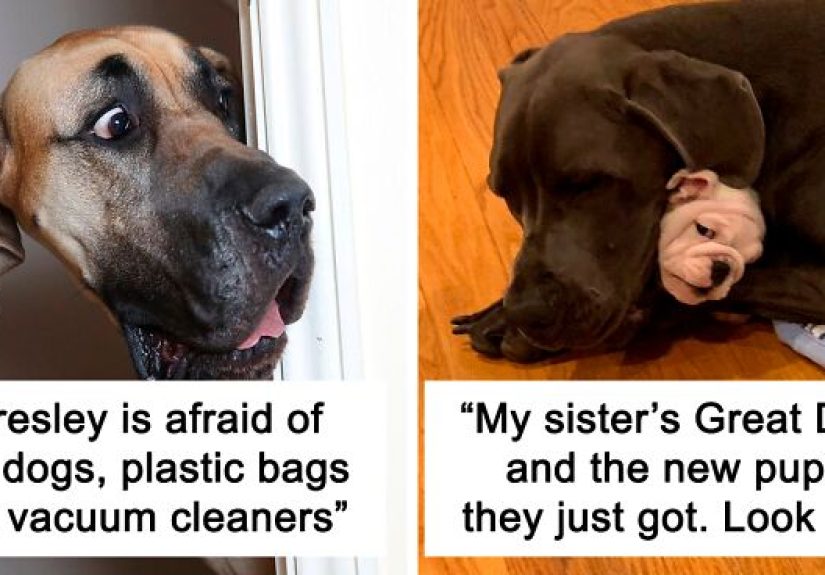
That’s the delicious joke behind Bored Panda’s “50 Great Danes Who Don’t Understand How BIG They Are (New Pics)”:
the comedy isn’t that they’re clumsyit’s that they’re affectionate, sweet, and utterly committed to the idea that
personal space is a myth. But beneath the laughs is a useful truth: living with a gentle giant is amazing
when you understand the realities of size, training, nutrition, and a few breed-linked health risks.
The Gentle Giant Reality Check: How Big Is a Great Dane, Really?
Great Danes aren’t just “large.” They’re giant-breed dogstall enough to rest a head on your kitchen
counter without even trying, and heavy enough to make your vacuum develop anxiety.
- Height (at the shoulder): roughly 30–32 inches for males and 28–30 inches for females
- Weight: commonly around 140–175 pounds for males and 110–140 pounds for females
- Life expectancy: often cited around 7–10 years
Those numbers matter because “big” changes everything: how you train greetings, how you feed puppies, how you set up
your home, and how you plan for emergencies. A Great Dane who jumps up isn’t just “being rude”they can accidentally
turn your aunt into a bowling pin. A Great Dane who pulls on leash isn’t “a little strong”they’re basically a
moving couch with opinions.
Why Big Dogs Act Like Lap Dogs (and Why It’s Weirdly Heartwarming)
If you’ve ever watched a Great Dane fold themselves into a pretzel on your legs, you’ve probably asked:
“How do you not realize you’re enormous?”
Part of the answer is simple: dogs don’t measure themselves the way we do. They learn what works through experience,
comfort, and habit. Many Great Danes grow up getting cuddled like babies (because, honestly, it’s hard not to), and
they keep those expectations into adulthood. Also, Danes are famously people-focused. They were built to be close to
humansemotionally, physically, and in a way that suggests they’d like to share your email password.
The result is a breed that often behaves like a “velcro dog” in a body that belongs in the “oversized luggage” line:
- The Lean: a full-body press that says “Hello, I am hugging you with my skeleton.”
- The Lap Claim: sitting on you as if you are a chair made of love and poor decisions.
- The Sofa Takeover: leaving you an 8-inch strip of cushion like it’s a generous gift.
- The Tiny Bed Mystery: choosing the smallest bed available, because irony is a lifestyle.
In photo collections like Bored Panda’s, that mismatchgentle, clingy personality in an enormous frameis the whole
punchline. You’re not laughing at the dog; you’re laughing at the adorable confidence of a creature who
believes they are the size of a throw pillow.
What the “New Pics” Usually Capture (Without Spoiling the Fun)
Lists like “50 Great Danes Who Don’t Understand How BIG They Are” tend to spotlight the same glorious themes, because
Great Danes are consistent in exactly one way: they are consistently unaware of dimensions.
1) Scale Comedy
A Dane next to a toddler. A Dane next to a “large” dog bed. A Dane next to literally any normal household object.
Everything becomes a measuring tool. Suddenly, your dining chair looks like it came from a dollhouse.
2) The “I Fit” Philosophy
Great Danes don’t ask, “Will this work?” They announce, “This will work,” and begin folding. The humor isn’t just
their sizeit’s their determination to participate in human life as if they’re a normal, compact pet.
3) Emotional Expressions You Can Read From Space
Great Danes often have expressive facessoft eyes, dramatic sighs, and the kind of “poor me” look that can convince a
grown adult to move an entire piece of furniture “so the dog has room.”
Living With a Dog That Can Reach Your Counter
The secret to enjoying a Great Dane is to keep the humor… and add structure. Think of it as raising a gentle giant
who is physically capable of chaos but emotionally inclined toward friendship.
Train Greetings Early (Because Physics)
Jumping is a normal dog greeting behavior, but with a Great Dane, it’s not “cute for a second.” It’s a safety issue.
The goal isn’t to punish enthusiasmit’s to teach an alternate greeting that still feels rewarding.
- Teach “sit to say hi” so attention arrives only when paws stay on the floor.
- Manage greetings (leash, distance, treats) so your dog rehearses calm behavior, not launching.
- Be consistent: if one person rewards jumping, your Dane will remember forever.
A helpful mental trick: reward the behavior you want (four paws down, a sit, eye contact) and make the behavior you
don’t want (jumping) less effective at getting attention.
Crate Training and Boundaries Aren’t MeanThey’re Comfort
Great Danes can benefit from crate training when it’s introduced positively. A crate can be a calm “home base” for
rest, travel, or when your dog needs a break from overstimulation. The key is to build a positive association with
treats, comfort, and calmnot to use it as punishment.
Socialization: Confidence Beats Caution
With giant breeds, early socialization matters because a confident, well-adjusted adult is easier to live with than
an anxious adult who weighs as much as a refrigerator. Introduce your Dane (safely and gradually) to new sounds,
surfaces, people, gentle dogs, and handlingso they learn the world is normal, not alarming.
Health Reality for a “Sofa Horse”
Great Danes are lovable, but they are also a breed where owners should take health education seriouslyespecially
about conditions that can become emergencies quickly.
GDV (Bloat): Know It Like You Know Your Own Phone Number
Gastric dilatation-volvulus (GDV), often called bloat, is a life-threatening emergency seen most commonly in large,
deep-chested dogs. In GDV, the stomach can fill with gas (dilatation) and may twist (volvulus), which can cut off
blood supply and rapidly become fatal without treatment.
Common warning signs can include:
- Retching or trying to vomit with little/no output
- Restlessness, pacing, or obvious discomfort
- Drooling, panting, or signs of pain
- A distended or tight-looking abdomen (not always obvious)
- Weakness or collapse as it worsens
If you suspect GDV, don’t “wait and see.” Treat it as an emergency and contact a veterinarian immediately. Prepared
owners often keep an emergency vet plan (address, phone, driving time) because minutes matter.
Prevention Moves That Make Sense
No prevention step is perfect, but many veterinarians and breed organizations emphasize practical habits that may help
reduce risk:
- Feed smaller, more frequent meals instead of one giant meal.
- Avoid hard exercise around mealtimes (before and after eating).
- Slow down fast eaters (bowls, feeding strategies) if gulping is an issue.
Gastropexy: The “Seatbelt” Conversation
For high-risk breeds, some owners discuss preventive (prophylactic) gastropexy with their
veterinarian. Gastropexy “tacks” the stomach to the body wall to reduce the chance of twisting. It doesn’t stop all
stomach upset, but it can significantly reduce the risk of the deadly twist component and is commonly part of GDV
surgery to prevent recurrence.
Heart and Joint Issues: The Big-Body Tradeoff
Large and giant breedsincluding Great Danescan be predisposed to dilated cardiomyopathy (DCM), a
disease of the heart muscle that can lead to enlargement and reduced pumping ability. Routine veterinary care,
attention to symptoms (like exercise intolerance or fainting), and breed-aware screening conversations can matter.
On the orthopedic side, Great Danes may also be prone to issues like hip dysplasia and arthritis
over time. The most underrated joint-support strategy is not a miracle supplementit’s keeping your Dane at a healthy
body condition and avoiding excessive “grow as fast as possible” nutrition in puppyhood.
Feeding and Growth: Big Dogs Need “Slow and Steady”
A Great Dane puppy is basically a construction project in progress. Giant-breed puppies are especially sensitive to
mineral balanceparticularly calciumand overly rapid growth can increase the risk of developmental orthopedic
problems. That’s why many veterinary nutrition sources emphasize feeding a diet formulated for growth in large-breed
puppies and avoiding unplanned supplementation unless a veterinarian directs it.
- Choose appropriate puppy food formulated for large-breed growth when your Dane is young.
- Avoid extra calcium supplements unless prescribedmore isn’t better for giant-breed puppies.
- Monitor body condition so “growing” doesn’t quietly become “overweight.”
Translation: your Great Dane will still become huge. You’re just helping them become huge with better joints and fewer
regrets.
Conclusion: Let Them Be HugeJust Set Them Up to Thrive
The magic of Great Danes is that they look like they should be intimidating, but often behave like affectionate,
couch-loving goofballs who want to be involved in everything. Photo lists like Bored Panda’s capture the joy of that
contradiction: a dog the size of a small sofa who still thinks they belong in your lap.
Enjoy the laughsthen do the practical stuff. Train greetings early, socialize thoughtfully, feed for healthy growth,
and learn the signs of urgent problems like GDV. Do that, and you’ll get the best of both worlds: a giant dog with a
gentle heart and a household that can still function (mostly).
Bonus: of Great Dane Owner Experiences (The Shared Reality)
I don’t have personal pets, but there’s a funny consistency in the experiences Great Dane owners share: the day you
bring home a Dane, you also adopt a new definition of “normal.”
1) The Lap Test. Owners often describe a moment when their Dane decideswithout discussionthat your
lap is a legal parking spot. It starts as a cuddle. Then a shoulder. Then a full sit. Your options become (a) accept
the love, (b) attempt to relocate a 140-pound marshmallow, or (c) quietly become furniture.
2) The Lean of Trust. The famous Great Dane lean is part hug, part security blanket, part “please
hold my emotions.” People say it’s sweet until you realize you’re supporting an entire dog’s body weight while trying
to answer the door.
3) The Couch Negotiations. Dane owners joke that their sofa has a “human edge” and a “Great Dane
kingdom.” You may purchase a giant bed, a giant blanket, and a giant cushiononly for your Dane to choose the exact
spot you were sitting in five seconds ago. It’s not spite; it’s closeness. Also, it’s comedy.
4) Doorways Become Strategy Games. A Dane can block a hallway with the casual elegance of a fallen
tree. Owners describe learning to say “excuse me” to a dog, as if politeness might cause the dog to fold themselves
into a smaller shape. Sometimes it works. Sometimes you just step over a very large, very relaxed obstacle.
5) The “Tiny Dog” Confidence in Public. On walks, many Dane owners report strangers reacting in two
ways: awe or immediate requests for a hug. Meanwhile, the Dane often behaves like a polite introvert who would rather
stand quietly and collect compliments like tips.
6) The Training Payoff Is Huge. Owners frequently emphasize that manners aren’t optional with giant
breeds. Teaching “sit to greet,” loose-leash walking, and calm waiting pays back every daybecause a well-trained
Great Dane is a dream, and an untrained Great Dane is a lovable demolition project.
7) The Emergency Plan Mindset. People who live with deep-chested, giant dogs often say they keep a
mental checklist: nearest emergency vet, fastest route, and what “not normal” looks like. It’s not fearit’s
preparedness. And it lets you relax more, because you’re not guessing when something feels off.
8) The Best Part: The Mood They Bring. Owners consistently describe Great Danes as emotional
thermostats for a home. They’re present. They’re gentle. They’re often happiest when everyone is togethereven if
“together” means the dog is physically touching three humans at once. And that’s the punchline and the blessing:
Great Danes may not understand how big they are, but they’re very clear on how much they want to love you.