Table of Contents >> Show >> Hide
- Why 2025 Felt Different From Earlier Trend Cycles
- 1. WaterSense Fixtures Became the Unsexy Superstar
- 2. Biophilic and Indoor-Outdoor Design Went Fully Mainstream
- 3. Coastal Modern Proved the Beach House Aesthetic Had Left the Beach
- 4. Net-Zero-Ready Homes Made Efficiency Feel Aspirational
- 5. EV Charging Quietly Became a Modern Must-Have
- What These Five Trends Really Say About 2025
- How to Bring These 2025 Home Trends Into Your Own Space
- Real-Life Experiences: What Living Through These 2025 Home Trends Actually Felt Like
- Conclusion
If 2025 had a decorating motto, it was this: your house should look good, yes, but it should also do something useful. Preferably several useful things. Save water. Lower energy bills. Feel calmer. Welcome more sunlight. Charge the car. Maybe even make you believe you have your life together because your showerhead is efficient and your patio doors fold open like you live in a luxury resort instead of a zip code with very normal recycling rules.
According to Realtor.com’s 2025 housing trend data, the year’s defining home trends were not random style fads cooked up for social media. They reflected something more practical and more interesting: buyers and homeowners wanted spaces that were efficient, resilient, and emotionally soothing. In other words, 2025 was the year home design stopped obsessing over pure flash and started chasing function with better lighting.
The five biggest trends Realtor.com highlighted tell a bigger story about where American homes are headed: toward sustainability, toward nature, toward smarter infrastructure, and away from oversized status symbols that feel expensive but not especially helpful. Here’s a closer look at the five home trends that defined 2025, why they took off, and what they reveal about the future of design.
Why 2025 Felt Different From Earlier Trend Cycles
For years, trend reports tended to revolve around visual drama: the right countertop stone, the right cabinet color, the right chandelier that made guests say, “Wow,” before quietly wondering how you dust it. But 2025 had a different energy. Rising operating costs, climate anxiety, and a stronger focus on everyday livability pushed buyers toward features that delivered real-world benefits.
That shift helps explain why Realtor.com found four of the five fastest-growing home features were tied directly to efficiency and sustainability. It also explains why some older symbols of aspirational living cooled off. Formal dining rooms with built-ins, three-car garages, wine vaults, and Old-World European styling all lost momentum. The mood of the year was less “Tuscan villa fantasy” and more “Can this house save me money, simplify my routines, and still look beautiful while doing it?”
That practical streak showed up across the broader design world too. Editors and designers spent 2025 talking about natural materials, warmer palettes, richer woods, indoor-outdoor flow, defined spaces, and homes that feel layered rather than sterile. The all-white, hyper-polished, showroom-perfect room started to feel less like a goal and more like a place where nobody is allowed to sit down.
1. WaterSense Fixtures Became the Unsexy Superstar
Efficiency won the year
The biggest breakout trend of 2025 was not a dramatic tile pattern or a moody paint color. It was WaterSense fixtures. Realtor.com found that listings mentioning these water-saving fixtures jumped nearly 290% year over year, making them the single fastest-growing trend in the report.
That may not sound thrilling until you remember what WaterSense products actually promise: they use at least 20% less water than standard models while still meeting performance standards. Suddenly the “boring” faucet starts looking a lot more glamorous, especially when utility bills keep climbing. In 2025, water efficiency stopped being a niche green talking point and became a mainstream selling feature.
Why buyers cared
Water-saving upgrades appeal to modern buyers because they check several boxes at once. They lower usage, reduce monthly costs, signal thoughtful maintenance, and fit neatly into a broader sustainability story. Unlike trendier decor moves, they also don’t require taste compatibility. Nobody walks into a home and says, “I would have made different choices on the efficient toilet.”
In practical terms, this trend showed up in upgraded faucets, showerheads, toilets, and plumbing fixtures that felt quietly premium rather than loudly performative. It was luxury by way of common sense. Not champagne in a freestanding tub, exactly, but at least the tub was no longer wasting gallons for no reason.
For homeowners, the lesson is simple: invisible upgrades matter. In 2025, buyers rewarded homes that were working harder behind the walls and under the sink.
2. Biophilic and Indoor-Outdoor Design Went Fully Mainstream
The outdoors became part of the floor plan
The second-biggest trend in Realtor.com’s ranking was biophilic or indoor-outdoor design, with listing mentions rising about 163% over the previous year. That umbrella covers a broad but recognizable set of features: large sliding or folding glass doors, interior courtyards, living walls, bigger visual connections to the yard, and layouts that blur the line between inside and out.
This was not just a warm-weather fantasy. It reflected a deeper design desire that many U.S. outlets tracked all year: people wanted homes that felt healthier, calmer, brighter, and more connected to nature. Large windows, more daylight, plants, stone, wood, earthy colors, and rooms that borrowed atmosphere from the outdoors all became part of the same conversation.
Why it resonated in 2025
Biophilic design works because it satisfies both emotional and practical needs. Emotionally, it makes a house feel more restorative. Natural light, greenery, and visual openness tend to make rooms feel bigger and less boxed in. Practically, better daylight and breezier indoor-outdoor transitions can reduce the need for artificial lighting and create more usable living space.
In real homes, that did not always mean a full architectural overhaul. Sometimes it looked like replacing a heavy back door with wider glass sliders. Sometimes it meant adding a small patio zone just off the kitchen. Sometimes it was as simple as framing outdoor views, using natural finishes, and introducing wood, cane, linen, clay, and stone in a way that made interiors feel grounded.
If 2024 still flirted with nature, 2025 moved in with it.
3. Coastal Modern Proved the Beach House Aesthetic Had Left the Beach
The style story of the year
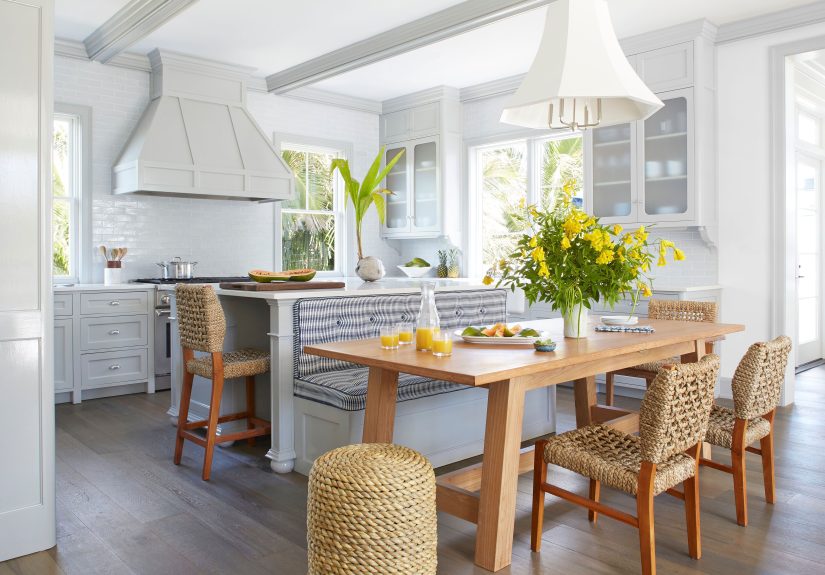
Realtor.com’s third-biggest trend was coastal modern, up 125.6% year over year. This was the most style-driven entry in the top five, but even here, the appeal was less about theme decor and more about mood. Coastal modern is not seashell overload and signs that say relax in cursive. It is cleaner, softer, and more grown-up: warm neutrals, natural textures, airy layouts, lighter woods, woven materials, and a strong connection to daylight and outdoor living.
It also carried the highest median listing price of the top five trends, which helps explain why it became such a visual shorthand for upscale-but-not-stuffy living. In 2025, luxury looked less heavy and formal. It looked breezier, textured, and easier to inhabit.
Why coastal modern spread so widely
The genius of coastal modern is that it travels well. You do not need an ocean view, a dune path, or even a gull overhead for it to work. The style borrows from a broad American appetite for softness and simplicity: lighter palettes, natural fibers, rounded silhouettes, white oak or warm wood tones, and rooms that feel edited but not cold.
That put coastal modern in harmony with other 2025 design signals from major U.S. outlets, including warmer minimalism, organic materials, darker or richer woods, and a move away from sterile all-gray interiors. The result was a home that felt peaceful without being empty and polished without feeling fragile.
One reason this trend lasted is that it offered flexibility. You could lean luxury with plaster walls, linen drapery, and statement stone, or keep it approachable with woven stools, textured throws, sandy paint, and better lighting. Coastal modern became the visual language of calm competence. Your home didn’t need to scream. It just needed to exhale.
4. Net-Zero-Ready Homes Made Efficiency Feel Aspirational
Future-proofing entered the mainstream
Net-zero-ready homes ranked fourth on Realtor.com’s list, doubling in listing mentions year over year. That is a major jump for a concept that once sounded highly technical and slightly intimidating to the average buyer. In simple terms, a net-zero-ready home is built to be so energy efficient that it can later be paired with renewable energy systems, such as solar, to offset most or all of its annual energy use.
What changed in 2025 is that this kind of high-performance construction stopped reading as fringe. It started to feel like smart planning. Better insulation, tighter construction, efficient systems, and readiness for future upgrades all aligned with a market increasingly focused on long-term operating costs.
Why buyers paid attention
Net-zero-ready homes speak to a new definition of value. Buyers are not only asking what a home costs to purchase; they are asking what it costs to run. That is a meaningful shift. A beautiful kitchen still matters, of course, but in 2025, so did the promise of lower energy waste, more comfort, better durability, and easier adaptation to future technology.
There is also a psychological component here. A net-zero-ready home signals preparedness. It suggests the house was designed with tomorrow in mind, not just staged nicely for today’s listing photos. That matters in a market where people want confidence that their home will remain functional and relevant as energy standards and buyer expectations evolve.
The rise of this trend tells us that sustainability is no longer just a design preference. It is becoming part of the architecture of trust.
5. EV Charging Quietly Became a Modern Must-Have
Infrastructure is the new luxury
Rounding out Realtor.com’s top five was EV charging, up 91.6% year over year. On paper, a home charger may seem more niche than a beautiful patio or a sunlit breakfast nook. In practice, it has become part of what buyers mean when they say they want a “modern” home.
Modern no longer refers only to clean lines and black-framed windows. It increasingly means the home is wired for the way people actually live now. That includes fast internet, smart controls, and yes, the ability to plug in a vehicle without turning every evening into a small logistical puzzle.
Why it mattered beyond car owners
Even for buyers who do not currently drive an electric vehicle, EV charging reads as future-friendly infrastructure. It suggests flexibility. It says the home can adapt. It also fits within a larger pattern seen across housing and design coverage in 2025: buyers wanted homes that were not just attractive, but ready.
This trend pairs naturally with net-zero-ready construction and other efficiency upgrades. Together, they tell a coherent story about the next American home: lower consumption, smarter systems, cleaner energy, and fewer retrofits down the line. Zillow research has also linked eco-friendly features, including electric vehicle chargers, with faster sales in earlier market analysis, reinforcing the idea that sustainable upgrades can carry real resale appeal.
In 2025, the garage became less about how many cars you could store and more about what your home could support.
What These Five Trends Really Say About 2025
Put all five trends together and a clear pattern emerges. The defining home of 2025 was not necessarily bigger, fancier, or more dramatic. It was better tuned. It saved resources. It welcomed more natural light. It supported contemporary routines. It felt calmer. It looked less rigid and more human.
That shift also explains what fell behind. Formal dining rooms with built-ins felt too specialized in an era that values flexibility. Three-car garages looked oversized when infrastructure mattered more than excess square footage. Wine vaults felt fussy next to wellness spaces, outdoor flow, and efficient systems. Old-World European styling, with its heavier visual language, gave way to brighter, airier, more natural interiors.
Even at the luxury end of the market, the direction was telling. Buyers still wanted beautiful homes, but the beauty increasingly came with purpose. Contemporary stone, natural materials, glass walls, and refined indoor-outdoor living beat old formulas built around ornate grandeur. The good life in 2025 looked less like display and more like ease.
How to Bring These 2025 Home Trends Into Your Own Space
You do not need a full custom build or a heroic renovation budget to borrow from the year’s most important home trends. Start with the logic behind them.
- Upgrade fixtures first: Water-saving faucets and showerheads are relatively small changes that deliver both efficiency and a marketable improvement.
- Invite in more daylight: Swap heavy window treatments, clear visual clutter around windows, and use mirrors to bounce light deeper into the room.
- Lean into natural materials: Add wood, linen, rattan, clay, or stone-look finishes for a softer, more grounded atmosphere.
- Create indoor-outdoor continuity: Match tones or materials across adjoining spaces so a patio, deck, or balcony feels like a true extension of the home.
- Think future-ready: Even if you are not installing solar panels or an EV charger today, consider pre-wiring and planning so the home can evolve later.
The biggest lesson from 2025 is that good design is not just decorative. It solves problems elegantly. It makes daily life easier. It gives you something nice to look at while your utility bill behaves a little better.
Real-Life Experiences: What Living Through These 2025 Home Trends Actually Felt Like
For many homeowners, the 2025 trend cycle did not feel like a glossy magazine fantasy. It felt personal. A kitchen faucet upgrade was suddenly less about aesthetics and more about noticing that everyday routines could be smarter. People started talking about water pressure and fixture labels with the kind of conviction usually reserved for sports or sourdough. That may not sound glamorous, but it reflects a real change: the modern home became a place where small decisions felt connected to larger values.
The same was true of biophilic design. People were not chasing indoor-outdoor living simply because it photographed well, though it certainly did. They were reacting to how it made them feel. Rooms with better daylight felt easier to wake up in. Living spaces that opened to a patio or framed a backyard view felt less confining after long workdays. A few plants, a natural fiber rug, and a wider connection to the outdoors could genuinely change the mood of a room. In a year when many people wanted calm without sacrificing style, that emotional payoff mattered.
Coastal modern had a similar effect. Homeowners gravitated toward it because it made spaces feel lighter, quieter, and less overdesigned. A sandy palette, textured upholstery, pale woods, and woven accents created a home that looked intentional but never fussy. It was the design equivalent of finally answering emails from a clean table instead of from under a pile of shipping boxes. The look suggested order, but soft order. Not military neatness. More like, “Yes, I own baskets, and no, I am not apologizing for loving them.”
Net-zero-ready thinking also changed the way people talked about renovation. Instead of only asking what would look best for the next few years, many started asking what would still make sense in ten. Better insulation, higher-performing windows, tighter envelopes, and solar readiness sounded less technical once homeowners connected them to comfort. A house that stays more consistent in temperature, wastes less energy, and feels durable in every season becomes easier to appreciate every single day. Long-term efficiency stopped feeling abstract when it showed up as fewer drafts, steadier indoor temperatures, and a little less anxiety every time utility bills arrived.
Then there was EV charging, which symbolized a broader experience of 2025: people wanted homes that kept up with real life. Even buyers who did not yet own an electric vehicle saw value in a house that was prepared for changing habits. That readiness felt reassuring. It suggested the home was not stuck in an earlier version of modernity. It understood where daily routines were heading.
Taken together, these experiences explain why the biggest home trends of 2025 landed so strongly. They were not just attractive ideas. They changed how homes functioned, how rooms felt, and how confidently owners could imagine the future. That is why these trends defined the year. They were lived, not just liked.
Conclusion
Realtor.com’s five defining home trends of 2025 captured a year when American homes became more practical, more nature-connected, and more future-focused. WaterSense fixtures proved efficiency could be a selling point. Biophilic design turned sunlight and greenery into essentials. Coastal modern showed that warmth and ease now outrank formality. Net-zero-ready homes made long-term performance feel desirable. EV charging confirmed that infrastructure is part of modern living.
If there is one takeaway from 2025, it is this: the most successful homes were not the ones trying hardest to impress at first glance. They were the ones designed to work beautifully over time. And honestly, that might be the best trend of all.