Table of Contents >> Show >> Hide
- 1. An All-White Bathroom That Feels More Clinical Than Calm
- 2. Faux-Farmhouse Details That Turn the Bathroom Into a Costume Party
- 3. Oversized Jetted Tubs and Bulky Tub-First Layouts
- 4. Vessel Sinks That Splash, Crowd the Counter, and Try Too Hard
- 5. Storage That Is Too Deep, Too Open, or Too Clutter-Friendly
- How to Modernize a Bathroom Without Chasing the Next Trend Too Hard
- What Real Bathrooms Teach You About Dated Design
- Conclusion
Your bathroom does not need to be enormous, wrapped in imported stone, or blessed with a tub worthy of a boutique hotel to look good. But it does need to avoid a few visual traps. Bathrooms age faster than most rooms because design trends hit them hard and then disappear without even leaving a thank-you note. One year, everyone wants a bowl sink that looks like a sculpture. The next year, everybody is quietly asking why it splashes like a toddler in a kiddie pool.
If you are planning a bathroom remodel, refreshing a dated bathroom, or just trying to figure out why your space feels stuck in another decade, the answer is often not one giant problem. It is usually a handful of features that instantly push the whole room into “this looked trendy once” territory. The good news is that outdated bathroom features are easier to spot than most homeowners think. Even better, many of them can be updated without tearing your house down to the studs and living off dry shampoo for six weeks.
Below are the five features that make a bathroom look outdated right away, plus what feels fresher, warmer, and more livable now. Think of this as equal parts design advice and intervention. No judgment here. We have all fallen for a trend that looked brilliant in a showroom and slightly unhinged at home.
1. An All-White Bathroom That Feels More Clinical Than Calm
Why it instantly dates the room
There was a long stretch when the ideal bathroom looked like a spotless lab with good water pressure. White subway tile, white walls, white vanity, white counter, white shower, maybe a little gray thrown in for emotional complexity. It was clean. It was bright. It was also copied so aggressively that many bathrooms lost every ounce of personality in the process.
Now, when a bathroom is too white and too polished, it can feel cold instead of luxurious. The issue is not the color white itself. White can still be beautiful. The problem starts when every surface looks identical and every finish is so crisp that the room feels less like a retreat and more like a place where someone says, “Scoot down on the paper-covered table.”
What looks better now
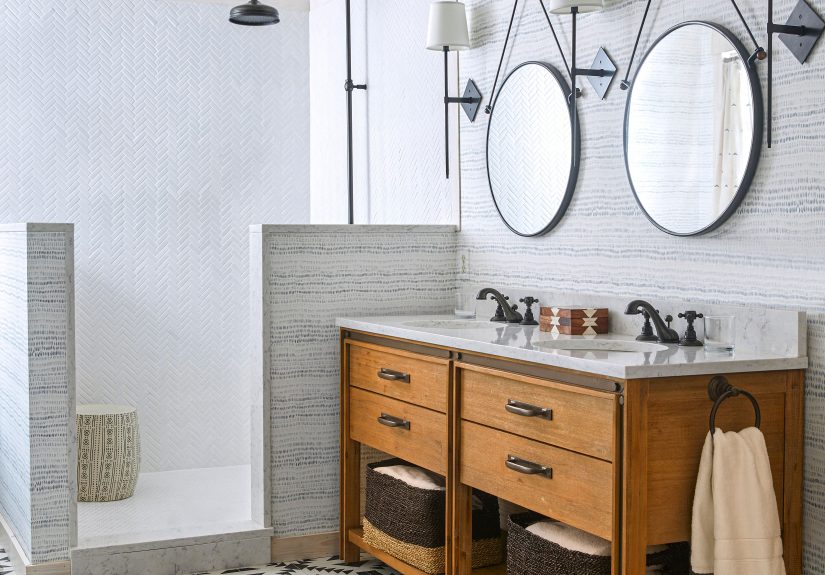
The modern bathroom trend leans warmer and more layered. That can mean a wood vanity, a creamy paint color, handmade tile, a soft stone look, or a wallpaper moment that says, “Yes, a real human lives here.” Even a small dose of warmth makes a dated bathroom feel more current. Think warm taupe instead of icy gray. Think brass or bronze accents instead of a room that looks dipped in refrigerator enamel.
If you already have white tile and do not want to replace it, do not panic. Add contrast with a furniture-style vanity, textured textiles, a framed mirror, or better lighting. A bathroom does not become timeless because it is white. It becomes timeless because it feels intentional.
2. Faux-Farmhouse Details That Turn the Bathroom Into a Costume Party
Why it reads as yesterday’s trend
Modern farmhouse had a very strong run. It made homes feel relaxed, approachable, and a little less precious. Then people started adding shiplap, barn doors, wire baskets, black metal signs, apron-front everything, and enough rustic accessories to make the powder room feel like it might start selling jam.
In bathrooms, themed design ages especially fast. When every detail is pushing the same message, the room stops feeling designed and starts feeling staged. That is why faux-farmhouse bathrooms often look outdated now. Not because rustic charm is inherently bad, but because the look became too literal, too matchy, and too dependent on trend pieces rather than lasting materials.
What looks better now
Borrow the warmth, not the costume. A bathroom can absolutely include natural wood, vintage-inspired hardware, or a classic wall treatment. The difference is restraint. Instead of shiplap on every surface and a sliding barn door that sounds like a train arriving, try one or two organic elements paired with cleaner lines.
For example, a stained oak vanity with simple cabinet fronts feels grounded and current. So does a traditional mirror mixed with updated sconces. If you love farmhouse style, the fix is not to erase it. It is to edit it. A bathroom should whisper charm, not shout “live, laugh, lather.”
3. Oversized Jetted Tubs and Bulky Tub-First Layouts
Why they make the whole bathroom feel old
If your bathroom has a giant built-in tub wrapped in tile, steps, and dramatic corners, there is a good chance it is dating the room. The oversized jetted tub once signaled luxury. Today, it often signals square footage that could have been doing something more useful.
These tubs can be visually heavy, hard to clean, expensive to maintain, and surprisingly underused. Plenty of homeowners discover that the giant soaking tub they thought they wanted mostly becomes a monument to good intentions. It is the exercise bike of bathroom fixtures: impressive, expensive, and occasionally used to hold laundry.
What looks better now
Bathrooms now tend to prioritize comfort and function in a more realistic way. That often means a larger walk-in shower, better lighting, smarter storage, and a layout that does not sacrifice half the room to a tub nobody uses. A shower with a bench, niche storage, attractive tile, and quality glass feels far more current than a hulking whirlpool tub from another era.
If you genuinely love baths, a simple freestanding tub can still look elegant. It just needs breathing room and a clear reason for being there. The goal is not to banish bathtubs from civilization. It is to stop letting oversized tubs dominate bathrooms that would work better with balance.
This is one of the biggest differences between an outdated bathroom and a modern bathroom: the current version is designed around how people actually live, not around what looked fancy in a brochure twenty years ago.
4. Vessel Sinks That Splash, Crowd the Counter, and Try Too Hard
Why vessel sinks age badly
Vessel sinks had their moment because they looked artistic and upscale. A sink that sat on top of the vanity instead of inside it felt custom. Dramatic. Boutique hotel-adjacent. Then reality arrived with wet sleeves and toothpaste flecks.
Many vessel sinks are harder to clean than undermount or integrated sinks because grime likes to gather around the base. They can also reduce usable counter space, sit awkwardly high, and create more splashing than a fixture whose job description is literally “contain water.” In a powder room, a vessel sink can still work as a statement. In an everyday bathroom, it often feels like style winning a little too aggressively over function.
What looks better now
Today’s stronger bathroom vanity ideas are simpler and smarter. Integrated sinks, undermount basins, and streamlined console sinks tend to look cleaner and perform better. They make the vanity feel more substantial and less fussy. They also leave room for real life: hand soap, skincare, a toothbrush cup, maybe the hair product collection you swore would stay under control.
If you want your sink area to feel special, focus on the full composition instead of one showy fixture. A beautiful stone top, elegant faucet, framed mirror, and layered lighting usually create a more elevated result than a sink that looks like it belongs in a modern art auction.
5. Storage That Is Too Deep, Too Open, or Too Clutter-Friendly
Why bad storage makes a bathroom look dated fast
Storage is where a lot of bathrooms quietly go wrong. Deep linen closets sound practical until half the products vanish into the abyss. Open shelves look airy in photos until they are holding twelve mismatched bottles, three backup toilet paper rolls, and a candle that has not been lit since 2022. Wire shelving, builder-grade medicine cabinets, and awkward wall units can make the room feel more utility closet than polished retreat.
An outdated bathroom is often not technically ugly. It is just visually tired because the storage does not support the way people use the space. When everything ends up on display, the room feels chaotic. When storage is bulky and badly planned, the room feels clumsy. Either way, the bathroom loses that calm, well-designed look homeowners want from a renovation.
What looks better now
Smarter bathroom storage is more tailored. Drawers inside the vanity. Cabinetry that looks like furniture. Recessed medicine cabinets with cleaner lines. Thoughtful compartments. Maybe a niche where it actually helps instead of a random hole in the wall that gathers dust and expired face masks.
Closed storage is especially powerful because it instantly calms the room. You can still add one open shelf for a pretty towel or a small decorative object, but the heavy lifting should be done by storage that hides the boring stuff. The best bathroom remodel ideas understand a simple truth: toothpaste, spare razors, and six half-used lotions do not need a stage.
How to Modernize a Bathroom Without Chasing the Next Trend Too Hard
The trick to avoiding a dated bathroom is not to race toward every new bathroom design trend. That is how people end up with a room that feels fresh for eight minutes and weirdly specific forever. The smarter move is to use current ideas as a filter. Ask whether a feature is warm, functional, easy to live with, and visually balanced.
Good bathroom renovation choices tend to share a few qualities. They add comfort. They improve storage. They make cleaning easier. They flatter the space instead of overwhelming it. And they leave enough room for personality without turning the room into a trend museum.
If you are deciding where to spend money first, start with the features that affect the whole look at a glance: vanity, mirror, lighting, sink, and tub-or-shower layout. Those changes do more to pull a bathroom out of the past than buying a prettier soap dispenser and hoping for the best.
What Real Bathrooms Teach You About Dated Design
Spend enough time looking at real homes and you start to notice something funny: the bathrooms that age best are rarely the ones that tried hardest to be impressive. The rooms that hold up are the ones that quietly did their job while still having a little style. They were not screaming for attention. They were just well put together.
Take the classic giant tub situation. Plenty of homeowners once thought that a huge jetted tub was the ultimate badge of success. Then life happened. Work got busy. Kids arrived. Water bills existed. Suddenly the enormous tub became a very expensive sculpture that collected dust around the jets. Meanwhile, the smaller shower nearby was doing all the actual work. That is a perfect example of how a feature becomes outdated: not just because it looks old, but because it no longer matches how people live.
The same thing happens with trendy sinks and open shelving. A vessel sink looks dramatic during installation day. Then someone actually uses it every morning while rushing out the door. Water spots show up. Toothpaste lands in the weird seam near the base. The counter feels cramped. The magic fades quickly. Open shelves follow the same arc. They look airy and designer-approved right up until real life arrives with cotton swabs, backup shampoo, and the giant economy-size mouthwash bottle nobody wants to style for Instagram.
Then there is the all-white bathroom, which often starts out looking polished and expensive. For a while, it feels bright and serene. But if every finish is cold and every surface looks the same, the room eventually starts to feel anonymous. That is why so many homeowners end up adding warmer paint, wood accents, or better lighting later. They are not trying to make the bathroom trendy. They are trying to make it feel alive.
One of the clearest lessons from outdated bathroom features is that trend fatigue usually shows up before actual wear does. A vanity may still be functional, a tile floor may still be in excellent condition, and a mirror may still technically reflect your face just fine. But if the overall combination feels overly themed, overly sterile, or overly awkward to use, the room will read as old even when nothing is broken.
The best updates usually come from honest questions. Do I use this tub? Do I have enough counter space? Does this lighting help me get ready without making me look haunted? Is this bathroom easy to clean? If the answer is no, the room is probably giving you useful information. In design, practicality is not boring. It is what keeps a bathroom from becoming a time capsule.
That is why timeless bathrooms are almost always edited, not overdesigned. They mix beauty with utility. They avoid gimmicks. They leave room for a little character, but they do not lean so hard into one trend that the entire room expires when tastes shift. In other words, the best bathroom is not the one that tries to be the most dramatic. It is the one that still makes sense after the trend cycle packs up and leaves town.
Conclusion
If your bathroom looks outdated, the cause is usually not mysterious. It is often one of a handful of features that instantly age the space: a sterile all-white palette, faux-farmhouse overload, a bulky jetted tub, a high-maintenance vessel sink, or storage that creates clutter instead of solving it. Fix those, and the whole room begins to feel lighter, smarter, and more current.
The best bathroom remodel ideas are not about impressing strangers on the internet. They are about building a room that feels warm, works hard, and still looks good after the latest design obsession has wandered off. That is the sweet spot. And yes, your toothbrush deserves better lighting.