Table of Contents >> Show >> Hide
- Why Ignoring Bullies Sometimes Works
- 1. Give Them Nothing to Work With
- 2. Leave the Scene Without Looking Defeated
- 3. Build a Paper Trail Instead of a Drama Trail
- 4. Protect Your Mind So the Bully Does Not Move In
- What Ignoring Bullies Should Never Look Like
- Experience-Based Insights: What This Looks Like in Real Life
- Conclusion
Some bullies are easy to avoid. You block the account, switch tables, dodge the hallway, and move on with your life like the final girl in a horror movie who actually reads the warning signs. But some bullies are not that convenient. They sit near you in class, work in your office, ride your bus, share your family circle, or keep showing up online like they pay rent there. When distance is not an option, the question becomes more practical: How do you ignore bullies without becoming a doormat, a punching bag, or a stressed-out emotional volcano?
First, let’s clear up a myth. Ignoring a bully does not mean pretending everything is fine while your nervous system hosts its own disaster movie. It also does not mean staying silent when you are unsafe. Real ignoring is strategic. It is about refusing to feed the bully the reaction they want, protecting your peace, reducing your exposure, and using the right support at the right time.
In other words, this is not passive. It is smart. It is controlled. And sometimes, it is the most powerful move in the room.
Why Ignoring Bullies Sometimes Works
Many bullies are chasing a reward: attention, fear, embarrassment, laughter from other people, or the satisfaction of seeing someone unravel. If they push your buttons and your buttons start singing show tunes, they learn that the tactic works. That is why calm, limited reactions can be effective in some situations, especially with verbal taunts, baiting, gossip, or online poking designed to get a rise out of you.
But here is the fine print, and it matters. Ignoring is not the right response to every form of bullying. If behavior includes threats, stalking, intimidation, physical aggression, sexual harassment, discriminatory harassment, blackmail, or repeated cyberbullying that is escalating, do not treat it like a minor annoyance. That is not “just ignore it” territory. That is documentation, reporting, safety planning, and getting help from adults, managers, school staff, HR, or authorities when needed.
Important: If a bully is threatening your safety, touching you, following you, sharing private images, targeting you based on race, religion, disability, sex, sexual orientation, or gender identity, or making you fear harm, skip the “cool and collected” routine and move straight to getting support.
1. Give Them Nothing to Work With
Use the “boring on purpose” method
The first way to ignore a bully you cannot escape is to become deeply, magnificently uninteresting to them. Not as a person. As a target.
That means keeping your response brief, flat, and emotionally unprofitable. No dramatic speeches. No rage text essays. No visible meltdown. No sarcasm duel that turns into a full-contact sport. A bully wants proof that they can control your mood. Your job is to refuse the performance.
Try responses like:
- “Okay.”
- “I’m not doing this.”
- “You’re entitled to your opinion.”
- Silence, followed by leaving the conversation.
This works best when the bullying is verbal and designed to provoke. Think snide comments, mocking, repeated teasing, or those weird little remarks people make when they want to look casual and cruel at the same time.
The key is consistency. If you ignore them one day and explode the next, the bully learns to keep digging until they hit gold. If you stay calm every time, the interaction becomes less rewarding for them.
What this does not mean
It does not mean stuffing down your emotions and pretending you are made of granite. Feel your feelings later in a safe place. Vent to a friend. Journal like a detective with excellent punctuation. Cry if you need to. Process the anger. Just do not hand the bully a front-row ticket to it.
2. Leave the Scene Without Looking Defeated
Walking away is not weakness; it is strategy
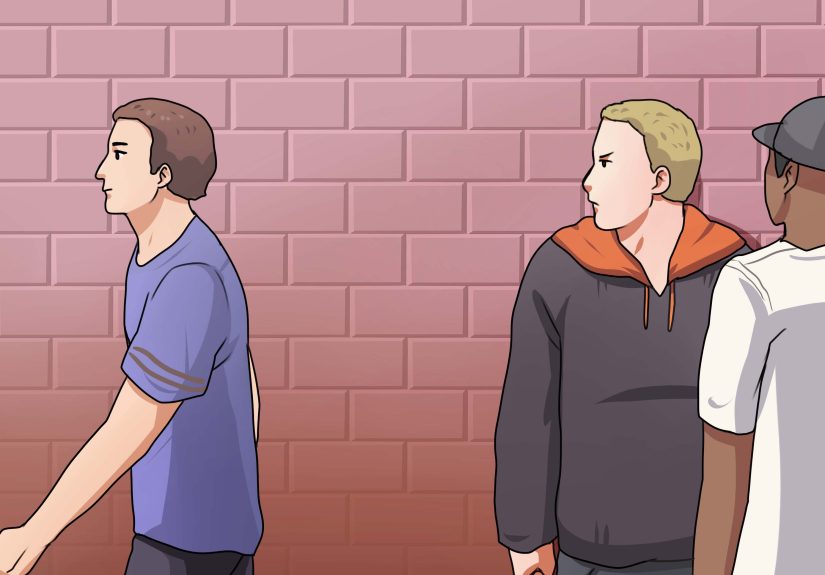
One of the smartest ways to ignore a bully is to physically disengage when possible. Bullies often rely on access. If they can corner you, they can keep poking. If you leave quickly, calmly, and consistently, you interrupt the whole routine.
That might mean:
- Changing your route between classes or departments
- Sitting near supportive people or authority figures
- Using the buddy system in places where bullying usually happens
- Ending calls, muting chats, or stepping away from group threads
- Keeping transitions short so you are not left alone with the person
Notice the goal here: not hiding, not surrendering, not shrinking your life into a miserable little corner. The goal is to reduce opportunities for harm. That is a boundary, not a retreat.
Body language matters
Walk like you have somewhere better to be, because you do. Keep your head up, shoulders relaxed, and pace steady. You do not need movie-star swagger, but you also do not want to look rattled. Calm body language sends a quiet message: You do not run my day.
And yes, sometimes the most powerful sentence in the English language is not a sentence at all. It is you picking up your bag and exiting stage left before the nonsense gets a sequel.
3. Build a Paper Trail Instead of a Drama Trail
Document what happens
If you cannot get away from a bully, chances are the problem is not a one-time comment. It is a pattern. Patterns need records.
Write down what happened, when it happened, where it happened, who saw it, and what was said or done. Save screenshots. Keep emails. Store texts. If the bullying is happening at work, note witnesses, deadlines affected, or policy violations. If it is happening at school, keep a running log with dates and details.
This is one of the most overlooked ways to “ignore” a bully: you stop trying to win the moment and start building the facts. Bullies often thrive in confusion. Documentation is bad for confusion.
Why this matters
When you finally report the behavior, you do not want to sound vague, emotional, or easy to dismiss. You want specifics. “She is always mean” is frustrating but weak. “On February 12, 14, and 19, she mocked my speech in front of the team, interrupted me during meetings, and sent two messages insulting my work” is harder to ignore.
Documentation also helps you. Bullying can make people doubt their own memory, instincts, or judgment. Seeing the pattern in writing can be strangely grounding. It reminds you that you are not overreacting just because someone else wants to act like cruelty is a personality quirk.
When to involve someone else
If the behavior is repeated, escalating, or affecting your mental health, learning, attendance, job performance, or sense of safety, bring in support. That might be a teacher, principal, counselor, parent, coach, HR representative, union rep, or manager. Ignoring the bully’s bait is wise. Ignoring the impact on your life is not.
4. Protect Your Mind So the Bully Does Not Move In
Do not let their voice become your inner voice
The hardest part of bullying is not always the event itself. Sometimes it is the after-effect. The replay. The overthinking. The fake argument you have with them in the shower while your conditioner waits patiently for emotional closure.
That is why one of the most important ways to ignore bullies is internal: stop giving their words authority over your identity.
That sounds inspiring on a poster, but in real life it takes practice. Try these:
- Replace their insult with a fact: “They called me awkward” becomes “I am learning, and that does not make me less worthy.”
- Talk to someone who sees you clearly.
- Stay connected to activities that build confidence.
- Limit doom-scrolling and re-reading hurtful messages.
- Use counseling or therapy if the stress is becoming overwhelming.
Bullies often want to shrink your world. The best revenge is not a comeback line polished to perfection. It is a life that keeps expanding anyway.
Choose support, not isolation
One cruel side effect of bullying is shame. People start withdrawing because they do not want to seem dramatic, weak, or needy. But isolation makes bullying heavier. Support makes it lighter. Tell someone. Find your people. Borrow belief from others until your own confidence catches up.
You do not need a huge cheering section. Sometimes one trusted person changes everything. One adult who listens. One coworker who witnesses. One friend who walks with you. One counselor who helps you stop blaming yourself.
What Ignoring Bullies Should Never Look Like
Let’s draw a very bright line here. Ignoring bullies does not mean:
- Staying silent about threats or physical aggression
- Accepting humiliation as “normal”
- Letting mental health slide because you want to seem tough
- Handling serious harassment alone
- Believing you somehow caused the behavior
If the bullying is persistent or severe, the healthiest move may be formal action, not emotional detachment. Some situations require intervention, not endurance. There is wisdom in knowing the difference.
Experience-Based Insights: What This Looks Like in Real Life
A high school student once described lunch as the longest thirty minutes of the day. A group at the next table never touched her food, never threw anything, never said anything loud enough for a teacher to hear. They just laughed when she walked by, copied her voice, and made sure she knew she was the joke. She tried arguing back once and spent the rest of the week getting imitated in the hallway. What helped was not a magical comeback. It was a practical shift. She started sitting with two people from art club, stopped reacting when the snickering started, and wrote down every incident. When she finally spoke with a counselor, she had dates, names, and a clear pattern. The behavior was addressed. More importantly, she stopped feeling crazy.
An office worker had a different version of the same problem. His bully wore nicer shoes and called it “feedback.” Every meeting came with little digs about his ideas, his pace, or his confidence. At first he defended himself in real time, which only seemed to invite more public criticism. Later, he changed tactics. He answered only the work question, skipped the emotional bait, followed up in email, and kept records of repeated comments that crossed the line. Once the pattern was visible, HR could no longer dismiss it as a personality clash. He learned a hard truth: being calm is not the same as being powerless.
Then there was the teenager dealing with cyberbullying from people she still had to see every day. Blocking one account did nothing because another one appeared five minutes later like a terrible sequel nobody asked for. What helped was reducing access, saving screenshots instead of arguing, and telling an adult before the situation had time to spread. She also made one smart choice that people rarely talk about: she stopped rereading the messages. That alone gave her mind room to breathe. Sometimes ignoring a bully starts with refusing to become your own archivist of pain.
Even adults in families can face bullying they cannot cleanly escape. A cousin, sibling, or in-law can turn every gathering into a competitive insult marathon. In those cases, the same rules apply. Keep responses short. Do not perform hurt for their entertainment. Sit near safe people. Leave the conversation when it turns cruel. Debrief with someone supportive afterward. Family access does not create a free pass for disrespect.
Across all these experiences, the biggest lesson is simple: people feel stronger when they stop trying to win the bully’s game and start changing the conditions around it. Less reaction. More strategy. Less self-blame. More support. Less chaos. More evidence. That is what effective ignoring really looks like in real life. It is not numbness. It is self-protection with a brain.
Conclusion
If you cannot get away from a bully, your best move is not to become tougher than steel or funnier than a late-night host. It is to become strategic. Give them less reaction. Leave when you can. Document what happens. Protect your mental space. Get help when the behavior crosses the line from rude to harmful.
The goal is not to prove you are unbothered. The goal is to stay safe, stay grounded, and keep your dignity intact while refusing to let someone else manage your emotions for sport. Bullies count on chaos. Your power is clarity.
And if you need a final reminder, here it is: ignoring a bully is not about pretending they do not exist. It is about refusing to let their behavior decide who you are.