Table of Contents >> Show >> Hide
- From Full Carts to Fuller Calendars: What This Episode Is Really About
- Why Buying Less Is Having a Big Moment
- Doing More: Experiences, Projects, and Everyday Adventure
- Lessons from Downsizing: What the Episode Teaches About Home
- How to Pursue Buying Less & Doing More in Your Own Life
- Real-Life Experiences: What Buying Less & Doing More Actually Feels Like
- Final Thoughts: Less but Better, at Home and Beyond
Picture this: your closet is full, your garage is full, your cart is always
full… but your calendar and energy level? Not so much. That tension is
exactly what Young House Love dives into in episode #33, “In Pursuit Of
Buying Less & Doing More” and it hits home for anyone who’s ever stood
in Target wondering, “Do I actually need this… or am I just bored?”
In this fan-favorite episode of Young House Love Has a Podcast,
John and Sherry Petersik chat with blogger Dana Miller of House Tweaking
about what it’s really like to downsize, let go of “perfect house” pressure,
and put more energy into experiences and everyday life rather than carts and
cardboard boxes.
Paired with a growing body of research on minimalism, intentional spending,
and why experiences tend to make us happier than more stuff, episode #33
becomes less of a casual chat and more of a mini masterclass in “less but
better” living. Let’s unpack the big ideas no shopping bag required.
From Full Carts to Fuller Calendars: What This Episode Is Really About
At its core, “In Pursuit Of Buying Less & Doing More” is about shifting
your default setting. Instead of automatically upgrading every room,
collecting decor, or buying more storage bins, the episode asks:
What if you bought less and actually did more with what you already have?
John and Sherry are known for their DIY projects, decor hacks, and “we tried
it so you don’t have to” energy. But here, they pull back the curtain on a
less glamorous part of home life: the weight of too many things and too many
expectations. They talk with Dana about:
- Why her family of five moved into a house roughly half the size of the previous one
- How downsizing changed daily routines, not just their floor plan
- What they stopped buying (and didn’t actually miss)
- Why “doing more” doesn’t always mean spending more
The episode also detours into a surprisingly practical topic: whether it’s
smarter to rent or buy certain tools when you’re into DIY. Spoiler:
sometimes you don’t need to own the thing to enjoy the project.
Meet the Voices Behind the Microphone
If you’re new to Young House Love, John and Sherry Petersik are long-time
home bloggers turned podcasters who share real-life decorating, remodeling,
and home organization stories with lots of humor and honesty. Their show
blends practical home tips with bigger conversations about how we want our
homes and lives to feel.
Guest Dana Miller, former author of the House Tweaking blog, brings the
downsizing angle. She and her husband moved their family into a compact,
carefully edited home and focused on living more intentionally in a smaller
footprint a real-world example of buying less, doing more, and still
loving your space.
Why Buying Less Is Having a Big Moment
Minimalism, but Make It Real Life
Minimalism isn’t just empty white rooms and a single wooden chair anymore.
Recent research into minimalist practices shows that people who consciously
reduce excess possessions often report better financial well-being and
higher overall happiness.
That doesn’t mean you have to throw out everything you own and live with two
forks. It usually looks more like:
- Cutting impulse purchases you forget about in a week
- Keeping the decor you truly love, not every “it was on sale” item
- Designing rooms around how you live, not how Instagram thinks you should live
Studies on minimalism suggest that simplifying your stuff often leads to
less financial stress and a stronger sense of control over your life.
That’s exactly what Young House Love and Dana are circling around:
downsizing isn’t just a house decision it’s a quality-of-life decision.
The Science of “Less Stuff, More Happy”
A number of psychological and consumer-behavior studies have found that
reducing mindless consumption can boost well-being. Cutting back on random
spending often:
- Lowers debt and money anxiety
- Frees up cash for savings and future plans
- Creates room in your budget for experiences, not just objects
Research on spending patterns has also shown that people who lean toward
“tightwad” behavior spending more carefully and less often tend to buy
more experiences than physical goods and report higher happiness.
In other words, your future self is much more likely to remember a weekend
trip, a concert, or a goofy family activity than that fourth decorative
pillow that mysteriously migrated to the floor.
Doing More: Experiences, Projects, and Everyday Adventure
Spending on Experiences, Not Just Things
Episode #33 fits neatly into a growing trend: spending money on experiences
instead of things. Multiple studies from San Francisco State University to
other U.S. research groups have found that people who invest in
experiences report more lasting happiness than those who mostly buy material
items.
Why? Experiences:
- Become part of your story and identity
- Are easier to share with others (hello, family memories)
- Age better in your mind even a messy road trip becomes a funny tale later
Young House Love leans into this idea in their “We’re Digging” segments,
where they sometimes highlight deals on experiences (like discounted outings
or activities) rather than just home items.
The message is clear: it’s okay to spend money just consider spending more
on what you can do instead of what you can dust.
When “Doing More” Looks Like Doing Less
Ironically, “doing more” can also mean saying “no” more often. When your
home isn’t overstuffed and your budget isn’t stretched, there’s space for:
- Slow Saturday mornings instead of frantic errand lists
- One bigger family adventure instead of constant tiny purchases
- Deeper hobbies (DIY, gardening, reading) instead of endless scrolling
Minimalism research notes that people who adopt simpler lifestyles often
report having more time and mental bandwidth not because the day grew
longer, but because they stopped filling every gap with shopping or managing
possessions.
Lessons from Downsizing: What the Episode Teaches About Home
Smaller Spaces, Bigger Life
Dana’s story of moving her family into a smaller home reinforces a major
theme: a right-sized house can feel more freeing than a bigger one. Instead
of pouring money into rarely used rooms, they focused on:
- Efficient storage that forces you to prioritize what stays
- Multi-functional spaces that work hard every day
- Outdoor time, community, and activities beyond the four walls
This lines up with broader minimalist and financial research: people who
intentionally limit their space and spending often gain more flexibility to
travel, change jobs, or pursue creative projects.
Tools, DIY, and Renting vs. Buying
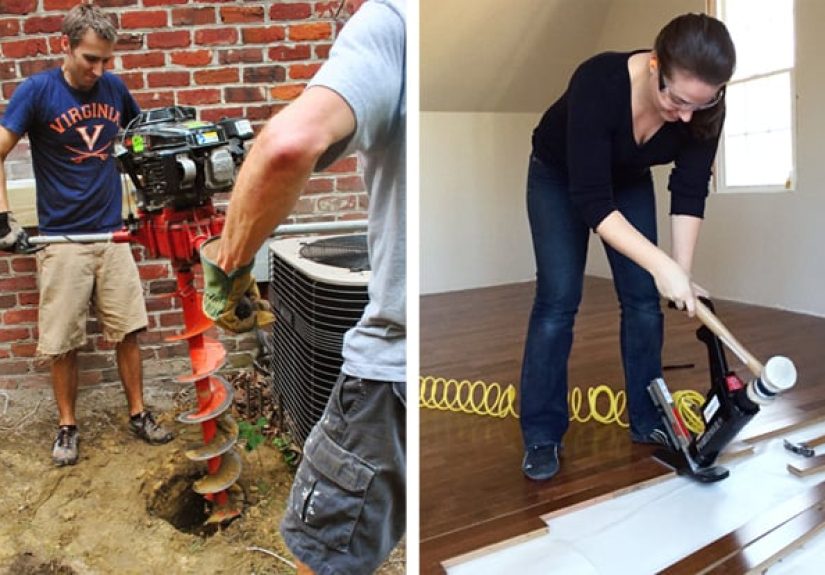
A surprisingly helpful moment in episode #33 is when John and Sherry talk
about whether it’s better to rent or buy tools. For DIY fans, this is
sneaky-important. Owning every tool “just in case” can:
- Eat up valuable storage space
- Cost more than renting for occasional use
- Leave you maintaining items you barely touch
The buy-less mindset asks, “How often will I realistically use this?” If the
answer is “once a year at most,” renting may be the smarter, more
minimalist-friendly move and leaves money for the projects and experiences
you’re truly excited about.
How to Pursue Buying Less & Doing More in Your Own Life
Step 1: Audit Your Stuff (Without Shame)
Start by looking at your home with curiosity, not criticism. Walk through
each room and ask:
- What do I actually use weekly?
- What do I genuinely love seeing every day?
- What’s just… here, taking up oxygen and shelf space?
Minimalist research points out that voluntary simplicity is most powerful
when it’s value-based, not guilt-based.
You’re not “failing” for owning things; you’re just choosing what fits the
life you want now.
Step 2: Shift Your Budget Toward “Doing”
Next, look at your monthly spending. How much goes to:
- Random home decor, clothes, or gadgets you didn’t plan for?
- Subscriptions or memberships you don’t really use?
- Experiences: outings, classes, hobbies, trips, or time-saving services?
Studies from U.S. researchers consistently show that spending on
experiences from small outings to major trips tends to generate more
immediate and long-term happiness than buying more possessions.
Try a simple swap: for every “thing” you say no to, move that amount into a
“doing more” fund.
Step 3: Redesign Your Home Around How You Live
Young House Love has always focused on homes that work hard for real
families, not just styled photos. Episode #33 extends that idea: let your
home support your experiences, not compete with them.
That might mean:
- Turning a rarely used formal dining room into a craft space or homework zone
- Trading extra decor for open surfaces so projects are easier to start
- Adding hooks, baskets, and zones that make outings and activities simpler to launch
When your house is set up to support “doing,” you’re less tempted to shop as
entertainment and more likely to invite people over, try that DIY idea, or
finally start the hobby you keep pinning.
Real-Life Experiences: What Buying Less & Doing More Actually Feels Like
It’s one thing to nod along with a podcast about buying less. It’s another
to open your closet and realize you haven’t seen the back wall since 2019.
So what does this shift feel like in real life?
Many families who’ve experimented with “buy less, do more” describe the
early stage as a little weird. Weekends used to mean errands, browsing, and
“just running into” a few sales. When that routine changes, there’s this
awkward empty space in the day which is exactly where better things can
happen.
Instead of strolling the aisles, one couple committed to planning one small
experience every week. Sometimes it was a free hike at a nearby park.
Sometimes it was a low-key brunch at a place they’d never tried. Over time,
they noticed:
- They could remember weekends by what they did, not what they bought
- Their impulse to “reward themselves” with stuff faded
- They had more shared stories and inside jokes than ever
Another family downsized to a smaller home not as dramatically as Dana’s,
but enough to force choices. Toys were pared down to favorites; duplicate
kitchen gadgets were donated. At first, it felt like a massive purge. But a
few months in, they realized mornings were calmer. Cleaning took less time.
The kids actually played with what they had, instead of dumping every bin in
search of that one buried thing.
People who shift their spending this way often report a surprising bonus:
less guilt. Research on experiential purchases shows that we tend
to feel less guilty about money spent on experiences than on random objects
we don’t end up using.
Even a slightly pricey concert ticket can feel like a good investment if it
becomes a core memory.
In smaller, everyday ways, “doing more” can look like:
- Inviting friends over for a board game night instead of online shopping together
- Signing up for a weekend workshop or class instead of buying more gear you never learn to use
- Using coupons and deals on experiences (like the ones John loves) to nudge yourself toward trying new things
Over time, many people find that their identity shifts. Instead of being the
person with the “nicest stuff,” they become the person who’s always planning
something fun, thoughtful, or creative. Their home becomes a backdrop for
action projects, conversations, dinners, messy crafts not a showroom of
untouched decor.
That’s the heart of episode #33. It’s not an anti-shopping rant. It’s more
of an invitation: let your money, your home, and your time reflect the life
you actually want to live. Buy fewer things. Do more that matters. Young
House Love just happens to make that invitation sound like a fun chat with
friends.
Final Thoughts: Less but Better, at Home and Beyond
“In Pursuit Of Buying Less & Doing More” taps into something bigger than
a single episode. It’s part practical home talk tools, floor plans,
storage and part mindset shift anchored in real research on happiness,
minimalism, and intentional spending.
The takeaway is refreshingly simple:
you don’t have to own more to live more. By trimming back
the excess, designing your home for real life, and redirecting your budget
toward doing rather than stockpiling, you open up space literally and
mentally for the memories you actually want.
Whether you’re downsizing, decluttering a single closet, or just trying to
say “yes” to more experiences and “no” to random late-night purchases,
episode #33 of Young House Love offers both inspiration and a nudge: stop
chasing the next thing, and start building the next great story.