Table of Contents >> Show >> Hide
- What Counts as a Model Number on Nike Shoes?
- Why Finding the Right Nike Style Code Matters
- Way #1: Check the Label Inside the Shoe
- Way #2: Check the Shoe Box and Product Sticker
- Way #3: Search the Code or Visual Details Online
- Common Mistakes to Avoid
- What to Do If the Label Is Missing or Unreadable
- Quick Example: How the Process Works
- Final Thoughts
- Extra Experience Section: Real-World Situations That Make Finding Nike Model Numbers Easier
- SEO Tags
If you have ever picked up a pair of Nikes and thought, “These are cool, but what exactly are you?” welcome to the club. Nike shoes can be easy to recognize by look alone, but identifying the exact pair is another story. One sneaker can have ten cousins, three twins, and one suspiciously similar sibling wearing a different colorway. That is where the model number comes in.
Here is the important thing: when most people say Nike shoe model number, they usually mean the style code or style number. That is the code used on Nike product pages, retailer listings, resale sites, and often the label inside the shoe. It is the fastest way to figure out whether you are holding an Air Max Portal, a Court Vision, a Dunk, or a mystery sneaker that has been living in your closet rent-free for years.
In this guide, you will learn three easy ways to find model numbers on Nike shoes, what those numbers usually look like, where to search them, and what to do if the label is faded, missing, or about as readable as a coffee-stained treasure map. We will also cover common mistakes, practical examples, and a few real-world experiences that make the hunt easier. Sneaker detective hat on. Let’s go.
What Counts as a Model Number on Nike Shoes?
Before we jump into the methods, let’s clean up the vocabulary. Nike and retailers do not always use the exact same wording. You may see terms like:
- Style number
- Style code
- SKU
- Product code
- Model number in everyday conversation
For Nike shoes, the identifier people usually need is a code such as HF3053-001, DM0829, or DD1391-602. Sometimes you will see the full code with a dash and color suffix. Sometimes a retailer shows only the base style number. Either way, this code is your best clue for identifying the exact shoe.
Think of it like a sneaker’s legal name. “Black Nike running shoes” is a description. “HF3053-001” is the part that actually gets things done.
Why Finding the Right Nike Style Code Matters
Knowing the correct Nike style code is useful for more than satisfying your curiosity. It can help you:
- Find the official product page
- Replace an old pair with the same model
- Confirm the correct colorway
- Check resale pricing or release history
- Compare sizing reviews for the exact shoe
- Spot mismatched listings when shopping online
In other words, this tiny code can save you time, money, and the pain of accidentally buying “basically the same shoe” that turns out to be absolutely not the same shoe.
Way #1: Check the Label Inside the Shoe
The easiest and most reliable place to start is inside the shoe. On many Nike pairs, the best clue is printed on the size label attached to the inner lining or the back of the tongue area. This label usually includes sizing information, country of manufacture, and the code you need.
Where to look
Open the shoe wide and check these spots carefully:
- The underside or inner side of the tongue
- The inner sidewall near the collar
- The lining around the heel or midfoot area
Most modern Nike shoes have a label tucked in one of these places. A flashlight helps. So does patience. So does not trying to do this while balancing on one foot.
What the code looks like
The code often appears as a mix of letters and numbers, sometimes followed by a dash and three more digits. Common examples include:
- HF3053-001
- DD1391-602
- DM0829
- 621358 133
Do not panic if your pair looks slightly different. Older Nike shoes, limited releases, kids’ shoes, and special editions can format the code in different ways. The key is to find the most product-looking code on the label, not the size, not the date range, and not the barcode gobbledygook.
How to tell it apart from the other numbers
Here is a quick cheat sheet:
- Size: usually marked clearly as US, UK, EUR, or CM
- Date range: often appears as production dates
- Barcode or factory data: useful for logistics, less useful for shoppers
- Style code: the one most likely to identify the shoe model and colorway
If you are staring at a label full of numbers and wondering which one is the star of the show, look for the code that resembles the examples above. That is usually the golden ticket.
Best use case for this method
This is the best method when you already have the shoes in hand. It is fast, direct, and usually more accurate than guessing from looks alone. If the label is clear, you can identify the pair in minutes.
Way #2: Check the Shoe Box and Product Sticker
If the shoe label is faded, worn, or mysteriously absent, your next best move is the original Nike shoe box. The box label often includes the same or closely related product identifier used on listings and retailer pages.
Where to look on the box
Check the product sticker on the outside of the box, usually on one of the short ends. You may see:
- The shoe name
- The size run
- The color description
- The style code or style number
- A barcode
If you still have the box, congratulations. You are better organized than half the internet.
Match the box code to the shoe
One of the smartest ways to confirm a Nike model number is to compare the code from the shoe label to the code on the box. If they match, great. If they do not, slow down and investigate. A mismatch may mean:
- The shoes were stored in the wrong box
- You are looking at a replacement box
- The pair came from a mixed secondhand lot
- Someone, somewhere, made sneaker organization choices with pure chaos energy
Use the colorway as a backup clue
Even when the style code is partially missing, the product sticker can still help. Nike boxes usually list the shoe color or colorway. Combine that with the model name and silhouette, and you can narrow the match quickly.
For example, if the box says a style such as HF3053-001 and the color is black and white, you can search that code online and compare the results to your actual pair. If the upper pattern, outsole shape, branding placement, and cushioning setup match, you are in business.
Best use case for this method
This method works best for newer pairs, gift purchases, or shoes stored at home with their packaging. It is also useful when you are selling a pair online and want to make sure your listing is accurate before someone messages you with “Do you know the exact style code?” at 11:47 p.m.
Way #3: Search the Code or Visual Details Online
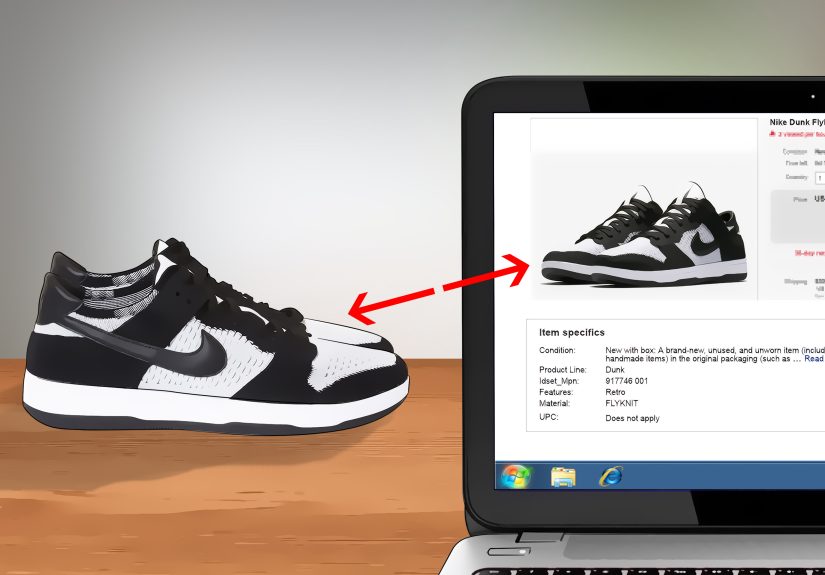
If you found a code on the label or box, you can now use it like a search key. This is where the detective work gets fun. Search the code on Nike’s site, major retailers, or trusted sneaker marketplaces and compare the results to your pair.
How to search effectively
Type the code exactly as it appears. Try these search formats:
- HF3053-001 Nike
- DD1391-602 Nike shoes
- DM0829 style number
- 621358 133 Nike
You can search the code on:
- Nike’s official site
- Large retailers
- Sneaker marketplaces
- Resale platforms with detailed listings
Retailer pages often show “Style,” “Style No.,” or “Style number.” Sneaker marketplaces may use “Style” or “SKU.” Different words, same basic mission: identifying the shoe correctly.
If you do not have the code, search by visual details
Sometimes the label is too damaged to read. That does not mean the case is closed. Search using descriptive phrases that combine the most obvious details:
- Silhouette name if you know it
- Main colors
- High-top, low-top, or mid-top shape
- Visible Air unit or special cushioning
- Swoosh shape and placement
- Unique overlays, mesh patterns, or outsole design
For example, instead of searching “old Nike shoes,” try something like black white Nike low-top with visible Air heel or Nike retro basketball shoe white red mid-top. Once you find a likely match, look for the style code on that listing and compare it to your pair.
Cross-check, do not trust the first result blindly
This part matters. Search results are helpful, but not every listing is perfect. Always compare multiple details:
- Upper materials
- Midsole shape
- Outsole pattern
- Heel branding
- Tongue tag design
- Color blocking
If everything lines up, you probably found the right model number. If the code matches but the shoe looks different, dig deeper. Some listings are sloppy. Some sellers copy and paste. And some shoes are so heavily worn that they begin to resemble their own distant relatives.
Common Mistakes to Avoid
Confusing size information with the style code
This is the most common mistake. Your US, UK, EUR, and CM sizes are not the model number. They are important, but they will not tell you the exact shoe.
Using only the shoe name
“Nike Air Max” is a family, not a full identity. The style code narrows it down to the exact model and often the exact colorway.
Ignoring the color suffix
If your code includes a dash and three extra digits, do not leave them out unless you must. Those final digits often help distinguish one colorway from another.
Trusting one blurry photo
When shopping secondhand, ask for a clear picture of the inside label and the box tag if available. A fuzzy photo is not a verification strategy. It is a gamble with laces.
What to Do If the Label Is Missing or Unreadable
Do not give up just because the label is worn out. Older Nike shoes often lose their printed details over time, especially if they were actually worn like shoes instead of displayed like museum pieces.
Here is a practical backup plan:
- Check the box for a matching sticker
- Search by silhouette, colorway, and design details
- Compare your pair against official and marketplace photos
- Look at outsole shape, heel logo, tongue branding, and panel layout
- Use multiple listings to confirm the same style code
Even without a readable label, you can often get surprisingly close. Sneaker identification is part research, part pattern recognition, and part staring very intensely at midsoles.
Quick Example: How the Process Works
Let’s say you find a code inside your shoe that reads HF3053-001.
- You search the code online.
- You find a Nike product page and retailer listings using the same code.
- The photos show the same upper design, heel pull tab, branding, and colorway as your pair.
- Now you know the exact model number and can use that information to shop, resell, or replace the shoes.
That is why the process works so well. You are not guessing from vibes. You are matching a specific identifier to a specific shoe.
Final Thoughts
Finding the model number on Nike shoes is not hard once you know where to look. Start with the label inside the shoe, then check the box, and finally search the code online to confirm the match. In most cases, the answer is sitting right there on the shoe, quietly minding its business while the rest of us overcomplicate things.
If the code is clear, identification is usually quick. If it is faded, the box and online comparison can still save the day. Either way, the style code is the best shortcut to identifying a Nike shoe accurately, especially when names alone are too broad.
So the next time you pick up a pair of Nikes and wonder what they are called, do not rely on guesswork, vague memories, or your cousin who says, “I think those are Air Something.” Go straight to the code. The sneakers will not introduce themselves, but the label usually will.
Extra Experience Section: Real-World Situations That Make Finding Nike Model Numbers Easier
One of the most common experiences people have with this topic starts with a closet cleanout. You find an old pair of Nike shoes you have not worn in years, and suddenly you want to know whether they are worth keeping, replacing, or selling. At first glance, they may look familiar, but not familiar enough. That is when the inside label becomes your best friend. Many people are surprised by how fast the answer appears once they stop searching by color alone and start searching by the code printed inside the shoe.
Another common situation happens during online shopping. You find a pair that looks almost exactly like the one you already own, but the price, material, or shape feels a little different. This is where checking the model number saves you from buying the wrong pair. Two Nike shoes can look nearly identical in a thumbnail photo but feel very different on foot. A style code helps you tell whether you are looking at the same model, a new version, or a similar silhouette with a different fit.
There is also the secondhand market experience, which can be equal parts useful and mildly chaotic. People shopping resale often discover that the fastest way to confirm a pair is to ask for a clear photo of the size tag and the box label. Without that, you are left playing sneaker charades. With it, you can search the code, compare photos, and make a smarter decision. This is especially helpful for older basketball shoes, limited releases, and colorways that all start blending together after page five of search results.
Parents run into this issue too. Kids outgrow shoes at a speed that seems both impressive and financially disrespectful. If a child loves a specific Nike model, finding the correct style number makes it much easier to hunt down the same pair in the next size up. Instead of guessing based on appearance, parents can use the code to find the exact shoe their child already likes, which means fewer arguments and fewer “but these are not the same” speeches in the kitchen.
Collectors and casual sneaker fans have their own version of this experience. Sometimes you remember a pair from years ago but not the name. You can picture the shape, the color blocking, maybe the era, maybe the fact that you wore them until the soles practically filed a complaint. Once you learn how Nike model numbers work, identification gets much easier. You stop searching like a confused poet and start searching like a person with a system.
The best part is that this skill compounds. After you identify one pair correctly, the next pair gets easier. You begin to recognize where Nike places labels, how retailers list style numbers, and how marketplaces present SKUs. What started as a one-time search becomes a useful habit. And honestly, there is something deeply satisfying about solving the mystery of an unnamed shoe without having to post blurry photos and ask the internet, “Anybody know what these are?”