Table of Contents >> Show >> Hide
- Why beach photos feel so revealing
- 20 Fascinating Photos of Historical Figures at the Beach
- 1) Albert Einstein, beachsidegenius meets shoreline
- 2) Theodore Roosevelt “at the beach,” but make it Oyster Bay
- 3) The Wright brothers at Kitty Hawk: the beach as a launchpad for the future
- 4) JFK on the shoreline with Caroline: a “family man” portrait (that still sells a message)
- 5) Jackie and Caroline on the sand: quiet glamour, Cape Cod edition
- 6) JFK Jr. playing on the beach at Hyannis Port (1963)
- 7) Nixon and Pat Nixon walking the San Clemente beach (1971)
- 8) Franklin D. Roosevelt at Hampton Beach (1932): politics with sea air
- 9) FDR relaxing on Palm Beach sand: leadership, but sunscreen-adjacent
- 10) Harry S. Truman walking the Key West beach (1947)
- 11) Winston Churchill painting at Miami Beach (1946): the statesman as artist
- 12) Churchill in swimwear at Dieppe (1911): paparazzi before paparazzi
- 13) Douglas MacArthur wading ashore at Leyte (1944): a beach photo with a mission
- 14) Dwight D. Eisenhower at the Normandy beachheads (1944): leadership in the surf zone
- 15) Babe Ruth jogging on Sea Spray Beach (Palm Beach): athletic mythology, sand edition
- 16) Marilyn Monroe in the water at Amagansett (1957): the icon as a real person
- 17) The Beatles in bathing suits at Miami Beach (1964): pop history in sunshine mode
- 18) Audrey Hepburn on the beach during “Two for the Road” (1967): elegance meets wind
- 19) Gandhi at Dandi beach (1930): a shoreline that became a symbol
- 20) Princess Diana on a beach holiday: modern royalty, public curiosity
- How to read historic beach photos like a pro (without becoming insufferable at parties)
- What these beach photos teach us about power, fame, and being human
- Experiences that make these photos hit harder (an extra 500-ish words)
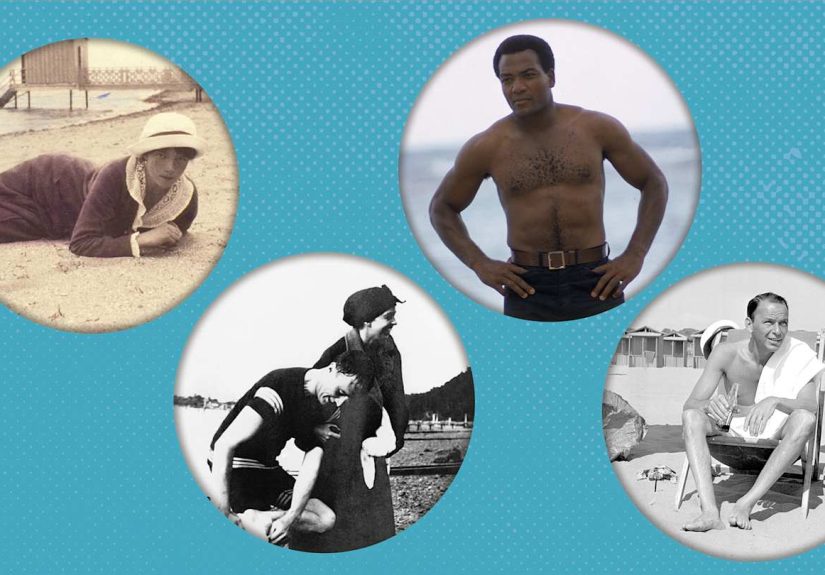
History books love a stiff collar, a serious face, and a dramatic speech. But the beach? The beach is where history’s “main characters” accidentally become regular humansthe kind who squint at the horizon, misjudge a wave, and suddenly realize sand is basically glitter with a grudge.
The best vintage beach photos don’t just show sun and surf. They show image-making. Power relaxing on purpose. Celebrity becoming “relatable” long before social media discovered the humble-brag. And sometimes, they show the opposite: war beaches, beachheads, and shorelines that became turning points for the world.
Why beach photos feel so revealing
The beach strips away the usual propsno podiums, no palace curtains, no office desk to hide behind. That’s why a candid seaside snapshot can feel oddly intimate. Leaders look less like marble statues and more like people with wind in their hair. Artists look less like “genius” and more like someone trying to keep a sketchbook from becoming a wet napkin. Even when a photo is staged, the setting still changes the vibe: the shoreline is casual by nature, so formality has to work harder.
In other words: the beach is history’s unofficial lie detector. Not because it tells you everythingbut because it tells you what someone wanted you to feel. Comfort. Confidence. Youth. Romance. Resilience. Or, in wartime images, resolve and risk written into the surf.
20 Fascinating Photos of Historical Figures at the Beach
1) Albert Einstein, beachsidegenius meets shoreline
In one striking archival image, Albert Einstein stands on a California beach with companions, dressed more like a curious traveler than a mythic scientist. The charm is in the contrast: the mind that bent physics, framed by something as ordinary as waves and wet sand. It’s a reminder that even the biggest brains still took breaksand probably still got sand in their shoes like the rest of us.
2) Theodore Roosevelt “at the beach,” but make it Oyster Bay
A National Park Service image labeled “Theodore Roosevelt at the Beach” shows him in a boat along the Cold Spring Harbor shore near Sagamore Hill. It’s not a swimsuit momentit’s a shoreline moment. The point isn’t tanning; it’s terrain. Roosevelt loved the outdoors, and this kind of photo quietly supports the larger Roosevelt brand: energetic, rugged, and at home in nature.
3) The Wright brothers at Kitty Hawk: the beach as a launchpad for the future
The iconic Library of Congress photograph of the first powered, controlled, sustained flight captures Orville at the controls and Wilbur running alongside near Kitty Hawk. The setting matters. Wind and sand weren’t just scenerythey were the lab. A beach photo that isn’t about leisure at all, but about invention taking off from the edge of the sea.
4) JFK on the shoreline with Caroline: a “family man” portrait (that still sells a message)
Mark Shaw’s famous 1959 beach photograph of John F. Kennedy lifting little Caroline at the water’s edge is adorableuntil you notice how much strategy can hide inside adorable. The scene reads as intimate and spontaneous, yet it also helped craft a modern political image: youthful, approachable, and family-forward. It’s a masterclass in “casual” that’s carefully designed to feel effortless.
5) Jackie and Caroline on the sand: quiet glamour, Cape Cod edition
Another Mark Shaw image from Hyannis Port shows Jacqueline Kennedy and Caroline on the beach. It’s softer than campaign-style hero shotsmore like a private pause in public life. Photos like this helped build the “Camelot” atmosphere: American, coastal, elegant, and just relaxed enough to feel real (even when the camera is clearly invited).
6) JFK Jr. playing on the beach at Hyannis Port (1963)
White House photographer Cecil Stoughton captured a bright slice of summer: John F. Kennedy Jr. playing on the beach and around a catamaran at Hyannis Port on August 25, 1963. The moment is ordinary and extraordinary at the same timebecause it documents childhood inside the orbit of history. It’s also a reminder that “presidential life” still includes sandcastles and salty wind.
7) Nixon and Pat Nixon walking the San Clemente beach (1971)
The Nixon Library’s photo listings include frames of President Richard Nixon and Pat Nixon walking along the beach near La Casa Pacifica (the Western White House) on January 12, 1971. The shoreline becomes a stage for a different kind of presidential imagery: reflective, domestic, almost cinematic. Two people strolling where the country can’t followexcept the camera did.
8) Franklin D. Roosevelt at Hampton Beach (1932): politics with sea air
Getty’s archive descriptions include a 1932 image of New York Governor Franklin D. Roosevelt eating breakfast aboard the “Motto II” at Hampton Beach in Portsmouth, New Hampshire. It’s an early example of a coastal appearance serving multiple purposes at once: leisure, visibility, and a calm, capable persona presented in an easygoing setting.
9) FDR relaxing on Palm Beach sand: leadership, but sunscreen-adjacent
Another Getty-described photo places Franklin D. Roosevelt on the beach at Palm Beach, Florida, relaxing with Frances de Rham. The interest here is the vibe shift: from crisis manager to someone capable of rest. These “off-duty” images mattered in the early-to-mid 20th century, when a public figure’s private life was less documentedmaking every glimpse feel significant.
10) Harry S. Truman walking the Key West beach (1947)
A Getty editorial caption describes President Harry S. Truman walking on the beach at Key West, Florida in 1947. The simplicity is the power: a president moving through an open landscape, no motorcade in sight, framed by a horizon that suggests steadiness. Beach photos like this often double as mood boards for leadership: unhurried, grounded, and in control.
11) Winston Churchill painting at Miami Beach (1946): the statesman as artist
HistoryNet highlights a photograph of Churchill at his easel in Miami Beach in 1946. It’s fascinating because it flips the usual Churchill storyline. Instead of speeches and strategy, you get composition and colorproof that even war leaders need an outlet. Also, it’s hard to look “intimidating” while calmly painting in beach light, which makes the image disarming in the best way.
12) Churchill in swimwear at Dieppe (1911): paparazzi before paparazzi
Long before modern “celebrity culture” became a full-time industry, Winston and Clementine Churchill were photographed in swimming costumes at Dieppe, Franceimages that even made a magazine cover in 1911. The International Churchill Society notes how surprising it is for a major public figure of that era to be seen “cavorting around in the waves.” Today it feels normal. Back then, it was borderline scandal seasoning.
13) Douglas MacArthur wading ashore at Leyte (1944): a beach photo with a mission
The U.S. National Archives’ World War II photo listings include the famous image of General Douglas MacArthur wading ashore during the initial landings at Leyte in October 1944. It’s “beach” in the most serious possible way: a shoreline as a statement. The photo is history, propaganda, and personal legend all at oncean image built to say, “I returned,” in a single frame.
14) Dwight D. Eisenhower at the Normandy beachheads (1944): leadership in the surf zone
The Reagan Library’s D-Day photo gallery includes a captioned image of Eisenhower touring Allied beachheads, stopping an amphibious “DUCK” to question officers during his visit. The beach is not vacation scenery hereit’s logistics, danger, and decision-making. It’s a reminder that “the beach” can mean sunscreen… or strategy, depending on the year.
15) Babe Ruth jogging on Sea Spray Beach (Palm Beach): athletic mythology, sand edition
Getty’s captions describe a photo of Babe Ruth jogging on the sands of Sea Spray Beach in Palm Beach, Florida, trimming down ahead of spring training. The fun is in the contrast between legend and routine: the larger-than-life slugger doing the simplest human thingtrying to get in shape. It’s also early evidence that “training content” existed long before fitness influencers discovered ring lights.
16) Marilyn Monroe in the water at Amagansett (1957): the icon as a real person
Getty’s Marilyn Monroe beach listings include images from Amagansett, New York in 1957Monroe in the water, hair and waves sharing the same spotlight. These photos are fascinating because they sit on the border between candid and curated. You can feel the public hunger for “the real Marilyn,” even as the camera helps create a new layer of myth.
17) The Beatles in bathing suits at Miami Beach (1964): pop history in sunshine mode
Getty’s Miami Beach coverage of The Beatles around their Ed Sullivan-era visit includes rehearsal and downtime images at the Deauville Hotel including the wonderfully human detail of “The Beatles, in their bathing suits.” The cultural impact is massive, but the photo energy is casual: four global sensations trying to exist like normal guys near a pool and a shoreline. Spoiler: history did not let them be normal.
18) Audrey Hepburn on the beach during “Two for the Road” (1967): elegance meets wind
A Getty caption describes Audrey Hepburn on the beach during a pause on the set of Two for the Road in 1967. What makes it compelling isn’t just the star powerit’s the candid in-between moment. Film sets are controlled worlds, but beaches are not. Wind and light refuse to cooperate, which is exactly why these behind-the-scenes beach images feel so alive.
19) Gandhi at Dandi beach (1930): a shoreline that became a symbol
U.S. history and public television resources recount Gandhi’s Salt March to Dandi and the symbolic act of picking up natural sea salt on the beach in 1930. The “photo at the beach” here isn’t leisureit’s defiance. A simple shoreline action becomes a global lesson in how powerful a small, visual act can be when it’s tied to a movement people understand instantly.
20) Princess Diana on a beach holiday: modern royalty, public curiosity
Getty’s collections include multiple Princess Diana beach imagesfrom family holidays to candid moments by the surf. What makes these photos historically interesting is the tension: relaxation versus relentless attention. Beach settings are supposed to be private, but Diana’s life showed how fame can follow you all the way to the shorelineand still ask you to smile.
How to read historic beach photos like a pro (without becoming insufferable at parties)
Look for the “why,” not just the “who”
Ask what the photo is doing. Is it documenting a real moment, shaping public perception, or both? A family beach image can be a personal memory and a carefully managed narrative. A wartime “beachhead” image can be documentation and a morale-building statement.
Check the basics: date, location, photographer, and archive notes
The most trustworthy historic photo listings usually include metadata: a date, a place, a collection name, and a credit line. If a viral post has none of that, treat it like a “miracle beach detox” adpossible, but suspicious.
Beware of modern edits and recycled captions
Beach photos are easy to romanticize, and captions get recycled like plastic water bottles. Crops, filters, and “helpful” re-titles can shift meaning fast. When possible, trace images back to a library, museum, presidential archive, or major photo collection description.
What these beach photos teach us about power, fame, and being human
The shoreline is one of the few places where everyonescientists, presidents, artists, athletes, and royaltylooks at least slightly vulnerable. Wind ruins hair. Sun forces squinting. Sand ignores status. That’s why these images endure: they compress big reputations into small, relatable moments.
Some of the most fascinating “historical figures at the beach” photos are the ones that clash with the story we’ve memorized. Churchill as a painter. Kennedy as a playful dad. Ruth as a guy trying to get his cardio in. MacArthur and Eisenhower turning beaches into battlefront milestones. They don’t replace the textbook version of historybut they add texture. And history, like a good beach day, is better with texture (even if it’s mildly annoying when it gets in your socks).
Experiences that make these photos hit harder (an extra 500-ish words)
If you’ve ever gone looking for historic beach photos online, you know the feeling: you start with a simple search“president on the beach” or “vintage celebrity beach photo”and suddenly it’s two hours later and you’re deep in an archive page reading about film negatives, contact sheets, and the difference between a “public domain” government photo and an editorial image that still has rights attached. It’s the most educational rabbit hole you’ll ever fall into while wearing pajamas.
What’s especially fun is how the beach changes your expectations. You’re used to seeing historical figures posed like they’re about to sign a treaty or give a speech. Then you find a shoreline moment and everything feels closer. You can almost hear the wind. You can almost smell the salt. You can practically feel the awkwardness of a too-bright sun. It’s not that the photo lets you “know” the person, but it does let you see them in a different temperatureless marble statue, more living human.
And when you compare beach photos across decades, you start to notice patterns that aren’t obvious in biographies. Early beach images often feel formal even when they’re trying not to bebecause the culture demanded respectability. Later, the photos get more candid, more playful, more “caught in the moment,” but they’re also more likely to be managed, staged, or sold as part of a public narrative. Somewhere along the way, the beach becomes a branding tool: presidents “unwinding,” stars “just like us,” royalty “trying to be normal,” athletes “training,” and photographers quietly shaping what the world believes it’s witnessing.
There’s also a strange emotional flip when the beach isn’t a vacation setting. Wartime shorelinesbeachheads, landings, soldiers moving through surfmake the word “beach” feel heavier. You realize how easily one location can hold completely different meanings depending on context. That contrast is part of what makes a beach-photo collection so compelling: the same waves can frame joy, propaganda, rest, anxiety, romance, and danger.
If you ever want to make the experience even richer, try picking one figure and following the photo trail outward. Start with the beach image, then look up the date. What was happening in their life that week? Was it a genuine break or a strategic appearance? Who took the photo, and where did it appearnewspapers, magazines, government archives, family albums? It turns a single snapshot into a mini history lesson, and the beach becomes more than a backdrop. It becomes a clue.
The best part is that you don’t need to be an expert to enjoy it. You just need curiosity, a decent attention span, and the willingness to be delighted by the fact that even the most famous people in history still had to deal with wind, glare, and the eternal question: “Is this towel actually dry… or is it lying?”