Table of Contents >> Show >> Hide
- Shandong in 60 Seconds
- Origin Story: From “Learning” to “Building”
- How Shandong Works: The Ski-Jump, the Wires, and the Physics Tax
- The Air Wing: J-15s, Helicopters, and the “Support Cast” Getting Bigger
- It’s Not Just the Carrier: The “Team Sport” of Carrier Operations
- Where Shandong Operates: The Map Tells a Story
- So What Can Shandong Actually Do?
- Why Shandong Matters for the U.S. and the Indo-Pacific
- Conclusion: Shandong Is a BridgeNot a Finish Line
- Experience: What It Feels Like to “Follow” Shandong in Real Time (A 500-Word Field Guide)
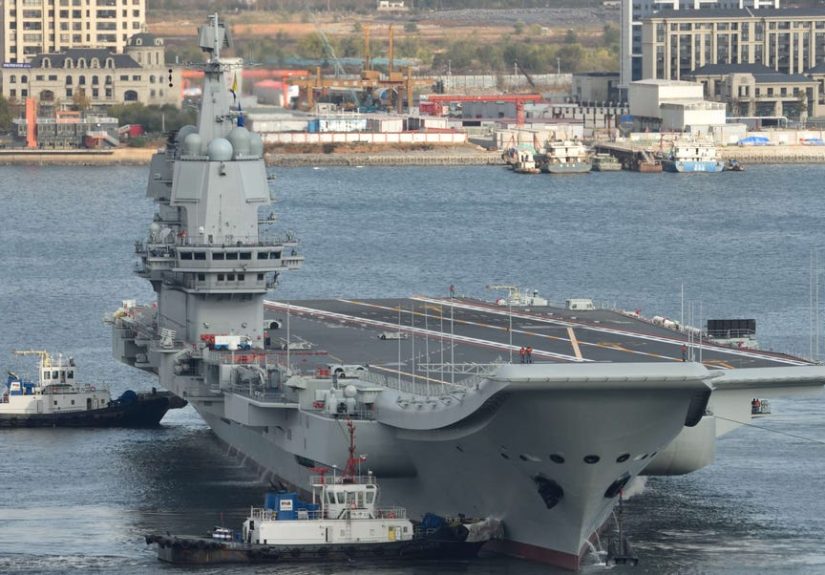
If aircraft carriers are the world’s most expensive business cards, then Shandong is China’s way of saying, “Hi, we’re serious about blue-water naval poweralso, please admire our parking lot for fighter jets.” Commissioned in late 2019, Shandong is widely described as China’s first domestically built aircraft carrier and the second flattop in the People’s Liberation Army Navy (PLAN) lineupafter the earlier Liaoning. It’s not the newest carrier China has launched since then, but it may be the most revealing: Shandong is the bridge between China’s “learning to operate carriers” era and its “learning to operate carriers farther, longer, and faster” era.
This article walks through what Shandong is, how it works, what it carries, and why it mattersusing a plain-English (and occasionally mildly sarcastic) tour of the ship’s design, air wing, and real-world deployments. Think of it as a guided museum visitexcept the exhibit can move, launch jets, and makes regional security planners reach for the coffee.
Shandong in 60 Seconds
| What it is | China’s second aircraft carrier; first domestically built carrier (PLAN) |
|---|---|
| Commissioned | December 2019 |
| Type | STOBAR carrier (ski-jump launch + arresting-wire recovery) |
| Typical aircraft | J-15 carrier fighters + carrier helicopters (and evolving support variants) |
| Big idea | Regional power projection, training, and signalingespecially around the First Island Chain |
Origin Story: From “Learning” to “Building”
China’s carrier journey did not begin with a clean-sheet design and an easy tutorial mode. Liaoningits first carrierwas a refitted, Soviet-origin hull that helped China develop the basic muscle memory of carrier aviation: launching, recovering, spotting aircraft, maintaining jets at sea, and running a floating airbase without setting the flight deck (or the schedule) on fire.
Shandong is what happens when you take those lessons and say, “Okay, now let’s build one ourselves and operate it more often.” Analysts frequently frame Shandong as an incremental but meaningful step: not a revolutionary leap, but a practical upgrade in domestic shipbuilding confidence and day-to-day carrier operations. CSIS notes that Shandong is China’s first domestically built carrier and, like Liaoning, uses a STOBAR system for launching and recovering aircraftan important detail because it shapes everything from sortie rate to what kinds of planes can realistically fly from the deck.
How Shandong Works: The Ski-Jump, the Wires, and the Physics Tax
Shandong is a STOBAR carriershort take-off but arrested recovery. Translation: jets take off using a ski-jump ramp at the bow, and they land by catching arresting wires with a tailhook. This system is simpler than catapults, but it charges interest in the currency of payload and fuel. You can launch fighters, sure, but “fully loaded and ready to party” is harder when the launch assist is basically a gravity-and-engine-power combo deal.
Why STOBAR matters (and why catapults are a big deal)
A catapult-equipped carrier can throw heavier aircraft into the skyplanes built for airborne early warning, electronic warfare, and longer-range strike packages. With STOBAR, the aircraft that work best are typically fighters and helicopters, and even fighters may face trade-offs: less fuel, fewer weapons, or both. War on the Rocks has highlighted the general challenge for heavy carrier fighters in a ski-jump launch environment, including the resulting constraints on range and payload, and notes efforts like “buddy refueling” to stretch operational legs.
This is why China’s newer carrier direction has drawn attention: the U.S. Department of Defense describes China’s shift toward operating a multi-carrier force and points to the PLAN’s next-generation approachespecially as it modernizes beyond ski-jump carriers. Shandong, then, is both capable and limited: capable enough to matter every time it sails, limited enough that it also motivates what comes next.
The Air Wing: J-15s, Helicopters, and the “Support Cast” Getting Bigger
When most people picture a carrier, they think “fighter jets.” That’s fairfighters are the headline act. Shandong’s deck operations are centered on the J-15 carrier fighter family, supported by helicopters for missions like anti-submarine warfare, logistics, and airborne utility roles.
But carriers are not just about fightersthey’re about the ecosystem. Modern naval aviation needs sensing, networking, and electronic warfare. Recent U.S. defense reporting has pointed to a growing PLAN interest in a more sophisticated carrier air wing mix, including electronic warfare aircraft, and the broader trend is clear: the more complex the air wing, the more the carrier behaves like a true floating airbase rather than a jet-themed photo op.
Electronic warfare: the less-photogenic superpower
One of the most interesting developments is the emergence of carrier-oriented electronic warfare variants in the J-15 family. The War Zone has discussed visible signs of newer carrier-based electronic warfare concepts, and the U.S. Department of Defense has also noted China’s display of carrier-borne electronic warfare aircraft in public showcases. Even if the most optimized versions are associated with catapult-capable designs, the direction of travel matters: electronic warfare is how modern navies complicate an opponent’s sensors and communicationsand that’s the kind of advantage you want before the first missile ever leaves the rail.
It’s Not Just the Carrier: The “Team Sport” of Carrier Operations
A carrier without escorts is a celebrity without security: famous, expensive, and not safe in public. In practice, Shandong operates as part of a carrier strike group (CSG)-style formation, with surface combatants and support ships providing air defense, anti-submarine screening, and logistics.
Logistics is the underrated superpower. The U.S.-China Economic and Security Review Commission has emphasized that China’s carrier strike group capability depends heavily on replenishment and support, and it has discussed how limits in air wing size and propulsion choices can affect expeditionary utility. In plain terms: you can’t do sustained far-seas presence on vibes alone. You need fuel, parts, food, and the ability to keep the whole group supplied long after the coastline becomes a distant memory.
Where Shandong Operates: The Map Tells a Story
Shandong’s operational pattern matters because it reveals intent. The U.S. Department of Defense has described China’s carrier training and activity as part of broader efforts to operate farther from China’s shores and to integrate joint combat capabilities. Shandong has been repeatedly observed operating in and around key waterways near Taiwan, Japan, and the Philippinesareas that form strategic gates between the near seas and the wider Pacific.
Far-seas training and the “more days at sea” effect
In its 2024 report, the U.S. Department of Defense noted that Shandong conducted multiple major far-seas training events in 2023, including activity connected to exercises near Taiwan and operations demonstrating increasing reach into the Philippine Sea. This is important because carrier competence is built through repetition: deck cycles, maintenance rhythms, night operations, coordination with escorts, and the human factors that don’t show up in glossy brochures.
Dual-carrier operations: from “one carrier” to “fleet problem”
When you can operate two carriers at once, you can do more than double the flex. You can practice deconfliction, layered air defense, distributed strike planning, and the kind of choreography that separates symbolic carrier use from operationally meaningful carrier aviation. The U.S. Department of Defense reported that China’s two operational carriersLiaoning and Shandongconducted dual-carrier operations for the first time in late 2024. That’s a milestone: coordination problems multiply faster than the number of decks.
2025 drills around Taiwan: the carrier as a moving message
In 2025, Shandong’s presence was repeatedly tied to high-profile activity around Taiwan. Reuters reported Shandong’s participation in drills to the east of Taiwan focused on integrated operations and “multi-dimensional blockade and control.” AP similarly reported the Shandong carrier group’s role in large-scale exercises framed as warnings against moves toward independence. Whether you read these events as training, signaling, or both, the carrier’s participation is a reminder that a flattop is not only a weapon systemit’s a political instrument that can move quickly, stay visible, and shift where airpower is concentrated.
So What Can Shandong Actually Do?
Shandong is best understood as a regional power-projection and training platform with increasingly frequent and increasingly complex deployments. It can generate fighter sorties, provide a protected bubble of air defense when paired with escorts, and serve as a mobile base for operations and signaling. But the STOBAR architecture and air wing constraints mean it is not the final form of China’s carrier ambition.
The most realistic way to view Shandong is as a “workhorse in training”a ship that helps China build the habits of carrier aviation and task group operations. That includes learning what breaks, what’s slow, what’s noisy, what’s hard at night, and what takes ten times longer at sea than it does on land. In other words: Shandong is not merely a ship; it’s a syllabus with a flight deck.
Limitations that matter (without underestimating the ship)
- Launch constraints: Ski-jump STOBAR limits the heaviest fixed-wing support aircraft options and pressures fighters on payload/fuel trade-offs.
- Endurance and logistics: Sustained far-seas operations depend on replenishment and escort coordination, not just hull count.
- Experience curve: Carrier aviation is one of the hardest things navies do; repetitions build proficiency over years, not weeks.
Why Shandong Matters for the U.S. and the Indo-Pacific
Even with limitations, Shandong influences regional planning because it creates optionality: a movable airfield that can appear in different operating areas, complicate surveillance and targeting, and contribute to broader joint operations. U.S. defense reporting has framed China’s carrier activities as part of expanding operational reach and integrated joint capability developmentespecially in scenarios involving Taiwan and surrounding seas.
It also matters because it’s a stepping stone. USNI reporting, citing U.S. Department of Defense assessments, has discussed China’s longer-term plans to expand its carrier fleet substantially. In that context, Shandong is not “the end”it’s one of the ships helping China learn how to run a larger carrier force, which is a different challenge than operating a single prestige platform.
Conclusion: Shandong Is a BridgeNot a Finish Line
Shandong sits in the middle of China’s carrier timeline: more mature than the early training phase, less capable than what comes with newer carrier generations. Its ski-jump design anchors it to certain constraints, but its growing tempo of operations shows how quickly a navy can learn once it commits to the routine of at-sea aviation.
If you want to understand China’s naval trajectory, Shandong is a great place to look. Not because it’s the biggest or the newest, but because it’s the ship that reveals how China turns industrial capacity into operational habitand how a carrier evolves from “symbol” into “system.”
Experience: What It Feels Like to “Follow” Shandong in Real Time (A 500-Word Field Guide)
Unless you’re actually posted to a destroyer in the Western Pacific (and if you are, please put this article down and go drink water), most of us experience Shandong the way modern maritime watchers experience everything: through a steady drip of official statements, satellite imagery, and those little map graphics that appear when regional militaries announce they “observed a vessel operating in international waters.”
The experience begins with a headline: “Carrier group spotted.” You open your browser like a detective in a film noir, except your trench coat is a hoodie and the rain is push notifications. Somewhere, a blurry photo appearsgrey ship, flat deck, tiny aircraft shapesand suddenly the internet becomes a surprisingly enthusiastic community of people arguing about whether a shadow is an elevator or just a weird cloud.
Then comes the geography lesson. You find yourself casually dropping phrases like “First Island Chain” and “Bashi Channel” in conversation, as if everyone grew up using them in board games. You start to recognize the rhythm: carriers don’t just pop up anywhere; they move through chokepoints and operating areas that make sense for training, signaling, and logistics. The moment you realize you’re checking distances in nautical milesby choiceyou know you’ve crossed into the deep end.
Watching Shandong’s operations from afar also gives you a new appreciation for what a carrier is: not just a ship, but a moving schedule. A flight deck is an exercise in controlled chaos. Every sortie is a tiny miracle of timing: fuel, maintenance, deck handling, air traffic control, recovery windows, and the sheer human coordination required to launch and catch jets repeatedly without someone turning the wrong wrench at the wrong time. If you’ve ever tried to get six friends to agree on a dinner place, imagine doing thaton steelwhile the ocean tries to rearrange your furniture.
And yes, there’s a strange emotional curve. At first it’s novelty (“Wow, look at that!”), then complexity (“Wait, what does STOBAR imply for payload?”), then the sobering part (“Oh, this is happening near real strategic flashpoints”). Carriers like Shandong are simultaneously engineering achievements, training platforms, and geopolitical signals. Following them feels like watching a floating intersection of industry, strategy, and national messaging.
The final “experience” is realizing how much of maritime power is invisible. The carrier is photogenic; the logistics ship is not. The fighter launch is dramatic; the maintenance cycle is not. But the unglamorous piecesreplenishment, training repetition, escort coordination, electronic warfare development, and command-and-control practiceare what turn a carrier from a symbol into a capability. If Shandong teaches anything at a distance, it’s that the headline is only the surface. The story is the system.