Table of Contents >> Show >> Hide
- What Is the GEM-63XL, and Why Should You Care?
- What You’re Really Watching in a Rocket Booster Test
- The Test Timeline: From “Ignition” to “Wow, That’s Loud”
- How to “Read” a GEM-63XL Test Video Like a Pro (or at Least Like a Fun Nerd)
- Why the GEM-63XL Uses a Fixed Nozzle (and Why That’s Not a Problem)
- From Factory to Flight: The GEM-63XL Life Cycle in Real Terms
- How GEM-63XL Fits Vulcan Centaur’s Mission Menu
- Why Retesting Happens (Even After Flights)
- So… Where Can You Watch a GEM-63XL Rocket Booster Test?
- Experience Section: What It Feels Like to “Watch” a GEM-63XL Booster Test (500+ Words)
- Conclusion: The Loudest Proof Is in the Data
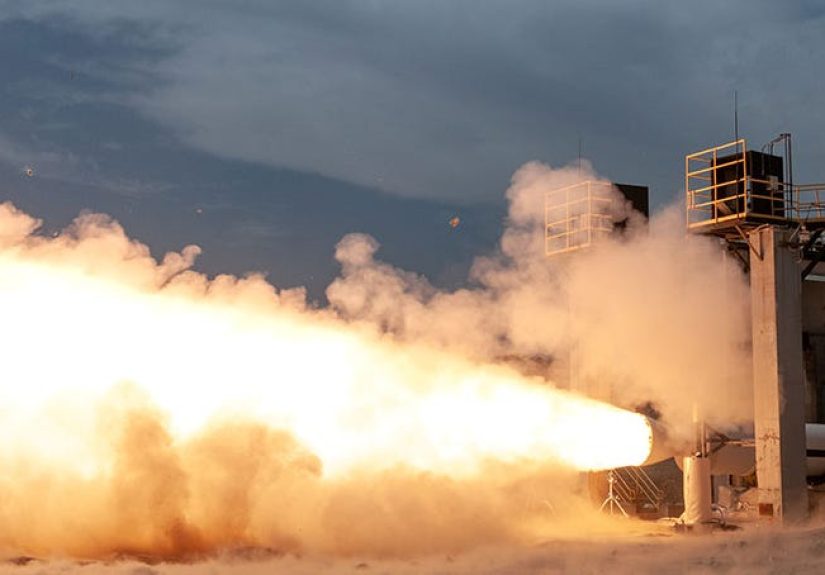
If you’ve never watched a solid rocket booster test, here’s the spoiler: it’s not a “test” so much as a
short-lived weather event. For about a minute and a half, the desert becomes a fog machine with opinions,
the ground vibrates like it just got a group text, and a single piece of hardware does exactly one job:
convert propellant into go.
The star of today’s show is the GEM-63XL (Graphite Epoxy Motor 63, extended length),
built by Northrop Grumman to fly as strap-on boosters for ULA’s Vulcan Centaur rocket. If rockets were bands,
the core stage would be lead vocalsand the GEM-63XLs would be the drummer who shows up, counts to four, and
immediately makes everyone take it seriously.
What Is the GEM-63XL, and Why Should You Care?
The GEM-63XL is a 63-inch-diameter strap-on solid rocket motor designed to augment liftoff
thrust for heavy missions. “XL” isn’t marketing fluff; it’s literally longerabout 72 feet end to end.
In plain English: it’s a giant composite tube packed with solid propellant, built to burn for roughly
85–87 seconds, producing peak thrust on the order of ~463,000 pounds-force.
Those numbers matter because Vulcan Centaur is designed to fly in multiple configurationszero, two, four,
or six boostersdepending on payload mass and destination. On missions where every extra bit of energy counts,
a pair (or a quartet) of GEM-63XLs can be the difference between “nice orbit” and “exactly the orbit the customer paid for.”
Quick Specs You Can Brag About at Parties (The Good Kind)
- Diameter: 63 in (1.6 m)
- Total length: ~864–865 in (~72 ft)
- Propellant mass: ~106,000 lb (about “one adult blue whale,” give or take the whale)
- Burn time: ~85–87 seconds
- Peak thrust: up to ~463,249 lbf
- Nozzle: fixed (no gimballingthis booster is a “set it and send it” type)
One subtle but important point: you’ll see different thrust numbers quoted in different contexts.
That’s normal. Test conditions (temperature conditioning, grain design iteration, instrumentation goals)
and whether someone is quoting peak, average, or a rounded “about” figure can move the headline number.
The real story is consistencydoes the motor behave the way the models say it should?
What You’re Really Watching in a Rocket Booster Test
A static fire is the rocket version of a treadmill stress testexcept instead of a jog, it’s a sprint while
carrying a small building. The motor is bolted into a test stand at Northrop Grumman’s Promontory, Utah, site,
instrumented like a science fair project with a defense budget, and ignited while engineers measure everything
from thrust to nozzle erosion.
The goal isn’t just “did it light?” The goal is “did it match predictions across the entire burn,” including
the parts that try very hard to melt, crack, vibrate loose, or otherwise ruin everyone’s week.
Qualification vs. Validation: Two Similar Words, Two Different Moods
You’ll see two key test labels tied to early GEM-63XL firings:
Qualification Motor (QM) and Validation Motor (VM).
Think of them like this:
-
Qualification (QM): Prove the design and manufacturing process meet requirements.
It’s the “this is the real thing” exam. -
Validation (VM): Reduce risk and confirm performance (often under different conditions).
It’s the “do it again, but make it spicy” exam.
For GEM-63XL, Northrop Grumman’s published test fact sheets highlight a two-motor series:
QM-1 (cold conditioned) and VM-1 (hot conditioned). Cold and hot testing isn’t just
dramait helps validate ballistic predictions, because solid propellant performance changes with temperature.
The Test Timeline: From “Ignition” to “Wow, That’s Loud”
If you’re watching video, the whole event can feel like: “nothing… nothing… EVERYTHING… and we’re done.”
Under the hood, it’s more structured.
1) Prep and Instrumentation
Before ignition, the motor is installed in the test bay and connected to sensors (pressure, strain,
temperature, vibration, acousticsbasically everything except a horoscope). Northrop’s early published
qualification materials mention hundreds of instrumentation channels, which is engineer-speak for
“we’re not guessing.”
2) Conditioning: Cold or Hot
One early qualification test was conditioned to about 40°F, while a validation test was conditioned
to about 90°F. Temperature conditioning is a big deal because it pushes performance toward edges
of the expected operating envelope.
3) Ignition and Thrust Ramp
The igniter lights the internal propellant surface, chamber pressure rises fast, and thrust ramps up. In many
videos, you’ll see a sudden bloom of flame followed by a thick, bright plume that looks like the world’s
angriest candle.
4) Steady-State Burn: The “Data Gold” Phase
Most of the burn is steady-state: thrust and pressure follow a profile that matches the internal grain geometry.
This is where engineers check if the motor’s ballistics (burn rate behavior) are matching predictions and if
insulation and nozzle materials are doing their jobs.
5) Tail-Off and Shutdown
As the propellant is consumed, thrust tails off. The plume changes character, the roar shifts, and the test stand
gets a well-earned moment to consider its life choices.
How to “Read” a GEM-63XL Test Video Like a Pro (or at Least Like a Fun Nerd)
Watch for These 7 Visual Clues
-
Plume brightness and shape: A stable plume and consistent shape often correlate with stable
chamber pressure and expected flow. -
Smoke color shifts: Solid motors generate a bright plume and substantial exhaust products; changes
can reflect lighting, camera exposure, or transient burn behavior early/late in the firing. -
Camera shake and ground vibration: This isn’t just cinematic flairhigh thrust plus acoustics equals
“the Earth is humming.” -
Nozzle area behavior: Engineers care about nozzle erosion, insulation performance, and plug behavior
(especially in tests designed to measure those specifics). -
Start transient: The first seconds can be the most revealingpressure rise rate and early plume behavior
are scrutinized closely. -
Consistency through the mid-burn: Most designs aim for predictable performance; a “smooth” looking burn
is usually a good sign (the real verdict is always the data). - Tail-off symmetry: The end of burn can show how cleanly the motor transitions as propellant is depleted.
Bonus tip: audio is deceptive on the internet. If you’re watching from far away, sound arrives late. If you’re watching
a compressed video, microphones clip. So treat the sound track like a movie trailerfun, dramatic, not a calibrated instrument.
Why the GEM-63XL Uses a Fixed Nozzle (and Why That’s Not a Problem)
Some boosters steer with gimballing nozzles. GEM-63XL boosters are generally described as having fixed nozzles,
meaning the booster doesn’t pivot its thrust vector. That might sound limiting, but it’s part of a bigger system:
the core stage engines provide steering authority, and the vehicle’s guidance and control account for booster behavior.
Fixed nozzles simplify the booster, reduce moving parts, and can support a strong reliability storyespecially valuable
for missions where “reliable” is not a nice-to-have but the whole point.
From Factory to Flight: The GEM-63XL Life Cycle in Real Terms
A solid rocket motor is “simple” only if you ignore manufacturing, materials, geometry, and physics. The GEM-63XL uses
a composite case (that “graphite epoxy” in the name) and is cast as a single, monolithic segment.
That monolithic approach is great for performance and integration, but it also creates real-world logistics challenges:
a 72-foot booster doesn’t exactly fit in your average rideshare.
After manufacturing in Utah, boosters are transported over the road to launch sites for integration. ULA has described
shipments arriving to support Vulcan’s launch campaignsbecause sometimes the most impressive part of rocket science
is the trucking plan.
How GEM-63XL Fits Vulcan Centaur’s Mission Menu
Vulcan Centaur is meant to cover a wide range of payload needscommercial, civil, and national security. The GEM-63XL
boosters let ULA “dial in” performance by selecting how many strap-on boosters to fly. Two boosters can deliver a huge
liftoff kick; four or six can enable heavier payloads or more demanding orbits.
From an observer’s standpoint, more boosters also means more spectacle. Two boosters look impressive. Four boosters look
like the rocket brought friends. Six boosters look like the rocket is overqualified for its own job interview.
Why Retesting Happens (Even After Flights)
Space hardware is tested a lot before it flies. But sometimes, the program learns something from flight that
it wants to reproduce on the groundunder controlled conditions with maximum instrumentation. That’s one reason you’ll see
additional GEM-63XL test firings show up later in the program timeline, including firings associated with investigations
and design updates.
This is not a sign that “everything is broken.” It’s how high-consequence engineering works: observe, hypothesize, test,
update, verify. The flashy part is the flame. The important part is the feedback loop.
So… Where Can You Watch a GEM-63XL Rocket Booster Test?
The easiest (and safest) way to watch is via official and reputable channels that publish static test videos and
behind-the-scenes material. Northrop Grumman has posted GEM-63XL static test video assets, and spaceflight outlets often
cover the tests with context and technical notes.
If you’re the kind of person who enjoys pausing a video to argue with yourself about nozzle flow, congratulations:
you have found your hobby. Snacks are optional but encouraged.
Experience Section: What It Feels Like to “Watch” a GEM-63XL Booster Test (500+ Words)
Let’s be honest: most of us are not standing near a test bay in Promontory with a clipboard and a hard hat. We’re
watching from a screenlaptop, phone, maybe a TV if we’re making a whole evening of it. And still, a GEM-63XL static fire
manages to feel weirdly physical through the pixels.
The experience starts with anticipation that is wildly out of proportion to what’s about to happen. You tell yourself,
“It’s just a test firing.” Then you realize you’ve adjusted your volume, opened a second tab for background reading,
and you’re leaning forward like the rocket can sense your posture.
The first few seconds are basically a suspense movie: the motor is there, the test stand is quiet, and the camera is
politely pretending that nothing exciting is about to occur. Thenignition. The plume blossoms so fast it looks like someone
teleported a sunrise into the frame. In many videos, the exhaust is bright enough to punch straight through camera exposure,
turning the flame into a white-hot blur at the core. The surrounding smoke piles up into a thick cloud that spreads outward
and upward like it just got promoted to weather.
Even if you’re watching remotely, you can feel the implied sound. The camera might shake. The picture might vibrate just
enough to make you think your device is rattling on the desk. It’s a reminder that the GEM-63XL is not “a component” in the
abstractit’s a machine producing hundreds of thousands of pounds of thrust while being forcibly held still. That contrast
(maximum effort, zero movement) is part of what makes static tests so fascinating: all that energy, and the hardware doesn’t
get to go anywhere. It’s like flooring the accelerator while the car is strapped to a dyno, except the car is the size of
a bus, and the exhaust plume could double as a special effect in a disaster film.
Then comes the “watching like a nerd” phase. You start noticing details you didn’t care about five minutes ago. The shape
of the plume. The way the exhaust interacts with the trench. The subtle changes as the burn settles into a steady rhythm.
You wonder what the sensors are seeing. You remember that early tests were run under different temperature conditioning,
and you suddenly have opinions about ballistics predictions. This is how it begins: first you watch a rocket motor test,
and next thing you know you’re saying sentences like, “I’d love to see the nozzle erosion measurements from this run.”
And thentail-off. The flame changes character, the plume thins, the bright core softens, and the event ends with the kind
of abruptness that feels comical. You’re left watching lingering smoke drift across the landscape like the test is exhaling.
That final minuteafter the fire but before the camera cutsmight be the most satisfying part. It’s the visual proof that
the test wasn’t just spectacle; it was a controlled engineering exercise. The stand is still there. The motor is still there.
The data is captured. Somewhere off camera, a team is already turning roaring flame into charts, margins, and decisions.
If you want to make the experience even better, try watching with a “two-pass” mindset: first pass for awe, second pass for
details. On the second watch you’ll catch the steady-state consistency, the way the plume evolves, and the moments engineers
obsess over. In other words: you’ll watch it like the internet’s most harmless kind of detectiveand you’ll probably enjoy it more.
Conclusion: The Loudest Proof Is in the Data
The GEM-63XL static fire is one of those rare engineering moments that’s both deeply technical and instantly understandable.
You don’t need a propulsion textbook to appreciate what’s happening: a single-piece solid rocket motor is being pushed to do
exactly what it must do on launch day, while held firmly enough that the only thing moving is the exhaust and everyone’s
jaw dropping.
If you watch a GEM-63XL motor test, you’re not just watching flameyou’re watching design assumptions get audited by physics.
And physics, famously, does not accept “close enough” as an excuse.