Table of Contents >> Show >> Hide
- Why Kitchen Cabinets Matter So Much
- Types of Kitchen Cabinets
- Cabinet Materials and What They Mean for Durability
- How to Spot Better Cabinet Construction
- Popular Kitchen Cabinet Styles
- Color, Finish, and Hardware Decisions
- Smart Storage Features That Actually Help
- Planning Your Cabinet Layout
- Should You Reface, Repaint, or Replace?
- Common Kitchen Cabinet Mistakes to Avoid
- What the Best Kitchen Cabinets Really Do
- Real-Life Experiences With Kitchen Cabinets
- SEO Tags
Kitchen cabinets do a lot more than hold your coffee mugs, your pasta stash, and that one mystery lid nobody can identify. They shape the way your kitchen looks, feels, and functions every single day. The right cabinets can make a small kitchen feel smarter, a busy kitchen feel calmer, and a dated kitchen feel like it finally joined the current decade. The wrong ones? They can turn meal prep into a daily scavenger hunt.
If you are planning a remodel, refreshing an older kitchen, or building from scratch, kitchen cabinets deserve more attention than they usually get. Countertops may steal the glamour shots, but cabinets are the workhorses. They define storage, influence traffic flow, set the tone for your design, and take a beating from grease, moisture, fingerprints, and the occasional dramatic door slam.
This guide breaks down what matters most when choosing kitchen cabinets: types, materials, construction quality, layout, finishes, storage features, and budgeting. Whether you love classic Shaker doors, sleek modern slab fronts, or a warm wood look that makes your kitchen feel like it gives good advice, this article will help you make smarter decisions.
Why Kitchen Cabinets Matter So Much
Cabinets are one of the largest visual elements in any kitchen, so they influence style immediately. But their real superpower is function. Good kitchen cabinets support how you cook, clean, organize, and move through the room. That means the best cabinet choice is not only about color or door style. It is about how well the cabinetry works for your habits.
For example, a family that cooks every night may benefit from deep drawers for pots and pans, vertical tray storage near the oven, and a tall pantry cabinet with pull-out shelves. Someone in a compact condo kitchen may need ceiling-height cabinets, built-in organizers, and light finishes that help the room feel bigger. A serious baker might want a drawer for mixing tools, pull-out storage for stand mixers, and a dedicated baking zone. In other words, your cabinets should fit your life, not just your Pinterest board.
Types of Kitchen Cabinets
Stock Cabinets
Stock cabinets are the ready-to-go option. They come in standard sizes, limited styles, and faster lead times. They are usually the most budget-friendly choice and work well for straightforward kitchen layouts. If your kitchen dimensions play nicely with standard sizing, stock cabinets can offer strong value.
Semi-Custom Cabinets
Semi-custom cabinets sit in the sweet spot between affordability and flexibility. You typically get more choices in finishes, storage accessories, dimensions, and door styles. For many homeowners, this is the practical middle lane: more personality than stock, less financial drama than full custom.
Custom Cabinets
Custom cabinets are built to your kitchen and your specifications. They are ideal for unusual layouts, luxury remodels, or homeowners who want total control over size, finish, wood species, storage, and detailing. Custom cabinetry can be beautiful and highly functional, but it usually comes with a longer lead time and a price tag that may cause your wallet to clear its throat.
Base, Wall, and Tall Cabinets
Most kitchens use a mix of base cabinets, wall cabinets, and tall cabinets. Base cabinets support countertops and often hold drawers, cookware, and everyday tools. Wall cabinets store dishes, glassware, and pantry basics. Tall cabinets, including pantry cabinets, help maximize vertical storage and reduce clutter. A balanced combination of all three creates a kitchen that feels intentional instead of stuffed.
Cabinet Materials and What They Mean for Durability
Cabinet materials affect appearance, cost, and long-term performance. This is where smart buyers stop getting distracted by pretty paint colors and start asking better questions.
Solid Wood
Solid wood is often used for doors, drawer fronts, and face frames. It offers natural beauty, warmth, and strong durability. Popular species include maple, oak, cherry, alder, and hickory. Wood can expand and contract with humidity, but when properly finished and maintained, it ages beautifully.
Plywood
Plywood is a favorite for cabinet boxes because it is strong, stable, and generally more moisture-resistant than lower-cost alternatives. If you want a cabinet that can handle real-life kitchen conditions without acting fragile, plywood construction is usually a reassuring sign.
MDF
Medium-density fiberboard, or MDF, is smooth and consistent, which makes it especially useful for painted cabinet doors. It does not have a visible grain, so paint finishes can look crisp and even. It is not the same as cheap junk, despite what that one loud guy in the flooring aisle may suggest. Quality depends on how and where it is used.
Particleboard or Furniture Board
These materials can lower cost, but they are generally less durable than plywood, especially around moisture. They can still appear in decent cabinets, but construction details matter more when these materials are involved. A lower-cost box can work, but it should be paired with solid engineering and decent hardware.
Thermofoil and Laminate Finishes
Thermofoil and laminate options can deliver a clean look and easy maintenance. They are often chosen for contemporary styles or value-oriented projects. The tradeoff is that lower-end versions may be less forgiving around heat or wear over time, so placement and quality level matter.
How to Spot Better Cabinet Construction
Cabinet quality is not just about what you can see from across the room. It is about what happens when you open the doors, pull the drawers, and live with them for ten years.
Look for sturdy cabinet boxes, well-fitted doors, smooth drawer operation, quality joinery, and durable finishes. Soft-close hinges and drawer glides are worth serious consideration because they reduce wear and make everyday use noticeably better. Full-extension drawers are another smart feature because they let you reach the back without performing a yoga pose next to the dishwasher.
Also pay attention to shelf thickness, back panel strength, and how the cabinets are assembled. A beautiful door style cannot rescue weak construction. If the cabinet feels flimsy in the showroom, it is not going to develop inner strength later.
Popular Kitchen Cabinet Styles
Shaker Cabinets
Shaker cabinets remain one of the most popular choices for a reason. Their simple framed design works in traditional, transitional, farmhouse, and modern spaces. They are the jeans-and-white-shirt of kitchen design: reliable, versatile, and very hard to mess up.
Flat-Panel or Slab Cabinets
Flat-panel cabinets create a clean, streamlined look. They are common in modern and contemporary kitchens and pair well with minimal hardware or integrated pulls. If you prefer a quiet visual style, slab doors are often the way to go.
Inset Cabinets
Inset cabinets have doors set inside the frame for a tailored, furniture-like appearance. They look refined and classic, but they are usually more expensive because they require tighter tolerances and more precise construction.
Overlay Cabinets
Full-overlay cabinets reduce visible frame space and create a cleaner, more expansive look. Partial-overlay cabinets show more of the frame and often suit more traditional designs. Neither is automatically better; the right choice depends on the look you want and the budget you have.
Color, Finish, and Hardware Decisions
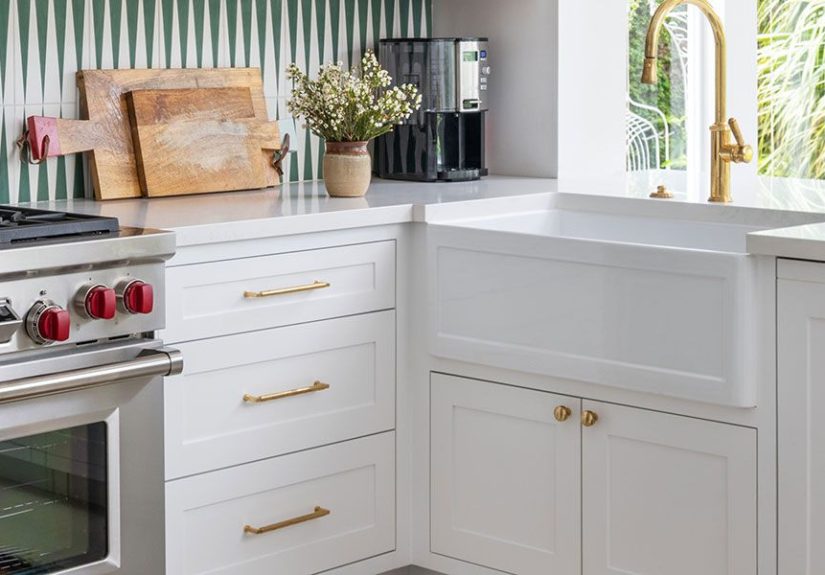
Cabinet color changes the mood of the kitchen instantly. White cabinets remain popular because they feel bright and adaptable. Warm wood tones bring natural texture and a more grounded feel. Green, blue, greige, and soft taupe continue to appeal to homeowners who want color without chaos. Two-tone kitchens, such as darker base cabinets with lighter uppers, can add depth without making the room feel heavy.
Finish matters too. Painted cabinets can look polished and fresh, while stained wood showcases grain and warmth. Matte and satin finishes often feel current and forgiving. Glossy finishes can be striking, especially in modern kitchens, but they tend to reveal more fingerprints. If you live with children, enthusiastic cooks, or one adult who touches every cabinet door with olive-oil hands, this is not a small detail.
Hardware is the jewelry of the kitchen, but useful jewelry. Knobs, bar pulls, cup pulls, and edge pulls all shift the style. Brushed nickel, matte black, brass, and warm metallic finishes remain popular choices. Just make sure the hardware fits your cabinet scale and the way you use the space.
Smart Storage Features That Actually Help
The best kitchen cabinets are not just pretty boxes. They solve problems. Thoughtful storage features can make a kitchen feel bigger, calmer, and more expensive, even when the footprint stays the same.
- Deep drawers for pots, pans, and mixing bowls
- Pull-out trays for pantry items and small appliances
- Lazy Susans or corner pull-outs for difficult corners
- Vertical dividers for baking sheets and cutting boards
- Trash and recycling pull-outs
- Drawer organizers for utensils, spices, and cooking tools
- Cabinet organizers that bring items forward instead of hiding them in the darkness forever
Good organization starts with zoning. Store everyday dishes near the dishwasher, cooking tools near the range, food prep items near the main work surface, and pantry goods where you can actually see them. A kitchen does not need more cabinets nearly as often as it needs better planning.
Planning Your Cabinet Layout
Cabinet layout should support movement, workflow, and comfort. Think in terms of zones rather than just rows of boxes. Prep, cooking, cleanup, and food storage should each have enough room to function without traffic jams.
In a galley kitchen, efficient cabinet placement is everything because space is tight. In an L-shaped kitchen, corner solutions become especially important. In a U-shaped kitchen, cabinetry can create excellent storage and counter continuity. In kitchens with islands, base cabinets and drawers in the island can carry a surprising amount of the workload.
Measure carefully before ordering anything. Ceiling height, appliance dimensions, window placement, trim, plumbing, and electrical lines all affect cabinet planning. This is the point where overconfidence becomes expensive. Measure twice, then maybe once more for emotional support.
Should You Reface, Repaint, or Replace?
Not every kitchen needs a full cabinet replacement. If your cabinet boxes are structurally sound and the layout works, repainting or refacing may be the smarter move. Repainting is usually the most budget-friendly cosmetic upgrade. Refacing replaces door fronts and visible surfaces for a bigger visual shift without a full teardown.
Replacement makes the most sense when the layout is inefficient, the cabinets are damaged, or the storage no longer fits your needs. A beautiful finish cannot fix sagging shelves, awkward corner access, or doors that have been fighting gravity since 2008.
Common Kitchen Cabinet Mistakes to Avoid
- Choosing style before function
- Ignoring storage accessories until it is too late
- Buying the cheapest option without checking construction details
- Forgetting how cabinet color will interact with flooring, countertops, and light
- Skipping full-extension drawers and soft-close hardware to save a little now and regret a lot later
- Underestimating the value of tall pantry storage
- Ordering before final appliance specs are confirmed
What the Best Kitchen Cabinets Really Do
The best kitchen cabinets make your life easier while making the room look better. They open smoothly, store things logically, hold up under everyday use, and fit the style of the home without feeling trendy in a way that will age badly. They are not necessarily the most expensive cabinets in the showroom. They are the ones that balance layout, quality, finish, storage, and budget in a way that works for your household.
So yes, kitchen cabinets are about design. But they are also about your mornings, your dinner rush, your snack drawer, your holiday cookware, and your ability to find the cumin before the onions burn. That is a lot to ask from a box with hinges, which is exactly why choosing the right one matters.
Real-Life Experiences With Kitchen Cabinets
One of the most revealing things about kitchen cabinets is that people rarely judge them accurately in the showroom. Under perfect lighting, almost every display looks organized, glamorous, and suspiciously free of cereal boxes. Real life is where the truth comes out. Homeowners usually start noticing cabinet success or failure within the first week of using the kitchen.
A common experience is the great drawer revelation. People who switch from traditional lower cabinets with doors to deep drawers often wonder why they waited so long. Suddenly, pots, lids, mixing bowls, and food containers stop living in stacked chaos. Instead of kneeling on the floor and excavating cookware like a kitchen archaeologist, you pull a drawer and everything is right there. It feels oddly luxurious, even though it is really just good planning finally doing its job.
Another frequent lesson comes from color choice. White cabinets can look bright, classic, and spacious, but they also make crumbs, splatters, and sauce drips easier to spot. Dark cabinets can feel rich and dramatic, but they may show dust, fingerprints, and pet hair with an honesty nobody requested. Homeowners often discover that mid-tone woods, warm painted neutrals, and satin finishes offer a nice balance between beauty and maintenance. In other words, the prettiest option in a staged photo is not always the easiest option on a random Tuesday night.
Storage accessories are another area where real-world experience changes opinions fast. Pull-out trash cabinets, tray dividers, spice drawers, and pantry roll-outs may seem like add-ons during the buying phase, but they often become the features people appreciate most. Meanwhile, decorative extras that looked exciting in the catalog sometimes end up mattering less than expected. Nobody wakes up whispering, “Thank goodness for that ornamental molding.” People do, however, become weirdly attached to a well-placed utensil drawer.
Many homeowners also learn that cabinet height matters more than they expected. Cabinets that stop short of the ceiling can leave an awkward dust shelf above them, while full-height cabinetry creates a more finished look and adds valuable storage. Of course, that upper storage may become the official home of holiday platters, cake stands, and appliances used once every presidential administration, but it is still useful space.
The most positive kitchen cabinet experiences usually come from decisions based on daily habits rather than impulse. Families who cook often tend to love durable finishes, easy-clean surfaces, and drawer-heavy layouts. People who entertain appreciate islands with storage on both sides and cabinets that help hide visual clutter quickly. Small-kitchen owners often report that the smartest upgrades are vertical storage, better organizers, and lighter cabinet colors that keep the room from feeling boxed in.
The overall lesson is simple: great kitchen cabinets are not the ones that win the most compliments on day one. They are the ones that still feel smart, useful, and sturdy after thousands of meals, messy mornings, holiday marathons, and late-night snack missions. That kind of satisfaction is not flashy, but it is exactly what good design is supposed to deliver.