Table of Contents >> Show >> Hide
- Why Are They Called “Mother Sauces”?
- Before We Dive In: Two Big Sauce “Mechanics” You Must Know
- The 5 French Mother Sauces at a Glance
- The 5 French Mother Sauces, Explained (With Real-World Examples)
- 1) Béchamel Sauce (a.k.a. “White Sauce,” a.k.a. Your Comfort Food’s Best Friend)
- 2) Velouté Sauce (The “Velvet Rope” Into Fancy Chicken and Fish Dinners)
- 3) Espagnole Sauce (The Brown Sauce That Built a Thousand Steakhouses)
- 4) Tomato Sauce (Sauce Tomat) (Not Your Pizza Sauce’s TwinMore Like Its French Cousin)
- 5) Hollandaise Sauce (The Brunch Diva With a Heart of Gold)
- How to Practice the Mother Sauces Without Turning Your Kitchen Into a Stress Documentary
- Common Sauce Problems (And Quick Fixes That Actually Work)
- FAQ: Quick Answers About the 5 French Mother Sauces
- Kitchen Stories: Real Experiences Learning the 5 French Mother Sauces (About )
- Conclusion
If French cooking had a superhero origin story, the “mother sauces” would be the radioactive spider.
Learn these five foundational sauces and suddenly you’re slinging flavor webs across pasta, poultry,
vegetables, fish, and anything else that looks lonely on a plate. The best part? This isn’t about
being fancy. It’s about being prepared. Because when dinner tastes “fine” (the culinary
equivalent of “we should talk”), a good sauce can save the day.
In classical French cuisine, the mother sauces are the core templates that spawn countless “daughter”
sauces. Think of them as the base models. Add cheese, wine, herbs, mustard, stock reductions, or
aromaticsand you’ve got a whole new personality without needing a whole new recipe.
Why Are They Called “Mother Sauces”?
The term comes from the idea that a small set of foundational sauces can be transformed into many
variations. Historically, chefs and writers debated which sauces “count,” but modern culinary teaching
most commonly lands on five: Béchamel, Velouté, Espagnole, Tomato (Sauce Tomat), and Hollandaise.
If you’ve ever wondered why people argue about this with the intensity of sports fans in overtime,
it’s because sauce classification has evolved over timeand chefs love a good debate almost as much as butter.
Before We Dive In: Two Big Sauce “Mechanics” You Must Know
1) Roux: The Thickening Backbone
A roux is cooked fat + flour, and it’s the thickener for three (sometimes four) of the five.
The longer you cook it, the darker it getsand the more nutty flavor you gain (while thickening power
gradually decreases). You’ll see these common stages:
- White roux: cooked briefly, mild flavor, maximum thickening (great for béchamel).
- Blond roux: lightly toasted, slightly nutty (classic for velouté).
- Brown roux: deeper color and flavor (used for espagnole).
2) Emulsions: The “Oil and Water, Please Be Friends” Trick
Hollandaise is the main emulsion mother sauce: egg yolks + butter whisked into a stable,
creamy sauce. It’s less about flour and more about temperature control, patience, and not panicking
when it looks weird for eight seconds (it’s testing you).
The 5 French Mother Sauces at a Glance
| Mother Sauce | Base Liquid | Main Thickener | Classic Uses |
|---|---|---|---|
| Béchamel | Milk | White roux | Gratins, lasagna, mac & cheese-style dishes |
| Velouté | White stock (chicken/veal/fish) | Blond roux | Poultry, seafood, refined pan sauces |
| Espagnole | Brown stock | Brown roux + reduction | Beef/veal, braises, demi-glace derivatives |
| Tomato (Sauce Tomat) | Tomatoes + stock/aromatics | Reduction (sometimes roux in classical style) | Meat, stuffed vegetables, French-style tomato sauces |
| Hollandaise | Butter + egg yolks | Emulsion | Eggs Benedict, asparagus, fish, steak |
The 5 French Mother Sauces, Explained (With Real-World Examples)
1) Béchamel Sauce (a.k.a. “White Sauce,” a.k.a. Your Comfort Food’s Best Friend)
Béchamel is the creamy baseline: milk thickened with a white roux. It’s mild, which is
exactly why it’s powerful. Béchamel doesn’t shout; it supports. It’s the sauce equivalent of a
friend who shows up with snacks and doesn’t ask questions.
Classic formula: equal parts butter and flour (by weight) cooked briefly, then whisk in warm milk and simmer until silky.
- Flavor profile: creamy, gentle, lightly savory.
- Best pairings: pasta bakes, gratins, vegetables, croque monsieur, lasagna.
- Pro tip: warm your milk first to reduce lumps and speed thickening.
Popular “Daughter Sauces” from Béchamel
- Mornay: béchamel + cheese (often Gruyère/Parmesan). Hello, upgraded mac & cheese.
- Soubise: béchamel + sweet, slowly cooked onions.
- Mustard sauce: béchamel + Dijon for chicken or ham.
2) Velouté Sauce (The “Velvet Rope” Into Fancy Chicken and Fish Dinners)
Velouté means “velvety,” and that’s the goal: a smooth sauce made from white stock
(chicken, veal, or fish) thickened with a blond roux. If béchamel is cozy, velouté is elegantlike
béchamel put on a blazer and learned how to pronounce “hors d’oeuvre” without sweating.
Classic formula: blond roux + white stock, simmered and skimmed until refined.
- Flavor profile: savory and stock-forward, subtle, adaptable.
- Best pairings: chicken, turkey, delicate seafood, spring vegetables.
- Pro tip: strain for restaurant-level smoothnessyour sauce deserves a glow-up.
Popular “Daughter Sauces” from Velouté
- Sauce Suprême: velouté enriched with cream (classic with chicken).
- Allemande (often taught as a derivative): velouté finished with egg yolk + lemon (adds richness and brightness).
- White wine sauce: velouté + reduction of white wine/shallots for fish.
3) Espagnole Sauce (The Brown Sauce That Built a Thousand Steakhouses)
Espagnole is the classic brown sauce base: brown stock thickened with brown roux, typically
built with mirepoix (onion, carrot, celery) and often tomato paste for depth. It’s not a “weeknight
quickie” saucethis one likes to take its time. But it pays you back in flavor like a high-yield savings account.
Classic formula: brown roux + browned aromatics + brown stock, simmered and reduced.
- Flavor profile: deep, roasted, meaty, savory.
- Best pairings: beef, lamb, veal, mushrooms, hearty braises.
- Pro tip: keep the simmer gentle and skim regularly for a clean finish.
Popular “Daughter Sauces” from Espagnole
- Demi-glace: espagnole + additional brown stock, reduced until glossy and intense.
- Bordelaise: demi-glace with red wine, shallots (often finished with marrow or butter).
- Mushroom sauce: demi-glace + sautéed mushrooms for steak or roast.
4) Tomato Sauce (Sauce Tomat) (Not Your Pizza Sauce’s TwinMore Like Its French Cousin)
French Sauce Tomat is traditionally more structured than a quick marinara. In classical
versions, you’ll see aromatics, sometimes salt pork, and stock used to build depth, then simmered
until the tomato flavor tastes rounded, not sharp. In modern home cooking, it often looks simplerbut
the core idea remains: tomato as a foundational sauce that can be steered in dozens of directions.
Classic formula: aromatics + tomatoes + (optional) pork + stock, simmered and reduced.
- Flavor profile: bright-to-rich, depending on reduction; savory when built with aromatics.
- Best pairings: meatballs, stuffed peppers, eggplant dishes, simmered proteins.
- Pro tip: a slow simmer tames acidity; a small pinch of sugar is optional, not mandatory.
Popular “Daughter Sauces” from Tomato
- Provençal-style tomato sauce: tomatoes + garlic + herbs (and often olives/capers).
- Spiced tomato variations: add smoked paprika, chili, or warm spices for bolder profiles.
- Chunky braise base: tomato sauce + wine + aromatics for short ribs or chicken thighs.
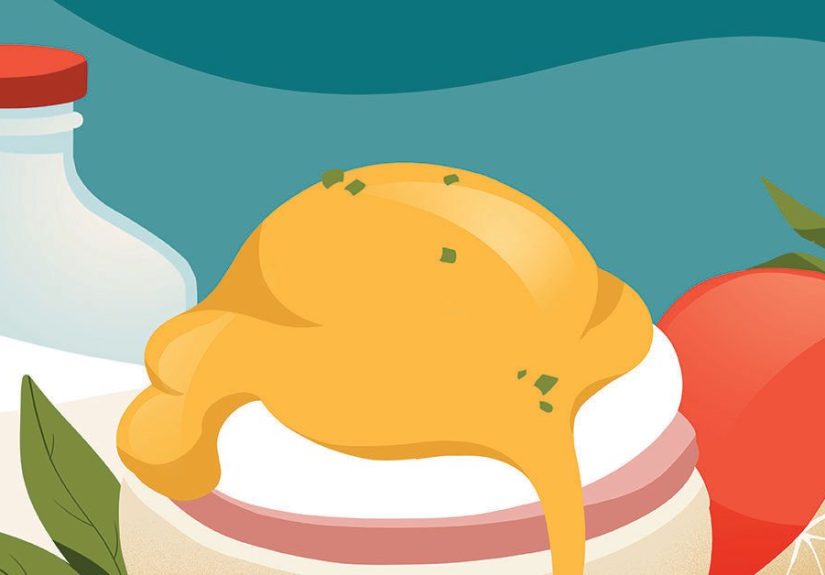
5) Hollandaise Sauce (The Brunch Diva With a Heart of Gold)
Hollandaise is a warm emulsion of egg yolks and butter, brightened with lemon juice or vinegar.
When it’s perfect, it’s glossy, airy, and richbut not greasy. When it’s not perfect, it can break,
separate, or become scrambled-egg soup. Don’t worry. Hollandaise is dramatic, not impossible.
Classic formula: whisk egg yolks with a little water and acid over gentle heat, then slowly stream in warm clarified butter.
- Flavor profile: rich, buttery, tangy, luxurious.
- Best pairings: Eggs Benedict, asparagus, artichokes, salmon, steak.
- Pro tip: gentle heat is the whole gamethink “warm hug,” not “lava.”
Popular “Daughter Sauces” from Hollandaise
- Béarnaise: hollandaise + tarragon/shallot reduction (steak’s best friend).
- Maltese: hollandaise + orange (great with asparagus).
- Choron: béarnaise + tomato (yes, sauces can cross-pollinate like that).
How to Practice the Mother Sauces Without Turning Your Kitchen Into a Stress Documentary
- Start with béchamel. It teaches roux control and whisking without expensive stock.
- Graduate to velouté. Same structure, more flavor complexity.
- Then tomato. Learn reduction and balancing acidity.
- Espagnole is the “slow jam.” Make it on a weekend; portion and freeze.
- Save hollandaise for last. It’s all technique and temperatureworth the patience.
Common Sauce Problems (And Quick Fixes That Actually Work)
Lumps in Béchamel or Velouté
- Whisk like you mean it while adding liquid.
- If lumps happen anyway: strain, blend briefly, or whisk over gentle heat until smooth.
Too Thick / Too Thin
- Too thick: whisk in warm milk/stock a little at a time.
- Too thin: simmer to reduce, or add a small amount of beurre manié (soft butter + flour paste) and cook it out.
Broken Hollandaise
- Whisk 1 teaspoon warm water in a clean bowl, then slowly whisk the broken sauce into it.
- Or start with a fresh yolk and drizzle the broken sauce in like it’s melted butter.
Burnt Roux (a Tragedy)
If your roux smells acrid or looks like it’s auditioning to be coffee grounds, it’s done.
Toss it and start over. There is no “power of positive thinking” strong enough to un-burn flour.
FAQ: Quick Answers About the 5 French Mother Sauces
Are there really only five?
In modern culinary teaching, “the five” is the common list. Historically, some systems included
different mother sauces or counted sauces like mayonnaise separately. For most home cooks, learning
the classic five gives you the broadest practical coverage.
Which mother sauce is the easiest?
Béchamel is usually the most beginner-friendly: simple ingredients, clear thickening, and lots of forgiveness.
Which one unlocks the most restaurant-style dishes?
Velouté and espagnole tend to “feel” the most restaurant-y because they lean on stock, reduction, and glossy finishes.
Hollandaise wins the brunch crown, obviously.
Kitchen Stories: Real Experiences Learning the 5 French Mother Sauces (About )
The first time I tried to “master the mother sauces,” I approached it like a responsible adult:
I made a plan, printed recipes, and told myself I would be calm. That lasted exactly seven minutes,
which is also coincidentally the moment my béchamel became wallpaper paste.
Here’s what no one tells you at the start: sauces are a confidence game. Not in a “manifest your dreams”
waymore in a “stop hovering over the pot like you’re defusing a bomb” way. When I finally relaxed,
béchamel stopped clumping. I learned that warm milk and steady whisking aren’t fussy rules; they’re
the culinary equivalent of wearing shoes in a rock-climbing gym. Sure, you could ignore the advice,
but you’ll have a bad time and everyone will pretend not to watch.
Velouté taught me humility. I assumed it would be béchamel with a French accent. Instead, it exposed
every shortcut I’d ever taken with stock. A watery stock gives you a watery saucethere’s no magical
roux wand that turns “meh” into “marry me.” The day I simmered a decent chicken stock and used it
for velouté, I finally understood why chefs talk about “body” and “mouthfeel” like they’re describing
a luxury mattress.
Espagnole was my weekend project era. I treated it like a slow-cooked soundtrack: roast, simmer, skim,
reduce. My apartment smelled incredible. My patience did not. But when I spooned a glossy brown sauce
over a slice of roast beef and it tasted like it had a backstory, I felt like I’d unlocked a secret
level. Then I froze some in ice cube trays like a sauce-prepper and started dropping little flavor
bombs into weeknight dinners. Highly recommend. It’s like meal prep, but with more swagger.
Tomato sauce was the biggest surprise. I grew up thinking tomato sauce was always fast: open can,
add garlic, done. The French approachbuilding aromatics, simmering until mellow, letting it turn
from loud to richmade me rethink “simple.” The lesson wasn’t that one style is better. It was that
technique gives you options. Some nights you want quick and bright. Other nights you want a sauce
that tastes like it paid rent and learned responsibility.
And hollandaise? Hollandaise is the diva everyone warned you about… and they were right. My first batch
broke. My second batch scrambled. By the third batch I learned to respect gentle heat, whisk steadily,
and stop chasing “boiling” anything near egg yolks. When it finally workedsilky, tangy, and absurdly
good on asparagusI understood why people wake up early for brunch. (Not me, personally. But I finally
understood the theory.)
The real takeaway from all five: sauces reward attention, not perfection. Make them a few times and you
start cooking by feelthickness, shine, aromalike you’ve joined a secret society where the handshake
is just whisking confidently.
Conclusion
The five French mother saucesbéchamel, velouté, espagnole, tomato, and hollandaisearen’t
just culinary trivia. They’re reusable frameworks. Learn the core methods (roux, reduction, emulsion),
and you’ll be able to build sauces that match what’s in your fridge, what’s on your plate, and what kind
of night you’re having. And if a sauce goes sideways? Congratulations: you’re officially practicing like a real cook.