Table of Contents >> Show >> Hide
- What the TS1C Actually Is (and Why It’s Different)
- Core Specs and Features (Real-World Meaning Included)
- Why a Cordless Station Can Be Better Than a “Cordless Iron”
- The Supercapacitor Angle: Pros, Cons, and the Honest Tradeoffs
- Setup Tips That Make the TS1C Feel Like a Premium Tool
- Who Should Buy the TS1C (and Who Should Not)
- Practical Use Cases (With Concrete Examples)
- The Bottom Line
- Real-World Experiences (500+ Words): What Using a TS1C Is Like Day-to-Day
There are two kinds of soldering sessions: the “I’m building a robot and time is fake” marathon, and the “I just need to tack one wire back onto this board before dinner” sprint. Traditional soldering stations love the marathon. The Miniware TS1C shows up for the sprintwearing running shoes, carrying a tiny docking station, and casually saying, “I charge in minutes.”
The TS1C is a cordless soldering iron that lives with a compact base station. Instead of a bulky transformer inside a bench station (or a big lithium battery in the handle), it leans on a high-capacitance energy store (often described as a supercapacitor) and a “dock, solder, dock” workflow. It’s a clever idea: keep your desk tidy, ditch the cable drag, and still get enough heat to handle real electronics work.
What the TS1C Actually Is (and Why It’s Different)
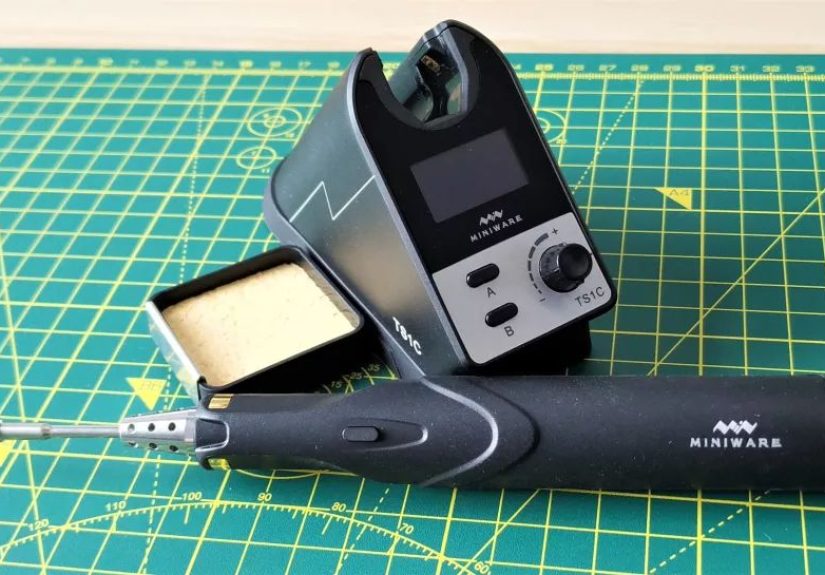
At a glance, the TS1C looks like a modern “soldering pen” paired with a small controller/stand. The base has an OLED display and acts as both a charging dock and a safer place to park the iron. Reviews and product docs describe the system as a cordless station using a high-capacitance energy store in the iron, fast charging, and Bluetooth-linked status/control between the iron and dock.
The big twist: supercapacitor-style power instead of a big battery
Batteries are great at storing lots of energy, but fast charging and high burst power come with compromises: heat, wear, charging safety, and long recharge times. Supercapacitors (and related hybrid “lithium capacitor” devices) flip the script: they can deliver high power quickly and recharge fast, but they hold less total energy than lithium batteries.
That’s exactly the point for a cordless soldering iron. Soldering is spiky: you need a lot of heat for short bursts, not a gentle trickle for hours. In general, supercapacitors discharge with a more linear voltage drop under constant current, and they excel at high power deliveryuseful characteristics when your tool needs to get hot quickly and recover fast between joints.
Core Specs and Features (Real-World Meaning Included)
Temperature range and heating power
The TS1C is commonly listed with an adjustable range around 100–400°C and a max heating power around 36 W. That’s plenty for typical electronics tasks: SMD rework, through-hole joints, wire-to-pad repairs, and connector touch-upsespecially if you’re not trying to solder a car battery terminal with it (please don’t).
Fast charging + USB-C PD input
A major selling point is the USB-C Power Delivery input on the station, often described as up to 20 V / 45 W. That’s practical because PD chargers are everywherelaptop bricks, compact GaN chargers, even some power banksso the station can be powered without a dedicated wall wart. Reviews also cite very fast charge times (on the order of minutes).
OLED status display and “station” workflow
The dock’s OLED display isn’t just for show. It turns the whole system into a tiny “pit lane”: you can see temperature, charge state, and operating modes at a glance, then park the iron securely when you need both hands for positioning parts.
Bluetooth link (useful, but not required to solder)
Bluetooth is used for communication between the iron and station (and, depending on firmware/software, can be used for configuration). In practice, you don’t buy this tool because you dream of pairing a soldering iron. You buy it because cordless convenience plus quick recovery is genuinely nice.
Tip system and connection style
One detail that matters a lot: the TS1C uses the compact 3.5mm “audio jack style” tip family commonly associated with Miniware’s TS80/TS80P ecosystem. Some reviewers note the TRS-style electrical contact approach versus friction-fit styles used by other pen irons. Translation: tip compatibility is a real thing, and you should verify the tip series you want is easy to get where you live before you fall in love.
Why a Cordless Station Can Be Better Than a “Cordless Iron”
A lot of “cordless soldering irons” are really “portable heat sources” that happen to melt solder. The TS1C’s approach is more grown-up: it pairs a stable stand/charger with a lightweight iron, so the tool can be used like a stationjust without the tether while you’re actually soldering.
The ergonomic win: no cable drag
If you’ve ever tried to do delicate SMD work while a silicone cable is gently trying to yank your hand off course, you understand the appeal. Eliminating cable drag can improve control in tight spaces, especially when you’re nudging tiny pads or holding a wire “just so.”
The workflow win: “dock between joints” keeps you fast
A supercap-powered iron encourages a rhythm: solder a handful of joints, dock, reposition your work, dock again, repeat. For intermittent tasksrepairing a lifted pad, replacing a connector, tinning wires, reflowing a couple of header pinsthis can feel faster than dragging a corded iron around your bench.
The Supercapacitor Angle: Pros, Cons, and the Honest Tradeoffs
Pros: burst power, fast recharge, long cycle life
- Fast top-ups: Supercapacitor-style storage can recharge far faster than typical lithium packs.
- Great for short tasks: Lots of soldering is “a few seconds of heat” repeated many times.
- Potentially durable: Supercaps generally tolerate many charge cycles compared to batteries.
Cons: less total energy than batteries (so your runtime is not infinite)
The main limitation is capacity. Compared to a chunky battery, the total energy stored is smaller. Practically, that means the TS1C is best when you can return it to the dock regularly. If you need continuous heat for long periodslike heavy gauge wiring, prolonged desoldering, or lots of thermal massyou may prefer a traditional high-power station or a battery-based portable station designed for longer runtimes.
A small nerdy footnote: “supercap” vs “lithium capacitor” debate
Some teardown discussions point out that what’s inside may behave like a lithium-ion capacitor (a hybrid that sits between supercapacitors and batteries). Either way, the user-visible result is the same: fast charging, high power bursts, and a dock-centric workflow.
Setup Tips That Make the TS1C Feel Like a Premium Tool
1) Pick a legit USB-C PD power source
Don’t sabotage a fancy tool with a bargain-bin charger. If the station expects USB-C PD at higher voltage profiles (commonly 20 V for max input power), use a reputable PD charger that explicitly supports the needed mode. Your reward: faster charging and more consistent performance.
2) Treat tip care like a superpower
The TS1C can only transfer heat as well as its tip surface allows. Keep it clean and tinned:
- Use the “sweet spot” on the tip (the side, not the needle point) to maximize heat transfer.
- Clean frequently using brass wool or a spongebrass is popular because it cleans without cooling the tip as much.
- Re-tin often so the tip stays shiny and wettable.
3) Keep firmware current (yes, really)
Multiple reviewers describe firmware updates via a hidden USB-C port on the iron (often under a decorative cap or cover), with updates performed by connecting to a computer and copying firmware files. It’s not glamorous, but firmware can fix quirksespecially for smart tools that manage power and tip detection.
Who Should Buy the TS1C (and Who Should Not)
You’ll love it if…
- You do small-to-medium electronics work and value a clean bench setup.
- You frequently do quick repairs (connectors, wires, keyboard mods, drones, small boards).
- You want cordless precision without giving up the “station” feel.
- You already use (or can easily source) the compatible tip ecosystem.
You may want a different tool if…
- You do long continuous sessions on thick wires or large thermal mass.
- You hate the idea of docking frequently (the TS1C’s superpower is the dock rhythm).
- You need a broad local supply of inexpensive tips and partsand TS1C-compatible tips are pricey or hard to find for you.
Practical Use Cases (With Concrete Examples)
Quick field repair: the “two-joint rescue”
Imagine a drone or RC build where a motor lead breaks loose mid-session. You don’t need an hour of heatyou need two strong joints, quickly, without wrestling a cable around props, arms, or an awkward frame. A cordless iron that recharges fast between steps is tailor-made for this kind of rescue job.
Bench tinkering: keyboards, small dev boards, and mods
For hobby projectsadding a header, swapping a connector, installing a switch, repairing a lifted padthe TS1C’s station footprint is small and the iron is nimble. The ability to set it down safely and pick it up without cable drag is the kind of quality-of-life upgrade you notice every single session.
Teaching and learning soldering
Beginners tend to struggle with three things: holding the iron steady, heating the joint properly, and keeping the tip in good condition. The TS1C’s clear status display and tidy docking can reduce chaos. Pair that with solid fundamentals (heat the pad and lead together, feed solder to the joint, keep the tip tinned), and you’ve got a friendlier learning curve.
The Bottom Line
The Miniware TS1C is not trying to replace every soldering setup on Earth. It’s trying to make a specific kind of soldering feel effortless: short, frequent tasks where you care about precision and convenience more than unlimited continuous runtime.
If you like the idea of a station that runs on USB-C PD, a cordless iron that heats quickly, and a workflow that rewards good habits (dock it, clean it, tin it, repeat), the TS1C is a genuinely clever piece of engineering. Just go in with the right expectations: it’s a sprint champion, not a marathoner.
Real-World Experiences (500+ Words): What Using a TS1C Is Like Day-to-Day
The best way to describe the TS1C experience is: it changes your soldering posture. With a corded iron, your hand learns to subconsciously compensate for cable tug, cable twist, and where the wire wants to “rest.” With the TS1C, that background tension disappearsand you suddenly realize how much micro-control you were spending on the cable instead of the joint.
Experience #1: The “dock dance” feels weird… then addictive
At first, docking the iron between steps feels like an extra action. Then it becomes your default. You solder a joint, place the iron in the station, adjust your board position, apply flux, grab the next wire, and by the time your hands are ready, the iron is ready too. It’s like having a pit crewexcept the pit crew is a small rectangle on your bench and the mechanic is you.
Experience #2: Short tasks feel faster than they should
A classic example is replacing a small connector. You’ll often do: (1) add flux, (2) touch up a pad, (3) tack one corner, (4) align, (5) solder the rest. With a cord, you sometimes “hover” the iron because setting it down is annoying or the cable is in the way. With a stable dock right there, you park it without thinking. The result is a calmer, more deliberate flowand your work tends to get cleaner.
Experience #3: Tip cleanliness becomes non-negotiable (in a good way)
Because the TS1C’s job is delivering controlled bursts of heat, a dirty or oxidized tip is the quickest way to ruin the magic. In realistic use, you’ll find yourself cleaning and re-tinning more oftennot because the tool demands it, but because the tool makes it easy. The station sits right where your brass wool or sponge goes, so the habit forms naturally: wipe, tin, solder, dock, repeat. It’s the kind of routine that improves every soldering iron you’ll ever use, not just this one.
Experience #4: It shines in “mixed work” sessions
Many bench sessions aren’t pure soldering. You’re also stripping wire, fitting heat shrink, checking continuity, and peering at a board like it owes you money. The TS1C thrives here because it doesn’t punish you for pausing. Instead of leaving a hot iron lying around or juggling a cable, you can dock it safely while you do the other steps. That makes the whole session feel less chaotic, especially if you’re working in a small space.
Experience #5: You learn its limits quicklyand that’s fine
Try to do heavy, continuous work (lots of big wire, large ground planes, prolonged desoldering), and you’ll feel the reality of limited stored energy. The iron may still perform, but you’ll notice that the best results come from working efficiently: use flux, use the correct tip shape, set an appropriate temperature, and keep contact time short. For big thermal mass jobs, you’ll likely reach for a higher-power bench station. But for the 80% of tasks that are small-to-medium electronics, the TS1C can feel like the “grab-and-go” tool you didn’t realize you needed.
In the end, the TS1C experience is less about raw wattage and more about friction reduction: fewer obstacles between “problem noticed” and “problem fixed.” If your projects involve frequent small soldering moments, that reduction in friction is worth real moneybecause it makes you more likely to do the repair properly, immediately, and neatly.