Table of Contents >> Show >> Hide
- Procrastination Isn’t Laziness. It’s Emotional Avoidance Wearing a Productivity Hat.
- Why You Procrastinate: The Usual Suspects (and What They’re Up To)
- 1) The task triggers a negative emotion
- 2) The task is vague, and your brain hates vague
- 3) You’re secretly trying to protect your self-esteem
- 4) Perfectionism turns “doable” into “terrifying”
- 5) You’re low on energy (or burned out), and your brain goes into power-saving mode
- 6) Distractions are engineered to be irresistible
- 7) The payoff is far away, but the discomfort is immediate
- The Procrastination Loop: How It Hooks You
- How To Stop Procrastinating: 12 Practical, Research-Informed Strategies
- 1) Shrink the task until it’s almost silly
- 2) Define the “next action” (not the whole project)
- 3) Use an “If–Then” start plan (implementation intentions)
- 4) Timebox your work (make it finite)
- 5) Make starting easier by lowering “activation energy”
- 6) Treat your emotions like data, not a stop sign
- 7) Use self-compassion (yes, really) instead of self-trash-talk
- 8) Create an “ugly first draft” rule
- 9) Pair the task with a reward (temptation bundling)
- 10) Add accountability that’s kind but firm
- 11) Stop waiting to “feel like it”
- 12) Build a “restart ritual” for when you fall off
- A Quick “Stop Procrastinating” Plan You Can Use Today
- When Procrastination Might Be a Bigger Signal
- of Real-World Experiences (Because Advice Is Cute, but Life Is Messy)
- Experience #1: “I’m not procrastinating. I’m… preparing emotionally.”
- Experience #2: “If I can’t do it perfectly, I’ll do it later. Forever.”
- Experience #3: “I’ll start after I check one thing.”
- Experience #4: “I’m exhausted, and my brain refuses to cooperate.”
- Experience #5: “I only work under pressure… and I hate it.”
- Conclusion: A Kinder, Smarter Way to Stop Procrastinating
You’re not “lazy.” You’re not “broken.” You’re not secretly allergic to success.
You’re just humanand your brain is doing a very normal (and very annoying) thing:
choosing feel better now over benefit later. Unfortunately, “later” is also
when deadlines live. So… yeah.
This article breaks down why procrastination happens, what’s really going on in your head
(hint: it’s not a moral failing), and how to stop procrastinating with practical strategies you can
use todayeven if your motivation is currently hiding under the couch with the dust bunnies.
Procrastination Isn’t Laziness. It’s Emotional Avoidance Wearing a Productivity Hat.
Procrastination is the habit of delaying something you intend to do, even though you know
the delay will probably make things worse. The key word is intend. You don’t forget. You don’t “run out of time.”
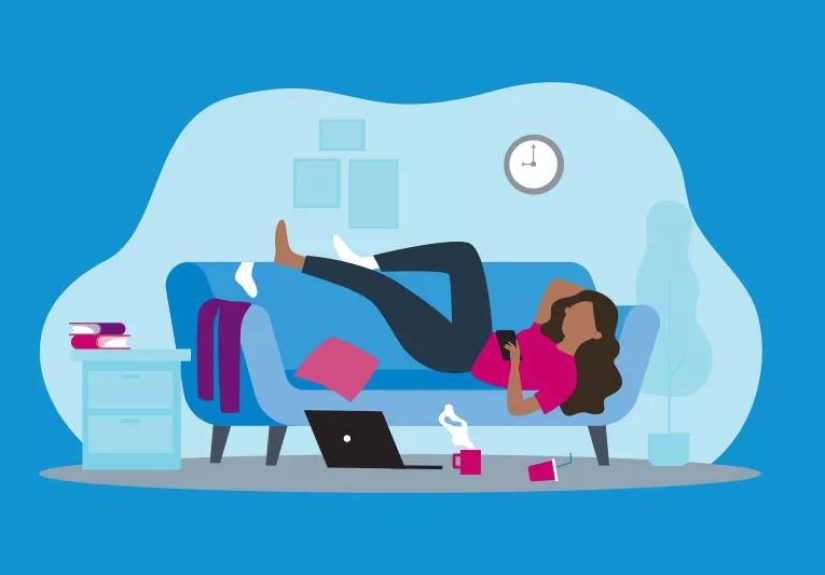
You just… mysteriously become passionate about reorganizing the spice rack at 11:47 p.m.
Strategic delay vs. procrastination
Not all delay is bad. Sometimes you’re waiting for information, energy, or a better moment.
That’s strategic delay. Procrastination is different: it’s delay driven by discomfortboredom, anxiety,
self-doubt, resentment, perfectionism, or that spicy little feeling of “I don’t wanna.”
The “feel better now” trade
When a task feels unpleasant, your brain looks for quick relief. Opening TikTok, checking email,
“just doing a little research,” starting laundrythese are mood-improvement strategies disguised as
Responsible Adult Activities. They work… for five minutes. Then the task is still there, and you get
a bonus side of guilt.
Why You Procrastinate: The Usual Suspects (and What They’re Up To)
1) The task triggers a negative emotion
Many people procrastinate because the task sparks discomfort: fear of failure, fear of judgment, boredom,
uncertainty, frustration, or overwhelm. Avoiding the task reduces that discomfort right now, which teaches your brain:
“Ah yes. Escape works. Let’s do that again.”
2) The task is vague, and your brain hates vague
“Work on the project” is not a task. It’s a fog bank. Vague tasks create mental friction because your brain can’t
see a clear first step. When the starting line is invisible, avoidance feels logical.
Compare:
Vague: “Start my essay.”
Clear: “Open the doc and write a messy 5-sentence intro about the main argument.”
3) You’re secretly trying to protect your self-esteem
Procrastination can act like an emotional shield. If you start late and the result isn’t great, you can blame time:
“I would’ve crushed it if I started earlier.” That story is comforting… but expensive.
4) Perfectionism turns “doable” into “terrifying”
When your brain believes the work must be flawless, starting feels risky. You’re not avoiding the taskyou’re avoiding
the possibility of not meeting an impossible standard. Perfectionism often sounds responsible, but it behaves like fear
with a fancier vocabulary.
5) You’re low on energy (or burned out), and your brain goes into power-saving mode
Procrastination rises when you’re tired, stressed, sleep-deprived, or juggling too much. Your brain seeks low-effort rewards
and avoids effortful tasks. If you’re procrastinating constantly, it’s worth asking: is this a productivity problemor an
exhaustion problem?
6) Distractions are engineered to be irresistible
Your phone is not neutral. Apps are designed to keep you scrolling, clicking, and checking. If your environment makes distraction
the default, procrastination becomes the path of least resistance.
7) The payoff is far away, but the discomfort is immediate
Humans discount the future. “Future You” is basically a stranger who lives in a different timeline and has suspiciously high
expectations. Meanwhile, “Present You” wants relief, snacks, and a quick dopamine hit.
The Procrastination Loop: How It Hooks You
Procrastination usually follows a predictable cycle:
- Task appears → “I should do this.”
- Discomfort hits → anxiety, boredom, overwhelm, self-doubt.
- Escape behavior → phone, cleaning, “research,” snacks, email, anything-but-that.
- Short-term relief → “Ahh. Better.”
- Long-term cost → stress, guilt, rushed work, lost sleep, lower quality.
The loop survives because it works in the short term. Your job is to break the loop where it’s weakest:
the start.
How To Stop Procrastinating: 12 Practical, Research-Informed Strategies
1) Shrink the task until it’s almost silly
When a task feels huge, your brain treats it like danger. Make the first step so small it feels harmless.
Not “write the report.” Try:
- Open the file and rename it.
- Write three bullet points.
- Find one source and paste the quote.
- Set a timer for 5 minutes and do a “warm-up draft.”
Starting is the hardest part because it’s where discomfort is highest and progress is lowest. A tiny step lowers the barrier.
2) Define the “next action” (not the whole project)
Your brain procrastinates on fog. Replace fog with a flashlight.
Ask: “What is the very next physical action?”
Example: “Study for biology” becomes “Open notes and do 10 review questions.” The clearer the next action, the less your brain can argue.
3) Use an “If–Then” start plan (implementation intentions)
Motivation is unreliable. Plans are cheaper.
Create a simple script:
If it’s 7:00 p.m., then I sit at my desk, open the doc, and write for 10 minutes.
The magic is specificity: time + place + action. You’re reducing decision-making in the moment, which is where procrastination loves to sneak in.
4) Timebox your work (make it finite)
Open-ended tasks feel like bottomless pits. Give them walls.
Try:
- Pomodoro: 25 minutes work, 5 minutes break (or 15/5 if you’re easing in).
- “One episode” rule: Work for the length of a TV episode (without watching one).
- “Office hours” for yourself: 9:00–9:45 is writing time. Period.
Finite time reduces dread. You’re not committing to suffering foreverjust until the timer dings.
5) Make starting easier by lowering “activation energy”
Procrastination often isn’t about willpowerit’s about friction. Remove friction in advance:
- Leave the document open where you’ll see it.
- Put your notes and laptop on the table the night before.
- Log out of distracting apps during work hours.
- Use website blockers for your top “oops” sites.
6) Treat your emotions like data, not a stop sign
When you feel resistance, label it:
“I’m feeling anxious about getting this wrong.”
“I’m bored and craving stimulation.”
Naming the emotion reduces its power. Then respond with a small coping move:
a deep breath, a quick walk, a 2-minute resetthen back to a tiny next step.
7) Use self-compassion (yes, really) instead of self-trash-talk
Beating yourself up feels like accountability, but it often fuels avoidance. Self-compassion is not “letting yourself off the hook.”
It’s choosing an inner voice that helps you re-engage:
- Harsh: “I’m the worst. I always do this.”
- Helpful: “Okay. I’m stuck. What’s the smallest step I can do in 5 minutes?”
When shame goes down, action gets easier.
8) Create an “ugly first draft” rule
Perfectionism hates this trick, which is how you know it works.
Give yourself permission to write badly, sketch messily, code clumsily, or plan imperfectly.
You can’t edit a blank page. You can absolutely edit a rough one.
9) Pair the task with a reward (temptation bundling)
If your brain wants dopamine, negotiate instead of fighting.
Pair something mildly enjoyable with the task:
- Only listen to a favorite playlist while cleaning.
- Only drink your “fancy coffee” while doing admin work.
- Watch a show after a 30-minute work block (not “during,” you sneaky genius).
10) Add accountability that’s kind but firm
Accountability works because it makes the future feel real. Options:
- Text a friend: “Starting at 7. Ask me at 7:30 if I did 20 minutes.”
- Co-work (in person or virtual): cameras on, mute, work silently.
- Use public commitments carefully: tell one trusted person, not the entire internet.
11) Stop waiting to “feel like it”
This is the big one: motivation often shows up after you begin.
Action creates momentum. Momentum creates motivation. Motivation creates… more action.
Waiting for motivation is like waiting for your car to warm up before you put the key in.
12) Build a “restart ritual” for when you fall off
Everyone slips. The difference is what happens next.
Create a short restart script you can repeat:
- Take 3 slow breaths.
- Write the next action on a sticky note.
- Set a 10-minute timer.
- Start badly on purpose.
Your goal isn’t perfection. It’s fast recovery.
A Quick “Stop Procrastinating” Plan You Can Use Today
If you want a simple sequence that works even when you’re not in the mood:
- Pick one task you’re avoiding.
- Write the next action in 10 words or fewer.
- Set a timer for 10 minutes.
- Make it ugly (rough, messy, imperfect).
- Stop when the timer endsor keep going if you’ve got momentum.
Ten minutes won’t finish everything. But it will do something more valuable: it will break the avoidance spell.
When Procrastination Might Be a Bigger Signal
Sometimes procrastination is situationala tough project, a stressful week, a boring class. But if it’s constant,
intense, and affecting school, work, sleep, or relationships, consider whether something else is involved:
chronic stress, anxiety, depression, ADHD/executive function challenges, burnout, or unrealistic workload.
You don’t need a diagnosis to use the strategies above, but you do deserve support. If procrastination is
paired with persistent low mood, panic, or inability to function, talking with a qualified professional can help you
address the root causesnot just the symptoms.
of Real-World Experiences (Because Advice Is Cute, but Life Is Messy)
Here are a few common procrastination experiences people describeand the fixes that tend to work in the real world.
These are composite scenarios (not anyone’s private story), but they’ll probably feel familiar enough to be mildly suspicious.
Experience #1: “I’m not procrastinating. I’m… preparing emotionally.”
A student has a paper due in a week. They keep telling themselves they’ll start “when they’re ready.”
They clean their room, reorganize folders, color-code notes, and watch five videos about “how to write a strong thesis.”
By day five, they feel busybut weirdly, still have no draft. What’s happening?
The research phase became a socially acceptable hiding place. The real fear was starting imperfectly.
What helps: a strict “ugly first draft” rule plus a 10-minute timebox.
The student writes a purposely messy intro and three bullet points for body paragraphs. It’s not good. That’s the point.
Once something exists, the brain relaxes. Editing feels safer than creating.
Experience #2: “If I can’t do it perfectly, I’ll do it later. Forever.”
A perfectionist keeps postponing a work presentation. They rewrite the first slide ten times, then avoid the project for two days.
The task isn’t hardit’s emotionally loaded. The presentation feels like a judgment of their competence.
What helps: separating “draft mode” from “judge mode.”
They schedule two sessions: one for messy creation (no editing allowed), one for refining.
They also create an If–Then plan: “If it’s 9:00 a.m., I make 6 rough slides before I open email.”
The project becomes a process, not a verdict.
Experience #3: “I’ll start after I check one thing.”
A remote worker opens their laptop and immediately checks messages. Then a quick reply. Then another.
Suddenly it’s noon and the “main task” hasn’t moved. They didn’t choose distraction; distraction chose them.
What helps: environment design and a start ritual.
They silence notifications for 45 minutes, put the phone in another room, and begin the day with one timed work block
before communication. The rule is simple: “Create before you consume.” They’re not more disciplinedthey just made
distraction less convenient.
Experience #4: “I’m exhausted, and my brain refuses to cooperate.”
A caregiver or overworked parent procrastinates on life adminforms, appointments, emailsbecause they’re depleted.
The tasks aren’t emotionally scary; they’re just one more demand in a long line of demands.
What helps: energy-respecting planning.
They batch low-energy tasks into a 15-minute “admin sprint” and pair it with a small reward (tea, music, a short break).
They also reduce the starting load: forms laid out, tabs open, passwords saved. This isn’t laziness; it’s bandwidth management.
Experience #5: “I only work under pressure… and I hate it.”
Some people rely on last-minute adrenaline. It feels productiveuntil it creates chronic stress and inconsistent quality.
They think pressure is the only way they can focus, so they keep recreating emergencies.
What helps: creating “safe pressure” earlier.
They set mini-deadlines, do short coworking sessions, and timebox work so the brain still feels urgencywithout the panic.
Over time, their confidence shifts from “I can do it at the last minute” to “I can start small and finish steadily.”
The pattern across these experiences is simple: procrastination usually isn’t solved by yelling at yourself.
It’s solved by reducing emotional threat, clarifying the next action, and making starting easier than avoiding.
If you take only one thing from this section, let it be this:
you don’t need to feel readyyou need a next step you can do anyway.
Conclusion: A Kinder, Smarter Way to Stop Procrastinating
Procrastination is rarely about not caring. More often, it’s about managing discomfort, protecting self-esteem,
and avoiding tasks that feel overwhelming or emotionally risky. The fix isn’t “try harder.”
It’s learning to work with your brain: shrink the start, make the next action crystal clear, timebox the effort,
reduce friction, and practice self-compassion so you can re-engage quickly.
You don’t need a new personality. You need a better systemand a smaller first step.
Start for 10 minutes today. Future You will be obnoxiously grateful.