Table of Contents >> Show >> Hide
- What Is a Lemon Lavender Crêpe Cake?
- Flavor Game Plan: How to Make Lemon and Lavender Play Nice
- Ingredients and Smart Substitutions
- Equipment Checklist
- Step-by-Step Lemon Lavender Crêpe Cake Recipe
- Yield
- Timing
- 1) Make the crêpe batter (and let it rest)
- 2) Cook thin, tender crêpes
- 3) Make lemon curd (bright, silky, and worth it)
- 4) Make lavender pastry cream (infused, not overpowering)
- 5) Lighten the filling (optional, but highly recommended)
- 6) Assemble like a calm, majestic layer wizard
- 7) Finish and serve
- Troubleshooting and Pro Tips
- Fun Variations (Because You’re the Boss of Your Dessert)
- Make-Ahead, Storage, and Serving
- Conclusion
- Real-Life Experiences: from the Crêpe Cake Trenches
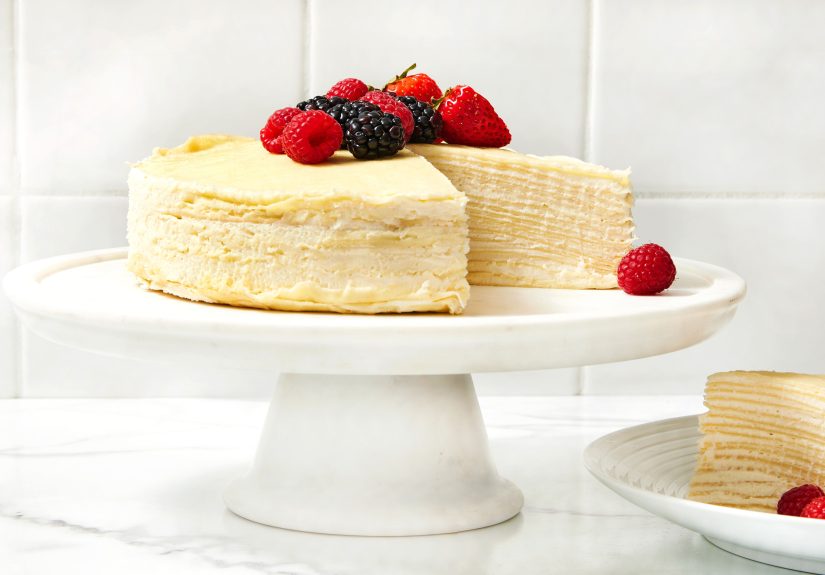
If a regular cake is a catchy pop song, a lemon lavender crêpe cake is a full orchestral scorelayered, dramatic,
and just a little bit extra (in the best way). You’re stacking tender crêpes with a bright lemon filling and a
softly floral lavender cream until you’ve built a dessert that looks like it belongs behind glass in a French
pâtisserie… but still feels totally doable in your own kitchen.
This guide walks you through a Lemon Lavender Crêpe Cake Recipe with practical tips, smart swaps,
and troubleshooting so you end up with a tall, sliceable masterpiecewithout crying into your whisk.
What Is a Lemon Lavender Crêpe Cake?
A crêpe cake (often called a “mille crêpe”) is made by layering thin crêpes with a creamy filling, then chilling
the whole thing so it slices like a cake. No oven neededyour stovetop does the heavy lifting, and your fridge does
the “make it look fancy” part.
The flavor combo here is a classic “sunshine + garden breeze”: lemon brings tang and freshness,
while lavender adds a gentle floral note that reads elegantnot perfume counterwhen used with a
light hand.
Flavor Game Plan: How to Make Lemon and Lavender Play Nice
Lavender can be magical or… aggressively soapy. The trick is to infuse rather than dump buds
straight into everything. Infusing lavender into warm dairy (milk or cream) lets you control intensity, then you
strain out the buds so the texture stays silky.
Lemon keeps the whole dessert from feeling heavy. You’ll use zest for aroma, juice for brightness, and a lemon curd
(or curd-style filling) for that rich, tangy “why can’t I stop eating this?” effect.
Ingredients and Smart Substitutions
This recipe aims for an 8-inch crêpe cake with about 18–22 layers (depending on
how thin you cook your crêpes). If you get more layers, congratulationsyou are now emotionally ready for a
technical bake-off.
For the crêpes
- All-purpose flour (or a blend with a little cake flour for extra tenderness)
- Eggs (structure + flexibility)
- Whole milk (richness) + optional water (helps keep crêpes delicate)
- Melted butter (flavor + prevents rubbery vibes)
- Sugar (just enough for sweet crêpes)
- Salt (don’t skipdessert needs seasoning too)
- Vanilla extract (optional, but nice)
For the lemon curd
- Lemon zest + fresh lemon juice
- Sugar
- Eggs and/or egg yolks (richer curd = more yolks)
- Butter (for silkiness and body)
- Pinch of salt
For the lavender cream filling
- Whole milk (for pastry cream base)
- Egg yolks
- Sugar
- Cornstarch (thickens cleanly)
- Culinary lavender (dried buds; use sparingly)
- Vanilla (optional, rounds out the floral note)
- Butter (optional, for a richer “mousseline” feel)
- Heavy cream (whipped, to lighten the filling)
For finishing
- Powdered sugar (for dusting)
- Fresh berries (blueberries, raspberries, blackberries)
- Lemon slices or zest curls
- Edible flowers (optional but photogenic)
Equipment Checklist
- 8-inch nonstick skillet or crêpe pan
- Blender (optional but great for smooth batter)
- Fine-mesh strainer (your insurance policy against lumps)
- Rubber spatula + whisk
- Cooling rack or parchment-lined trays
- Offset spatula (nice for neat layering)
- 8-inch cake ring (optional, for extra-straight sides)
Step-by-Step Lemon Lavender Crêpe Cake Recipe
Yield
1 (8-inch) crêpe cake, about 10–12 slices
Timing
Active time: ~90 minutes
Chill time: 4–8 hours (or overnight)
Total: Plan for a relaxed afternoon (plus fridge time for the “wow” factor).
1) Make the crêpe batter (and let it rest)
-
In a blender, combine:
- 1 cup all-purpose flour
- 2 tablespoons sugar
- 1/4 teaspoon salt
- 3 large eggs
- 1 1/4 cups whole milk
- 1/4 cup water (optional but helpful for tenderness)
- 2 tablespoons melted butter
- 1 teaspoon vanilla extract (optional)
- Blend until smooth (15–30 seconds). Don’t over-blend like you’re making a smoothie for a marathon.
-
Pour the batter through a fine-mesh strainer into a bowl. Cover and rest:
- 30 minutes at room temperature, or
- up to overnight in the fridge for extra-smooth, relaxed batter.
Resting hydrates the flour and helps the crêpes cook up tender instead of tough.
2) Cook thin, tender crêpes
- Heat an 8-inch nonstick skillet over medium to medium-low heat.
-
Lightly butter the pan (tiny amountthis is not a fried dough situation). Pour in about
2–3 tablespoons batter and immediately swirl to coat. -
Cook until the top looks set and the edges lift easily, about 30–60 seconds.
Flip and cook the second side briefly, about 10–20 seconds.
You want pale-golden, not “crispy pancake energy.” -
Slide onto a cooling rack or parchment. Repeat until you have 18–22 crêpes.
If you end up with a few “practice crêpes,” welcome to the club.
Pro move: Let crêpes cool fully before stacking, so steam doesn’t turn your delicate layers into a
soggy situation.
3) Make lemon curd (bright, silky, and worth it)
-
In a heatproof bowl (or saucepan), whisk together:
- 3/4 cup sugar
- 2 whole eggs + 2 egg yolks
- Zest of 2 lemons
- 1/2 cup fresh lemon juice
- Pinch of salt
-
Cook over gentle heat (or over a double boiler), whisking constantly, until thick enough to coat a spoon.
If you use a thermometer, aim for roughly 170°F for a set curd; some styles go higher for an
extra-thick finish. - Remove from heat and whisk in 6 tablespoons butter until glossy.
- Strain for extra smoothness. Cover with plastic wrap pressed to the surface. Chill.
4) Make lavender pastry cream (infused, not overpowering)
-
In a saucepan, warm:
- 2 cups whole milk
- 1–1 1/2 teaspoons dried culinary lavender
Bring to a gentle simmer, then turn off heat and steep 10–15 minutes.
- Strain out lavender buds, pressing lightly. Return infused milk to the saucepan and re-warm until steaming.
-
In a bowl, whisk:
- 5 egg yolks
- 1/2 cup sugar
- 3 tablespoons cornstarch
- Pinch of salt
until smooth and slightly lighter in color.
-
Temper the yolks: slowly whisk in a splash of the hot infused milk, then another splash. Keep
whisking so you don’t invent lavender scrambled eggs. -
Pour the tempered yolk mixture back into the saucepan. Cook over medium heat, whisking constantly, until thick
and bubbling for about 30 seconds. - Off heat, whisk in 1 tablespoon butter and 1 teaspoon vanilla (optional).
- Strain if you want ultra-smooth. Cover with wrap touching the surface. Chill until cold.
5) Lighten the filling (optional, but highly recommended)
A pure pastry cream filling is delicious but can feel heavy in a tall crêpe cake. For a fluffier slice, fold
whipped cream into the chilled lavender pastry cream.
- Whip 1 cup heavy cream to soft peaks.
- Whisk the chilled lavender pastry cream until smooth.
- Fold whipped cream into pastry cream in 2–3 additions.
-
Add lemon curd to taste:
- Option A: Swirl lemon curd in for a marbled effect.
- Option B: Mix in 1/2 cup lemon curd for a unified lemon-lavender cream.
- Option C: Keep lemon curd separate and alternate layers (lemon, lavender, lemon…).
6) Assemble like a calm, majestic layer wizard
- Place one crêpe on a serving plate (or inside a cake ring for straighter sides).
- Spread a thin layer of filling (about 2 tablespoons). Keep it even to avoid a leaning tower.
- Repeat: crêpe, filling, crêpe, filling… until you run out of either crêpes or self-control.
- Finish with a crêpe on top. Cover and chill at least 4 hours, ideally overnight.
7) Finish and serve
- Dust with powdered sugar.
- Top with berries and a little lemon zest.
- If using edible flowers, add them right before serving.
Slice with a long, sharp knife. Wipe between cuts for those clean, “bakery display case” edges.
Troubleshooting and Pro Tips
If your crêpes are tearing
- Batter too thin? Add 1–2 teaspoons flour, rest 10 minutes, try again.
- Pan too hot? Drop the heat slightly; tearing often happens when the edge sets too fast.
- Flipping too early? Wait until edges lift and the top looks dry.
If your crêpes are thick or rubbery
- Use less batter per crêpe and swirl immediately.
- Rest the batter longertenderness improves when flour hydrates and gluten relaxes.
- Keep the color light; darker crêpes can be tougher.
If your filling is runny
- Make sure pastry cream is fully chilled before folding in whipped cream.
- Don’t overdo lemon curd; it’s delicious, but it’s also a sneaky loosener.
- Chill the assembled cake longer. Time is structural engineering.
If your cake leans
- Use thinner layers of filling (tempting as it is to go big).
- Rotate the cake plate as you spread, so layers stay centered.
- A cake ring helps, but patience helps more.
Fun Variations (Because You’re the Boss of Your Dessert)
- Lemon-lavender mascarpone: Replace some pastry cream with mascarpone for a richer tang.
- Honey-lavender twist: Add 1–2 tablespoons honey to the infused milk for a softer sweetness.
- Berry-forward: Add a thin berry jam layer every 4–5 crêpes.
- Extra lemon: Brush a little lemon syrup over every third crêpe for big citrus energy.
Make-Ahead, Storage, and Serving
- Make ahead: Crêpes can be made 1–2 days ahead; store stacked with parchment between them.
- Chill time: Overnight chilling gives the cleanest slices and best texture.
- Storage: Keep covered in the fridge up to 3 days.
- Freezing: Not ideal once assembled (cream texture can change), but crêpes freeze beautifully.
Conclusion
This Lemon Lavender Crêpe Cake Recipe is the kind of dessert that makes people gasp a little before
they eat itand then gasp again because lemon + lavender is quietly unstoppable. Keep the lavender gentle, let the
batter rest, don’t fear the first “practice” crêpe, and give the cake enough chill time to become the elegant,
sliceable tower it was born to be.
Real-Life Experiences: from the Crêpe Cake Trenches
The first thing you learn while making a crêpe cake is that time works differently in the presence of a skillet.
You think, “I’ll just cook some crêpes.” Suddenly it’s an hour later and you’ve developed a relationship with your
spatula that feels legally binding.
Expect the first crêpe to be… a vibe. It might be too thick, too pale, too lacy, or shaped like a
topographical map of Vermont. This is normal. Many bakers treat the first one as a “pan temperature test” and move
on with confidence. If it’s edible, it becomes the chef’s snack. If it’s not, it becomes a reminder to reduce heat
and lighten your buttering hand. Either way, it serves a noble purpose.
Then comes the oddly satisfying part: you start hitting a rhythm. Pour, swirl, wait, flip, slide. Each crêpe lands
on the stack like a thin golden page in a delicious book you’re writing in real time. The kitchen smells like warm
butter and vanilla, and you’ll catch yourself thinking, “Okay… I get why people do this for fun.” (You will also
catch yourself thinking, “Who decided twenty layers was a casual idea?” Both thoughts are correct.)
Lavender brings its own real-world lesson: subtle wins. The most common experience is adding a
little, tasting, and wanting to add morethen remembering that lavender doesn’t slowly increase; it teleports from
“lovely” to “soap aisle” if you get reckless. Infusing the dairy and straining out buds is the calm, controlled
approach that keeps the flavor elegant. The best results taste like a lemony spring afternoon, not like your
grandma’s linen drawer (affectionately).
Assembly feels like building a tasty skyscraper. The first few layers are easy. Around layer eight, you start
checking the side profile like a structural engineer. You’ll adjust, nudge, and smooth, and you’ll discover that
thin filling layers are the secret to a stable cake. Too much filling and the crêpes skate around
like they’re wearing socks on a hardwood floor.
And thenafter the chillcomes the moment that makes it all worth it: the slice. A long knife goes in, you lift out
a wedge, and the layers show up like little stripes of victory. The texture is plush and delicate, the lemon wakes
up your taste buds, and the lavender hums in the background like a soft harmony. This is when you realize the crêpe
cake isn’t just dessert. It’s an edible flex. A very polite flex. The kind that says, “Yes, I made this,” without
saying, “Please applaud,” even though you deserve applause.